


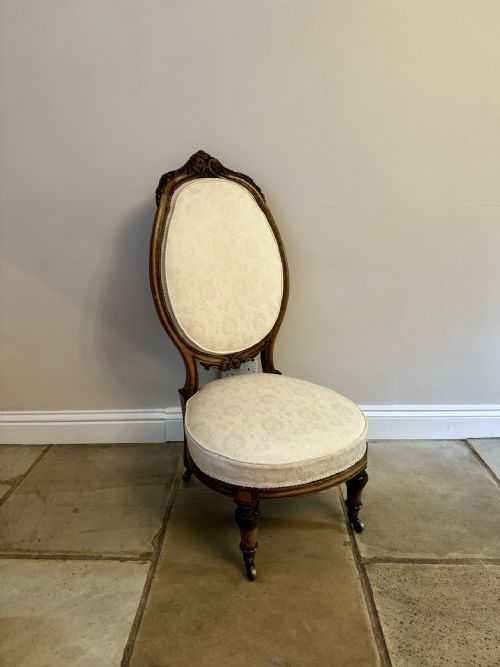
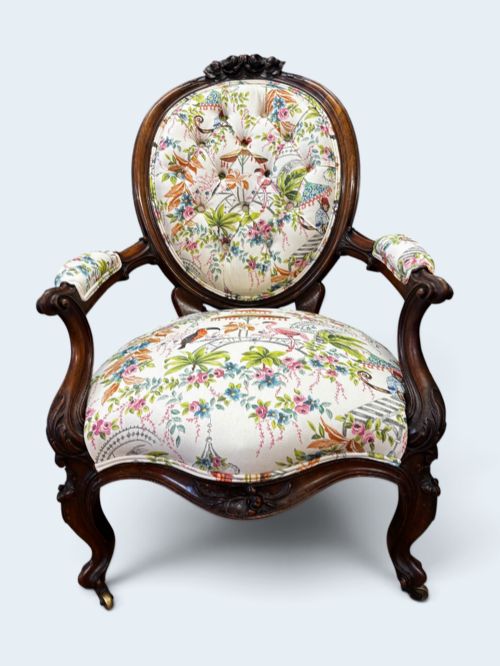
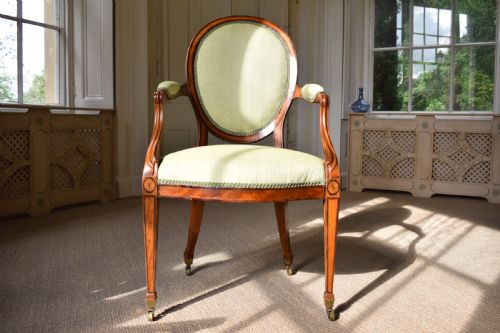
Oval Back Armchairs
Oval back armchairs bring distinct neoclassical proportion to a room, offering supportive seating wrapped in historic style.
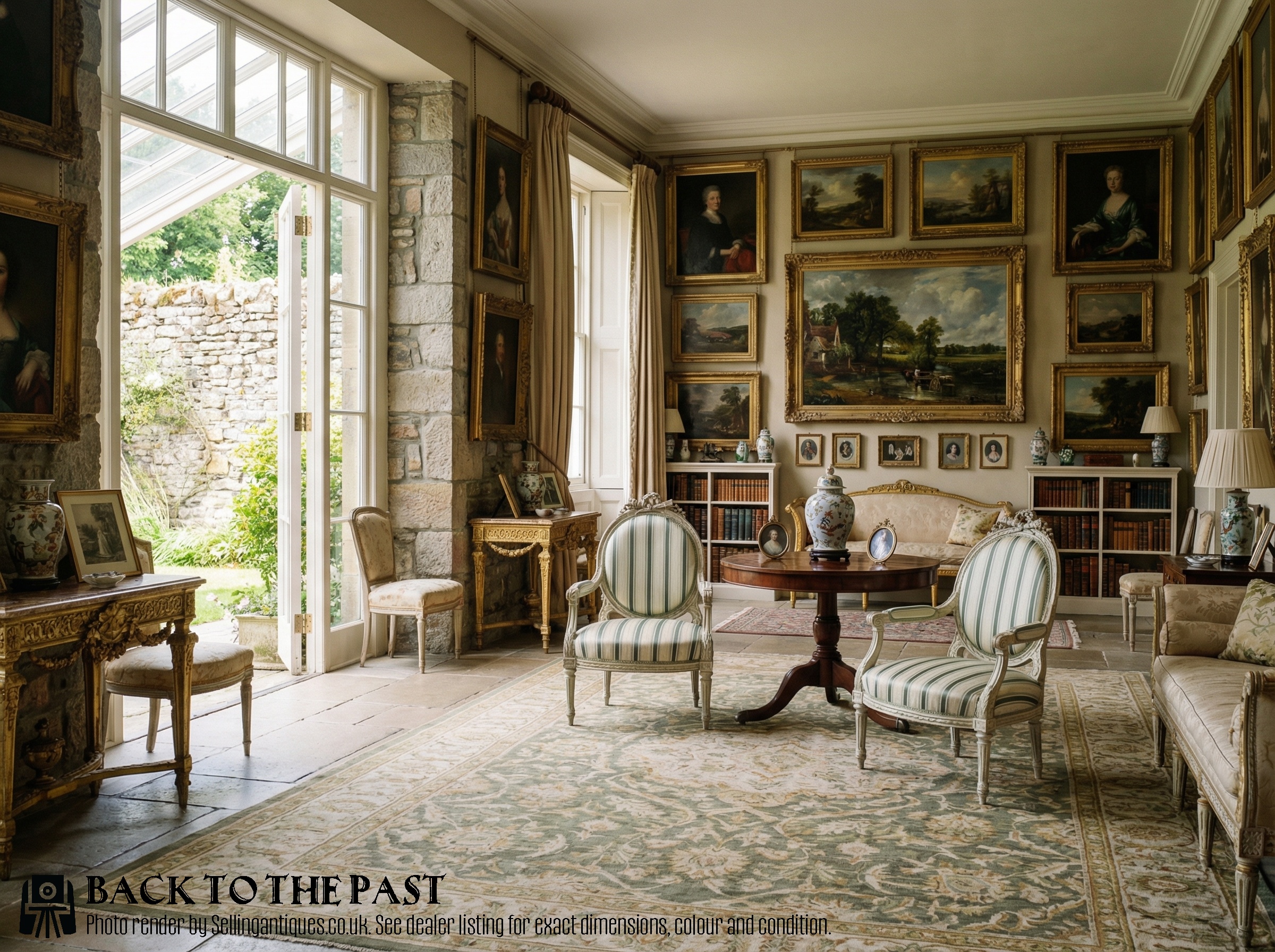
Oval Back Armchairs
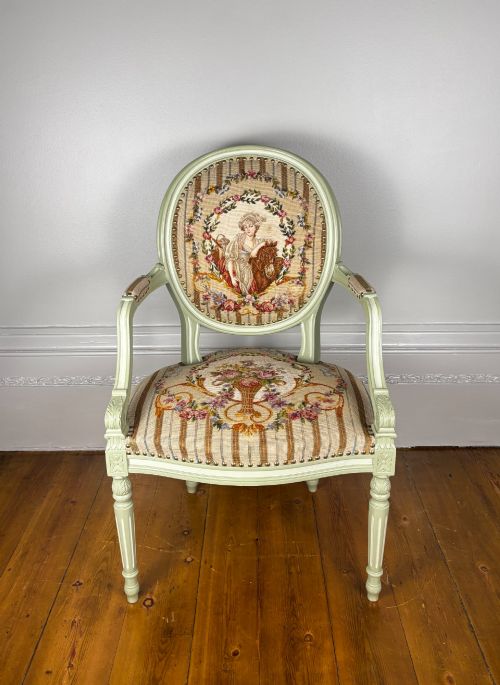
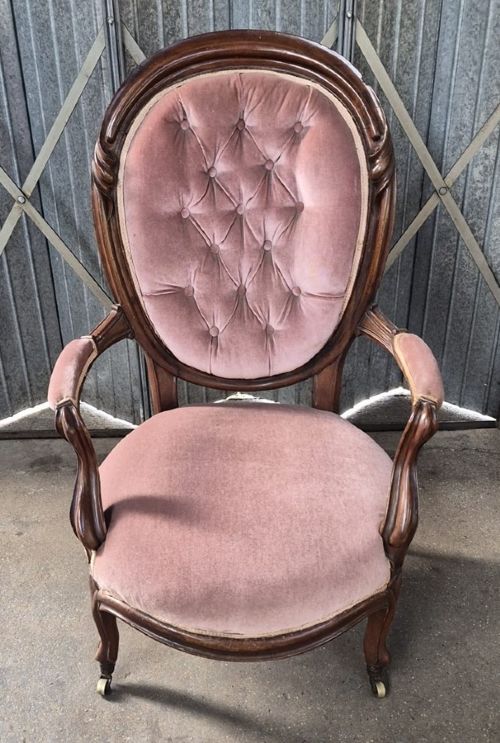
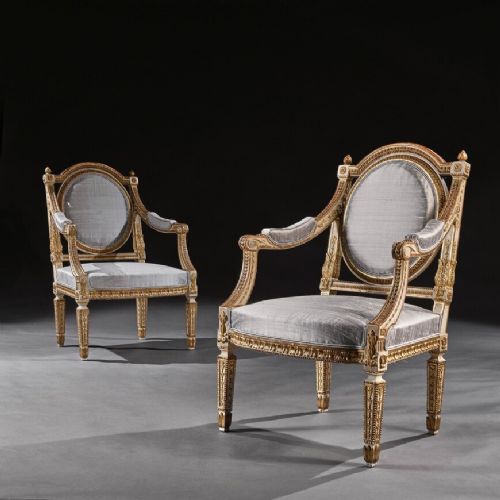
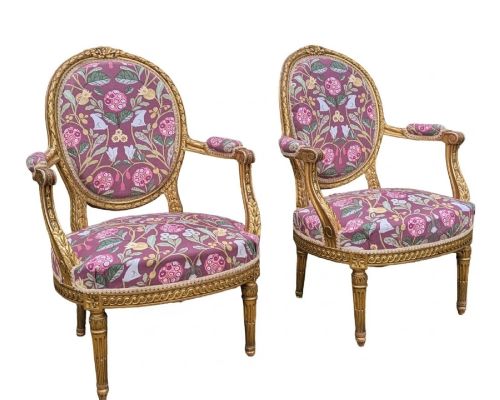
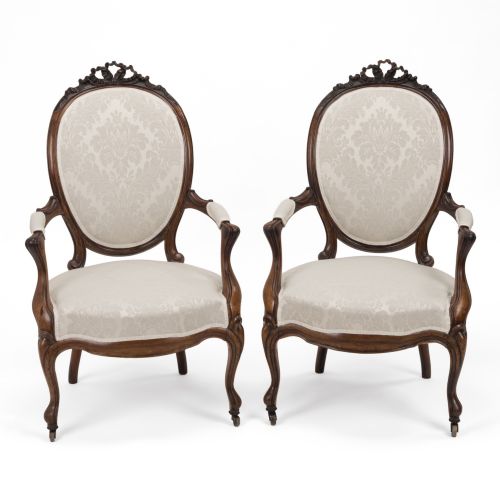
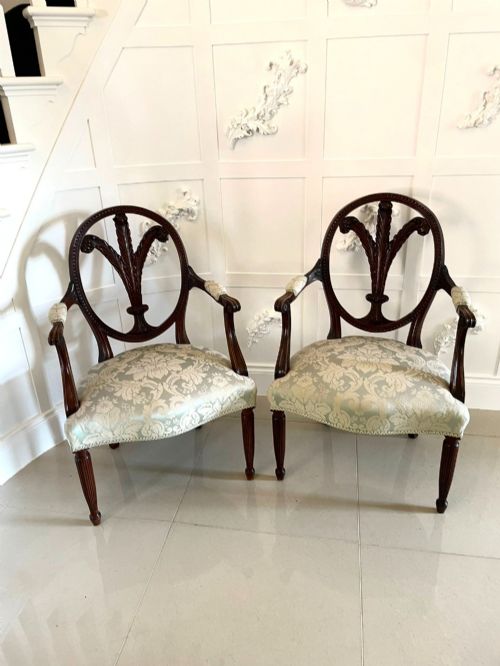
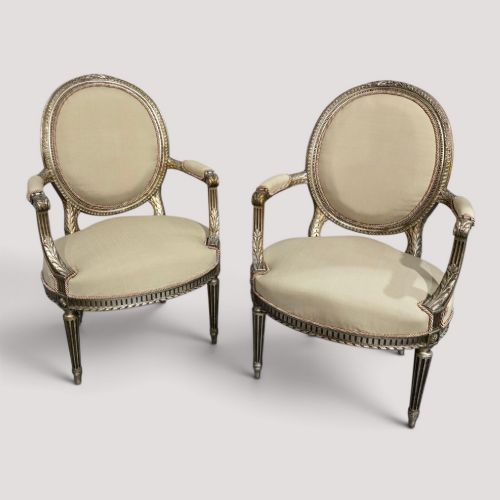
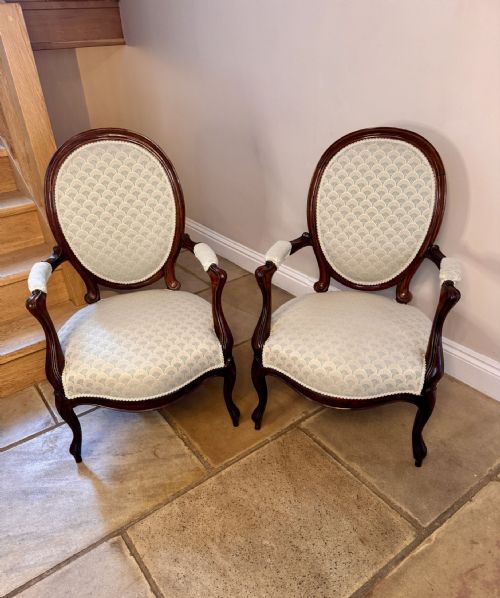
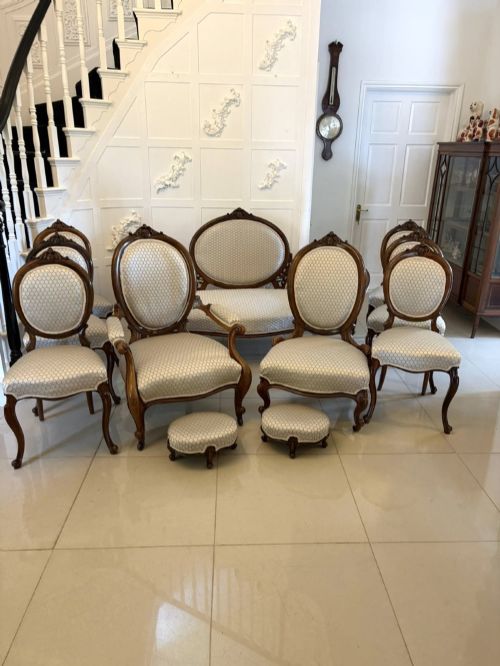
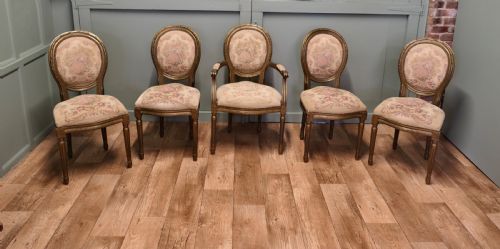
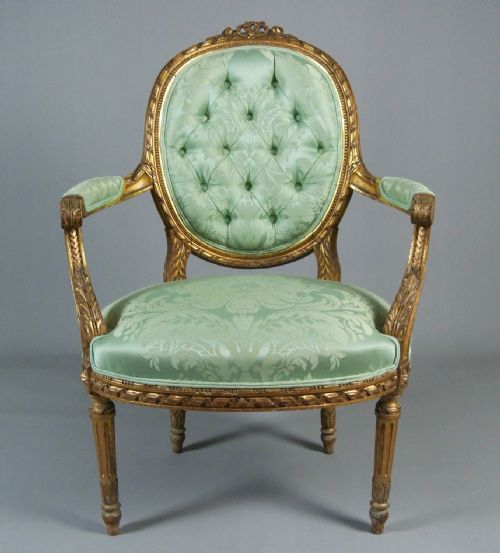
The version most commonly met on this page is the nineteenth-century French or English piece, often rendered in giltwood or mahogany following Louis XVI or Hepplewhite styles. These examples frequently appear in pairs or larger salon suites upholstered in silk or damask.
Makers and designers from George III periods to Edwardian revivals interpreted the shape in walnut, satinwood, and painted finishes. Buyers encounter everything from intimate boudoir chairs to large library armchairs sharing this definitive curved silhouette.
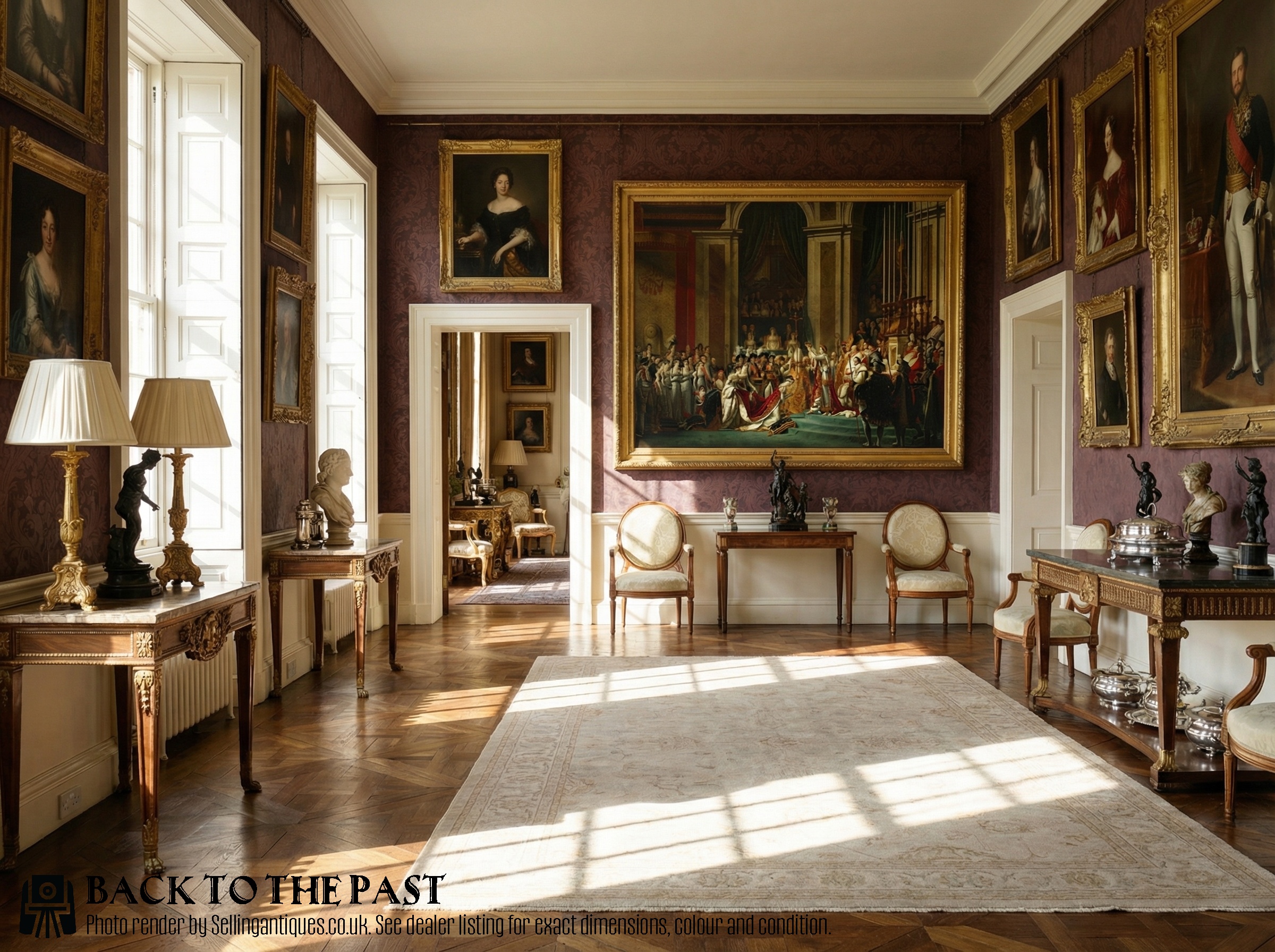
How they were made
Frames are constructed from solid timbers such as mahogany, walnut, and beech, alongside carved giltwood and painted wood. Joinery relies on traditional pegged mortise and tenon joints to secure the distinct curved framework of the backrest.
Upholstery techniques involve webbing, springs, and stuffing covered in textiles like velvet, silk fabric, needlepoint tapestry, and cane panels. Carved details, parcel gilt highlights, and decorative inlay define the surface ornamentation across periods.
Oval Back Armchairs Retail Price Guide 2026
Typical asking prices for oval back armchairs among the pieces listed under this phrase on Sellingantiques today, from the lower quarter to the upper quarter. They describe what is for sale here now, not the wider market.
Listings feature mahogany, giltwood, walnut, and satinwood across eighteenth, nineteenth, and early twentieth-century periods.
What varies in quality
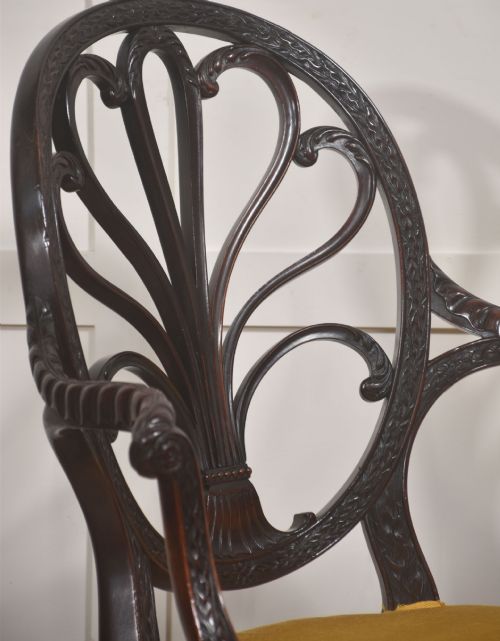
The crispness of the hand-carving on the wooden frame dictates the baseline distinction between standard production and superior craftsmanship. Deeply undercut foliage, fluted legs, and well-defined oval bezels show artisan involvement rather than mechanical shaping.
The integrity of the timber and the quality of the original gilding or painted finish separate ordinary examples from exceptional ones. Cohesive proportions, harmonious pairing in suites, and period-appropriate textile choices elevate certain pieces above routine workshop output.
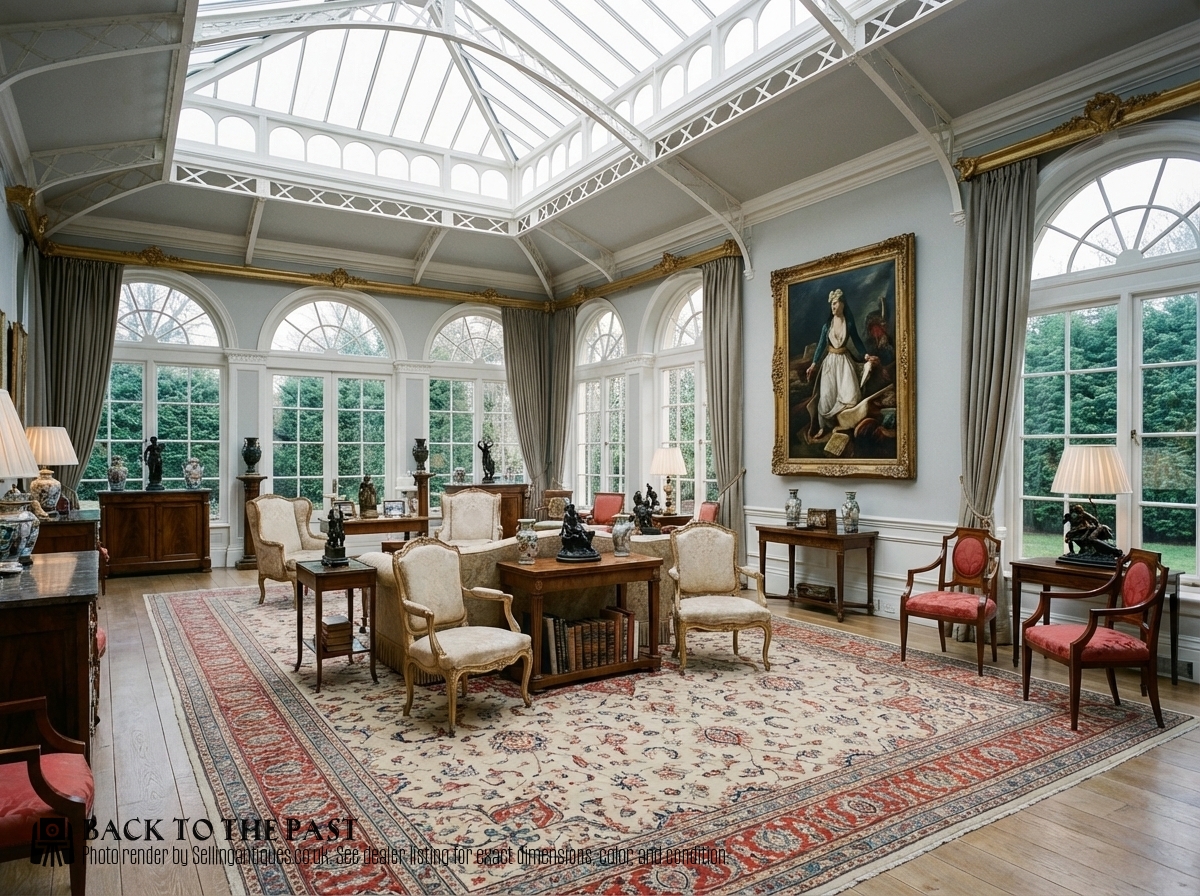
Thomas Chippendale
The Oval Back Armchairs Glossary
- Bergère
- An enclosed upholstered armchair with wooden framing and upholstered arms, often featuring cane work on the back and sides. This French form provides deep, comfortable seating.
- Giltwood
- Timber coated with a thin layer of gold leaf or gesso preparation. It creates the brilliant decorative surfaces seen on many formal salon chairs.
- Hepplewhite
- A late eighteenth-century English furniture style characterised by elegance, shield or oval backs, and tapering legs. It draws heavily on neoclassical restraint.
- Fauteuil
- An open-arm armchair with padded armrests and an exposed wooden frame of French origin. They were designed for formal sitting rooms.
- Parcel Gilt
- Partially gilded woodwork where gold leaf accents specific carved details against a painted or polished wood background. It highlights architectural mouldings.
Oval Back Armchairs: Frequently Asked Questions
Where should I place oval back armchairs?
These chairs suit formal drawing rooms, bedrooms, or reception spaces where their curved profiles can be viewed from multiple angles. Pairing them creates symmetry beside a fireplace or focal wall.
Smaller salon variants work well as occasional seating, while larger library chairs serve as primary reading seats.
How do I identify Louis XVI style?
Louis XVI style pieces display straight fluted legs, geometric symmetry, and neoclassical ornamentation contrasting with earlier curved rococo excesses. The oval medallion back is a primary marker of this aesthetic.
Carved ribbons, beading, and acanthus leaves frequently decorate the wooden frames of these French-inspired pieces.
Are these chairs comfortable for daily use?
Open armchairs and bergères from these periods offer supportive seating, though cushion depths and back angles vary by design. Many feature padded armrests and upholstered back panels intended for extended sitting.
Original webbing and interiors may vary in firmness depending on past restoration work.
How can I tell the age of the wood?
Examination of the frame construction, tool marks, and timber shrinkage reveals the manufacturing period. Eighteenth-century pieces show hand-cut joinery details, whereas nineteenth-century revivals utilise machine-assisted precision.
Patina on the finish and wear patterns on the touch points indicate the passage of time.