

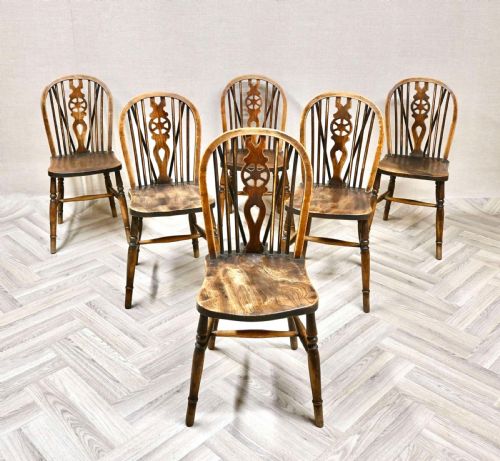


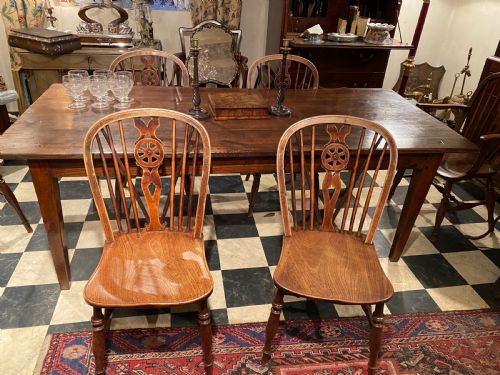

Wheelback Dining Chairs
Wheelback dining chairs are robust kitchen and country seats defined by their pierced splats, offering sturdy utility and enduring regional style.
What wheelback dining chairs are
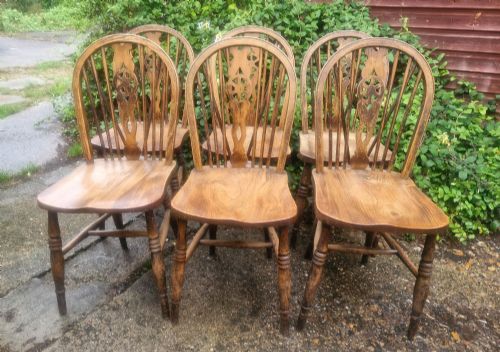
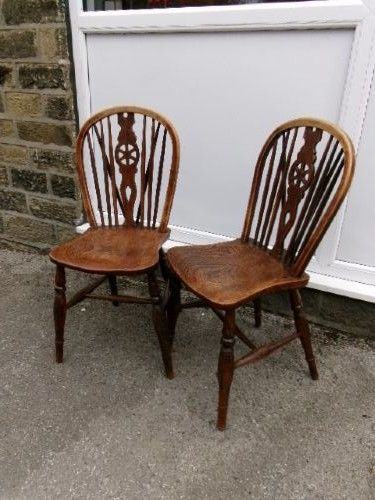
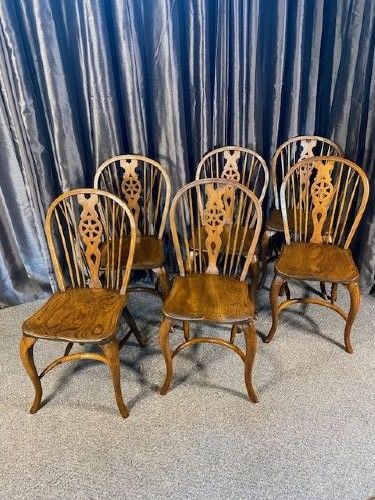
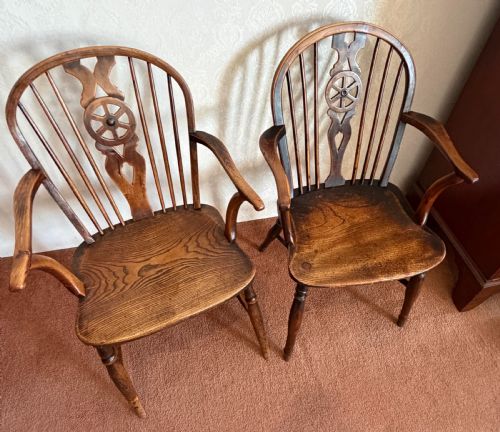
Wheelback dining chairs are traditional seating forms rooted in rural and domestic traditions, frequently featuring shaped timber seats and distinctive pierced splats resembling carriage wheels. When exploring wheelback dining chairs, buyers encounter sets and pairs originating across the nineteenth century, including Regency examples and Sheraton Revival elbow chairs.
The regional English country aesthetic dominates these pieces, frequently taking the form of Windsor chairs with hoop backs or kitchen dining chairs. Construction relies heavily on combinations of beech and elm, alongside occasional ash, mahogany, and oak timbers.
How they were made
Maker construction methods combine solid timber seats, typically sculpted from elm, with turned legs and spindles shaped from beech, ash, or oak. Steam bending techniques shape the hoop backs and crest rails to provide resilient structural support.
Joinery utilises traditional spindle and wedge construction, where legs and uprights pass directly through bored seats and lock into position. Surface finishes develop through decades of use, preserving the natural grain of the woods.
Many elm seats retain the distinct hollowed dips worn by generations of sitters leaning back over the breakfast table.
What varies in quality
Quality rests in the matching of timber grains across larger sets, particularly where elm seats and beech frames show uniform colour and consistent turning. The execution of the central wheel carving defines the sculptural ambition of the maker.
Structural integrity depends on the tightness of the pegged joints and the depth of the sculpted saddle seat, which dictates comfort and longevity.
The Wheelback Dining Chairs Glossary
- Wheelback
- A chair back featuring a central circular splat carved or pierced to resemble the spokes of a carriage wheel. This motif became popular in nineteenth-century country furniture.
- Windsor chair
- A chair built with a solid wooden seat into which the legs and back spindles are directly inserted. These pieces rely on structural sturdiness rather than heavy framing.
- Splats
- The vertical central strip of wood in the back of a chair, which in these pieces takes the characteristic wheel form. It provides both lumbar support and decorative detail.
- Elbow chair
- An armchair designed with supportive armrests, often found paired with side chairs in larger dining sets. These pieces provide additional comfort at the table ends.
- Sheraton Revival
- A late nineteenth-century design movement inspired by late eighteenth-century neoclassical furniture. Pieces from this style exhibit lighter proportions and refined classical details.
Frequently Asked Questions
Are wheelback chairs comfortable for daily use?
The sculpted wooden seats provide solid support, shaped to fit the body over long periods of sitting.
Adding loose cushions can soften the seat for extended dining use.
How do I match different wood tones in a set?
Country furniture often combines timbers like beech and elm, which naturally complement each other through varied grain patterns.
Shared design details and uniform heights matter more than matching wood colour precisely.
Can I mix armchairs with standard dining chairs?
Elbow chairs pair naturally with standard dining chairs, traditionally sitting at the heads of the table.
Matching wheelback motifs tie mixed arrangements together visually.
How do I date an older wheelback chair?
Turned leg profiles and timber combinations offer clues to the period, with early nineteenth-century examples showing distinct hand-tooling marks.
Construction methods inside the seat bore holes reveal the age of the joinery.