






Antique Wheelback Chairs
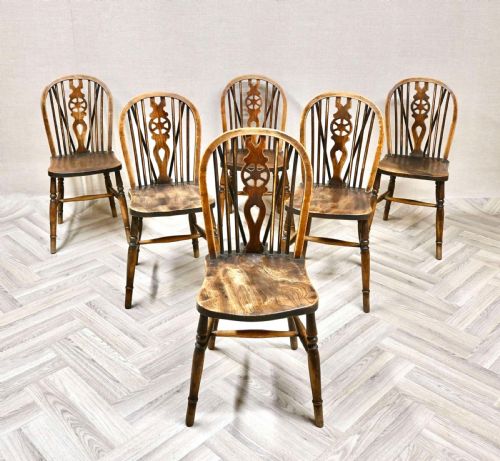
These antique wheelback chairs combine traditional Windsor construction with distinct pierced splats, offering sturdy country character for modern dining spaces.
Antique Wheelback Chairs
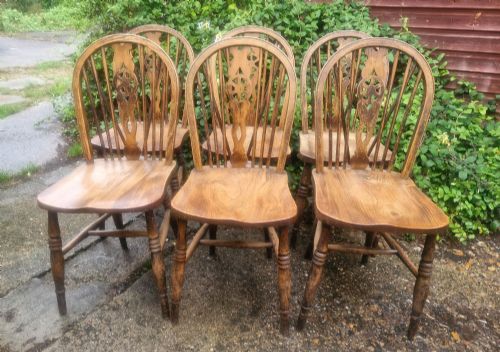
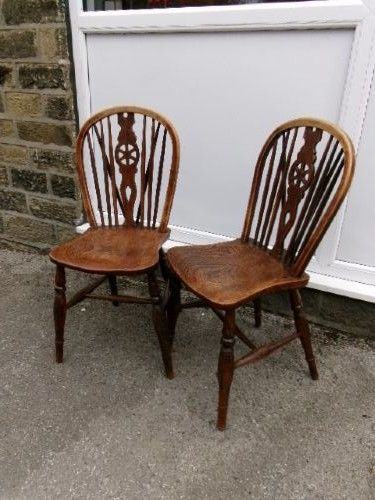
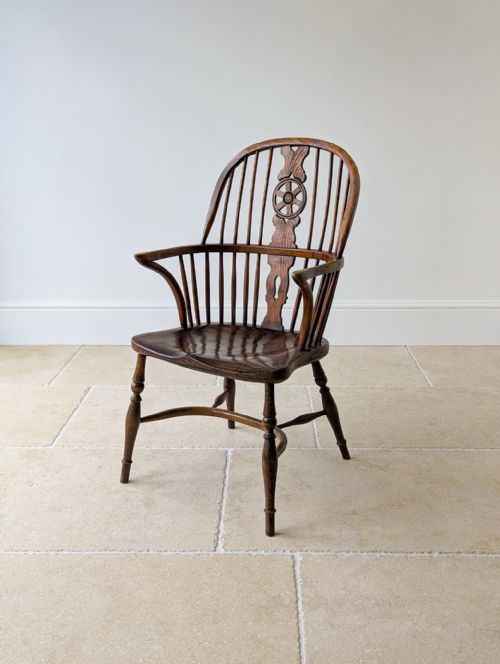
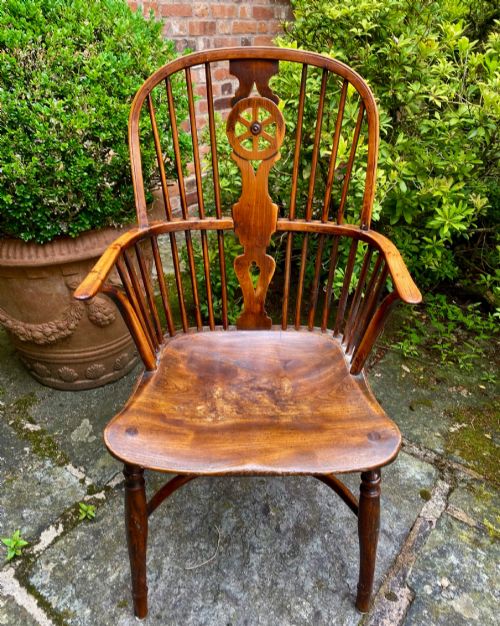
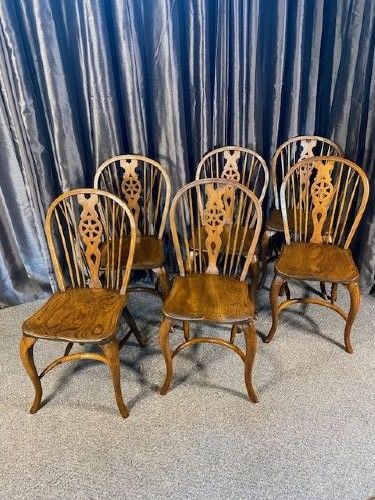
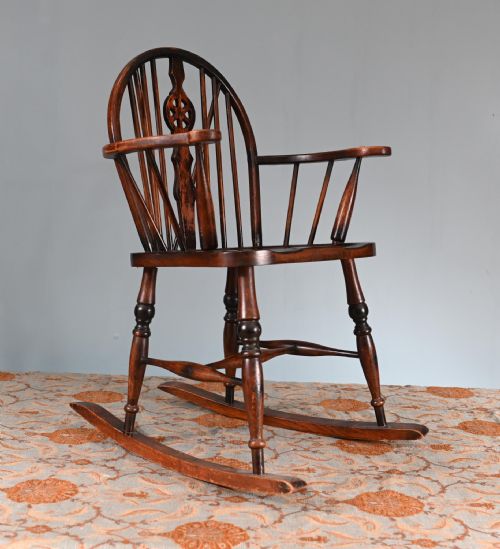
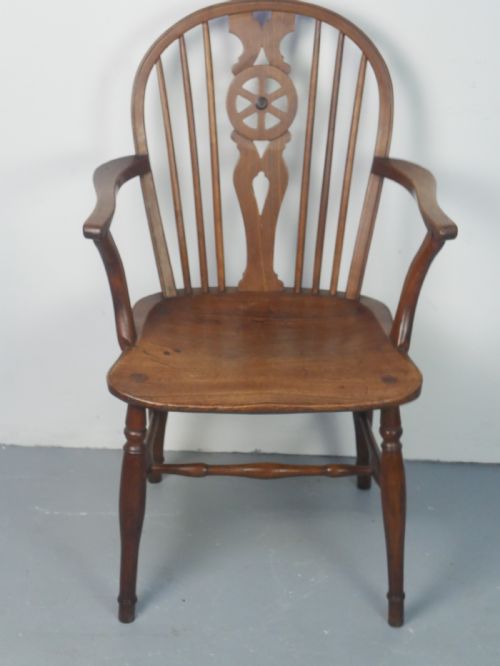
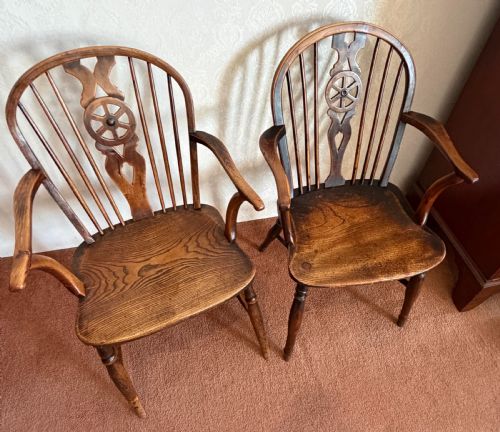
Antique wheelback chairs are a distinctive development of the traditional Windsor form, featuring a pierced central splat shaped like a carriage wheel. You will most frequently encounter these pieces as kitchen and dining chairs, often appearing as sets alongside individual armchairs and carvers.
The selection ranges from early Georgian and Regency examples to robust Victorian and Edwardian iterations. Pieces originate primarily from English country workshops, bringing vernacular design traditions directly into domestic interiors.
How they were made
Maker's workshops utilised a combination of timbers, frequently pairing resilient elm seats with turned beech or ash spindles and legs. Yew wood also appears in finer regional variants, prized for its rich grain and warm tone.
Construction relies on traditional stick-back and hoop-back framing where turned components are wedged directly into a thick, saddled wooden seat. This method creates a rigid skeletal frame without traditional mortise and tenon joinery on the main uprights.
The listings span multiple centuries, recording forms from early Georgian armchairs to Edwardian mahogany desks and robust Victorian kitchen carvers.
What varies in quality
The distinction between ordinary utility seating and finer examples rests largely on timber selection and seat sculpting. Deeper saddle-carved elm seats and balanced turning on the legs elevate a chair beyond standard kitchen utility grades.
Harmony within matched or harlequin sets dictates desirability, as does the crispness of the wheel carving in the back splat. Grain figure in yew wood examples further separates standard regional output from exceptional cabinetwork.
Fred Walker
The Antique Wheelback Chairs Glossary
- Wheelback
- A Windsor chair variation featuring a pierced splat carved or shaped to resemble the spokes and outer rim of a cart wheel. This decorative motif became popular during the nineteenth century in English vernacular seating.
- Windsor chair
- A chair built with a solid wooden seat into which the legs, back spindles, and bow are driven directly as separate components. This structural approach distributes weight efficiently across a rigid timber frame.
- Carver
- An armchair designed with low or open arms, historically placed at the head of a dining table or used as a desk chair. These pieces match the simpler side chairs in a dining set.
- Harlequin set
- A collection of dining chairs that share similar forms, periods, or materials rather than being carved from a single workshop batch. Such sets are assembled to match roughly around a table.
- Saddled seat
- A wooden chair seat hollowed out into a concave, ergonomic shape resembling a horse saddle. This shaping provides comfort during prolonged sitting.
Antique Wheelback Chairs: Frequently Asked Questions
Are these chairs comfortable for daily use?
The deep saddle-carved wooden seats and high supportive backs make these chairs surprisingly comfortable for long periods at a dining table.
Because they lack upholstery, adding loose cushions is a simple way to increase softness while maintaining the traditional appearance.
How do I match a harlequin set?
Harlequin sets are best matched by looking for consistent wood tones, such as elm and beech combinations, and similar turning styles on the legs.
Matching the height of the backs and the overall scale matters more than finding identical wheel motifs across every chair.
Where were these chairs traditionally used?
These robust items served primarily as everyday seating in farmhouse kitchens, country houses, and cottage dining rooms.
Armchairs often stood by hearths or at the heads of tables, while simpler side chairs filled out the remaining dining spaces.
How can I tell the age of a wheelback?
Earlier examples from the Georgian period tend to feature finer spindle turnings, darker patination, and broader saddle seats fashioned from single slabs of elm.
Later Victorian and Edwardian versions often display heavier framing, brighter beech components, and machine-shaped wheel splats.