
Antique Elm Kitchen Chairs
These antique elm kitchen chairs bring solid English country character to a dining table.
What the Chairs Are
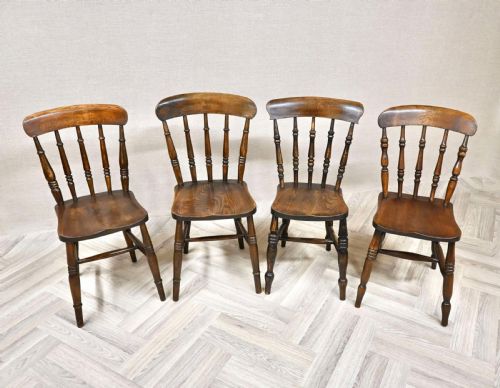
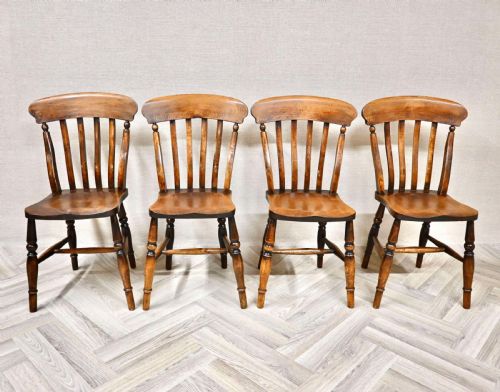
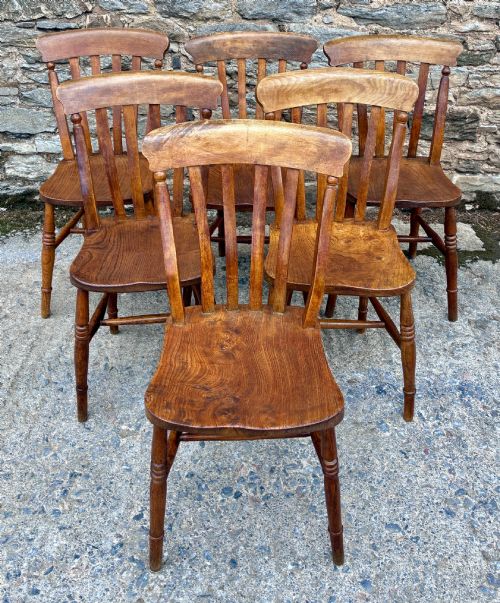
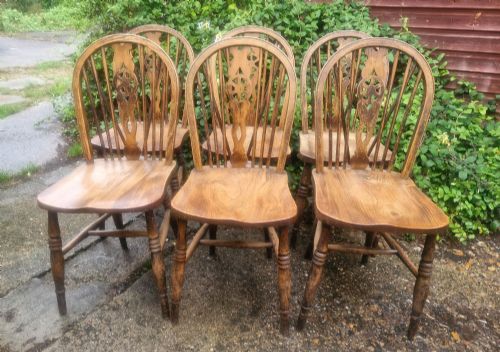
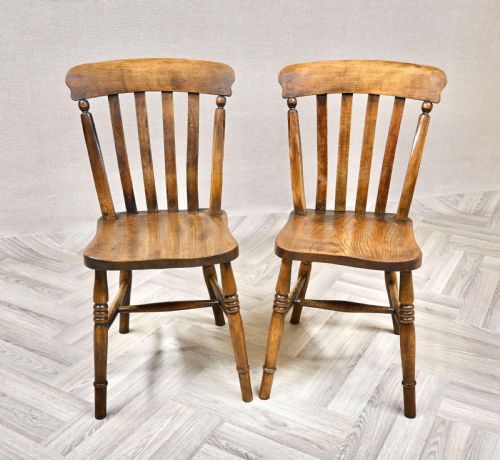
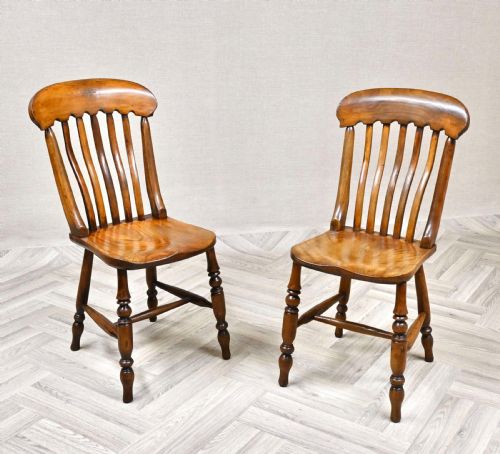
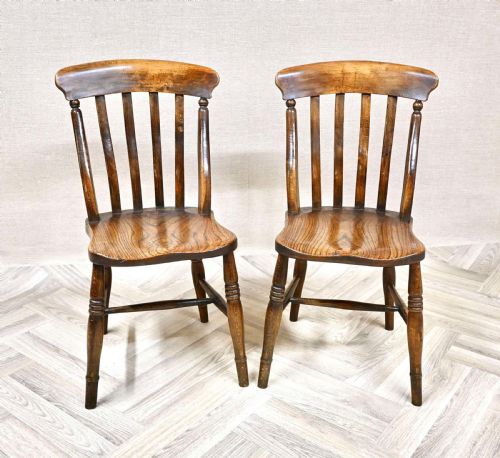
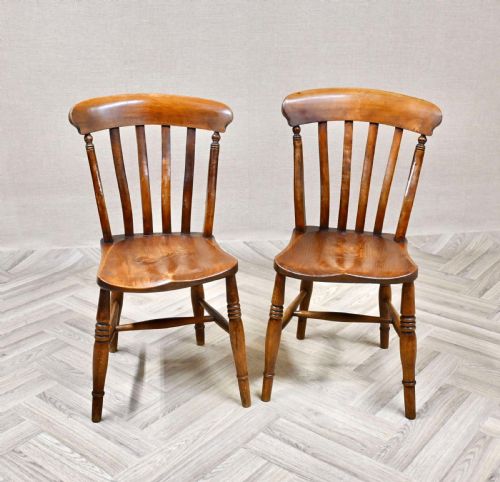
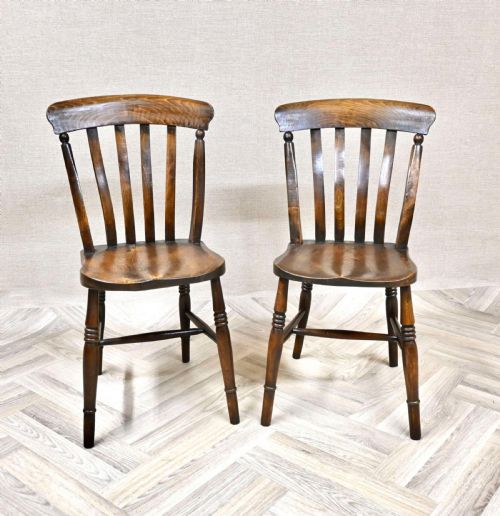
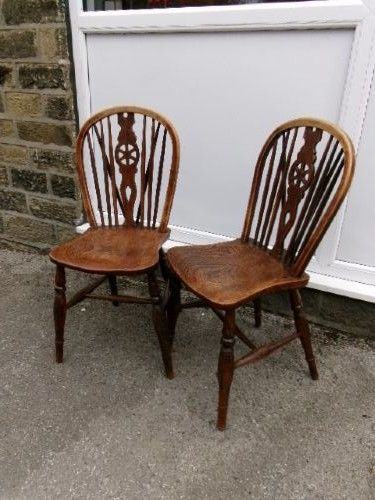
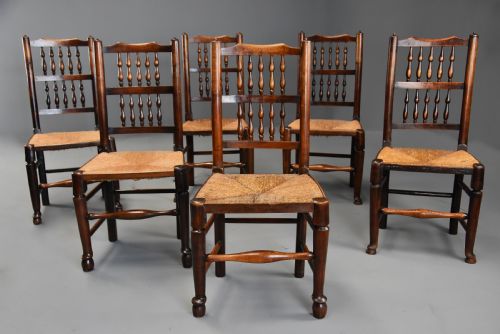
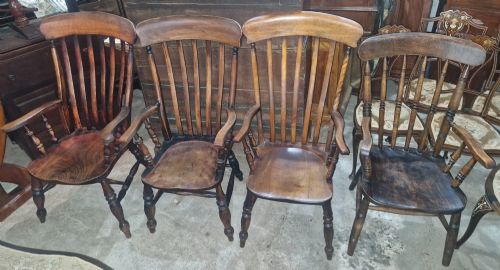
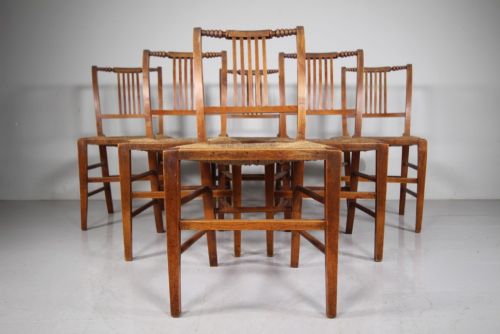
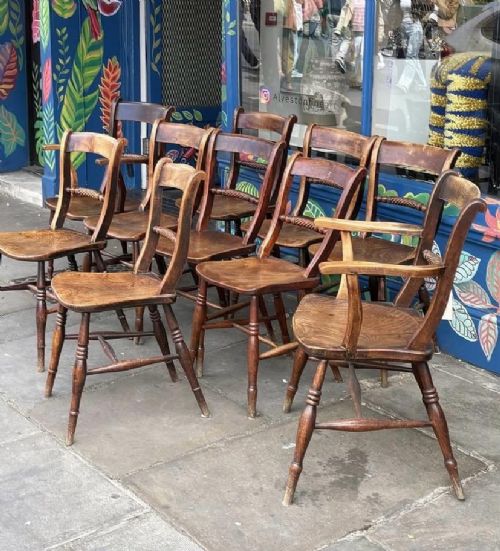
When searching for antique elm kitchen chairs, buyers look at functional dining and farmhouse seating shaped by English country traditions across the nineteenth century and into the early twentieth century. These pieces appear primarily as Windsor designs, alongside ladderback, fiddle back, and lathe back forms.
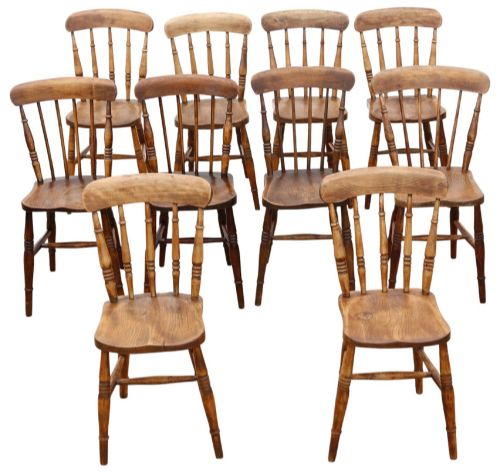
The version most commonly met on this page is the Windsor chair, typically constructed with a combination of elm seats and supporting woods like ash, beech, and oak. Sets range from pairs up to large groups of ten or twelve, often originating from Victorian farmhouses and country houses.
How They Were Made
Maker construction combined solid timber boards for the seats with steam-bent spindles, hoops, and backs. Elm provided a tough, interlocking grain suitable for heavy-seated chair bases that resisted splitting under daily use.
Complementary timbers such as ash, beech, and oak supplied rigid strength for legs, stretchers, and vertical uprights. Carpenters integrated double stretchers and turned components to brace the frame firmly.
Retail Price Guide 2026
Typical UK retail prices for elm kitchen chairs, calculated from the Sellingantiques database of over a million retail prices indexed since 2003. This retail price guide relies exclusively on Sellingantiques data; no external sources or auction records are used, so the figures do not describe the wider market.
Listings feature nineteenth-century and Victorian pieces utilising elm, beech, ash, oak, yew, and rush materials.
What Varies in Quality
Quality separates through the integrity of the timber selection and the harmony of matched sets versus harlequin groups. Sculpted saddle seats with deep contours represent superior workmanship compared to flat plank bases.
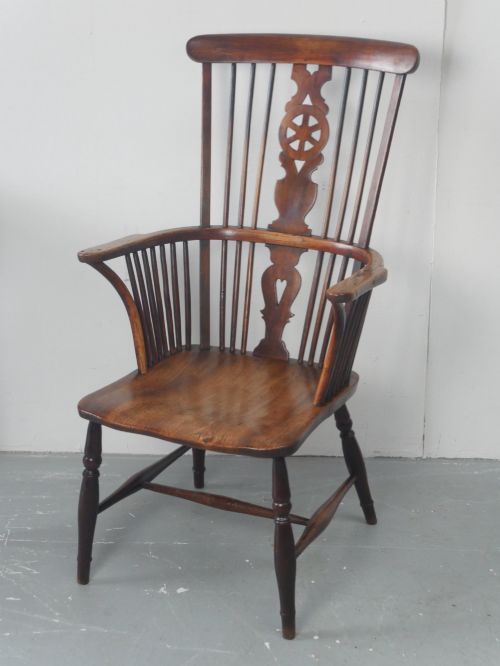
Cohesion within larger sets of dining chairs dictates desirability, as uniform turnings and balanced proportions elevate the standing of the group. The articulation of spindle backs, wheel backs, and hoop frames displays the maker's precision.
The Antique Elm Kitchen Chairs Glossary
- Windsor
- A chair built with a solid wooden seat into which the legs and back-bow are separately inserted. This form dominates country seating styles.
- Stretcher
- A horizontal wooden rod connecting the legs of a chair to provide structural stability. Double stretchers offer additional reinforcement.
- Lathe back
- A chair back featuring shaped vertical wooden slats turned or cut on a lathe. These provide supportive upright framing.
- Hoop back
- A continuous bentwood rail forming the upper frame of a Windsor chair back. It distributes weight evenly downward into the seat.
Frequently Asked Questions
Are these chairs comfortable for daily dining?
The saddle-shaped wooden seats distribute weight naturally for extended sitting during meals.
Built for practical farmhouse use, their sturdy frames support daily household dining without requiring upholstered cushions.
How do I identify a Windsor chair?
A Windsor chair is defined by legs and back spindles fitted directly into a thick wooden seat.
They usually feature bentwood hoops, bows, or comb-pieces rather than a standard joined frame.
Can I mix different chair styles together?
Matched sets offer a uniform look around a table, while harlequin groups mix varied nineteenth-century styles.
Country houses traditionally gathered matched pairs or assembled varied sets accumulated over many years.
What woods were used in these chairs?
Elm served principally for the solid seats because its interlocking grain resisted splitting under heavy use.
Ash, beech, and oak provided straight, rigid timber for the turned legs, spindles, and structural stretchers.