


Elm and Beech Chairs
Elm and beech chairs bring vernacular domestic seating traditions into everyday interiors through durable timber combinations.
Elm and Beech Chairs
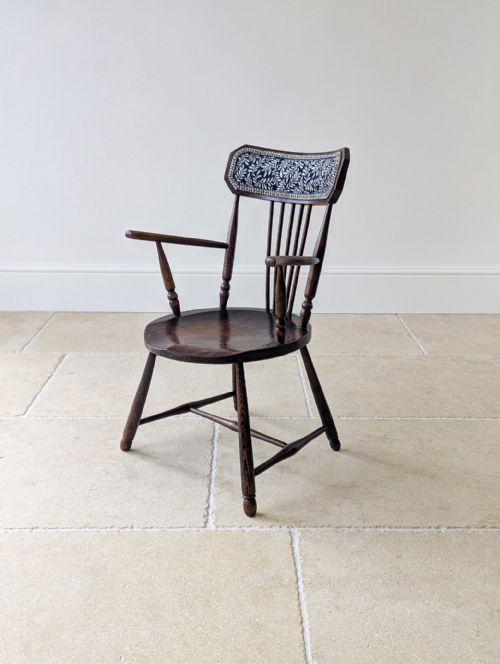
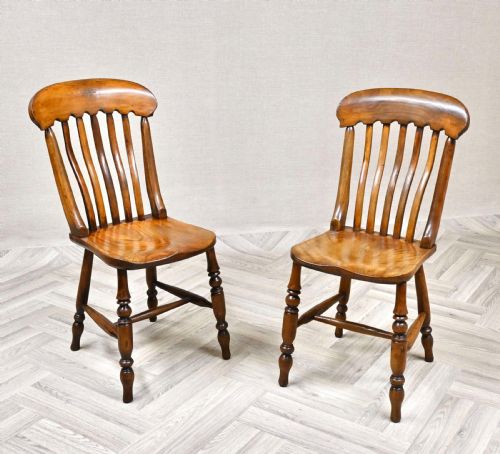
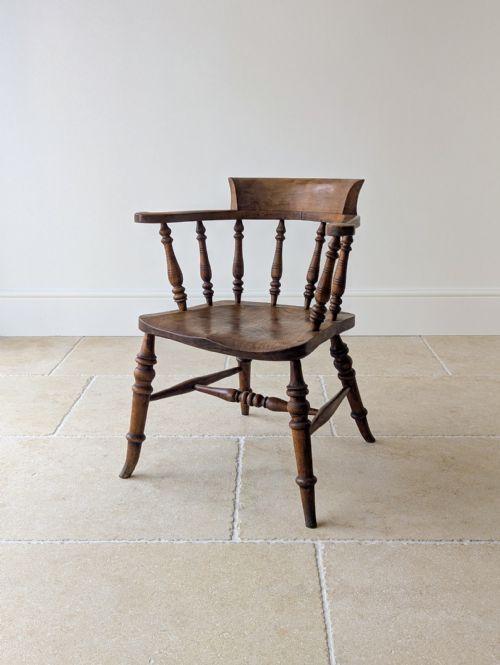
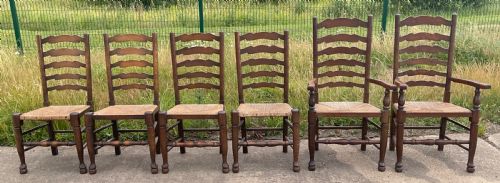
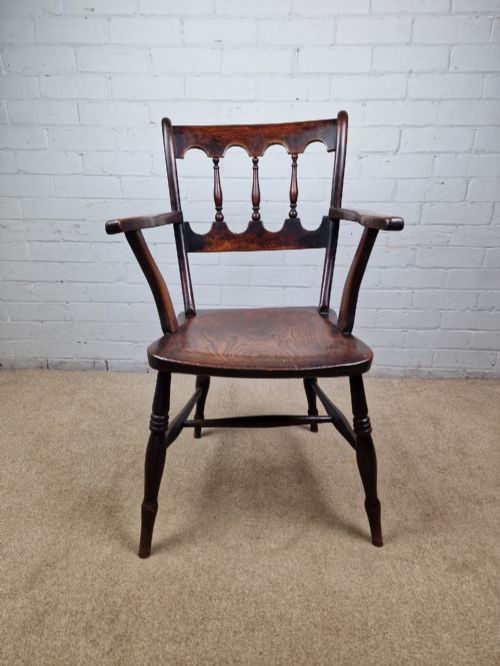
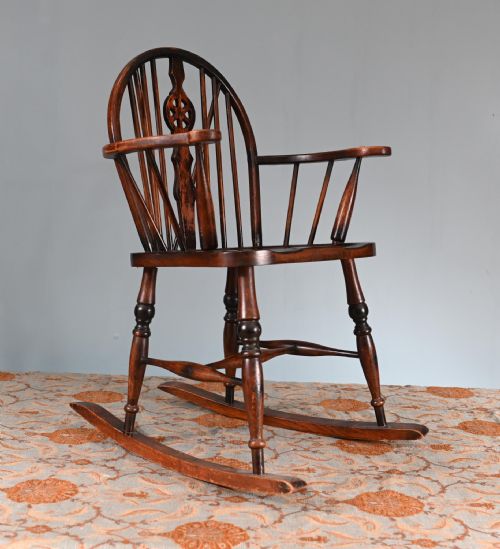
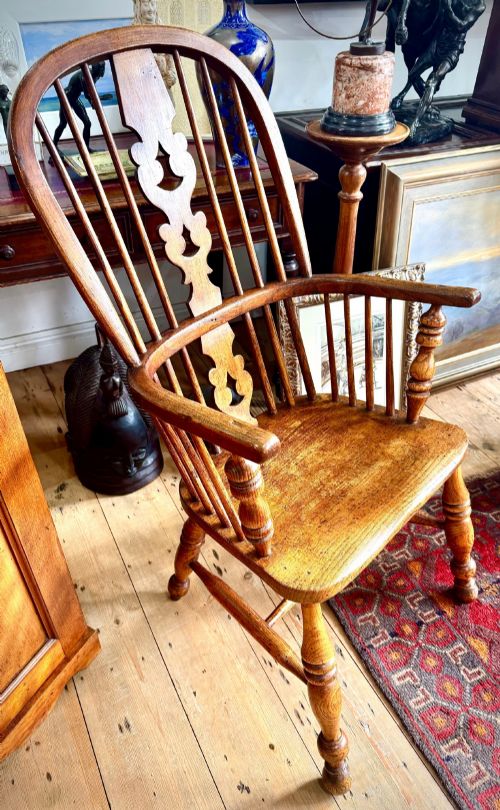
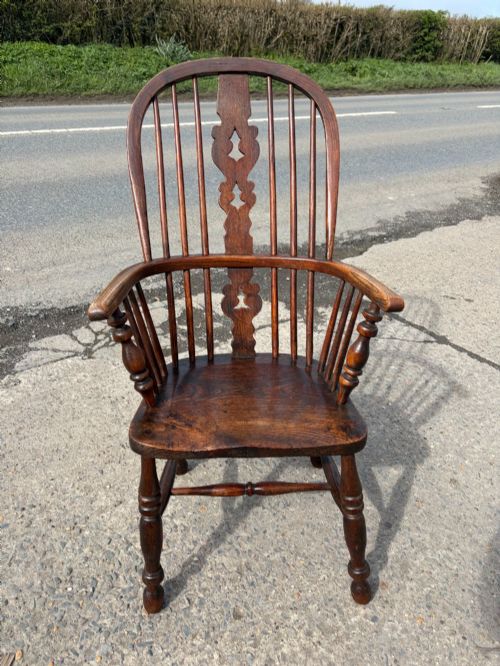
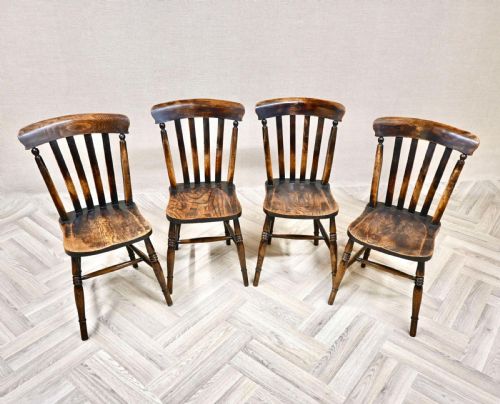
Elm and beech chairs encompass sturdy country seating forms designed for daily utility in kitchens, dining rooms, and farmhouses. You will frequently encounter nineteenth-century Windsor designs, smokers' bows, and ladderback dining chairs alongside chapel and school variants.
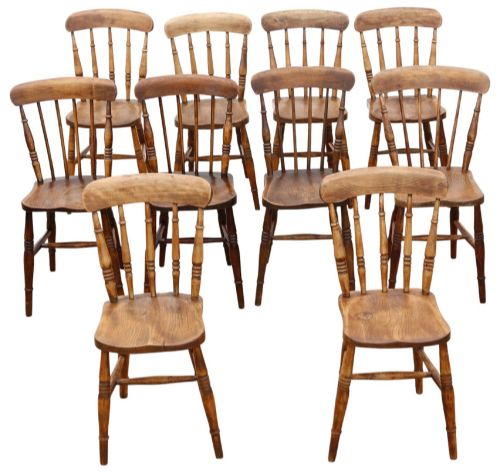
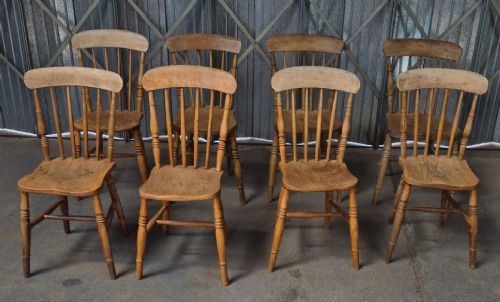
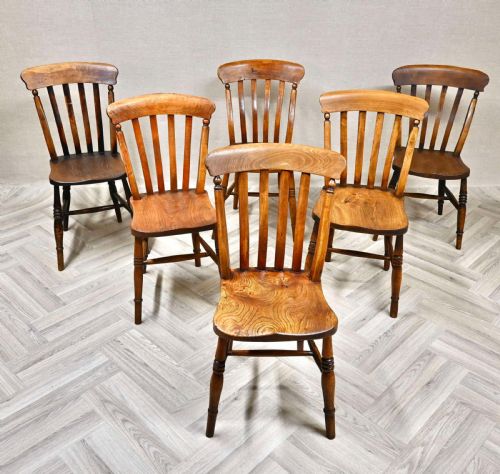
The selection ranges from single desk chairs and carvers to matched sets of ten or twelve dining seats. Harlequin sets appear regularly, bringing together related country forms gathered over time.
Most examples originate from the Victorian and Edwardian periods, stretching from the mid-nineteenth century into the early decades of the twentieth. Regional variations include Thames Valley stick backs and Oxford bar backs.
Materials and construction
Makers utilised elm primarily for seats due to its interlocking grain, which resisted splitting under heavy use. Beech provided strong, flexible timber for turned spindles, legs, and bowed frameworks.
Additional timbers such as ash, alder, and hardwood appear in turnery and framing components. Traditional joinery methods involved wedged tenons, steam bending, and pegged joints to secure the multi-wood structures.
Listings feature periods spanning from the nineteenth century through Edwardian times and into the 1930s, utilising elm, beech, ash, and rush.
Distinctions in quality
Quality rests upon the sculptural depth of the elm seat saddle and the crispness of the beech turnings on the spindles and legs. Well-proportioned Windsor bows and balanced arm attachments denote superior regional carpentry.
The integrity of the timber grain, minimal replacement parts, and the retention of a rich, aged surface patina separate finer examples from standard utility seating.
The Elm and Beech Chairs Glossary
- Windsor chair
- A chair built with a solid wooden seat into which the legs and back spindles are directly dowelled. They frequently feature steam-bent bowed backs.
- Smokers bow
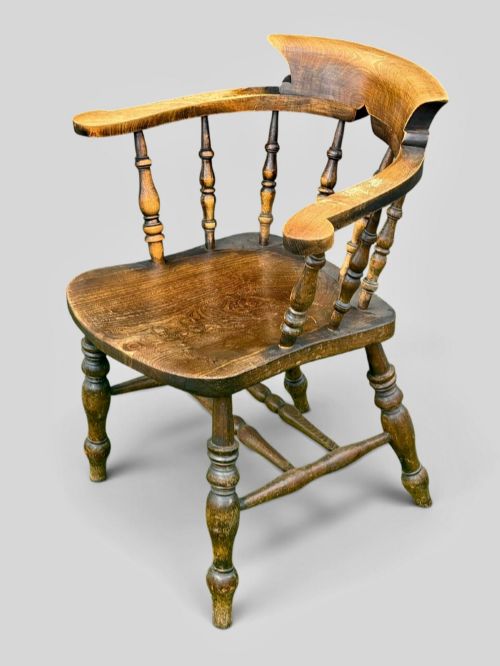
- A low-backed Windsor armchair with a continuous curved armrail, often used in offices or domestic smoking rooms. These pieces typically combine beech turnings with a moulded elm seat.
- Harlequin set
- A collection of chairs that share a similar style, period, or material but were not originally manufactured as a single unified batch. They offer a matched aesthetic with slight individual variations.
- Lath back
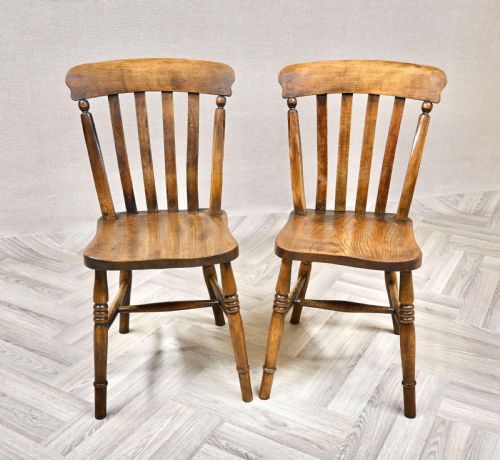
- A chair back featuring flat horizontal wooden slats rather than vertical turned spindles. This form is common in nineteenth-century kitchen and farmhouse seating.
- Stick back
- A minimalist chair design where plain vertical wooden rods form the back support. They provide robust support without elaborate ornamentation.
Elm and Beech Chairs: Frequently Asked Questions
What makes elm and beech work well together?
Elm possesses a tangled, interlocking grain that resists splitting when sat upon, making it the ideal timber for solid chair seats. Beech offers straight, dense fibres that take lathe-turning exceptionally well for slender legs and spindles.
This division of labour allowed nineteenth-century makers to combine the strengths of both native woods into durable seating. The resulting contrast in grain texture also provides subtle visual warmth.
How do I care for antique elm and beech chairs?
Keep wooden chairs away from direct heat sources and drastic humidity swings to prevent the timber from shrinking or splitting. Regular dusting with a dry cloth and occasional application of appropriate beeswax helps maintain the surface.
Avoid commercial silicone polishes, which build up over time and degrade the antique finish. Checking the joints periodically ensures any loose dowels are addressed before structural damage occurs.
Are harlequin sets practical for daily dining?
Harlequin sets provide a cohesive dining arrangement while retaining individual character through subtle variations in turning and seat shape. Because the chairs share fundamental periods, materials, and forms, they sit comfortably around a standard table.
They offer a flexible alternative to uniform dining suites without sacrificing structural integrity. Collectors often appreciate the accumulated history represented within a matched group of gathered chairs.
How can I tell a Windsor chair from a stick back?
Windsor chairs typically feature a solid plank seat with legs and back uprights wedged directly into bored holes. They often incorporate a distinctive bentwood bow or a shaped central splat supporting the armrails.
Stick backs rely on vertical wooden rods inserted into a simpler frame without the shaped central splats or heavy bows found on traditional Windsors. Both styles utilise elm and beech construction methods across nineteenth-century examples.