



Warm Brown Kitchen Chairs
Warm brown kitchen chairs bring rich timber tones and honest construction straight into domestic spaces through nineteenth-century Windsor forms and country dining seats.
Warm Brown Kitchen Chairs
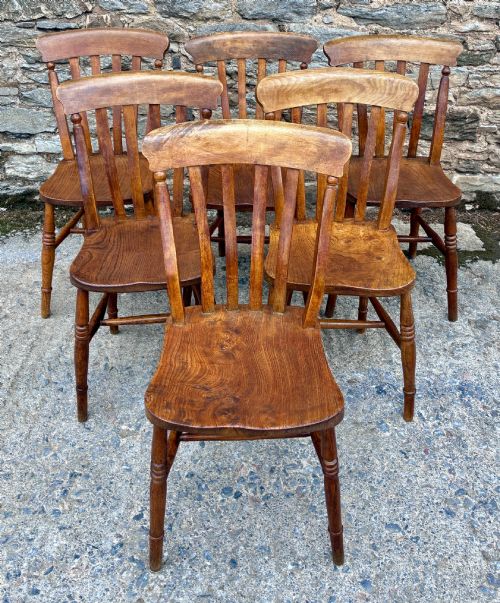
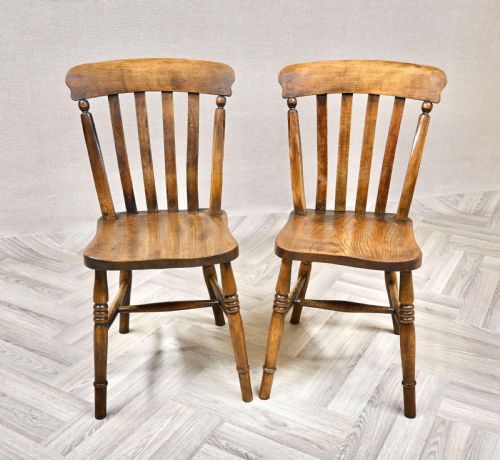
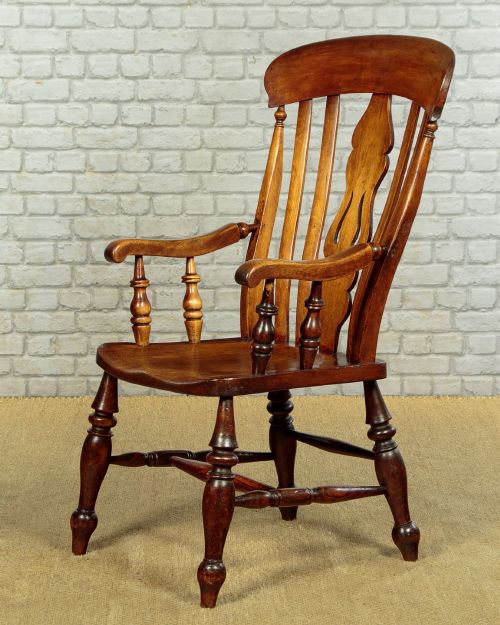
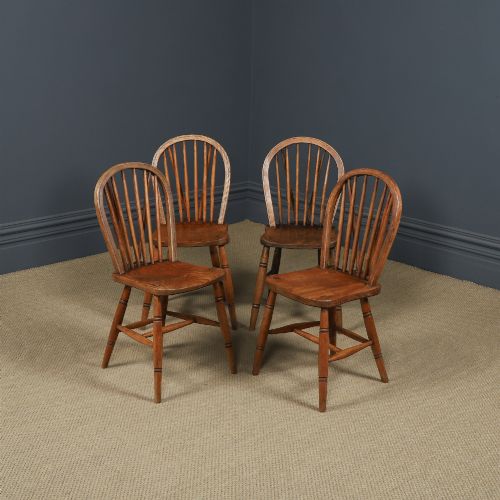
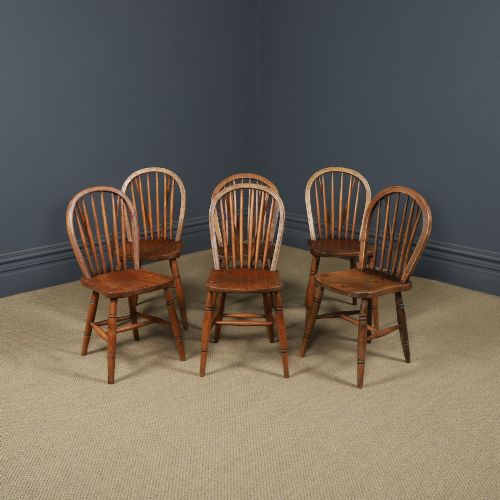
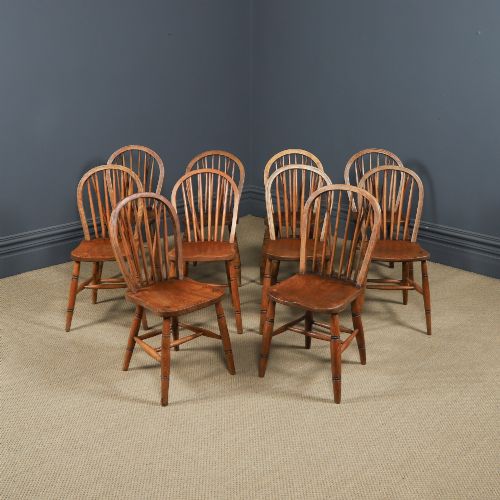
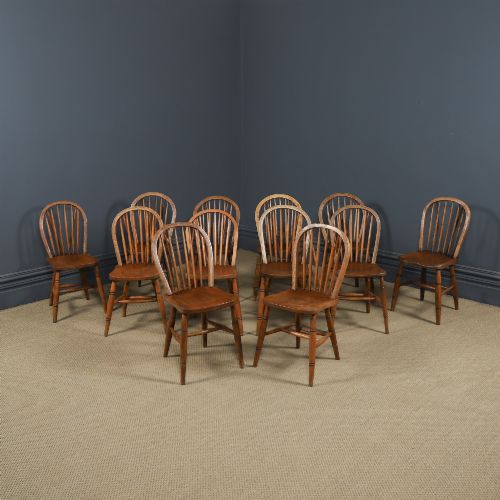
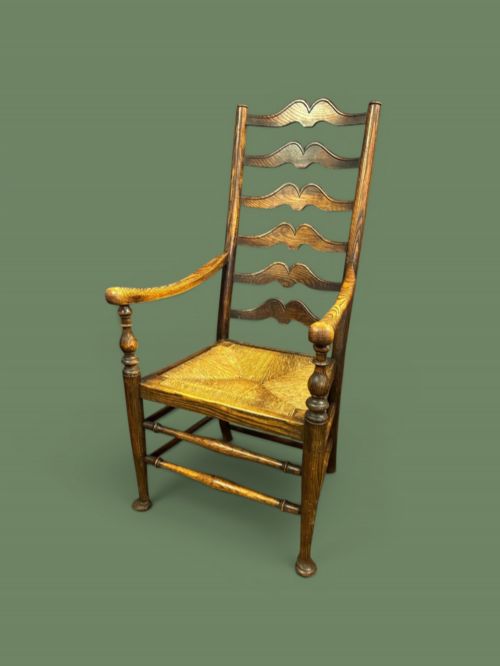
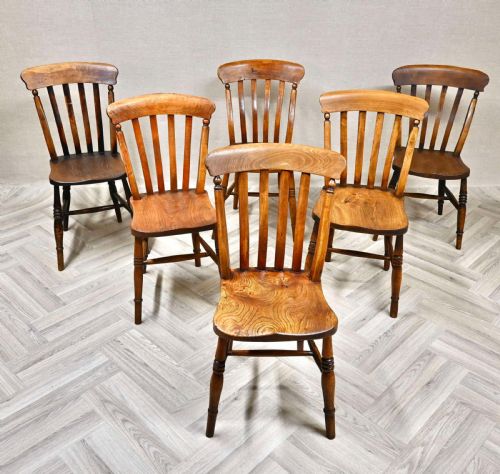
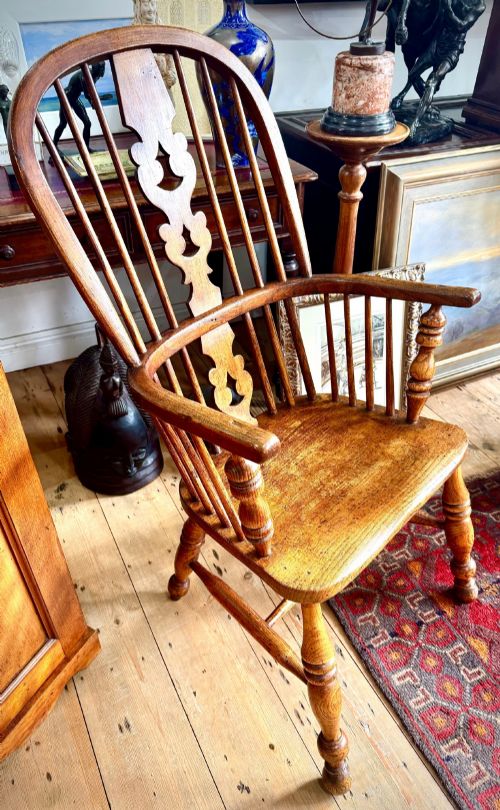
Warm brown kitchen chairs encompass domestic seating shaped by nineteenth-century and early twentieth-century country traditions, utilising timbers aged to deep honey and chestnut hues. These pieces appear primarily as Windsor armchairs and side chairs, alongside ladder-back and lathe-back dining sets designed for everyday utility.
Buyers seeking these chairs encounter regional English country designs alongside French provincial examples, spanning periods from the eighteen-fifties through to mid-century utility production. The selection ranges from single highback armchairs to matched sets of twelve, utilising robust wooden frames suited to dining rooms and kitchens alike.
Materials and Construction
Makers built these chairs using mixed native timbers, frequently combining elm seats with ash, beech, or oak spindles and framework to balance durability with comfort. Selected woods display natural grain variations enhanced by decades of daily use and waxing.
Traditional construction methods relied on turned components, steam-bent hoops, and wedged tenon joints that secured vertical uprights directly into solid wooden seats. Certain regional variants incorporated woven rush inserts within traditional timber frames.
Warm Brown Kitchen Chairs Retail Price Guide 2026
Typical asking prices for warm brown kitchen chairs among the pieces listed under this phrase on Sellingantiques today, from the lower quarter to the upper quarter. They describe what is for sale here now, not the wider market.
Current listings feature solid elm, ash, beech, and oak across nineteenth-century and early twentieth-century periods.
Judging Quality and Character
Quality rests in the visual depth of the timber grain, the tightness of traditional joints, and the survival of original surface patination untouched by modern stripping. Superior examples maintain balanced proportions across spindles and legs without excessive replacement parts.
The distinction between standard utility seating and finer workshop production appears in the sculptural shaping of solid elm saddle seats and the refined turning of arm supports and stretchers. Matching sets command distinct attention due to the difficulty of preserving uniform suites across generations of domestic service.
The Warm Brown Kitchen Chairs Glossary
- Windsor
- A traditional wooden chair featuring a solid carved seat into which the legs and back spindles are directly fitted. This form developed widespread popularity across rural workshops for its sturdy construction.
- Lathe back
- A style of chair back constructed from horizontal slats shaped on a woodturning lathe. These slats provide ergonomic support while maintaining a clean, open profile.
- Rush seat
- A seating surface woven from dried marsh rushes, creating a textured platform supported by wooden rails. This technique appears frequently on traditional ladder-back dining chairs.
- Hoop back
- A continuous curved wooden rail forming the upper back and armrests of a Windsor chair. This piece is typically steam-bent from a single piece of ash or similar resilient timber.
Warm Brown Kitchen Chairs: Frequently Asked Questions
How do I date an old Windsor chair?
Dating relies on examining the turning details of the legs, the thickness and shaping of the solid elm seat, and the method used to secure the back spindles. Earlier examples often show more pronounced saddle-shaped seats and heavier undercarriage turnings.
Changes in timber availability and regional workshop practices across the nineteenth century also help narrow down the production period of individual pieces.
Can I mix different styles of kitchen chairs?
Combining different country kitchen chairs creates a gathered aesthetic that reflects how rural households naturally acquired furniture over generations. Pairing Windsor side chairs with a matching set or an armchair works well around a shared dining table.
Maintaining a consistent palette of warm timber tones ties diverse nineteenth-century forms together cohesively within a modern interior.
How should I maintain wooden kitchen chairs?
Routine maintenance involves dusting with a soft cloth and occasionally applying natural beeswax to nourish the dry timber surface. Avoiding direct placement near heat sources prevents the wood from drying out and cracking.
Checking undercarriage wedges periodically ensures that traditional joints remain stable during daily domestic use.
What is the difference between a carver and a side chair?
A carver refers to an armchair designed with integrated armrests, historically positioned at the head of a dining table for the head of the household. Side chairs lack arms, allowing multiple seats to fit compactly alongside one another.
Both forms frequently share identical spindle designs and timber construction within matched dining sets.