

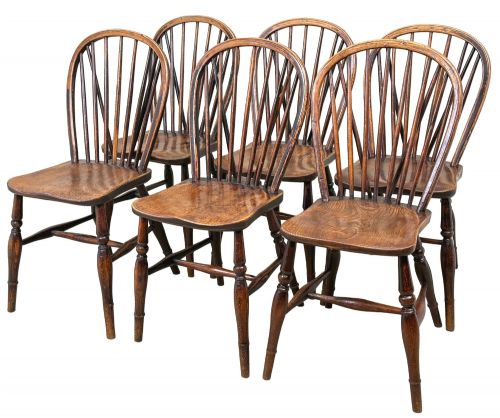


Stick Back Dining Chairs
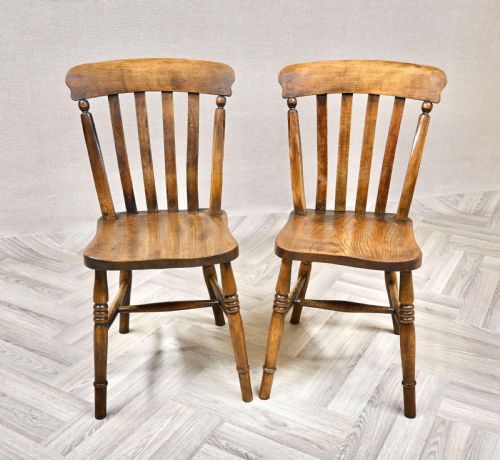
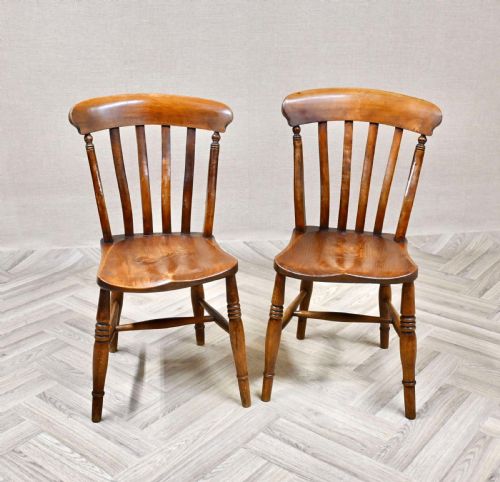
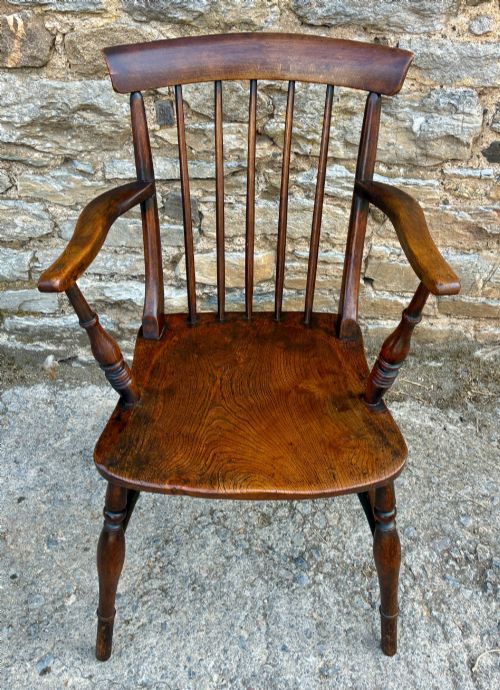
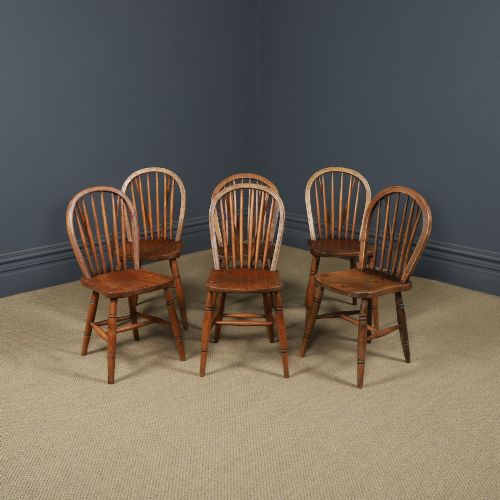
Stick back dining chairs are sturdy country seats featuring upright spindles, offering robust everyday utility around the kitchen table.
Identifying Stick Back Dining Chairs
Stick back dining chairs appear primarily as kitchen and farmhouse dining seating originating from the Victorian period through to the early twentieth century. These pieces encompass English country styles, Thames Valley designs, and mid-century utility forms intended for robust daily use.
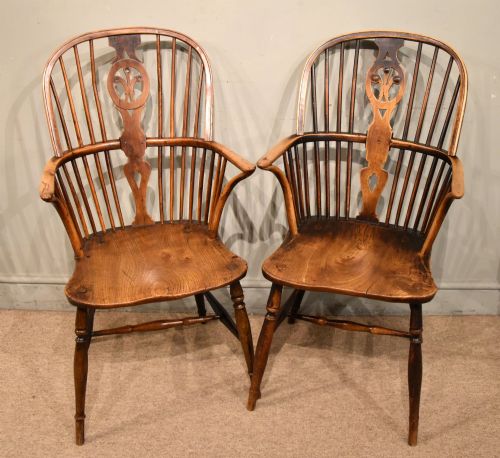
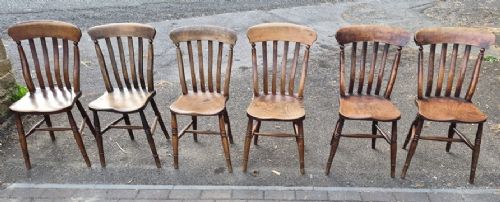
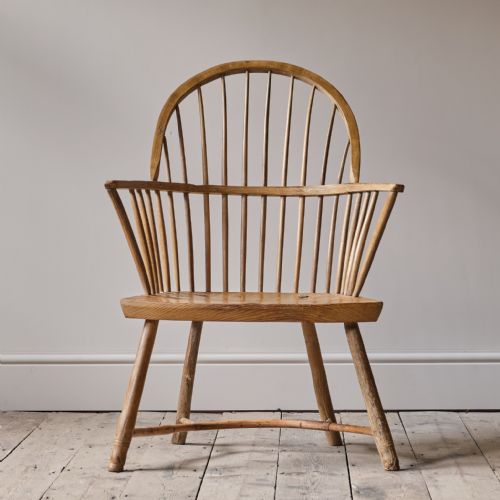
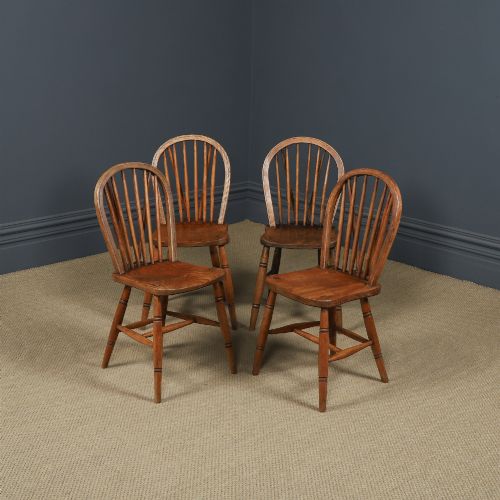
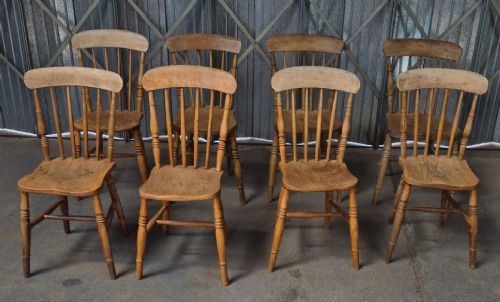
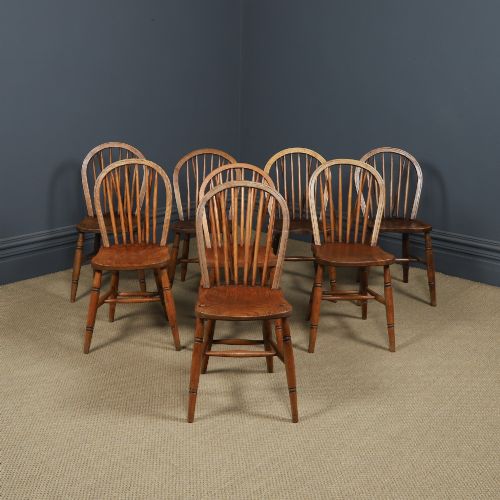
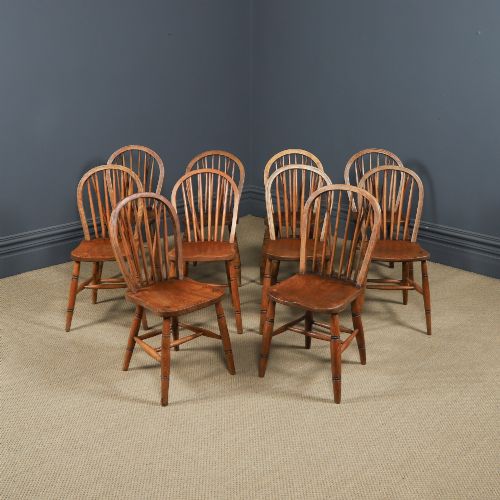
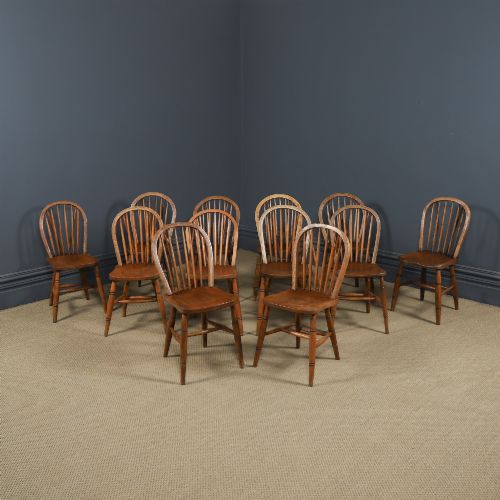
Buyers commonly encounter sets ranging from pairs up to large groups of ten or twelve chairs, frequently built as Windsor variants. The forms include hoop backs, wheel backs, and arched variations designed specifically around wooden seats.
Origins span English country workshops as well as Swedish and American production, reflecting vernacular woodworking traditions. Elm seated models dominate the selection, often accompanied by matching carvers and armchairs.
Materials and Construction
Makers utilised a combination of native timbers, pairing elm for solid, heavily grained seats with ash, beech, or oak for turned legs, stretchers, and slender vertical spindles. This multi-wood construction placed resilient timbers where stress and wear occurred most frequently.
Joinery relied on traditional Windsor framing methods, where turned uprights and stick backs are tenoned directly into thick plank seats. Splayed supports and curved stretchers provided additional structural stability to the underframe.
Retail Price Guide 2026
Typical UK retail prices for stick back dining chairs, calculated from the Sellingantiques database of over a million retail prices indexed since 2003. This retail price guide relies exclusively on Sellingantiques data; no external sources or auction records are used, so the figures do not describe the wider market.
Some nineteenth-century country chairs feature subtle pocket wear on the elm seats from generations of previous diners.
Assessing Build and Proportion
Quality rests upon the selection of timber and the execution of the turned components, where dense elm saddle seats and crisply shaped ash spindles demonstrate superior craftsmanship. Harlequin sets show greater variation in individual chair profiles compared to uniform matched sets.
Proportion and structural integrity distinguish finer examples, particularly where splayed legs and steam-bent hoops retain their original geometry without excessive wear or replacement parts.
The Stick Back Dining Chairs Glossary
- Windsor
- A chair built with a solid wooden saddle seat into which the back and legs are wedged and pinned directly. These chairs developed strong regional variations across the English countryside.
- Hoop back
- A continuous steam-bent wooden bow forming the upper rail and armrests of a chair. This technique allowed makers to create robust, flowing curves from a single piece of timber.
- Wheel back
- A Windsor chair variation featuring a pierced wooden disc resembling a wheel set into the centre of the backsplat. It served both a decorative and a structural purpose.
- Saddle seat
- A thick plank of timber, typically elm, carved into a concave shape for seating comfort. The shaping process accommodated the natural grain and thickness of the wood.
- Harlequin set
- A collection of dining chairs sharing similar styles and materials but gathered together as a matched group rather than being manufactured as one original set.
Frequently Asked Questions
How do I care for elm seats?
Clean wooden surfaces with a soft, dry cloth and apply occasional natural wax to nourish the grain.
Avoid placing chairs near direct heat sources to prevent timber shrinkage and splitting.
Can I mix different chair styles?
Harlequin sets demonstrate that combining slightly varied country chairs around a table creates an authentic historical appearance.
Matching timber types helps maintain visual cohesion across mixed seating groups.
Are these chairs suitable for daily use?
Constructed for robust farmhouse kitchens, these seats are engineered to withstand regular daily dining.
Checking underframe joints periodically ensures they remain stable under constant use.
How are Victorian chairs dated?
Makers relied on specific regional turning patterns, timber combinations, and assembly techniques characteristic of nineteenth-century production.
Examine the wear patterns on the elm seats and the tooling marks beneath for clues to origin.