
Rustic Country Dining Chairs
Rustic country dining chairs bring honest timber and sturdy vernacular design to the table.
What rustic country dining chairs are
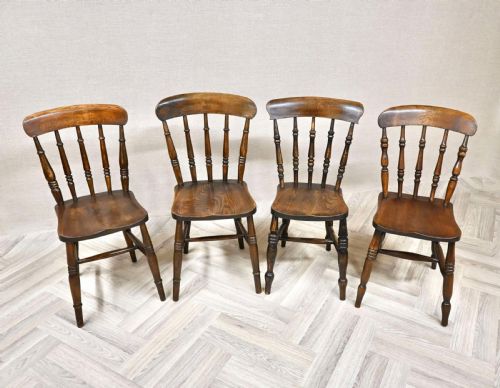
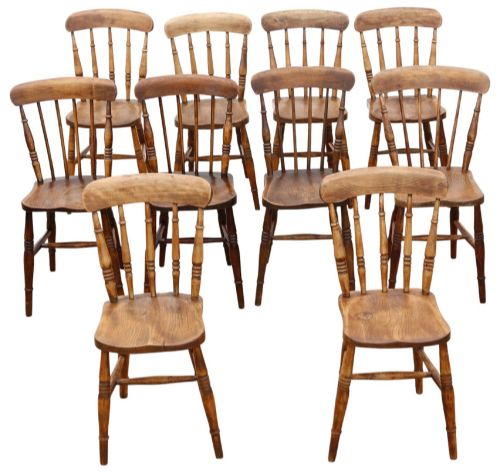
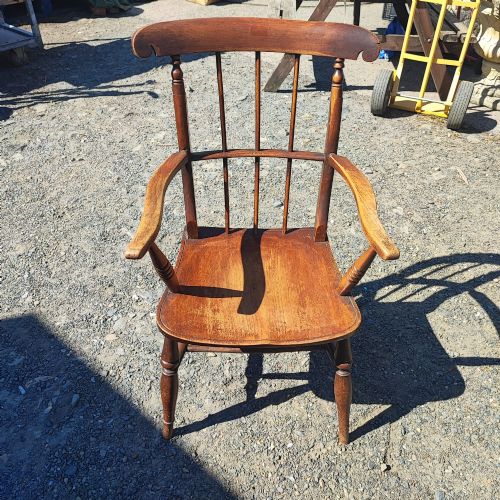
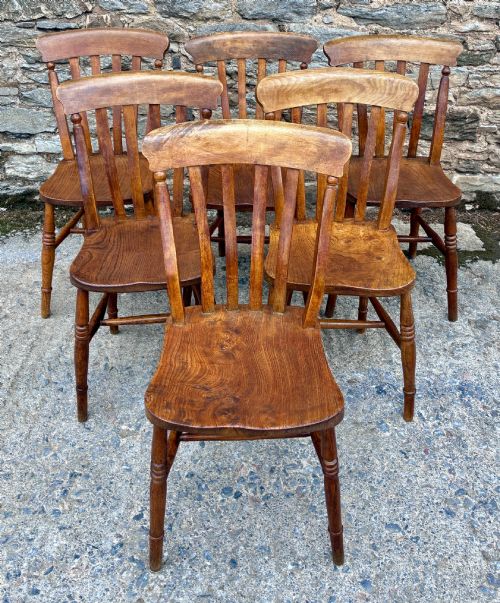
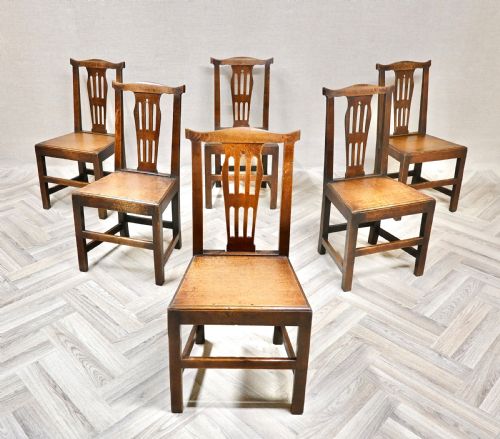
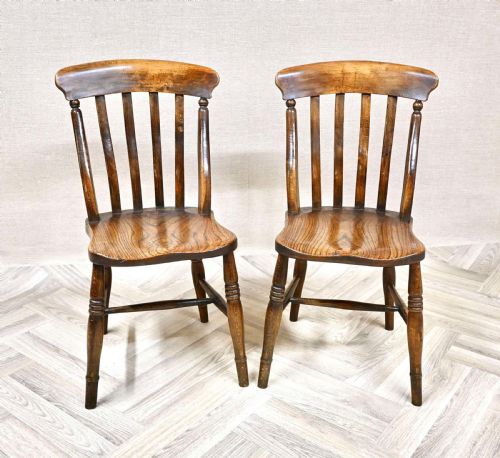
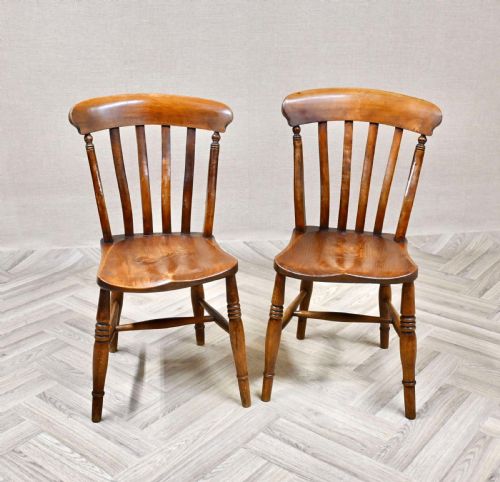
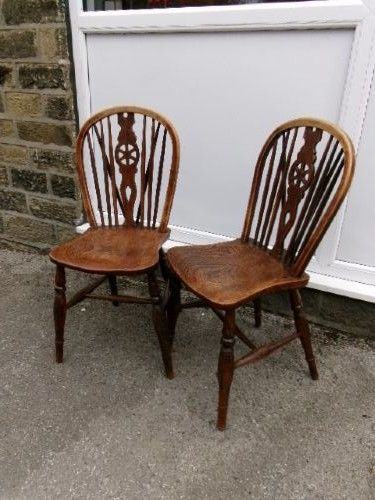
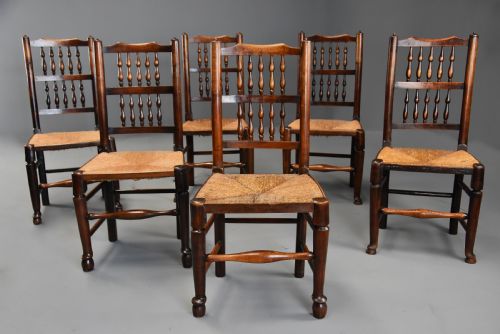
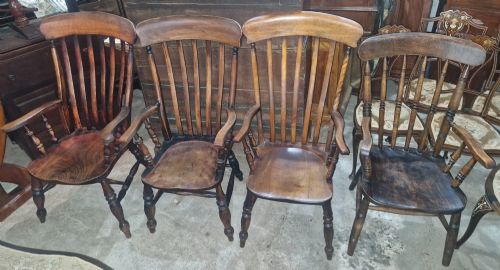
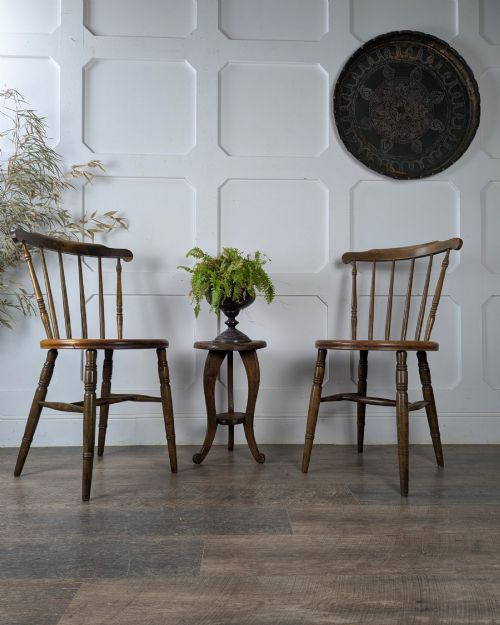
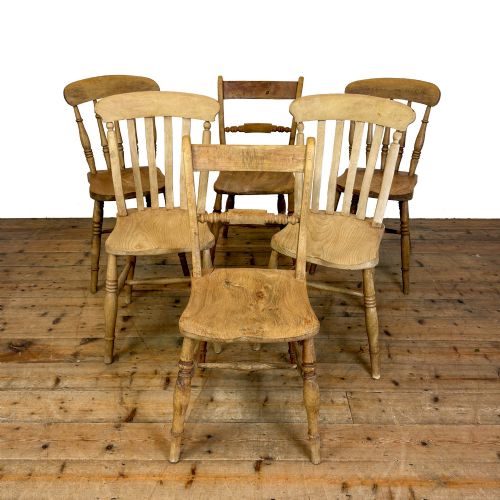
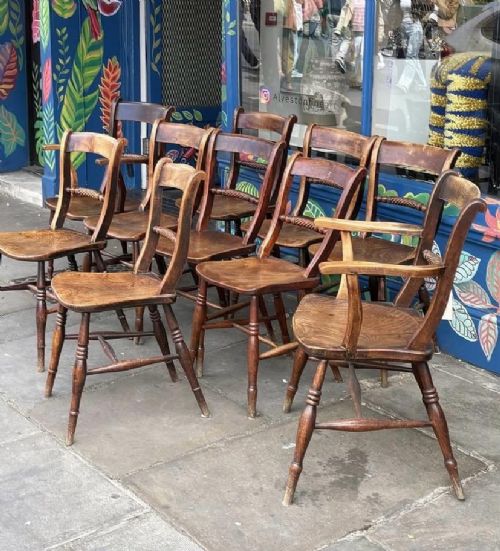
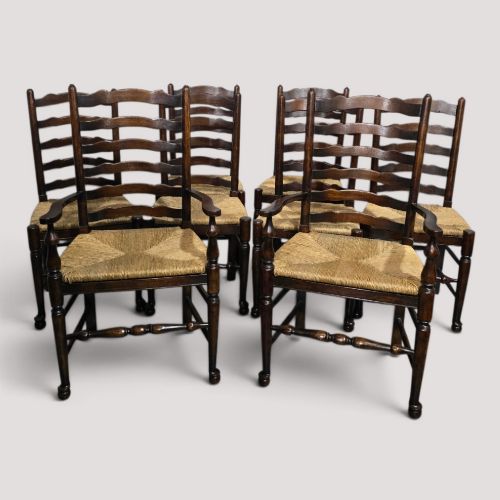
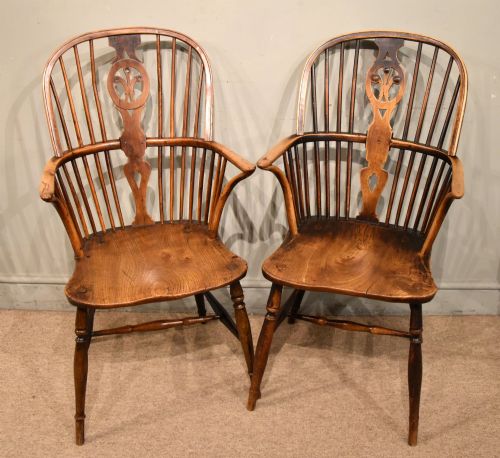
Rustic country dining chairs encompass practical vernacular seating built in regional workshops during the eighteenth and nineteenth centuries. These pieces typically take the form of Windsor chairs with lath backs, stick backs, and pad arms, alongside regional Lancashire forms.
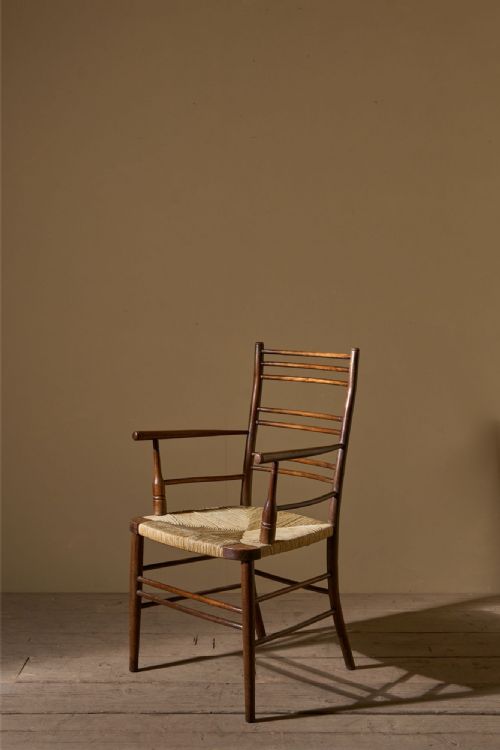
The materials reflect local woodlands, combining elm, beech, oak, ash, and yew with rush seating. Buyers encounter sets of four and six, pairs, and near pairs originating from the Georgian period through to the Victorian era.
English country and rustic farmhouse styles dominate these listings, offering robust construction designed for daily domestic use. The seating prioritises straightforward utility over courtly ornamentation, suiting both traditional and contemporary interiors.
How they were made
Maker-joiners utilised solid native hardwoods, turning spindles on lathes and bending wood through steam to form continuous back rails and bows. Seats were frequently saddled from single thick planks of elm to provide ergonomic comfort.
Construction relied on traditional wedged tenons and mortise joints, binding the components securely without metal fixings. Rush was woven tightly around wooden frames to create supportive, textured seats on specific regional variants.
Retail Price Guide 2026
Typical UK retail prices for rustic country dining chairs, calculated from the Sellingantiques database of over a million retail prices indexed since 2003. This retail price guide relies exclusively on Sellingantiques data; no external sources or auction records are used, so the figures do not describe the wider market.
Many elm seats still bear the deep saddle depressions shaped by generations of household diners.
What varies in quality
The distinction between standard utility seating and finer examples rests on the selection of timber and the articulation of turned elements. Richly figured elm seats and well-balanced spindle turnings elevate a set above plain utilitarian production.
Uniformity across a matched set commands greater interest than assembled near pairs, though matched sets of six remain scarce in vernacular furniture. The preservation of original surface patination and honest wear marks the difference between a sympathetic survival and a heavily restored piece.
The Rustic Country Dining Chairs Glossary
- Windsor chair
- A wooden chair built with a heavy solid timber seat into which the legs and back spindles are separately inserted. This construction method creates a sturdy, lightweight frame characteristic of country workshops.
- Lathback
- A chair back featuring a central horizontal wooden slat, or lath, set between vertical spindles. This design provides robust lumbar support in nineteenth-century kitchen seating.
- Stick back
- A vernacular chair style where simple turned or cleft wooden rods form the backrest. These rods are tenoned directly into the seat and top rail.
- Lancashire chair
- A regional seating type associated with the North West of England, often featuring high backs and rush seating. These chairs combine eighteenth-century proportions with practical vernacular durability.
Frequently Asked Questions
What defines rustic country dining chairs?
These chairs are vernacular wooden seats built in regional British workshops using native timbers like elm, beech, and ash. They prioritise functional domestic utility over formal stylistic conventions.
Forms include Windsor chairs with lath or stick backs, alongside regional ladderback and Lancashire types. Their honest construction makes them durable elements for everyday dining.
How do I date these chairs?
Dating relies on construction methods, wood selection, and wear patterns spanning the eighteenth and nineteenth centuries. Georgian examples often display lighter proportions and deeper elm saddles.
Victorian pieces tend toward heavier turnings and higher backs, such as pad arm Windsor designs. Comparing the joinery and turning styles helps establish the period.
Are matched sets common?
True matched sets of four or six are unusual in vernacular furniture because country chairs were made individually or in small batches. Buyers frequently encounter pairs or near pairs assembled over time.
Near pairs share similar forms and materials while exhibiting minor variations in turning or spindle count. These groupings offer practical seating options for larger dining tables.
How do I care for elm and beech?
Solid hardwoods respond best to stable indoor humidity and occasional applications of beeswax to nourish the dry timber. Avoid placing them near direct heat sources that cause wood to shrink or split.
Gentle dusting preserves the accumulated surface patination. Natural movement in old timber is expected and forms part of the history of country furniture.