
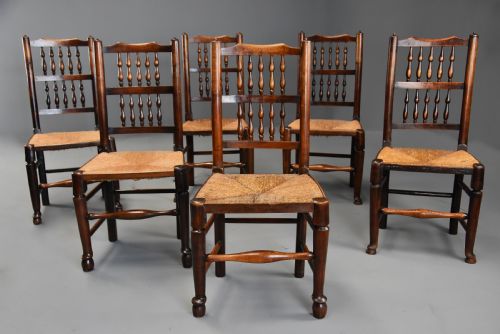
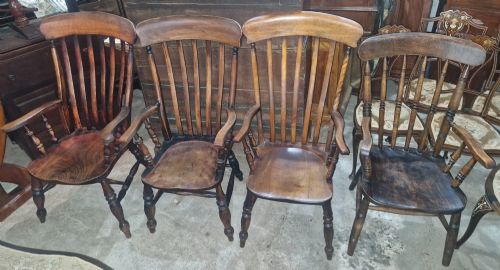
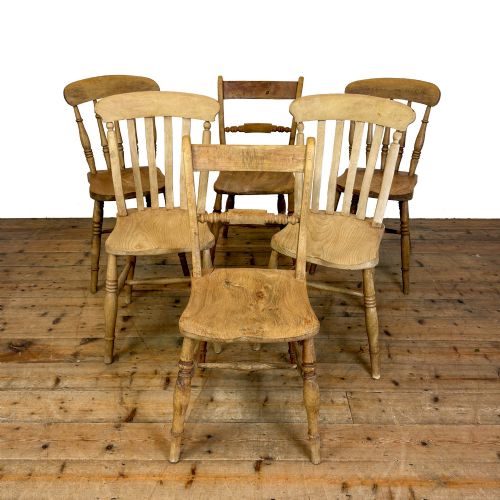
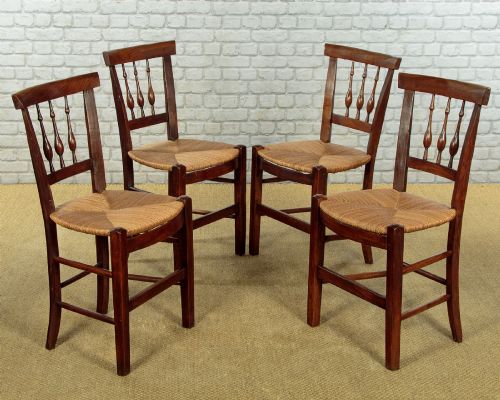
Traditional Farmhouse Seating
Traditional farmhouse seating brings honest vernacular utility into daily life, offering sturdy timber forms shaped by generations of practical domestic use.
Traditional Farmhouse Seating
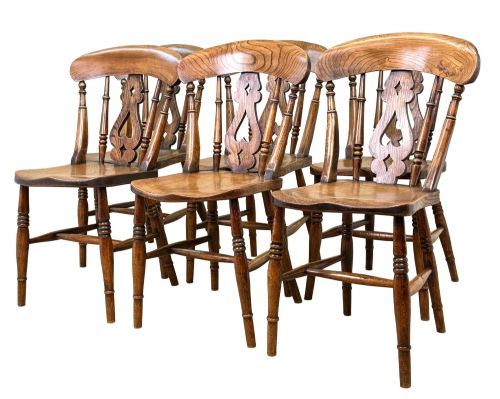
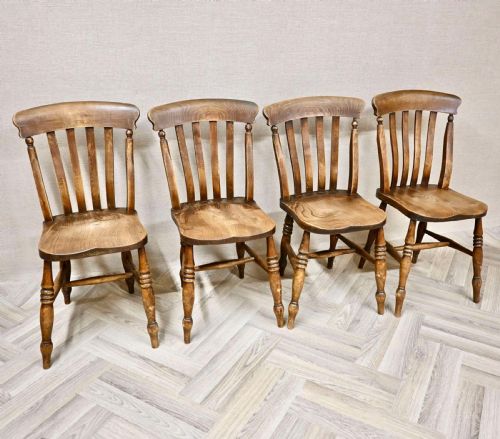
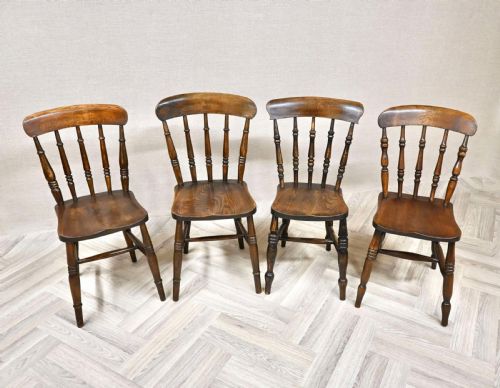
Traditional farmhouse seating encompasses practical dining chairs, armchairs, benches, and stools designed for robust daily use in domestic kitchens and country homes. These pieces predominantly date from the nineteenth century into the early decades of the twentieth century, reflecting utilitarian country craftsmanship from the Victorian and Edwardian eras.
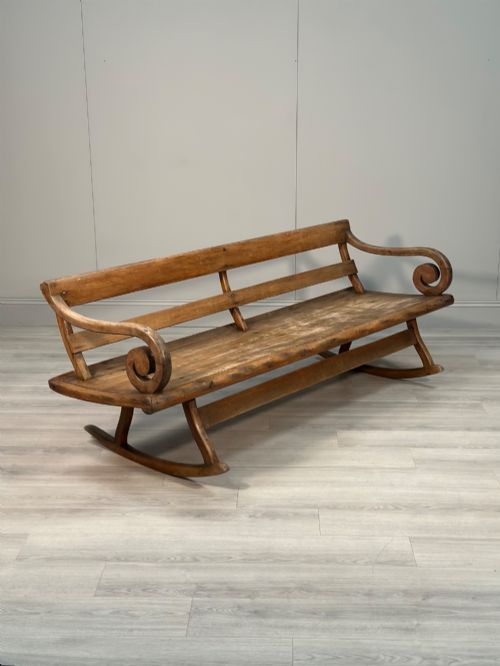
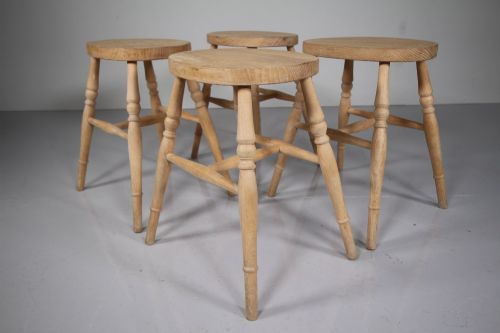
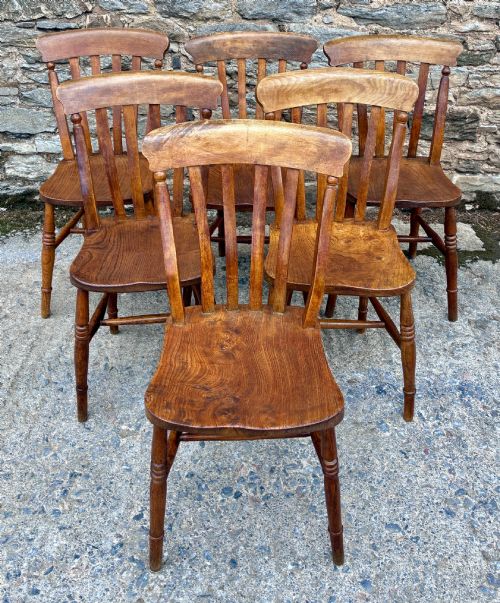
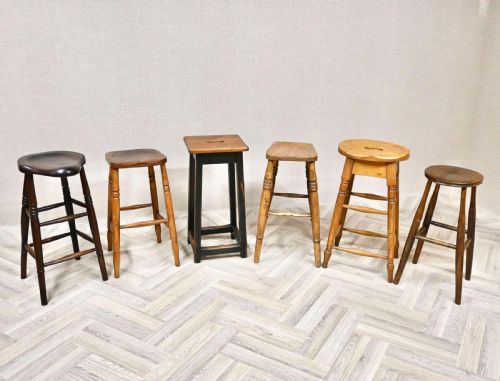
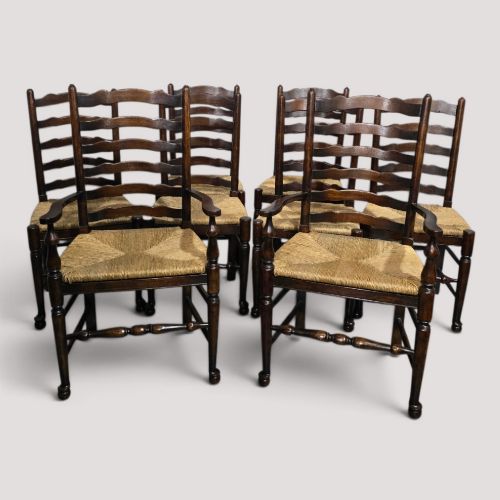
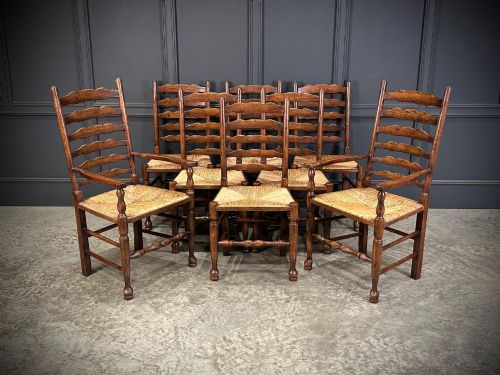
The selection ranges from single pieces to matched sets of six or eight, alongside longer benches and tall bar stools. Common forms include Windsor chairs with turned spindles, ladder backs, and rush-seated stools, all built to serve communal dining and kitchen tasks.
Materials and construction
Makers utilised native hardwoods such as elm, ash, beech, oak, and yew, often combining multiple timbers within a single chair to exploit the specific strengths of each wood. Elm frequently formed solid, sculpted seats, while ash and beech provided flexible strength for turned spindles and steam-bent bows.
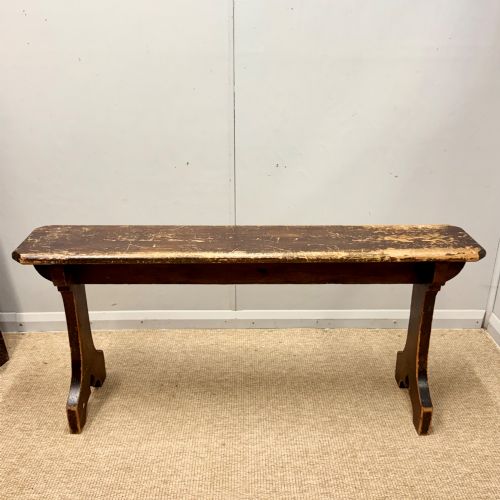
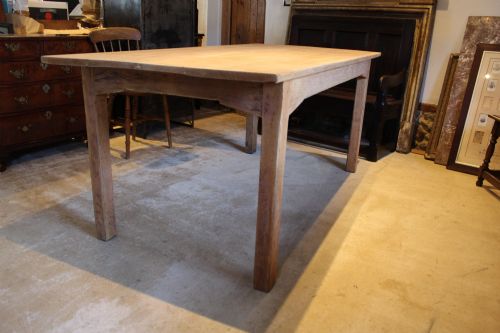
Joinery relied on traditional methods including wedged tenons, turned stretchers, and pegged joints to ensure rigidity under heavy daily strain. Rush was woven tightly onto frames for flexible seating surfaces, while larger tables and benches utilised heavy solid pine and oak.
Several nineteenth-century chairs arrive with double stretchers beneath, built extra sturdy for diners who evidently leaned back rather too vigorously.
Distinctions in quality
Quality rests upon the integrity of the timber selection and the retention of original surfaces, particularly where decades of handling have produced a deep, honest patina. Superior examples maintain balanced proportions, tight joints, and authentic components without excessive replacement parts.
Sets vary according to uniformity and completeness, where matching harlequin groupings differ from cohesive sets produced together in regional workshops. The finesse of turning on spindles and the depth of sculpted saddle seats further distinguish standard utility pieces from finer vernacular items.
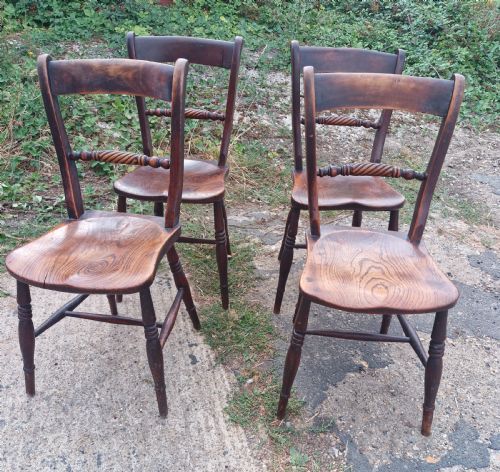
Worksop
The Traditional Farmhouse Seating Glossary
- Windsor chair
- A wooden chair constructed with a solid sculpted seat into which the legs and back spindles are directly tenoned. The back is formed by a steam-bent bow or comb piece.
- Ladder back
- A chair back constructed with horizontal slats between two upright posts. These slats are typically curved for comfort.
- Rush seat
- A seating surface woven from dried marsh rushes twisted into cord. This traditional method provides a resilient and slightly flexible seat.
- Vernacular
- Objects designed by local tradesmen for practical function rather than academic architectural styles. These pieces reflect regional traditions and available materials.
- Patina
- The surface sheen and colour developed on timber over decades of handling, exposure to light, and polishing. It serves as an indicator of age and honest use.
Traditional Farmhouse Seating: Frequently Asked Questions
How do I care for antique wooden seats?
Keep timber furniture away from direct heat sources and sudden humidity changes to prevent wood from splitting or joints from drying out. Apply traditional beeswax occasionally to nourish the surface and maintain the natural finish without building up heavy synthetic layers.
Regular dusting with a soft, dry cloth protects the patina from abrasion. Avoid modern silicone polishes, which can penetrate open-grained woods and damage the historic surface over time.
What is a harlequin set of chairs?
A harlequin set consists of dining chairs that are closely related in style, period, and material, but were not originally manufactured together as a single batch. These groupings were often assembled later by collectors or dealers to create a matching dining arrangement around a table.
Such sets share common design elements like ladder backs or Windsor profiles, offering a cohesive country aesthetic while displaying subtle individual variations in turning and grain.
Can I use these benches for everyday dining?
Solid pine and oak benches from the nineteenth and early twentieth centuries were built for heavy domestic labour and daily household dining. Their robust construction handles regular modern seating without difficulty.
Ensure floor surfaces are even to prevent rocking, as historic timber feet can wear unevenly over centuries of use on flagstone or uneven floors.
How do I identify a nineteenth century Windsor chair?
Nineteenth-century Windsor chairs typically feature a saddle-shaped elm seat, turned ash or beech spindles, and characteristic central splats such as lyre or pierced designs. Construction relies on visible wedged tenons where the back uprights pass straight through the seat.
Look for evidence of hand-turned components and traditional scribe marks left by the maker during assembly, which separate authentic period work from later reproductions.