
Vintage Country Kitchen Chairs
These vintage country kitchen chairs bring domestic warmth to a room, offering sturdy utility shaped by regional British vernacular traditions.
Vintage Country Kitchen Chairs
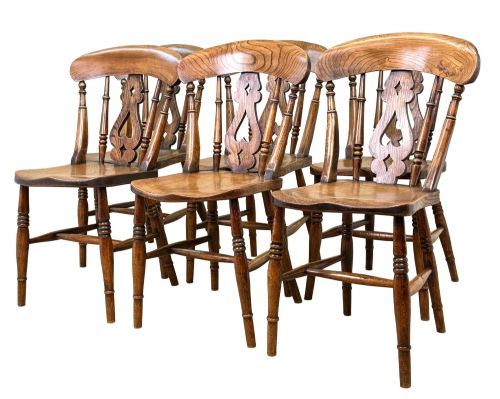
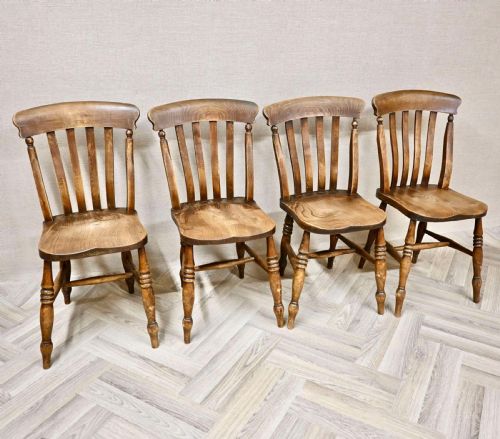
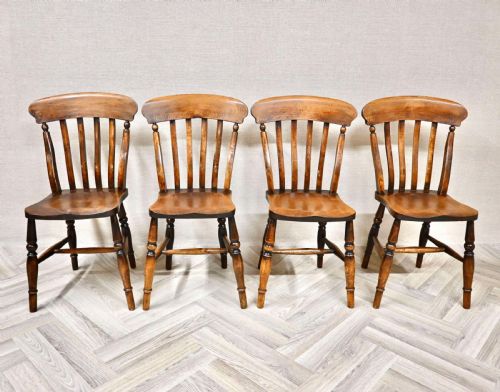
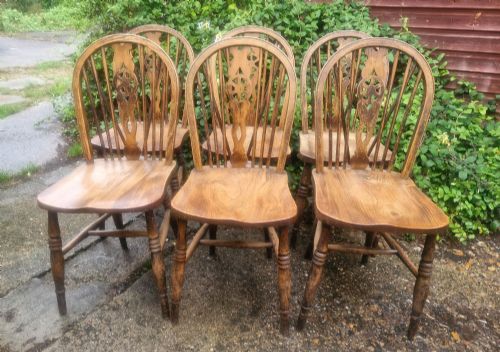
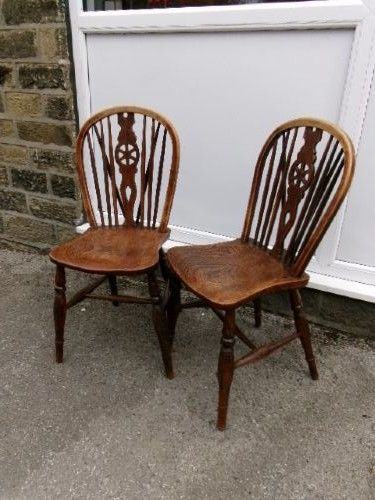
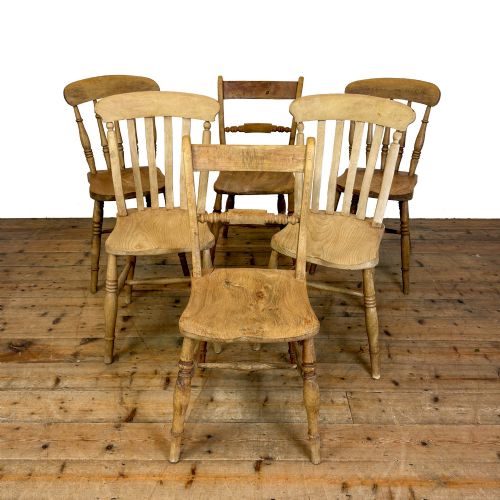
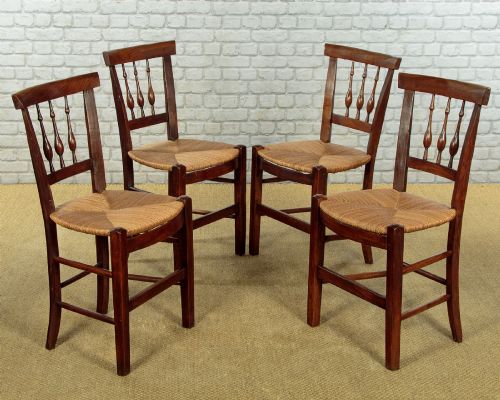
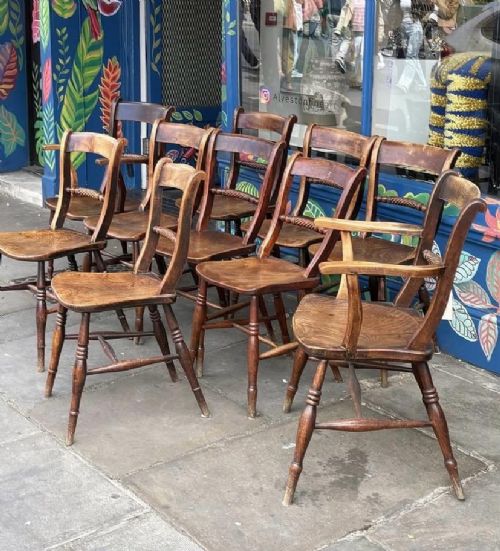
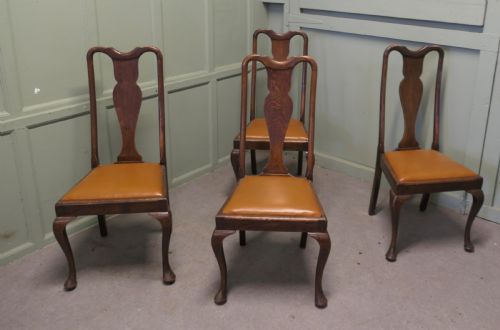
Vintage country kitchen chairs encompass a variety of seating forms designed for practical use, with Windsor chairs representing the most common type encountered on this page. These pieces appear in single items, pairs, and matched or harlequin sets dating from the nineteenth century through the early twentieth century.
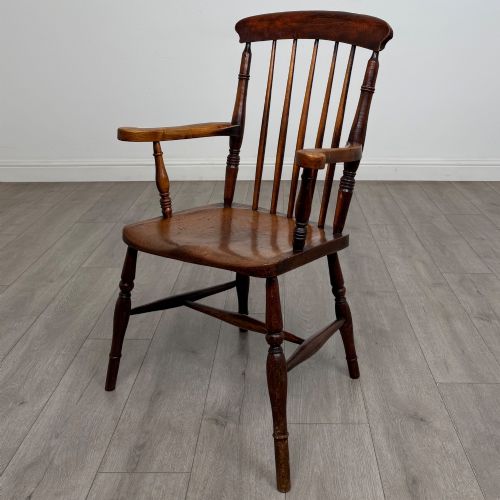
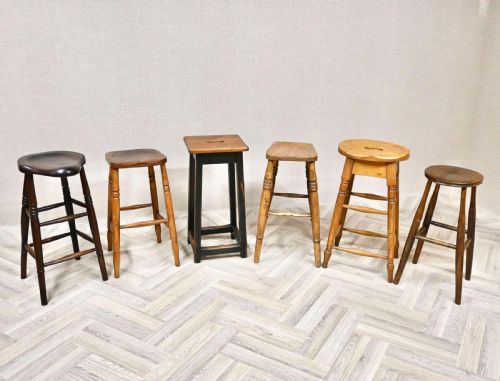
The selection ranges from low side chairs and highback armchairs to bar stools, settles, and benches. Styles draw on English country, Victorian, rustic farmhouse, and Edwardian traditions, reflecting local vernacular cabinet-making across regions such as the Thames Valley and Lancashire.
Materials and Construction
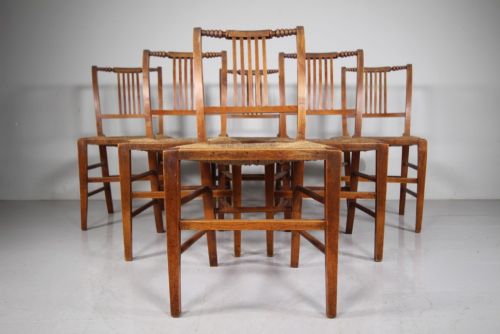
Carpenters relied on native hardwoods for strength and resilience, combining elm for sculpted seats with ash, beech, oak, and yew for spindles, hoops, and legs. Pine also appears in benches and settles, while rush provides traditional seating material for specific ladderback designs.
Construction techniques include steam-bending timber for curved hoop backs and securing turned legs directly into thick wooden seats. Windsor designs utilise wedged tenon joints, creating a rigid frame that withstands daily domestic service.
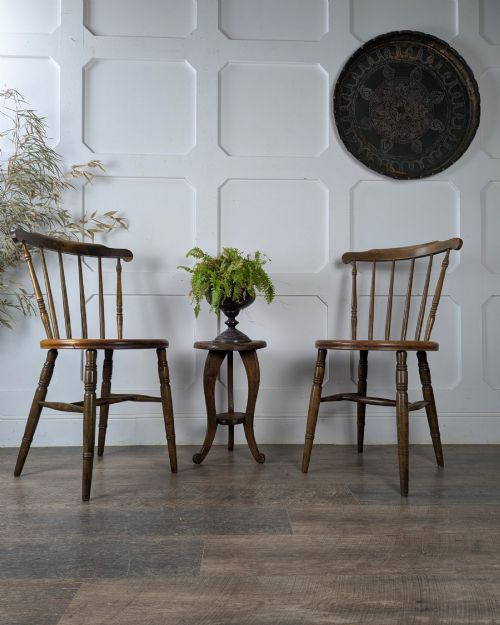
Penny chairs provided durable seating for rural pubs, where patrons allegedly paid a copper coin for their spot by the fire.
Distinctions in Standard
Quality rests upon the integrity of the timber and the harmony of the proportions, particularly in sculpted seats and turned spindles. Examples retaining their original surface patination demonstrate superior preservation compared to those stripped or heavily refinished.
Consistency within a set defines higher value, as harlequin groupings require careful matching of scale and timber grain. The precision of the turning work on legs and stretchers further separates standard utility pieces from finer vernacular outputs.
The Vintage Country Kitchen Chairs Glossary
- Windsor chair
- A wooden chair built with a thick solid seat into which the legs and back sticks are inserted directly. This form relies on a bow or hoop back for structural support.
- Harlequin set
- A collection of dining chairs that match in general style, period, or material but vary in minor details. Such sets were often assembled over time from individual pieces.
- Stick back
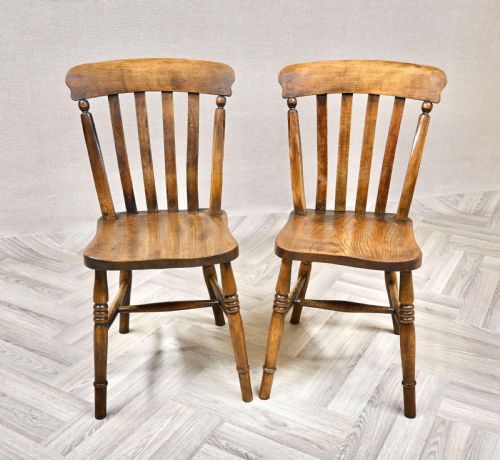
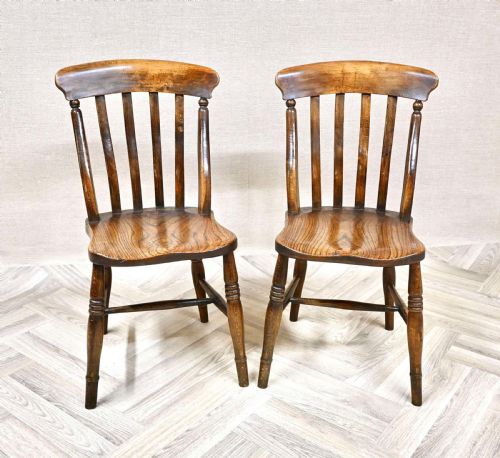
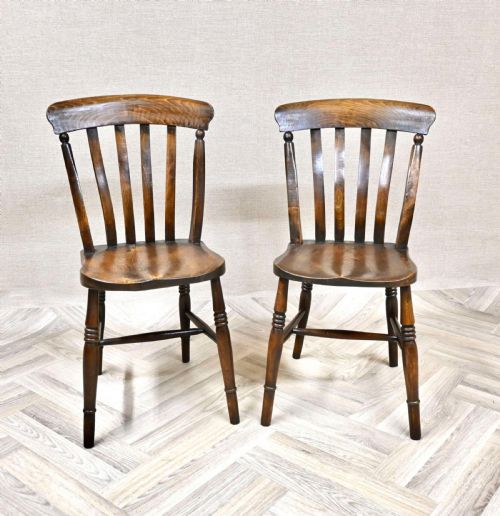
- A chair design featuring plain turned vertical spindles supporting the upper back rail. These members are tenoned straight into the seat.
- Ladderback
- A chair style characterised by horizontal slats set between two upright rear posts. These backs often accompany rush seating.
- Settle
- A wooden bench featuring a high solid back to block draughts and enclosed arms. They frequently stood by farmhouse fireplaces.
Vintage Country Kitchen Chairs: Frequently Asked Questions
How do I care for antique wooden kitchen chairs?
Keep wooden seating away from direct heat sources and sudden temperature shifts to prevent the timber from splitting. Feed the dry grain occasionally with a suitable wax polish rather than modern silicone sprays.
Check the joints periodically for movement, as central heating dries out traditional animal glues. Gentle handling preserves the original surface patination built up over generations of domestic use.
What is the difference between a Windsor and a stick back?
A Windsor chair typically incorporates a steam-bent bow or hoop that forms the arms and back in one continuous curved piece. These designs often include a central splat for additional back support.
Stick backs rely purely on vertical turned spindles rising to a horizontal top rail without a bentwood hoop. Both share the solid carved wooden seat typical of country vernacular seating.
Are harlequin sets practical for daily dining?
Harlequin sets work well for everyday dining provided the seat heights and overall proportions match reasonably closely. Mixing individual chairs of the same period creates an informal seating arrangement suited to farmhouse tables.
Checking dimensions carefully ensures that chairs fit comfortably beneath the table apron and around the perimeter. The slight variations in turning and grain add visual character to a dining space.
How can I date a country kitchen chair?
Dating relies upon examining tool marks, timber selection, and construction methods such as the shape of the seat saddle and leg turnings. Early nineteenth-century examples often feature deep, hand-sculpted elm seats and heavier undercarriage turnings.
Later Victorian and Edwardian pieces tend to show more standardised machine machining and lighter scantlings. Comparing the wear patterns around the foot rails also offers clues to the age of the piece.