

Antique Ladder Back Chairs
These antique ladder back chairs bring sturdy joinery and rhythmic horizontal slats to a room, offering practical seating rooted in country and formal traditions.
Antique Ladder Back Chairs
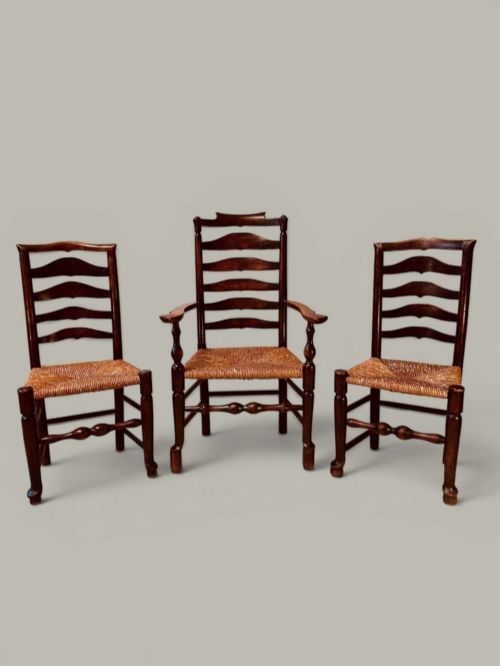
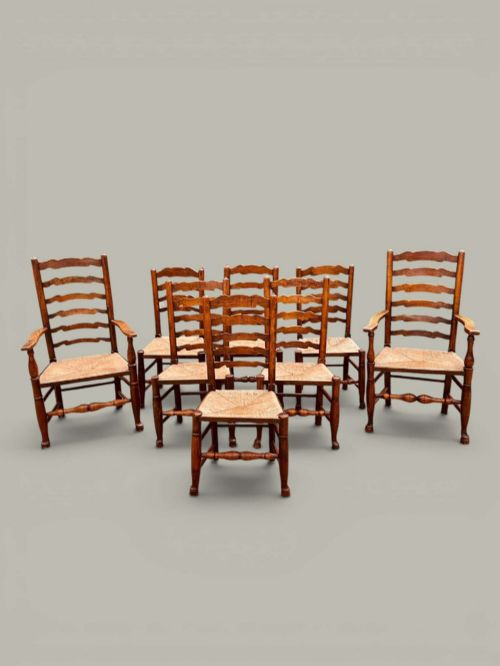
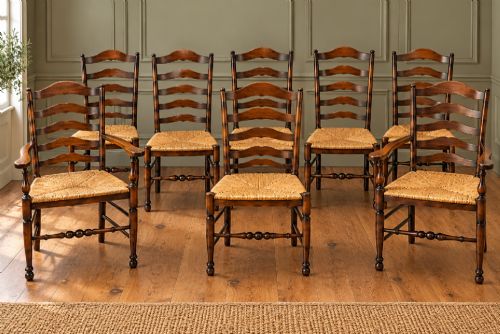
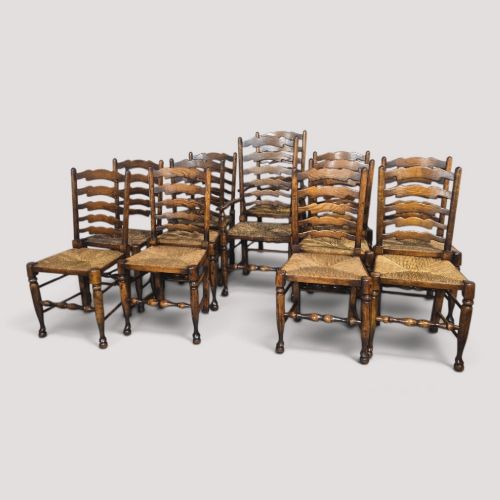
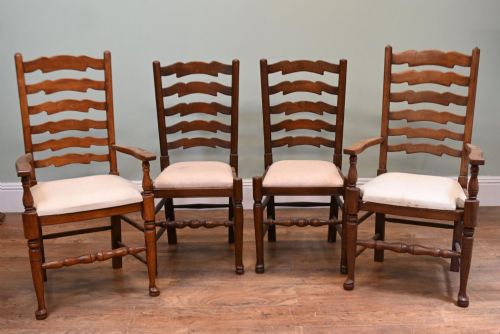
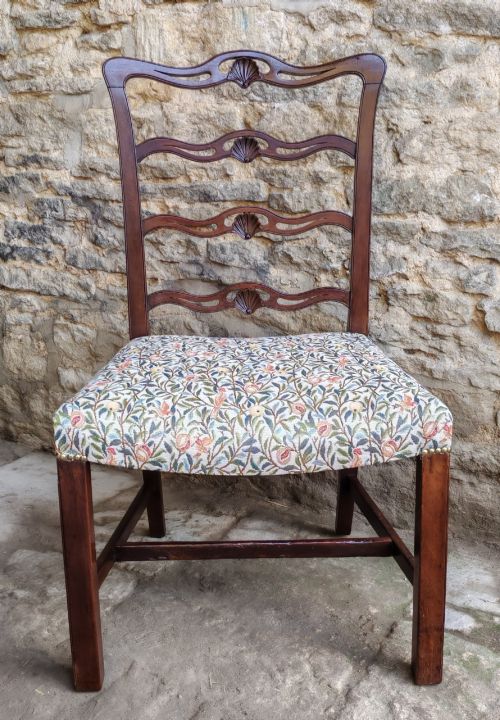
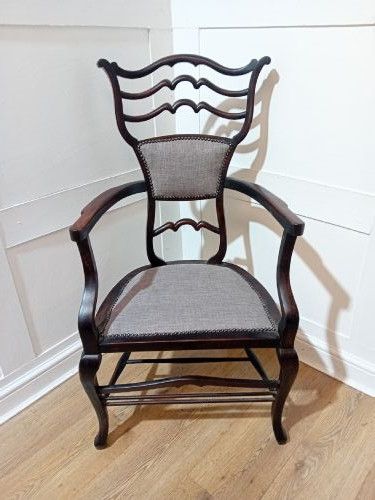
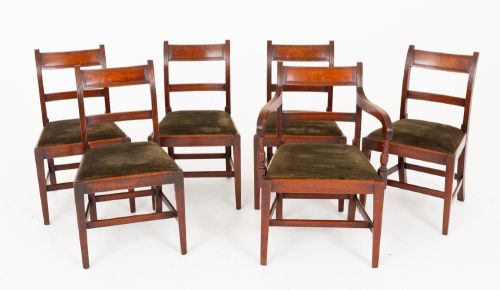
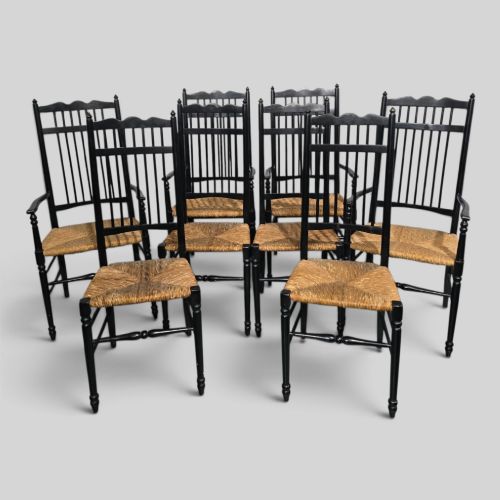
Antique ladder back chairs appear across listings as single dining chairs, carver armchairs, and matching sets ranging from pairs up to twelve pieces. These items span English Country, French Provincial, Regency, and Georgian styles, serving functional roles around dining tables and in kitchens.
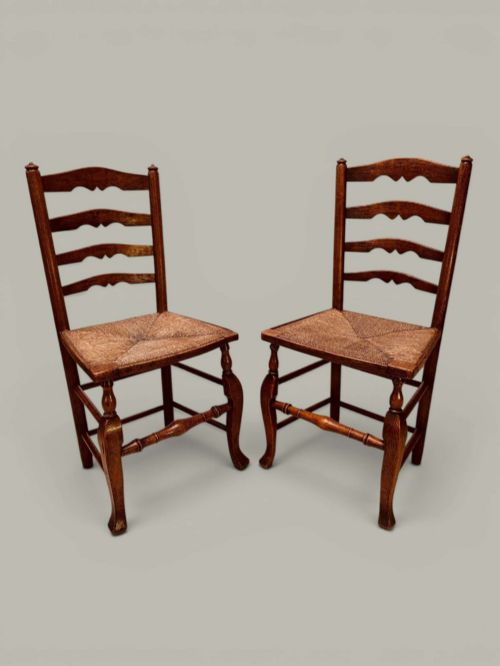
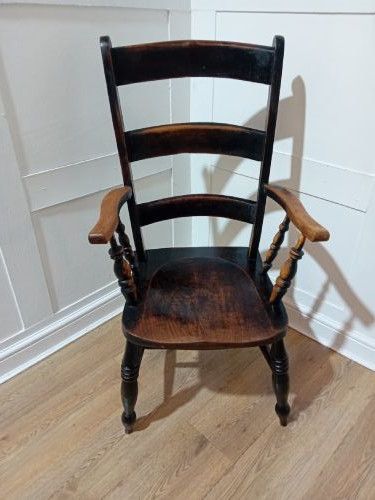
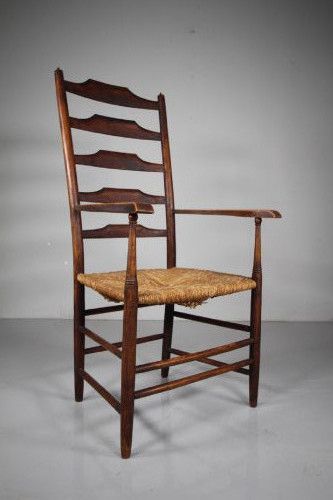
The format relies on upright rear posts connected by a series of horizontal wooden rails, known as ladders, graded in curve or width. Examples recorded in the inventory stretch from Georgian periods through Victorian times and into the early twentieth century.
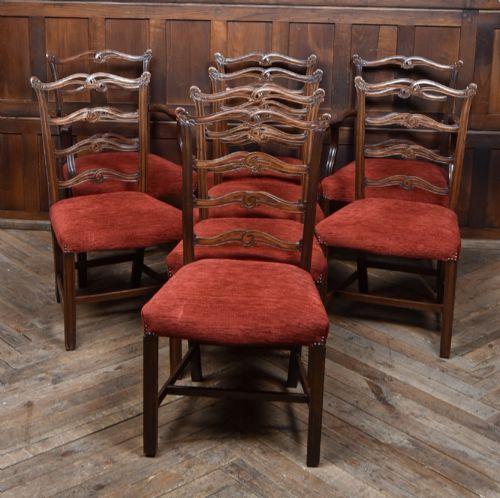
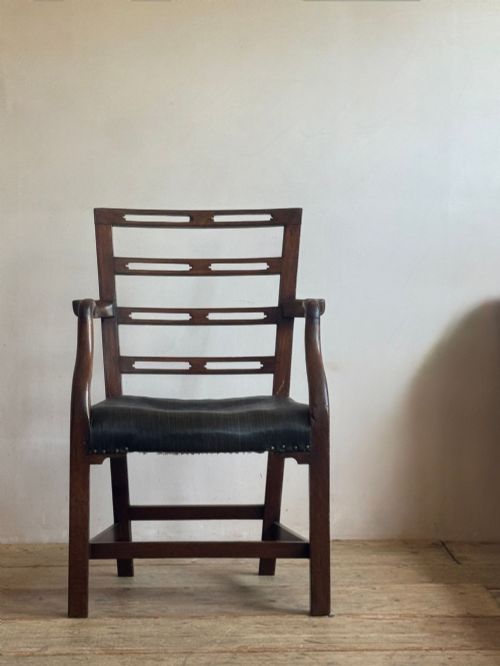
Makers produced these seats in regional workshops and larger establishments, utilising local hardwoods for domestic use or refined mahogany for formal settings. Buyers frequently encounter oak, ash, elm, and fruitwood variants alongside woven rush pads or upholstered cushions.
Craftsmanship and Proportion
Quality separates through the subtlety of the slat shaping, where finer examples display graduated curves and delicate chamfering rather than flat, heavy boards. The slenderness of the turned spindles and the tightness of the rush or upholstery weave indicate the maker's skill and the time invested in production.
Timber selection dictates the integrity of the frame, with dense grains in oak, mahogany, or fruitwood holding tight joints over centuries of use. Matching across larger sets demonstrates consistency in workshop output, whereas assembled groups show minor variations in height and turning details.
Antique Ladder Back Chairs Retail Price Guide 2026
Typical asking prices for ladder back chairs among the pieces listed under this phrase on Sellingantiques today, from the lower quarter to the upper quarter. They describe what is for sale here now, not the wider market.
Listings feature ash, elm, oak, mahogany, and fruitwood frames alongside rush and fabric seating surfaces.
Heals
The Antique Ladder Back Chairs Glossary
- Carver
- An armchair, often designed with scrolling or open arms to match a set of single dining chairs.
- Rush seat
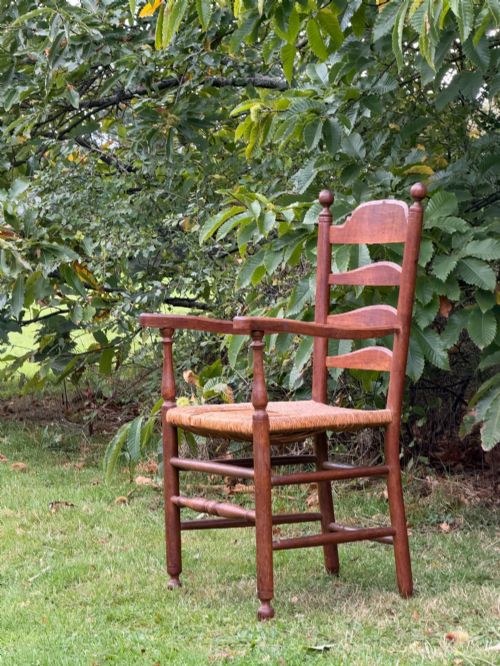
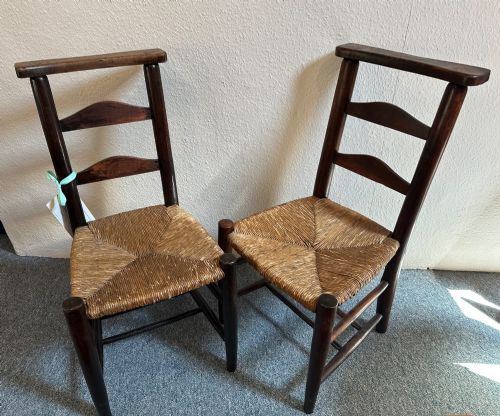
- A seating surface woven from dried marsh grasses around an internal frame, common in traditional country chairs.
- Slat
- A horizontal wooden rail fitted between the rear upright posts, forming the ladder pattern of the backrest.
- Mortise and tenon
- A joint wherein a pegged projection fits tightly into a corresponding cavity, locking the wooden frame together.
- Upright
- The vertical rear post of a chair that extends from the floor to support the back slats.
Antique Ladder Back Chairs: Frequently Asked Questions
What woods were used for antique ladder back chairs?
Makers built these frames using regional timbers including oak, ash, elm, fruitwood, and imported mahogany. Seats frequently incorporated woven rush or upholstered pads in fabric and velvet.
Lighter woods often appeared in country workshops, while formal dining sets utilised dense hardwoods capable of supporting refined carving.
How do I care for a rush seat?
Rush seats require dry environments to prevent the natural grasses from becoming brittle or absorbing moisture from the air. Regular dusting with a soft brush keeps debris from settling between the woven strands.
Avoid placing these chairs in direct sunlight or near heat sources that might dry out the plant fibres over time.
Are these chairs suitable for daily dining?
The sturdy mortise and tenon construction makes these seats practical for regular dining use. Frames built from solid hardwoods withstand daily movement around a table.
Checking that the joints remain tight ensures the chair handles everyday weight without structural strain.
How do French and English styles differ?
French provincial versions, often associated with Louis XV styles, typically feature cherry wood or oak with rush pads and softer curved profiles. English country models lean towards ash, elm, or oak with simpler turned spindles and tapered uprights.
Formal English pieces utilise mahogany and follow Georgian proportions with more pronounced splats and polished finishes.