




Vintage Ladder Back Chairs
Vintage ladder back chairs bring enduring character to interiors through horizontal wooden slats and traditional craftsmanship.
Vintage Ladder Back Chairs
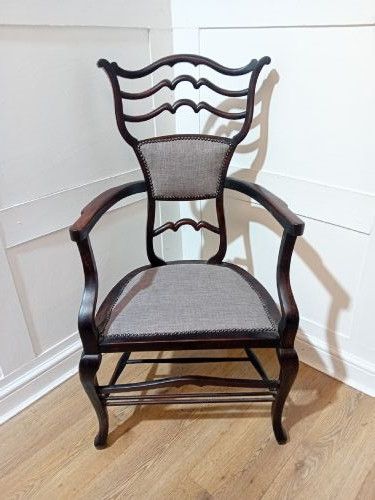
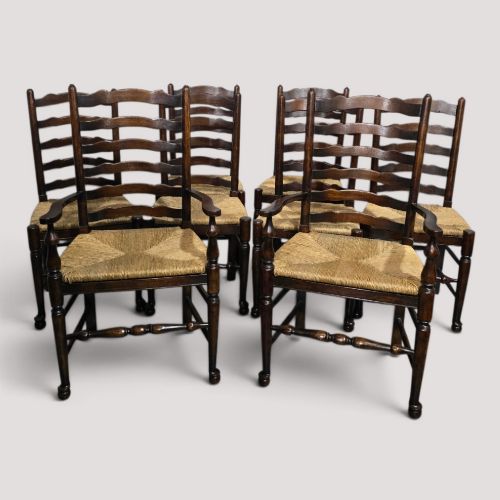
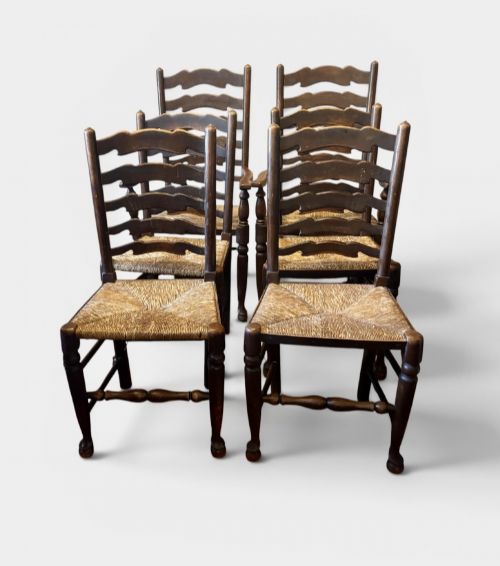
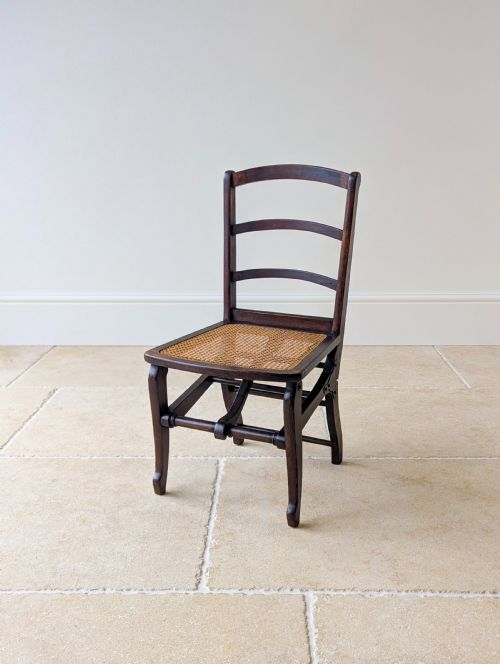
Vintage ladder back chairs are classic seating forms defined by horizontal wooden rails rising between the rear upright posts. When searching this phrase, buyers encounter dining chairs, armchairs, rocking chairs, and high chairs drawn from English, French, and American vernacular traditions.
The pieces on this page span from the nineteenth century into the twentieth century, appearing in woods like oak, mahogany, elm, and ash. Many examples show regional influences from English country styles, Arts and Crafts workshops, and French provincial designs.
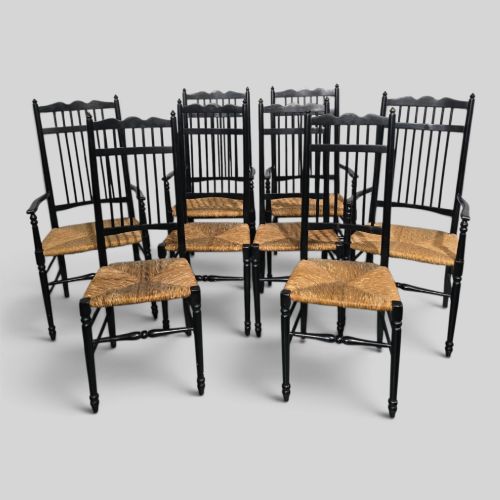
Dining sets appear alongside single armchairs, high chairs, and rocking versions, often fitted with woven rush seats or upholstered pads. These forms served utilitarian purposes in kitchens, halls, and dining rooms before becoming sought-after decorative seating.
Materials and construction methods
Carpenters utilised solid timbers such as oak, elm, mahogany, and ash to build the frames, joining uprights and horizontal slats with traditional mortise and tenon joints. Hardwood construction provided the structural strength required for daily kitchen and dining use.
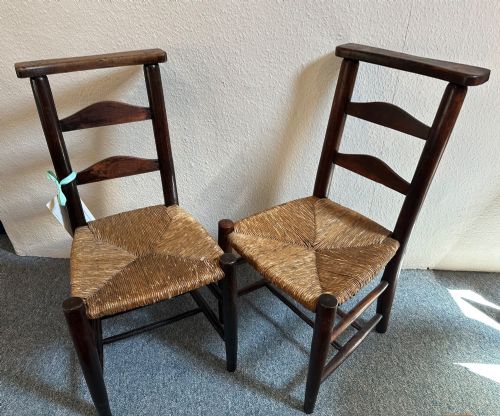
Seating areas frequently relied on woven rush or natural cordage wound tightly around the seat rails to create a resilient platform. Some examples incorporated leather, fabric, or velvet upholstery over padded foundations.
Makers shaped the horizontal slats by hand or steam-bending, curving the wood to fit the contour of the sitter's back. Turned spindles and upright posts added decorative detail and structural support to the frame.
The selection includes dining chairs, armchairs, rocking chairs, library steps, and high chairs spanning the eighteenth to twentieth centuries.
Distinguishing quality and execution
The integrity of the timber framing and the tightness of the joinery separate standard examples from superior pieces. Solid hardwoods like oak and elm with well-fitted joints maintain stability over decades of heavy use.
The precision in shaping the horizontal slats and turned uprights dictates the aesthetic merit of the piece. Hand-finished details and balanced proportions reveal the maker's proficiency.
The condition and tightness of woven rush seating or original upholstery influence the overall standard of the chair. Intact natural materials reflect careful preservation and superior initial craftsmanship.
St Pauls Cathedral London·Dicon Nance St Ives Studio·Lawrence Neal·Liberty and Co·Heals
The Vintage Ladder Back Chairs Glossary
- Ladder back
- A chair style characterised by horizontal wooden rails positioned between the rear upright posts, resembling the rungs of a ladder.
- Rush seat
- A seating surface created by weaving dried marsh grass or rushes around the wooden seat rails.
- Carver
- An armchair, usually designed to match a set of single dining chairs and placed at the head of a table.
- Vernacular
- Everyday furniture made by regional craftsmen for local use rather than high-style metropolitan workshops.
- Spindle back
- A chair design featuring thin, turned vertical wooden rods supporting the backrest instead of solid slats.
Vintage Ladder Back Chairs: Frequently Asked Questions
How do I care for rush seats?
Rush seats require gentle cleaning with a dry or barely damp cloth to avoid rotting the natural plant fibres. Keep them away from excessive moisture and direct heat sources.
Applying a light, neutral paste wax to the wooden frame preserves the finish while leaving the woven rush untreated.
Can I mix these chairs around a dining table?
Mixing different styles of ladder back chairs works well when the timber tones and seat heights share similar proportions. Combining single side chairs with matching armchairs at the table ends creates a balanced arrangement.
Matching sets provide a uniform look, whereas assembled groups introduce regional variety and historical depth to a dining space.
Were these chairs used only in kitchens?
These versatile pieces served utilitarian roles in farmhouses, cottages, and institutional buildings like churches and libraries. Their sturdy construction made them suitable for daily domestic tasks.
Over time, refined versions entered formal dining rooms, halls, and parlours as decorative and functional seating.
How do I distinguish nineteenth-century examples?
Nineteenth-century ladder backs often display hand-turned elements, pegged mortise and tenon joints, and dense native hardwoods like oak and elm. Tool marks and subtle irregularities in the wood indicate manual shaping before industrial standardisation.
Examining the wear patterns on the footings and seat rails helps confirm age and period usage.