



Ash Ladder Back Chairs
Ash ladder back chairs are sturdy country seating defined by horizontal slats and rush or woven seats, offering timeless rustic character.
Ash Ladder Back Chairs
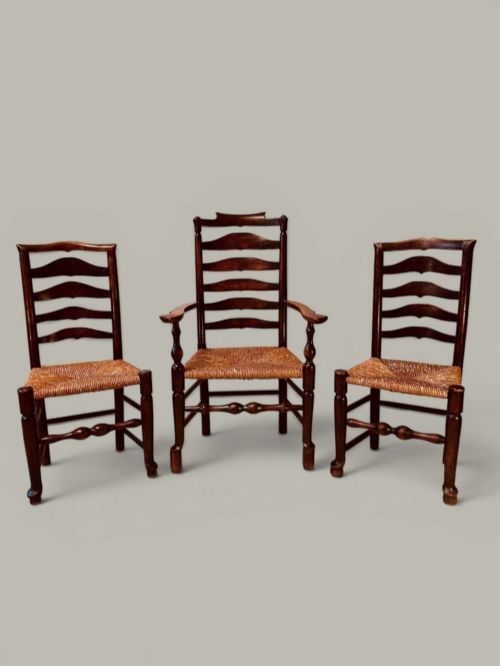
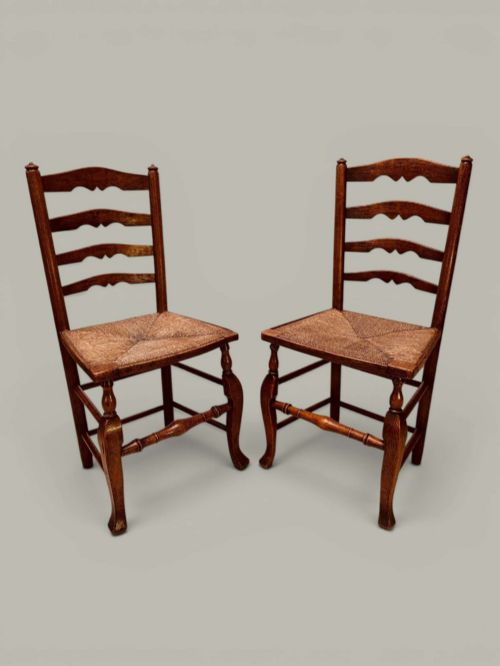
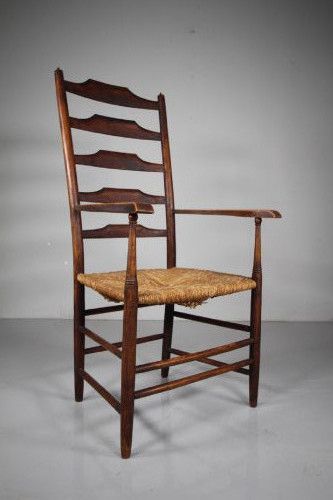
Ash ladder back chairs are traditional country seating forms constructed with horizontal back rails, known as rungs or slats, positioned between two upright posts. When you browse ash ladder back chairs, you encounter regional English country, Victorian, Dutch provincial, and Arts and Crafts examples dating from the nineteenth century up to the nineteen-thirties.
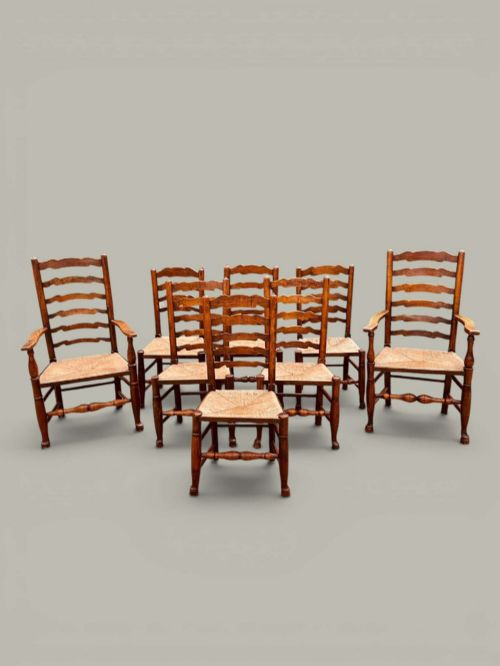
The pieces appearing on this page span several distinct regional styles and seating configurations, including carvers, side chairs, and large sets intended for dining tables. Most examples utilise native timbers combined with natural rush or woven seating materials, reflecting vernacular workshop traditions from Lancashire, Cheshire, and beyond.
Makers ranged from rural bodgers and village chair bodgers working in local woods to renowned nineteenth-century vernacular makers and twentieth-century Arts and Crafts workshops. These items served practical domestic purposes in farmhouses and cottages, evolving from utilitarian seating into sought-after decorative antiques.
How they were made
Makers constructed these chairs primarily using ash, often paired with alder or elm for secondary structural components or seats. Woodworkers turned spindles and uprights on lathes while shaping horizontal ladder slats by hand to fit precisely into mortise and tenon joints.
Seats traditionally utilised natural rush woven tightly across a wooden frame to provide a resilient and flexible platform for daily use. Some examples feature painted finishes applied to the ash timber frames, protecting the wood while aligning with regional domestic fashions.
Ash Ladder Back Chairs Retail Price Guide 2026
Typical asking prices for ash ladder back chairs among the pieces listed under this phrase on Sellingantiques today, from the lower quarter to the upper quarter. They describe what is for sale here now, not the wider market.
Some ladder backs were built with extra-wide slats to comfortably accommodate eighteenth-century country waistcoats.
What varies in quality
Quality in these chairs rests upon the proportion of the frame, the grace and number of curved slats, and the integrity of the original turned members. Superior pieces display harmonious proportions between the height of the back posts and the depth of the rush seating.
The skill of the initial turning and the survival of an untouched surface, whether painted ash or clean timber patination, elevate certain examples above standard utilitarian workshop output.
Philip Clissett·Lawrence Neal
The Ash Ladder Back Chairs Glossary
- Ladder back
- A chair featuring multiple horizontal slats or rails between the vertical back posts. This vernacular design has roots in European country seating traditions.
- Rush seat
- A seating surface woven from dried marsh rushes or sedges over a wooden frame. It provides a flexible and traditional base for vernacular chairs.
- Vernacular furniture
- Domestic items made by local craftspeople using regional materials and traditional methods rather than adhering to formal high-style metropolitan designs.
- Cabriole leg
- A furniture leg that curves outward and then tapers inward, inspired originally by animal limbs. It appears occasionally on select nineteenth-century provincial chairs.
- Spindle back
- A chair back featuring numerous thin turned wooden rods rather than flat horizontal slats. This construction method offers structural support while reducing weight.
Ash Ladder Back Chairs: Frequently Asked Questions
How do I care for a rush seat?
Keep rush seated chairs in rooms with stable humidity to prevent the natural fibres from becoming overly brittle over time. Regular gentle dusting preserves the material without introducing excessive moisture that could damage the weave.
Avoid placing these chairs in direct sunlight or beside intense heat sources which dry out the rush. Using a breathable seat pad can also reduce direct wear during everyday use.
Were these chairs used for dining?
Many of these chairs served as everyday seating around farmhouse and cottage dining tables. Sets of side chairs often accompanied matching armchairs at the table heads.
Their robust construction made them suitable for continuous daily domestic labour and family meals. Over decades, this heavy use contributed to the distinct patination found on the timber frames.
How can I tell a regional style?
Regional variations often appear in the turning details of the legs, the shape of the top rail, and the profile of the ladder slats. Cheshire and Lancashire workshops developed distinct local forms that differed slightly from Dutch provincial examples.
Examining the secondary woods used in the undercarriage can also offer clues regarding the geographical workshop origin. Local makers utilised whatever native timber grew abundantly in their immediate surrounding area.
Are painted finishes original?
Many nineteenth-century country chairs received coats of dark paint or scrubbed finishes to protect the ash and alder timbers. Surviving early paint layers add historical depth and character to regional vernacular seating.
Distinguishing original surface treatments requires looking closely at wear patterns and pigment integration within the wood pores. Unpainted examples instead showcase the natural grain patination developed through centuries of handling.