
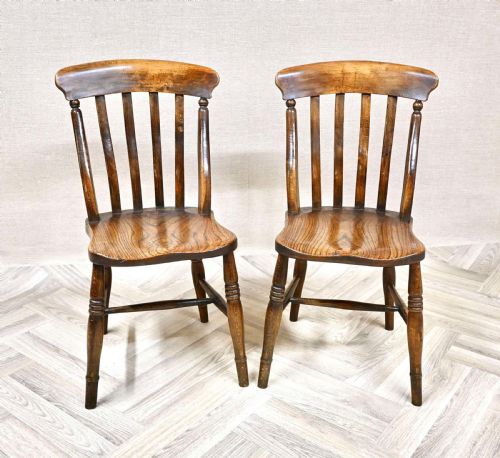
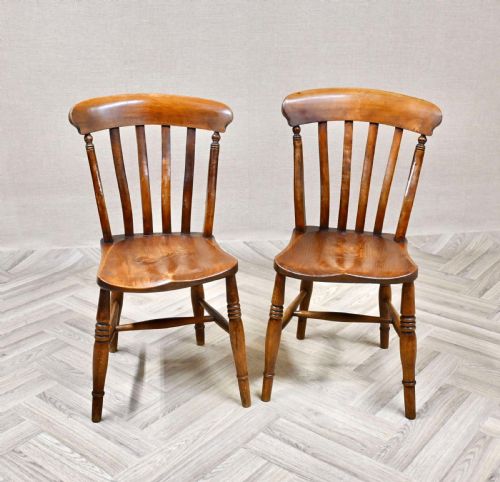
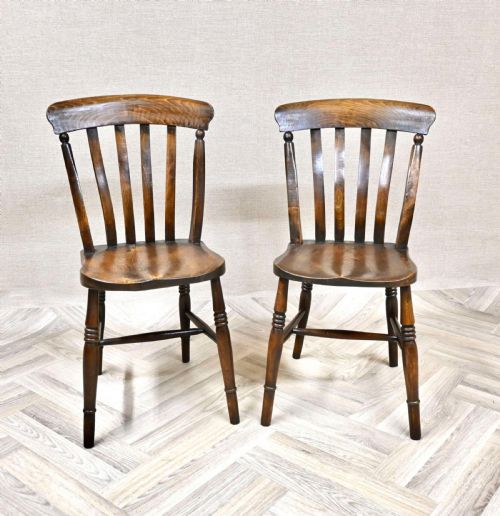
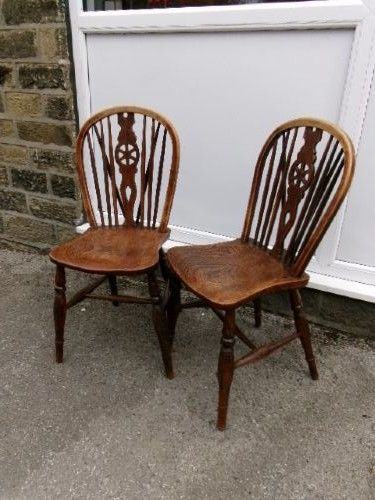
Traditional Country Side Chairs
Traditional country side chairs bring sturdy vernacular character to the dining table, combining utilitarian timber construction with regional vernacular design.
Traditional Country Side Chairs
Traditional country side chairs encompass robust seating forms rooted in rural domestic life, appearing extensively in nineteenth-century and Victorian iterations alongside Georgian and early twentieth-century examples. These pieces primarily function as dining chairs and kitchen seating, designed for daily utility rather than formal parlour display.
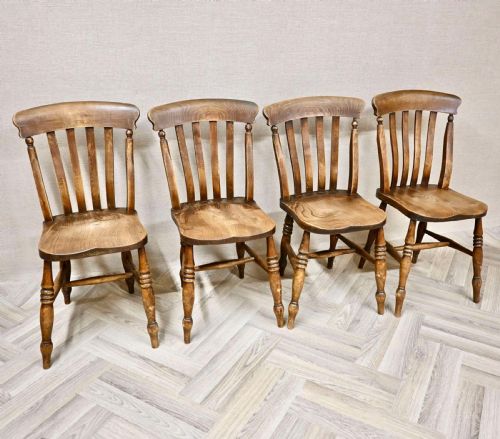
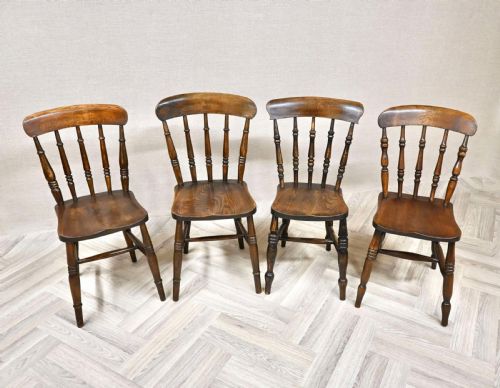
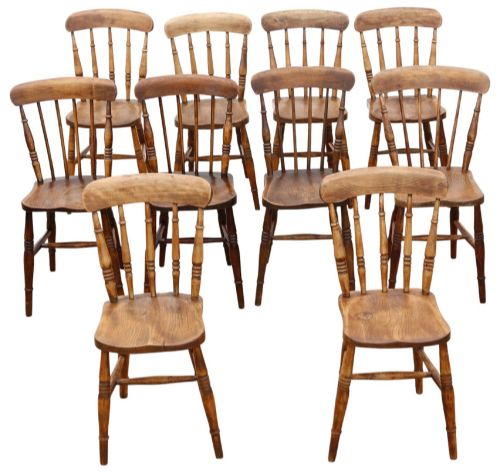
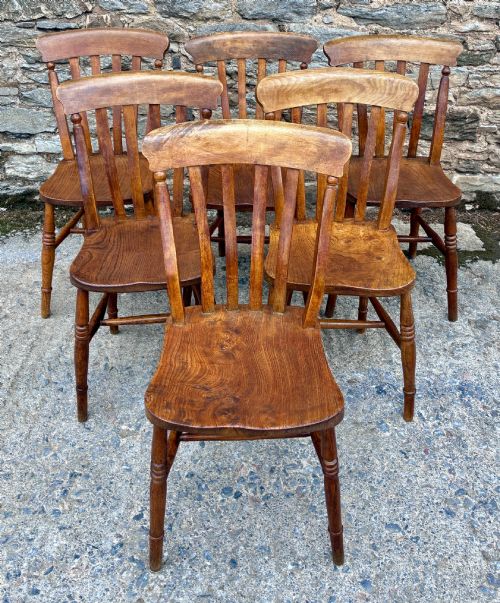
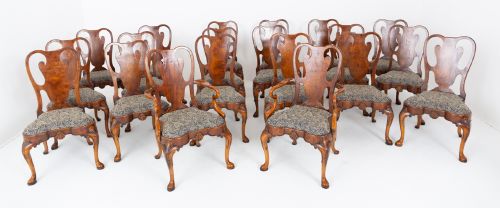
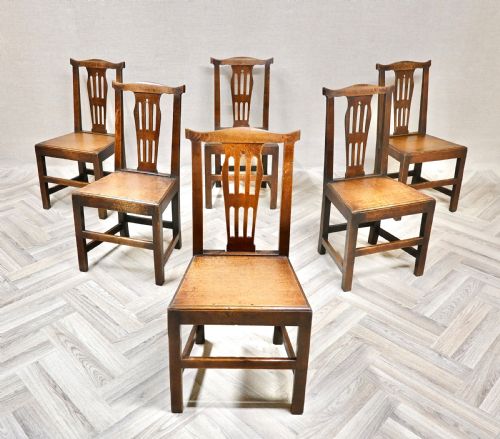
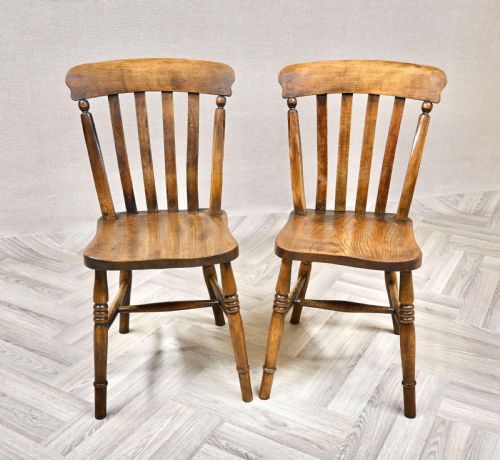
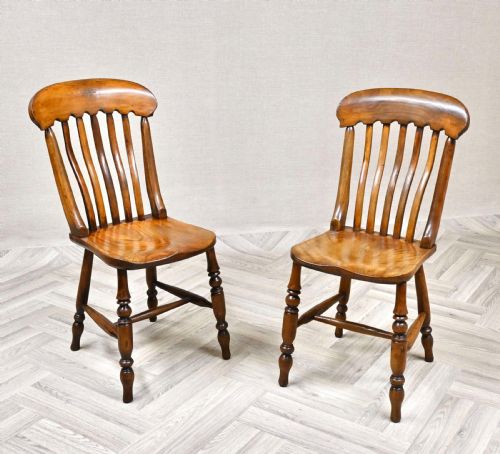
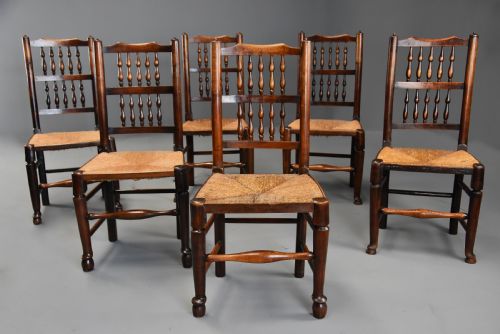
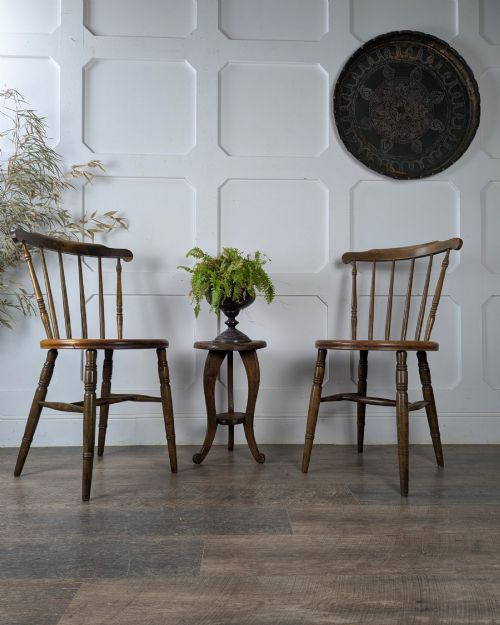
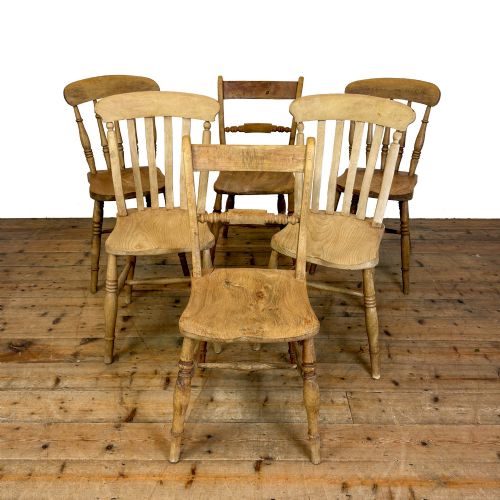
The inventory on this page leans heavily toward matched sets and harlequin groups of farmhouse and kitchen seating. Buyers encounter spindle backs, ladder backs, lathe backs, and Windsor designs frequently across these listings.
Origins span English country workshops, Welsh makers, and regional traditions such as Thames Valley production. The forms rely on straightforward geometric silhouettes and sturdy timber frames built to endure generations of domestic use.
Materials and construction
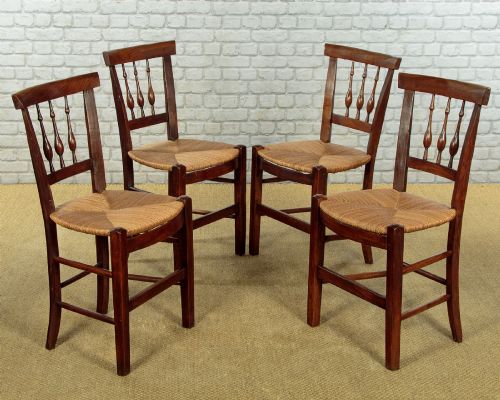
Makers utilised native hardwoods such as elm for solid, sculpted seats, paired with bent ash or beech for spindles, bows, and backs. Oak and fruitwood also appear regularly in frames and ladder backs, while rush provides traditional woven seating surfaces.
Construction techniques combine traditional joinery with steam-bending for curved elements like Windsor hoops and stick backs. Component parts are typically turned on a lathe and wedged or pegged together to create rigid joints without complex metal hardware.
Some sets preserve faux birds eye maple finishes applied to mimic exotic timbers in rural farmhouses.
Quality differences
Quality rests upon the integrity of the timber, the depth of the natural patina accumulated through use, and the harmony of matched or harlequin sets. Superior examples display carefully sculpted seats carved from single slabs of elm and well-turned spindles with crisp detail.
The tightness of the joints and the retention of original surface finishes dictate the standing of a piece. Lesser examples suffer from mismatched repairs, excessive sanding that strips character, or unstable frames lacking original wedged construction.
The Traditional Country Side Chairs Glossary
- Windsor chair
- A chair built with a solid wooden seat into which the legs and back bow are independently inserted. These pieces often incorporate curved stick backs and sculpted saddles.
- Ladder back
- A chair back constructed from horizontal slats or rails positioned between two upright posts. This traditional form appears frequently in oak and ash regional dining sets.
- Harlequin set
- A collection of chairs sharing similar styles, periods, or materials rather than originating as an identical factory-made set. These groupings work well around large farmhouse dining tables.
- Rush seat
- A seating surface woven from dried marsh grass or rushes around a wooden frame. This technique yields a textured, resilient pad found on traditional vernacular chairs.
- Patina
- The surface sheen and tactile quality developed by wood over decades of handling and use. A strong patina indicates age and continuous domestic service.
Traditional Country Side Chairs: Frequently Asked Questions
What defines traditional country side chairs?
These pieces are utilitarian wooden seats built for kitchens and farmhouses using regional English vernacular designs. They prioritize functional strength and comfort over ornate decoration.
Common forms include Windsor, ladder back, and lathe back chairs produced from local timbers like elm, ash, and oak.
How do I use them in a modern home?
Traditional country side chairs fit naturally around dining tables, mixing well with both antique and contemporary furniture. Their sturdy construction makes them practical for daily seating.
Harlequin sets offer a cohesive yet varied look when placed around a large kitchen table.
How are periods told apart?
Earlier eighteenth-century and Georgian pieces often display simpler, heavier framing or distinct regional turning patterns in fruitwood and oak. Nineteenth-century and Victorian examples frequently feature elm seats combined with beech or ash framing.
Twentieth-century versions introduce lighter utility designs and alternative manufacturing methods while retaining traditional forms.
What woods were used?
Makers relied on native hardwoods suited to different parts of the chair. Elm provided stable, crack-resistant timber for sculpted solid seats.
Ash and beech offered flexibility for steam-bent bows and turned spindles, while oak and fruitwood formed sturdy uprights and ladder backs.