

Antique Rustic Side Chairs
These antique rustic side chairs bring honest country character to a room, offering sturdy seating built for everyday farmhouse use.
Antique Rustic Side Chairs
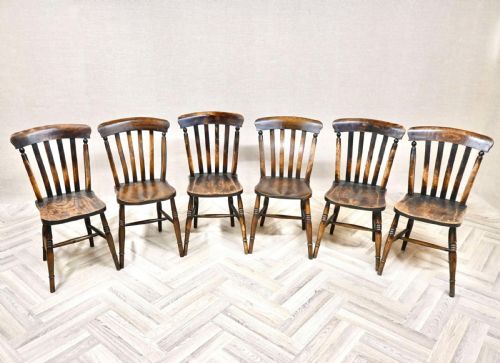
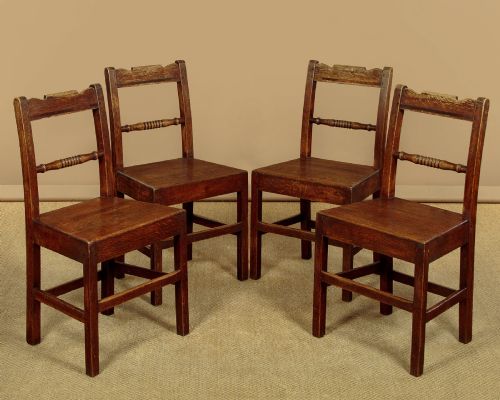
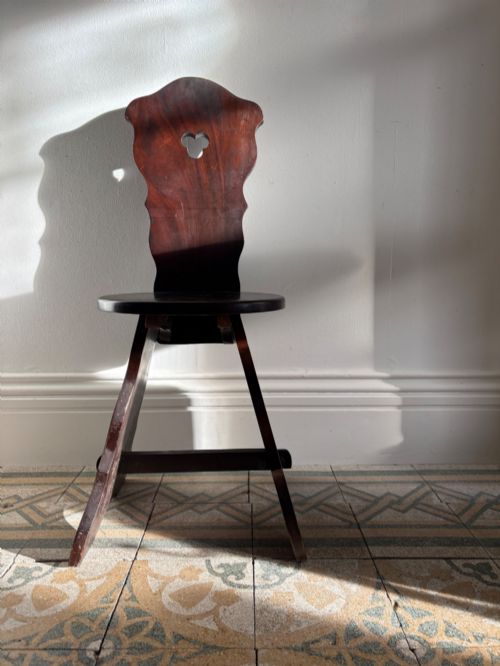
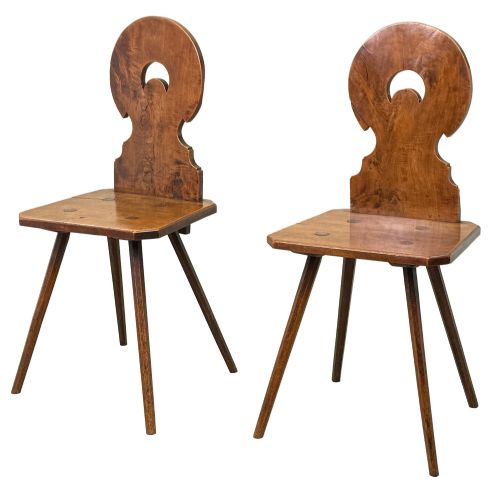
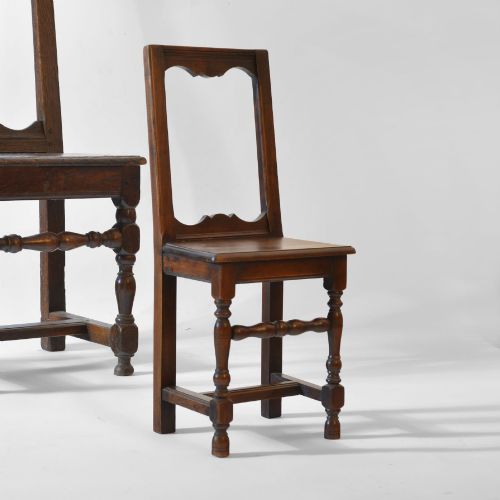
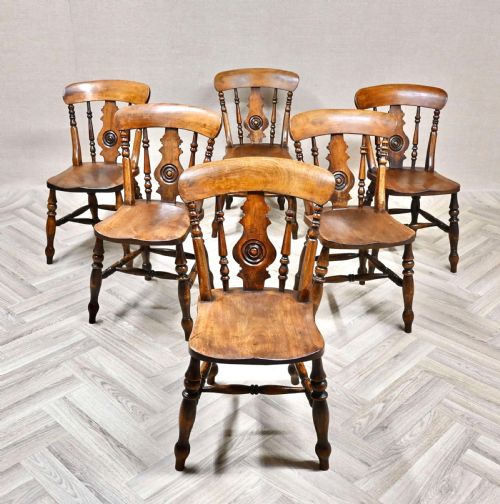
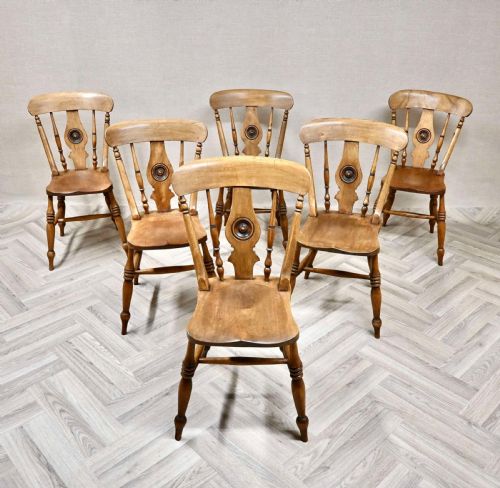
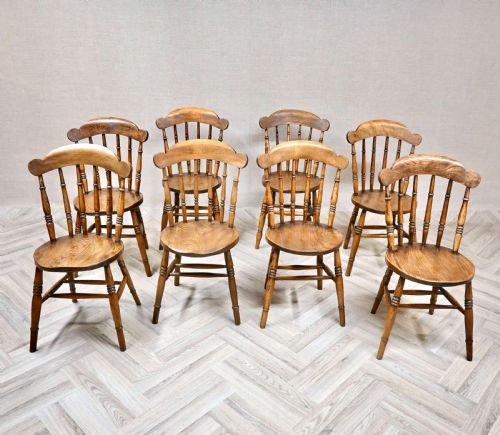
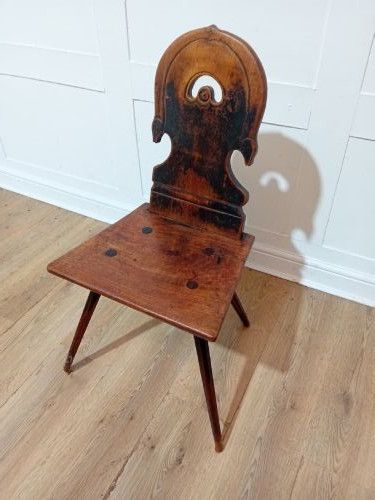
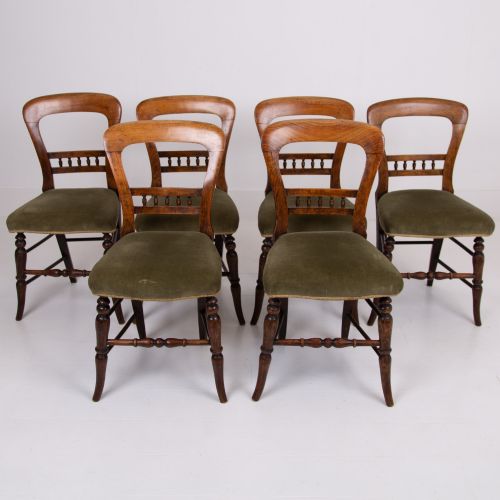
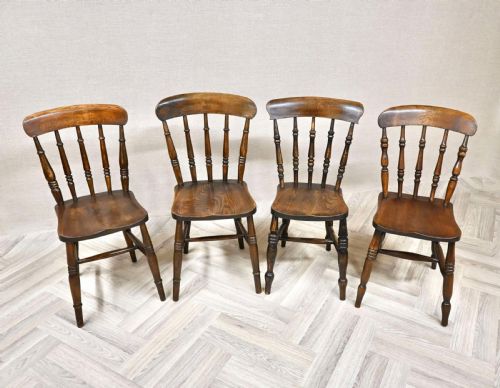
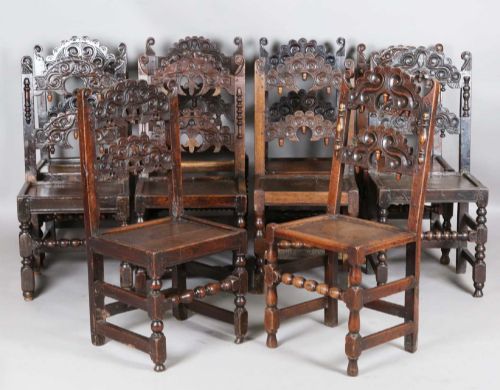
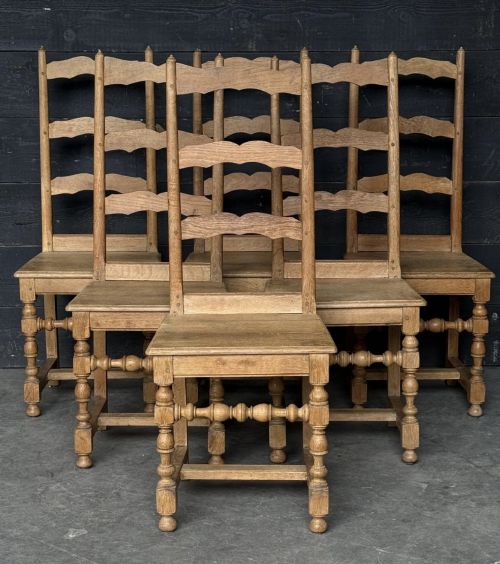
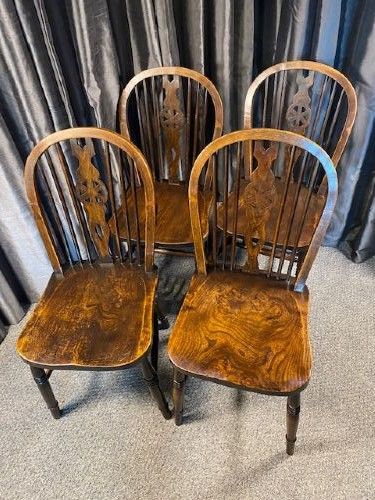
These antique rustic side chairs include sturdy kitchen, dining and occasional seating shaped by traditional country makers across the eighteenth, nineteenth and early twentieth centuries. You will frequently encounter Windsor forms alongside ladder back and spindle back designs.
The materials reflect rural timber supplies, pairing elm and beech seats with ash, oak or fruitwood frames. Many survive in matched sets or carefully gathered harlequin groups.
Makers focused on utilitarian strength, often combining turned wooden uprights with solid saddle seats shaped for comfort without upholstery. Their straightforward construction suits modern dining spaces just as well as period interiors.
How they were made
Country craftsmen relied on native hardwoods such as oak, ash, beech and elm, selecting each timber for its specific structural strength. Steam bending shaped bow backs and spindles, while lathe turning created decorative and supportive stretchers.
Joinery methods prioritized physical interlock, utilising wedged tenons and mortise joints that tightened with age. Seat bases were frequently hollowed from a single thick slab of elm to receive the legs and back uprights securely.
Antique Rustic Side Chairs Retail Price Guide 2026
Typical asking prices for rustic side chairs among the pieces listed under this phrase on Sellingantiques today, from the lower quarter to the upper quarter. They describe what is for sale here now, not the wider market.
A nineteenth-century penny chair hides a coin-sized indent in the seat where a careless carver apparently tested a gouge.
What varies in quality
Quality rests in the integrity of the timber and the depth of the surface patina accumulated through generations of use. Better examples retain their original wedged joints and display minimal replacement parts.
Proportion and turning detail distinguish finer country pieces from plain utilitarian seating. A well-sculpted elm seat and cleanly struck spindle turnings elevate the presence of a dining chair significantly.
The Antique Rustic Side Chairs Glossary
- Windsor chair
- A wooden chair featuring a solid carved seat into which the legs and back spindles are separately socketed. This form originated in rural workshops and remains a mainstay of country seating.
- Harlequin set
- A collection of chairs that share a similar style, period or material without having been manufactured together as an original set. They offer a cohesive look while preserving individual character.
- Lathe back
- A chair back incorporating flat wooden slats shaped on a lathe rather than traditional rounded spindles. These slats provide sturdy back support in nineteenth-century kitchen seating.
- Bobbin turned
- A style of furniture leg or stretcher shaped to resemble a series of wooden bobbins or spools end to end. This decorative turning technique appears frequently on seventeenth- and eighteenth-century oak pieces.
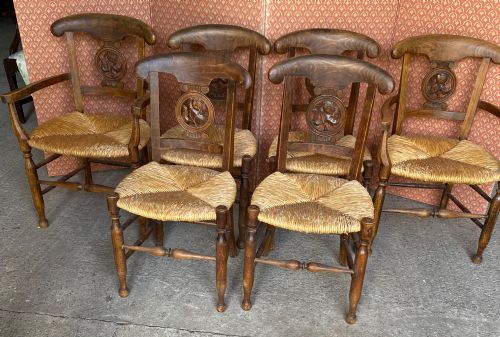
- Rush seat
- A seating surface woven from dried marsh rushes twisted into strong cords. This traditional technique creates a durable, flexible platform often found on ladder back farmhouse chairs.
Antique Rustic Side Chairs: Frequently Asked Questions
How do I spot an authentic country Windsor chair?
Look for a thick elm seat that shows natural wear and indentation from use over the centuries. The legs and spindles should pass right through the seat plank and be wedged from above.
Examine the turning details on the legs and stretchers to check for hand-chiseled consistency. Machine-tooled precision usually indicates a later reproduction rather than an eighteenth or nineteenth-century original.
What is a harlequin set of dining chairs?
A harlequin set is a gathered collection of individual chairs that share matching stylistic traits, materials and periods. Dealers assemble these groups to provide enough seating for a dining table while maintaining visual harmony.
While the chairs were not made in the same workshop at the same time, their shared proportions and timber tones allow them to sit comfortably together around a room.
How should I care for rush seat chairs?
Keep rush seated chairs away from direct sunlight and excessive dampness to prevent the natural reed fibres from becoming brittle. Dust them gently with a soft brush rather than using wet cloths.
Applying a light, natural wax to the wooden frames helps preserve the finish without harming the woven seating material over time.
Are ladder back chairs comfortable for daily dining?
Ladder back chairs provide upright support suited for long meals at a farmhouse dining table. Their horizontal rear slats are positioned to support the back effectively.
Many examples feature rush or solid wooden seats that pair well with loose cushions if extra padding is desired during extended seating.