


Wooden Panel Seat Chairs
Wooden panel seat chairs are solid timber seats built to endure, ranging from early wainscot armchairs to Victorian hall benches.
Wooden Panel Seat Chairs
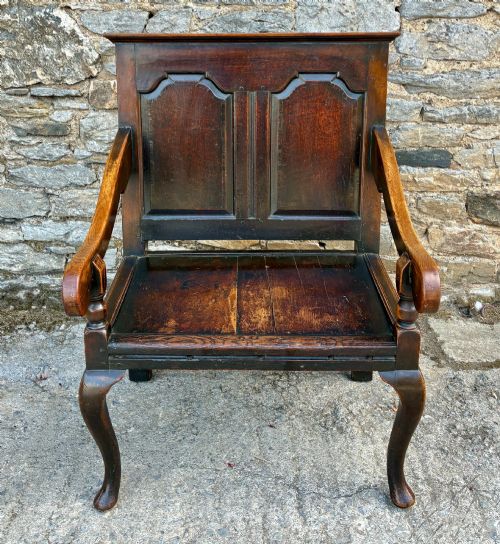
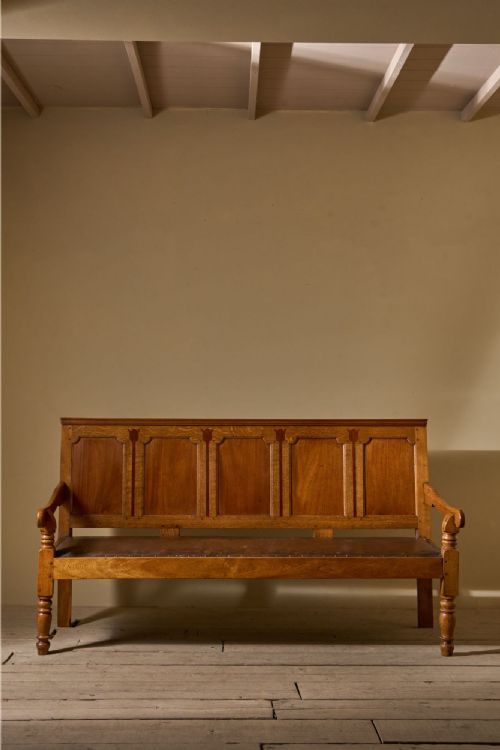
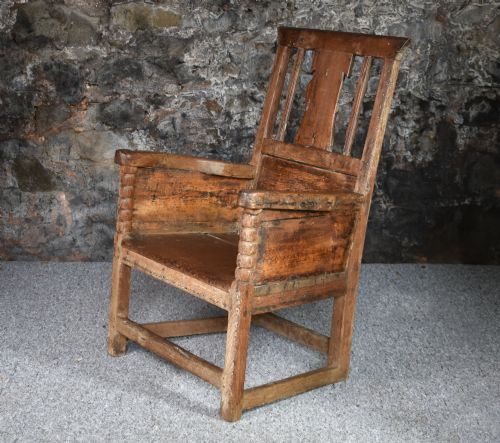
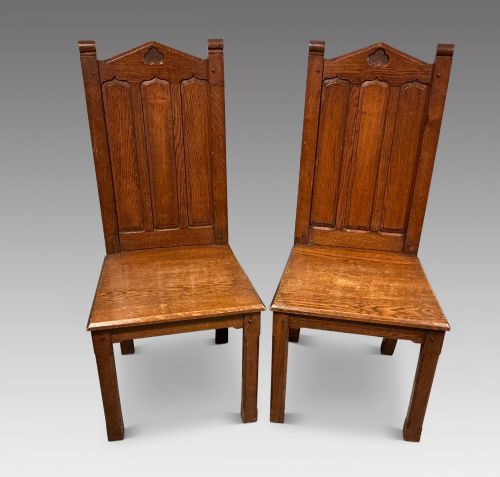
Wooden panel seat chairs encompass a variety of hard-wearing seating forms, including wainscot armchairs, hall chairs, settles, and benches. When searching for wooden panel seat chairs, buyers encounter pieces spanning multiple centuries, from the seventeenth century through to the Edwardian era.
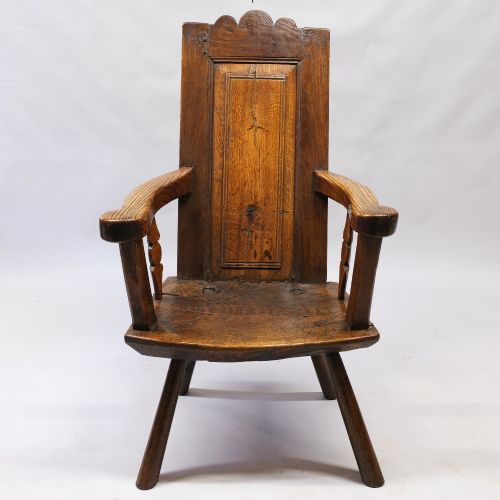
The selection ranges from vernacular country seating like crofter armchairs and pine settles to formal dining chairs and hall benches. Oak is the predominant timber, supplemented by mahogany, fruitwood, elm, pine, and hardwood.
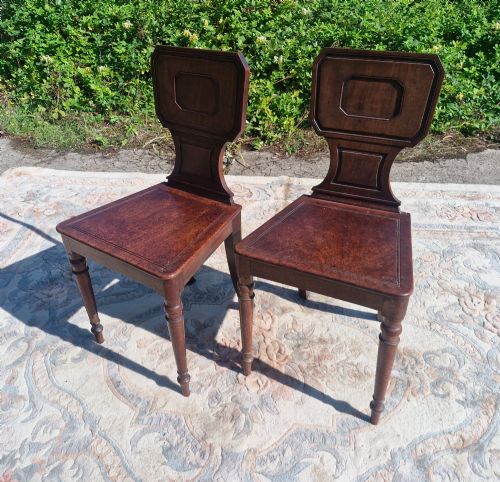
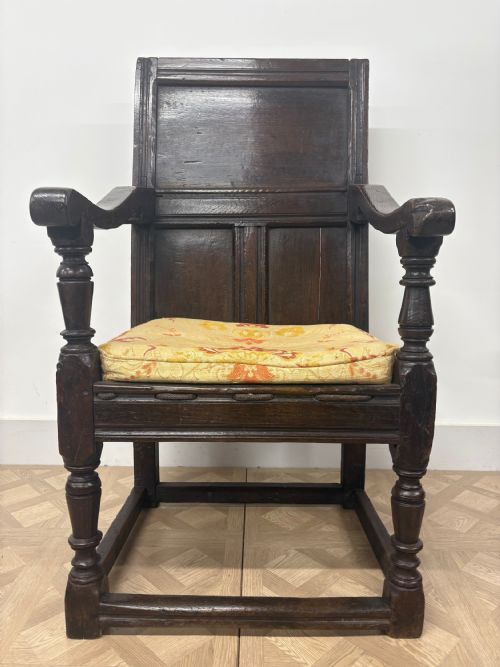
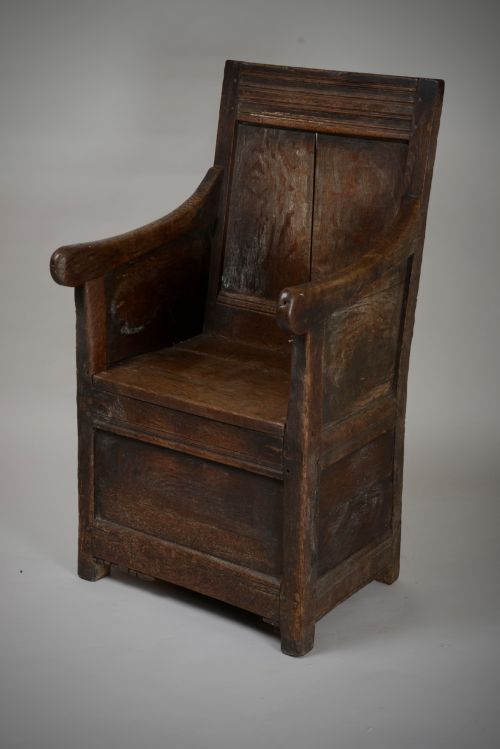
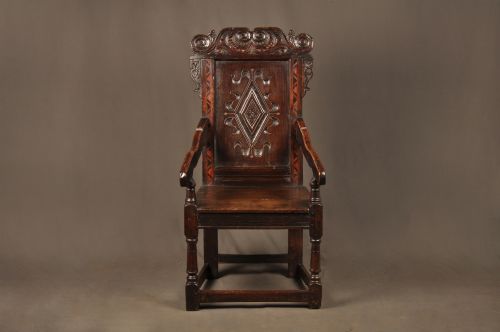
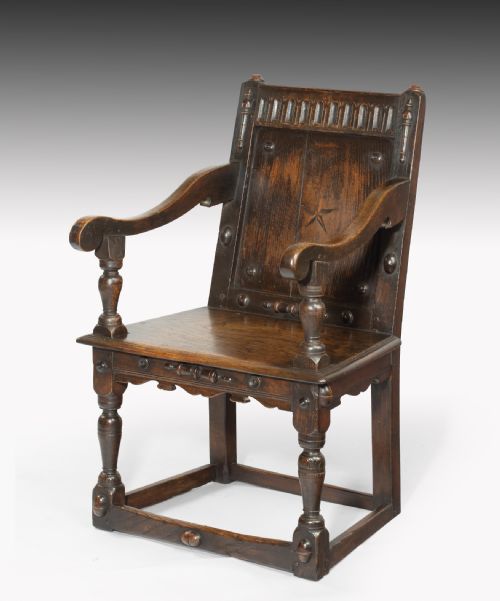
Early examples include seventeenth-century Yorkshire and Lancashire wainscot chairs with solid timber backs and seats. Later iterations cover Regency mahogany hall chairs, Victorian carved oak benches, and revival styles.
How they were made
Carpenters and joiners utilised solid timbers such as oak, mahogany, elm, and pine, constructing frames through mortise and tenon joints secured with wooden pegs. Panels were fitted into grooves within the frame, allowing the wood to expand and contract naturally with atmospheric changes.
Carving, inlay, and turned components defined the ornamentation on many examples, featuring tulip decoration, Mashrabiya panels, and leather or needlepoint detailing in later Victorian and revival pieces. Surfaces were frequently left untreated, waxed, or painted, depending on the region and period of manufacture.
Some nineteenth-century settles wear cheerful grey paint over old pine, hiding decades of muddy boots beneath their hinged wooden seats.
What varies in quality
Quality rests upon the integrity of the timber selection and the retention of original construction elements. Pieces retaining their original patination and early panel construction stand apart from heavily restored or later revival items.
The crispness of hand-carved detailing, such as floral motifs or geometric panels, distinguishes superior craftsmanship from simpler commercial output. Proportions and the balance between the solid wooden seat and the supporting frame also determine the visual weight and desirability of a piece.
Liberty and Co·Bruce J Talbert
The Wooden Panel Seat Chairs Glossary
- Wainscot chair
- An early wooden armchair characterised by a solid panel back and a wooden seat, typically constructed from oak during the seventeenth century. These sturdy seats derive their name from wainscot oak imported for fine panelling.
- Settle
- A wooden bench featuring a high solid back, enclosed arms, and a box base or panel seat designed to block draughts in domestic interiors. They often incorporate storage beneath the seat.
- Hall chair
- A rigid wooden seat placed in entrance halls, frequently carved with crests or family insignia and produced in pairs during the Regency and Victorian periods.
- Mashrabiya
- An architectural pierced wood-turning element utilised in decorative panels, occasionally found in nineteenth-century aesthetic or revival furniture.
- Country chair
- Vernacular seating produced by regional makers using local timbers like elm, fruitwood, and pine, prioritising utility and comfort over formal academic styles.
Wooden Panel Seat Chairs: Frequently Asked Questions
How do I use a hall bench?
Hall benches and settles provide narrow seating and often incorporate concealed storage beneath the panel seat for boots or linens. They suit hallways, boot rooms, and narrow corridors where bulky furniture will not fit.
Their solid wooden construction makes them resilient for daily use in high-traffic entrance spaces.
How are seventeenth-century chairs dated?
Seventeenth-century chairs are dated by observing construction methods, timber species like native oak, and regional carving styles. Joiners relied on pegged joints and hand-riven panels rather than modern metal fasteners.
Secondary indicators include tool marks left by pit saws and adzes, alongside the natural wear and patination accumulated over centuries.
What is the difference between an armchair and a side chair?
Armchairs feature structural wooden arms integrated into the front posts and back stiles, providing a more enclosed seat. Side chairs omit arms entirely, making them compact enough to line a dining table or hallway wall.
Both variants utilise solid wooden panels for their seats across the listed periods.