
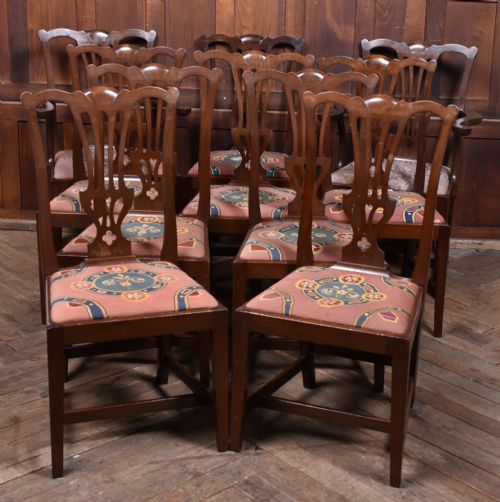
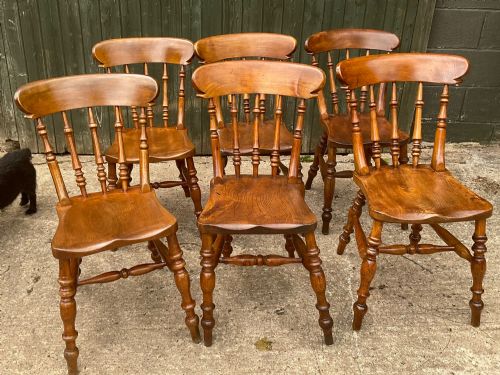


Regional Country Dining Chairs
Regional country dining chairs bring sturdy vernacular character to the table, fashioned from honest local timbers by rural makers.
Regional Country Dining Chairs
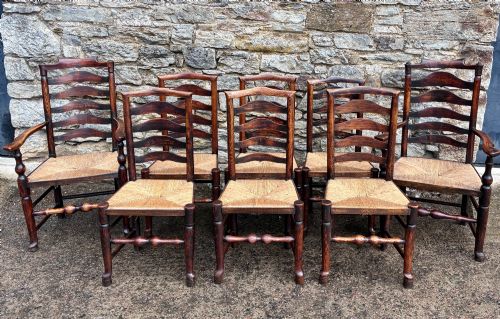
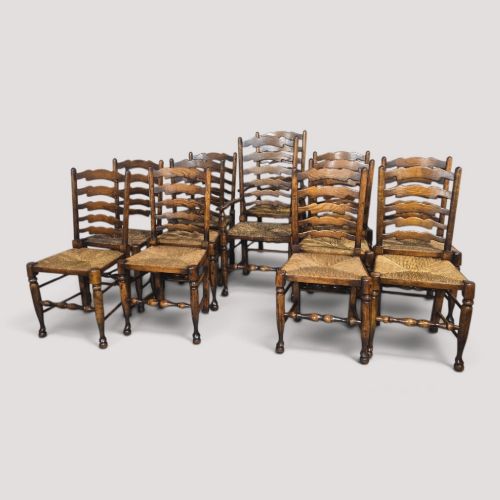
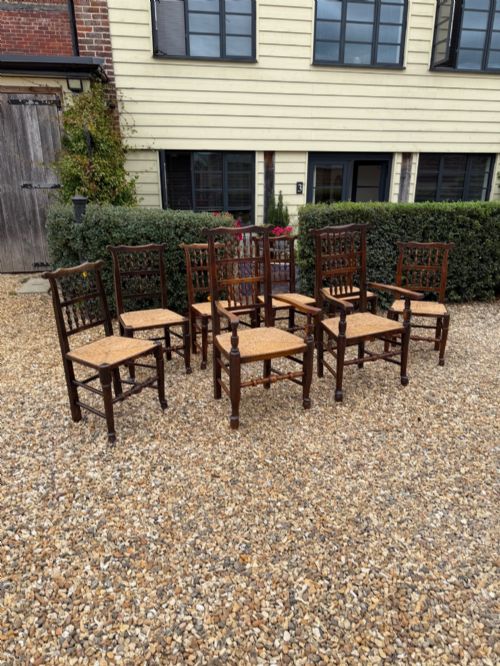
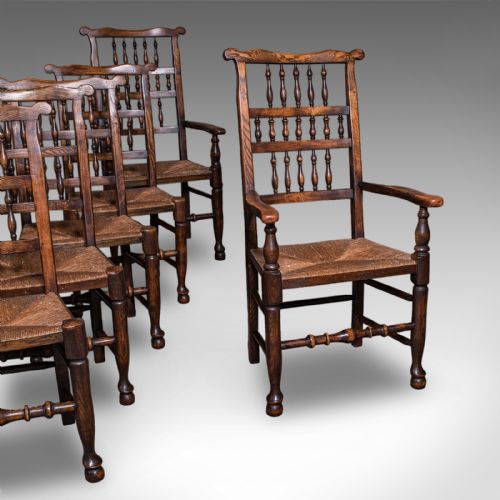
Regional country dining chairs encompass sturdy seating produced across British and continental shires during the eighteenth, nineteenth and early twentieth centuries. These pieces typically take the form of spindlebacks, ladderbacks, Windsor chairs and rush-seated kitchen chairs shaped by local tradition rather than metropolitan fashion.
The versions most commonly met on this page range from nineteenth-century Lancashire spindlebacks and Yorkshire armchairs to Thames Valley Windsor chairs and French ladderbacks. Buyers encounter single chairs, pairs and larger sets intended for daily domestic use around the farmhouse or cottage table.
Materials span native woods such as elm, ash, beech, yew and oak, frequently paired with woven rush seats. Construction often reflects regional specialisms, from the spindle-turned members of northern workshops to the bentwood bows of Thames Valley wheelbacks.
Materials and construction methods
Craftsmen utilised native hardwoods for their resilience, combining bendable timbers like ash and elm for backs and seats with harder woods for legs and stretchers. These woods were often locally sourced, resulting in distinct regional preferences such as yew in the Thames Valley and fruitwoods in other districts.
Joints relied on traditional pegged mortise and tenon construction, alongside steam-bending techniques used to shape continuous arm rails and bows for Windsor chairs. Seats were frequently carved from solid elm blocks or woven from natural rush over sturdy wooden frames.
Surfaces were finished simply, sometimes left in the bare timber or painted, allowing the natural grain and honest structural lines to form the primary visual appeal of the seating.
Some provincial makers incorporated local fruitwoods simply because that was what grew behind the workshop door.
Evaluating quality and authenticity
Quality in these chairs rests upon the integrity of the timber selection and the retention of original structural components. Chairs fashioned from well-figured yew, cherry or quarter-sawn oak display superior tactile and visual depth compared to utility grade replacements.
The harmony of proportion and the crispness of turning on spindles and legs distinguish finer rural production from basic workshop output. Original seat pads, whether carved solid timber or intact rush weaving, elevate the integrity of the piece.
The cohesion of matched sets and the presence of genuine regional characteristics, such as specific local back splats or arm shapes, separate standard vernacular seating from exceptional examples of provincial craftsmanship.
Wheelers of Arncroach·Worksop·Gabbitass
The Regional Country Dining Chairs Glossary
- Spindleback
- A chair featuring a back composed of multiple slender turned vertical wooden rods. These rods are tenoned into horizontal rails to provide flexible support.
- Windsor
- A chair built with a solid wooden seat into which the legs, back sticks and bow are separately bored and wedged. This technique creates a robust piece without heavy framing.
- Ladderback
- A seating form defined by horizontal arched slats stacked between two upright rear posts. This style has roots in European provincial and English vernacular traditions.
- Rush seat
- A seating surface woven from dried marsh rushes twisted around a core and wrapped across the frame. It provides a resilient, slightly yielding pad.
- Carver
- An armchair designed to match a set of smaller side chairs, often placed at the head of the dining table. They frequently feature broader arms supported on extended front legs.
- Wheelback
- A Windsor chair variation featuring a pierced central splat shaped like the hub and spokes of a cartwheel. This design became popular in nineteenth-century Thames Valley workshops.
Regional Country Dining Chairs: Frequently Asked Questions
What defines a regional country dining chair?
These chairs are defined by their reliance on local wood-turning traditions, vernacular forms and domestic utility rather than courtly London styles. They reflect the specific joinery methods and timber choices characteristic of individual shires and provinces.
Buyers find everything from simple Lancashire ladderbacks to refined Thames Valley yew wood Windsors, each shaped by the functional demands of farmhouse and cottage interiors.
How do I care for antique rush seats?
Rush seats require a stable indoor climate to prevent the natural fibres from drying out or absorbing excessive moisture. Avoid placing them near direct heat sources or in damp environments.
Cleaning should be limited to gentle brushing or vacuuming with a soft attachment. Applying moisture barrier treatments is generally unnecessary if the room humidity remains moderate.
Are matched sets common in country chairs?
Large matched sets from the eighteenth and nineteenth centuries are uncommon because rural chairs were often made in small batches or purchased individually over time. Many larger groupings found today are assembled harlequin sets sharing similar vernacular traits.
Finding a true set of ten or twelve chairs indicates a substantial commission for a large country house or prosperous farmhouse dining room.
How do I distinguish regional styles?
Regional styles are identified by the turning patterns of spindles, the shaping of arm terminals, and the local timber preferences. Northern chairs often feature distinct spindleback arrangements, while Thames Valley makers favoured bentwood bows in yew and elm.
Examining the undercarriage construction and the profile of the seat plinth also reveals clues regarding the specific district where the chair was fashioned.
Can these chairs be used daily?
These chairs were originally built for rigorous everyday use in kitchens and dining rooms, making them well-suited for modern domestic seating. Their sturdy mortise and tenon construction handles normal weight when the joints remain sound.
Routine inspection of the leg stretchers and seat frames ensures the chairs remain stable and safe for ongoing daily enjoyment around the dining table.