



Georgian Ash Dining Chairs
Georgian ash dining chairs bring English country vernacular character directly to the table, combining honest local timber with enduring regional forms.
Georgian Ash Dining Chairs
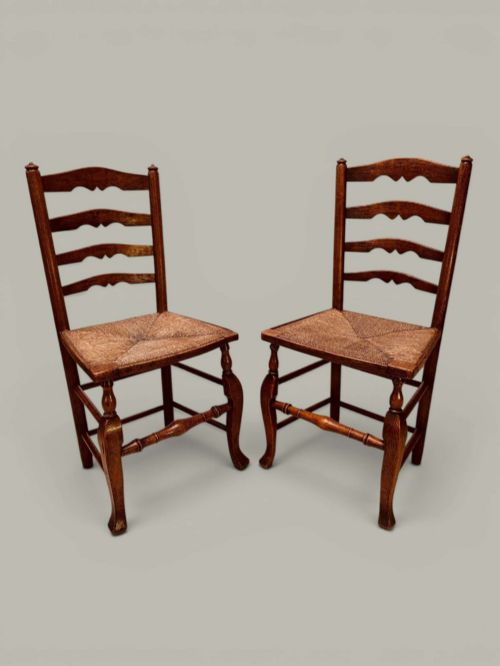
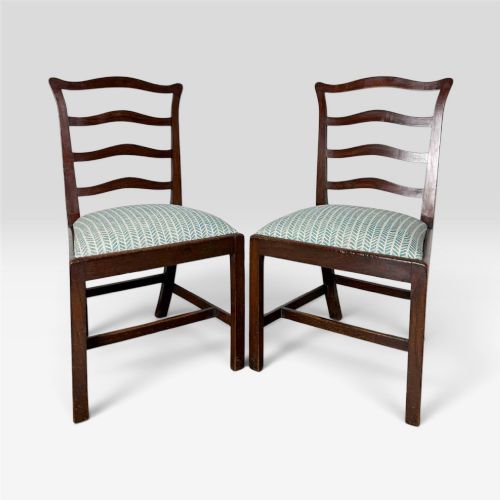
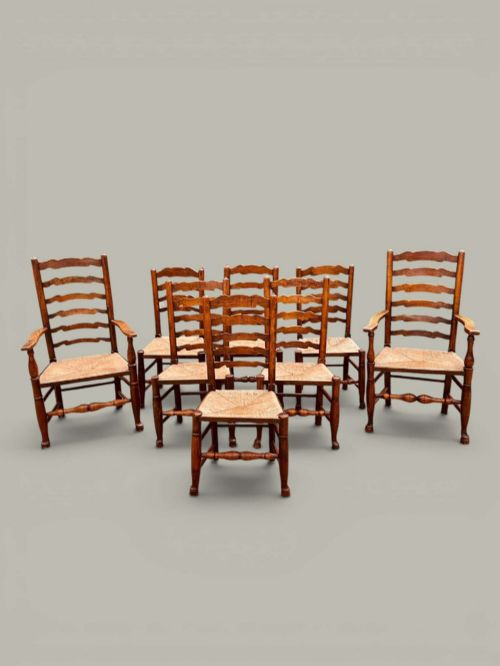
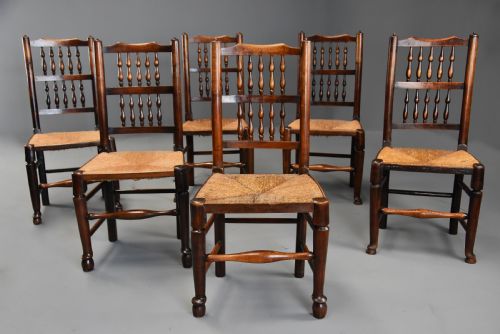
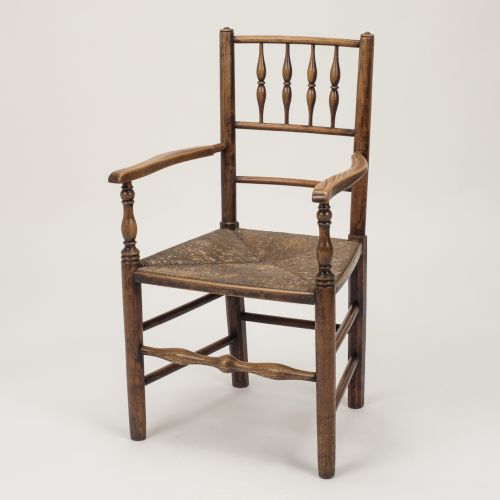
These georgian ash dining chairs comprise vernacular seating shaped by English country makers using accessible regional timbers. Buyers encounter ladder back side chairs, spindle back chairs, and carver chairs alongside sets featuring ash frames paired with elm seats.
Most examples originate from the nineteenth century while embodying Georgian country traditions and rustic farmhouse aesthetics. Pieces range from single armchairs to substantial sets of eight, often utilising rush or wood for the seating area.
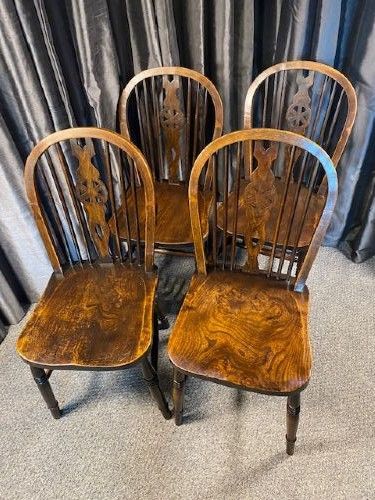
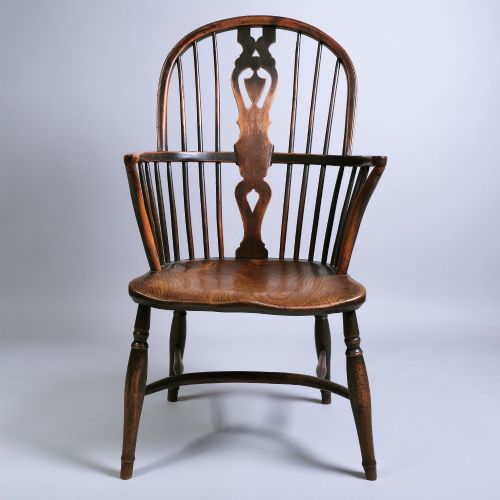
Regional Windsor variations also appear within this group, spanning low back, high back, and hoop back configurations. The construction relies on sturdy English country vernacular methods suited to everyday domestic life.
Materials and construction
Makers built these chairs primarily using solid ash for the structural frames and turned spindles, frequently combining it with elm for solid timber seats. Rush was also employed to weave traditional seating pads within country workshops.
Regional turners utilised green woodworking techniques and steam bending to form hoop backs and ladder backs. Joinery relied on traditional mortise and tenon joints secured with pegs to withstand daily wear.
Georgian Ash Dining Chairs Retail Price Guide 2026
Typical asking prices for georgian ash dining chairs among the pieces listed under this phrase on Sellingantiques today, from the lower quarter to the upper quarter. They describe what is for sale here now, not the wider market.
Country makers built these sturdy seats to withstand hearty meals and fireside tales without losing their rustic charm.
Assessing quality and character
Quality rests upon the integrity of the timber framing and the preservation of the original surface patina developed over generations. Uniformity across larger sets of chairs elevates the desirability for dining spaces.
Finer examples display careful turning on the spindles and legs combined with well-proportioned arm designs on carvers. The balance between the ash frame and the contrasting elm seat distinguishes superior country craftsmanship.
The Georgian Ash Dining Chairs Glossary
- Ash
- A tough, pale hardwood valued by country makers for its elasticity and strength in bentwood components. It forms the primary frame material for these regional chairs.
- Elm
- A durable, interlocking timber traditionally selected for solid saddle seats because it resists splitting under pressure. It frequently pairs with ash framing.
- Ladder back
- A chair back construction formed by a series of horizontal wooden slats set between upright posts. This traditional vernacular design appears in single chairs and large sets.
- Spindle back
- A rustic seating design featuring a row of slender turned wooden uprights supporting the backrest. These are associated with English country workshop production.
- Rush
- Dried marsh grass twisted into cords and hand-woven to create durable, textured seat pads. It provides a traditional seating surface for ladder back chairs.
Georgian Ash Dining Chairs: Frequently Asked Questions
How do I clean an ash chair?
Dust regularly with a soft, dry cloth to protect the historic timber surface and prevent grit accumulation.
Avoid liquid cleaners or household polishes that can degrade the dry patina characteristic of vernacular country furniture.
Can I use these for daily dining?
These robust country chairs were designed for everyday domestic use and remain structurally suited for contemporary dining tables.
Ensure joints remain stable over time and protect rush or wood seats from excessive moisture and direct heat sources.
What is a carver chair?
A carver chair is an armchair traditionally placed at the head of a dining table, featuring supportive armrests.
In country sets, these were often made to match side chairs while offering a wider and more commanding seat for the head of the household.
How are periods distinguished?
Distinguishing periods relies on observing vernacular regional styles, turning profiles, and the evolution of country workshop construction techniques.
Items span the eighteenth and nineteenth centuries, reflecting enduring rural traditions that persisted long after urban neoclassical tastes changed.