
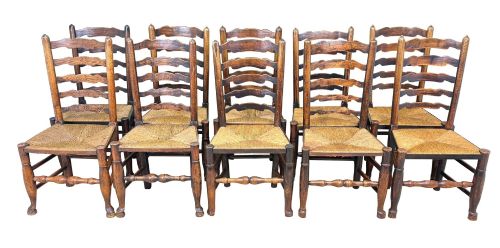
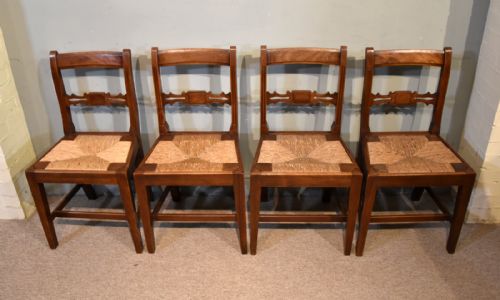
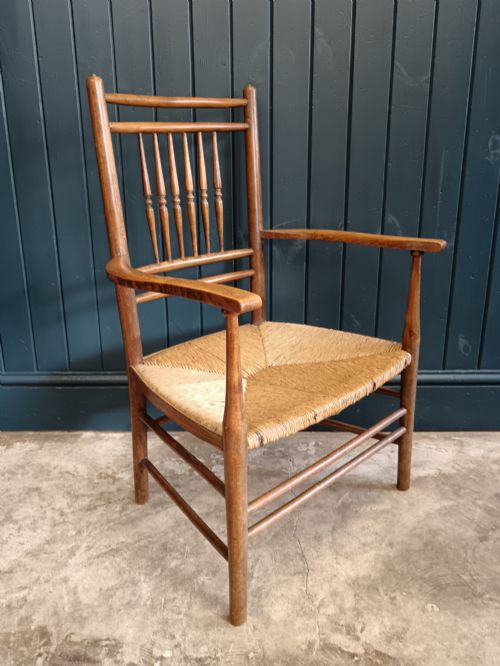

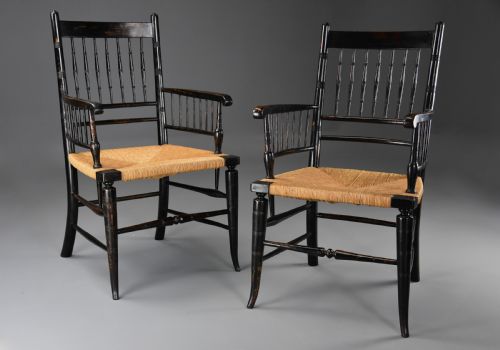


19th Century Rush Chair
A 19th century rush chair brings authentic vernacular character and traditional woven seating into a room.
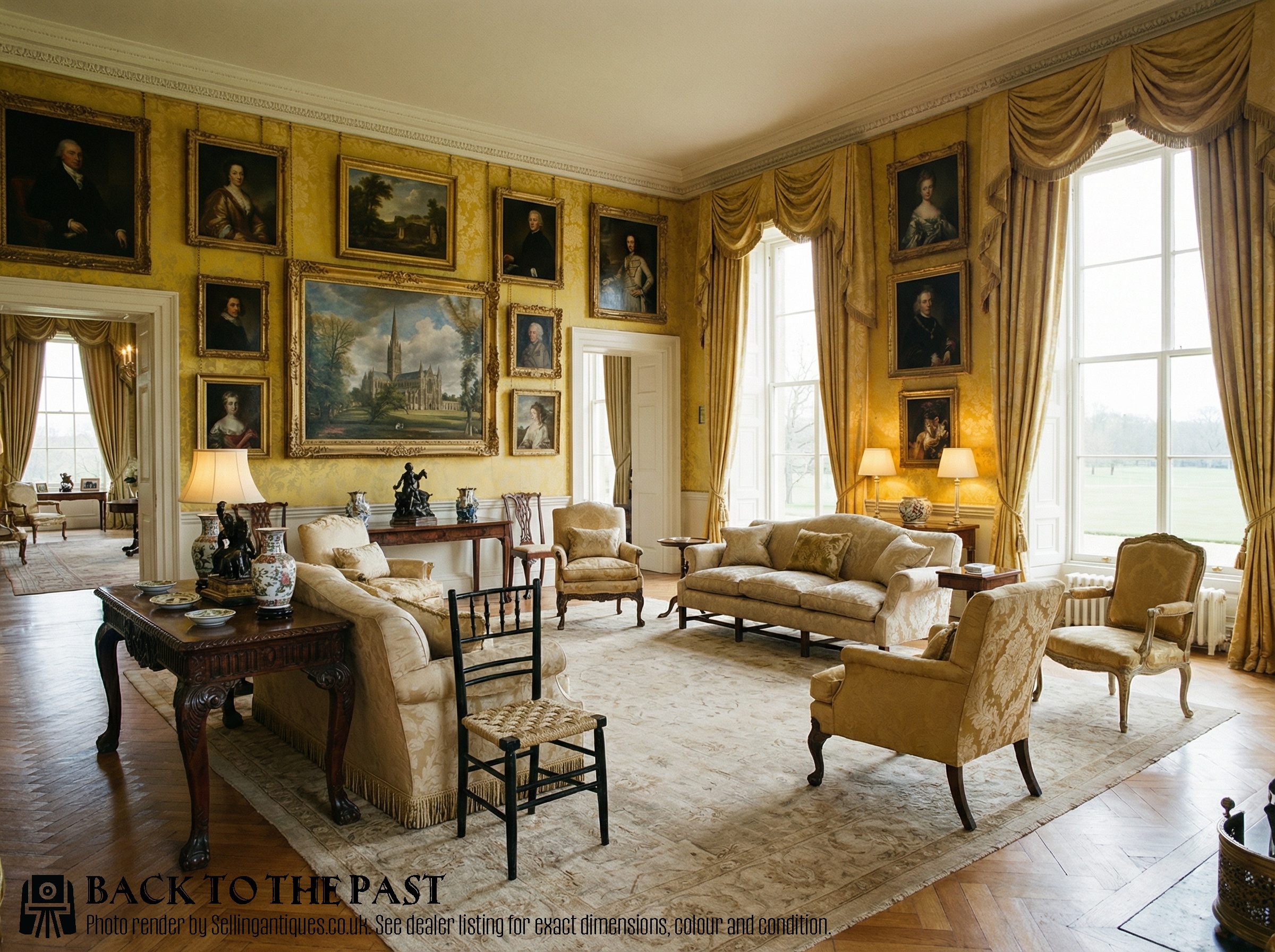
19th Century Rush Chair
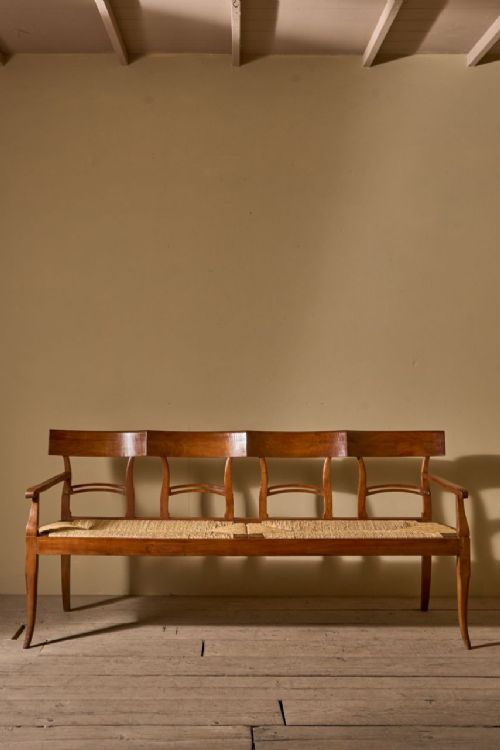
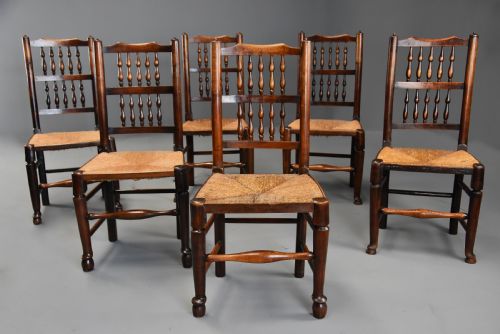
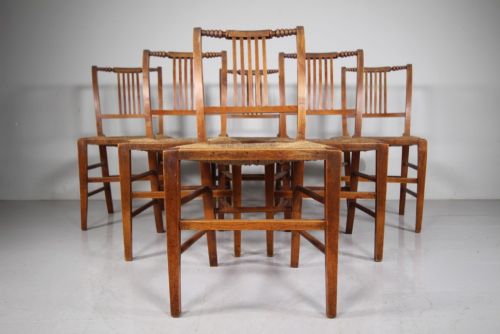
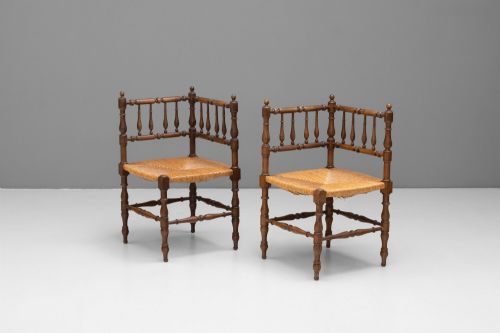
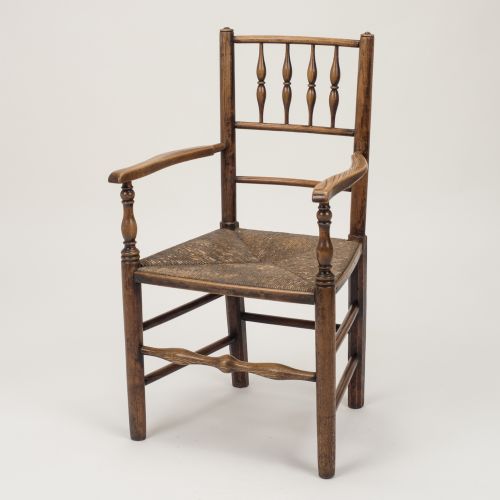
The inventory includes regional variations such as Lancashire spindlebacks, Dales chairs, and iconic Arts and Crafts models associated with makers like Morris and Co. These pieces range from simple utilitarian kitchen seating to sophisticated parlour armchairs designed by prominent nineteenth-century architects and designers.
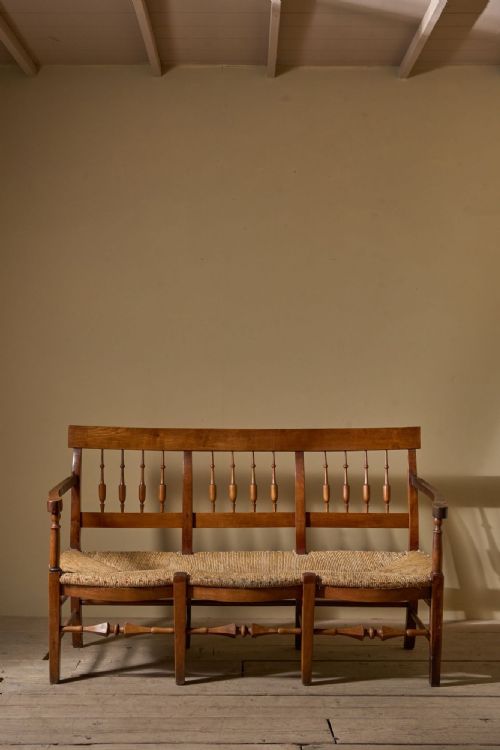
Forms span from straightforward side chairs to expansive dining sets, rocking chairs, child's chairs and hall benches. Elm, ash, fruitwood and beech predominate as the primary framing timbers, often paired with rush, seagrass or plaited straw seats.
Materials and construction methods
Makers constructed frames predominantly from native hardwoods like ash, elm and fruitwood, often combining timber types within a single chair to balance structural strength in the legs and frame with flexibility in the ladder or spindle backs. Turning, steam-bending and mortise-and-tenon joinery formed the structural backbone of these vernacular seats.
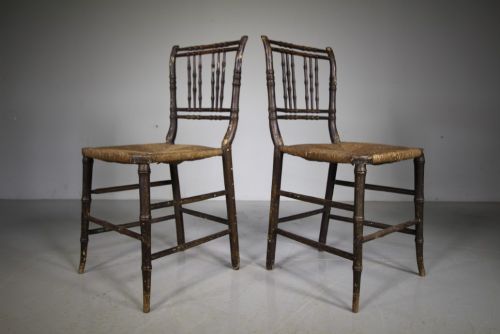
Seats were hand-woven using natural rush or plaited straw, twisted and wrapped tightly around wooden seat rails to create a durable, supportive surface. Frames were frequently left bare, painted, ebonised or polished to suit domestic tastes across different decades of the nineteenth century.
Materials span native hardwoods including ash, elm, beech, and fruitwood paired with traditional rush or straw.
Distinctions in construction and design
Quality rests in the integrity of the timber frame, the tightness and symmetry of the hand-woven rush seat, and the retention of original surface treatments such as early paint or a deep, natural patina. Strong structural joints and balanced proportions distinguish finer regional examples from simpler utilitarian seating.
Attribution to notable workshops or specific designers elevates certain chairs beyond standard vernacular production, while matched sets command greater interest due to the survival of complete groupings over centuries of domestic use.
Philip Clissett·Morris and Co·Philip Webb·Ford Madox Brown·Liberty of London
The 19th Century Rush Chair Glossary
- Rush seat
- A seating surface woven from dried marsh rushes twisted into cords and wrapped around the internal seat rails. This technique creates a resilient, textured pad common in vernacular seating.
- Ladderback
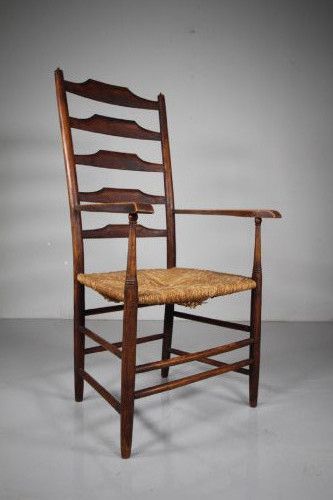
- A chair back featuring multiple horizontal arched rails between the rear upright posts. This regional style was widely produced in England and France throughout the nineteenth century.
- Spindleback
- A chair construction utilising numerous thin, turned wooden uprights supporting the backrest. These elements provide lightweight structural strength.
- Carver
- An armchair designed in a regional or country style, typically featuring open arms attached to a wider seat frame. They often accompanied sets of matching dining chairs.
- Patina
- The deep surface sheen and mellow colour developed by wood over decades of handling and wax polishing. This quality marks genuine age and continuous use.
- Vernacular
- Everyday domestic furniture built by local craftsmen following regional traditions rather than high-style metropolitan fashions. These pieces prioritise practical utility and local materials.
19th Century Rush Chair: Frequently Asked Questions
How do I clean a rush seat?
Dust the woven surface gently with a soft brush or vacuum attachment on a low setting to remove trapped debris. Avoid using liquid water or harsh cleaning agents, which can cause the natural fibres to become brittle and snap.
Condition the dry rush occasionally with a very light application of boiled linseed oil applied sparingly on a cloth. This practice helps maintain flexibility in the twisted plant fibres without softening the structure.
Were these chairs used for dining?
Many nineteenth-century examples served primarily around farmhouse kitchen tables or cottage dining spaces. Sets of matching side chairs and carvers catered to everyday family meals.
Lighter parlour chairs and fireside models were intended for sitting in reception rooms or bedrooms. Their lighter frames made them easy to move around the house as needed.
Can I sit in an antique rush chair?
Most surviving examples remain entirely sturdy for regular daily sitting if the frame and woven seat are sound. Inspect the joinery and check that the rush shows no major breaks before heavy use.
Delicate child-sized variants or chairs with significantly worn webbing are better suited for decorative display. Professional conservation can often re-web compromised seats to restore full weight-bearing capacity.