
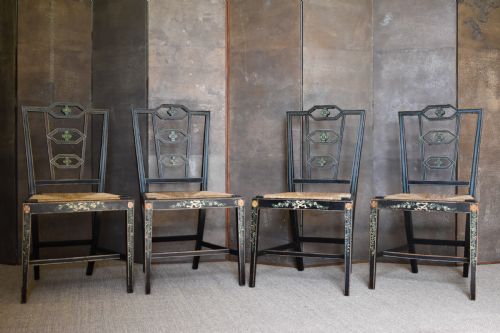
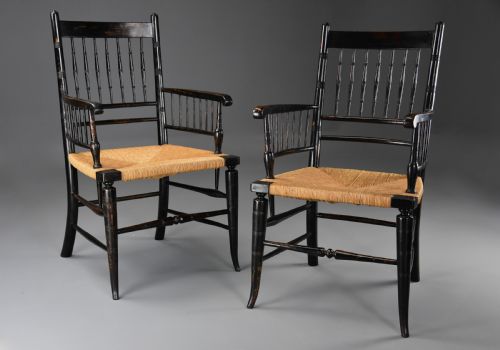


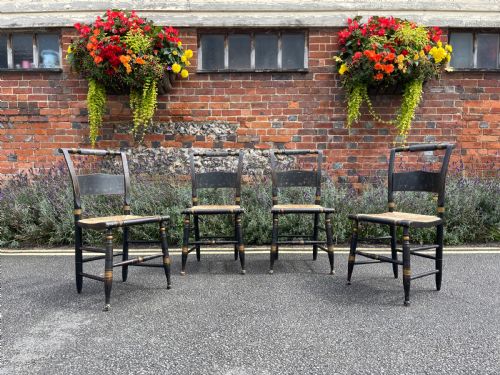
Black Rush Seat Chair
A black rush seat chair brings vernacular craft and dark timber straight into the room, offering sturdy seating with genuine historic character.
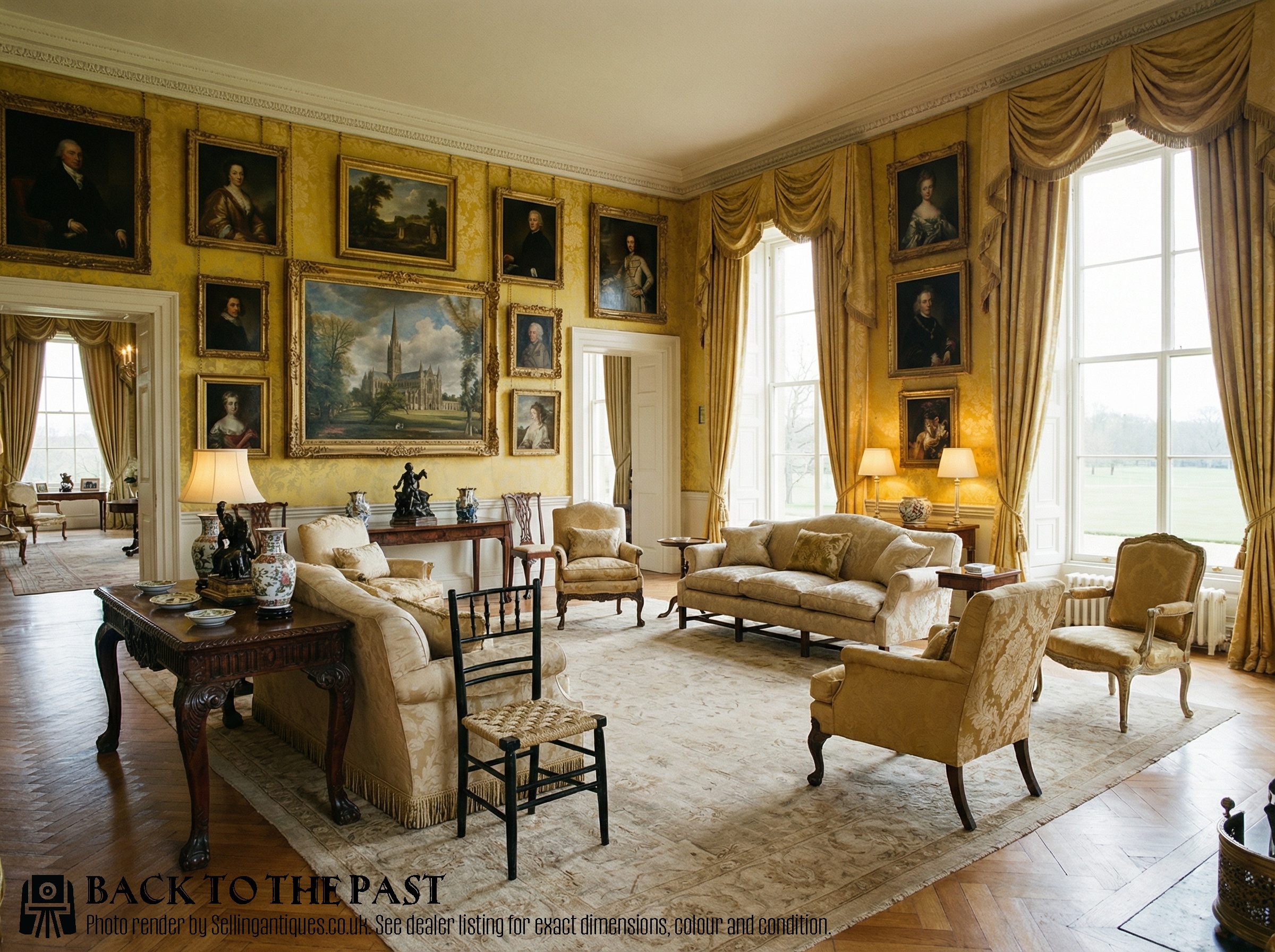
Black Rush Seat Chair
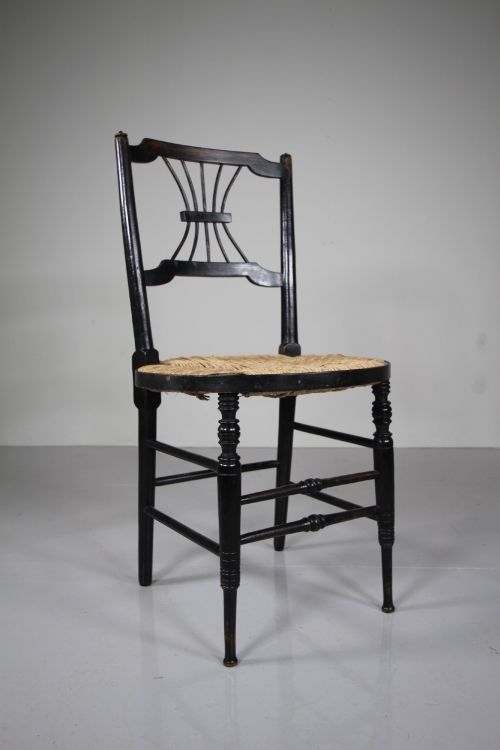
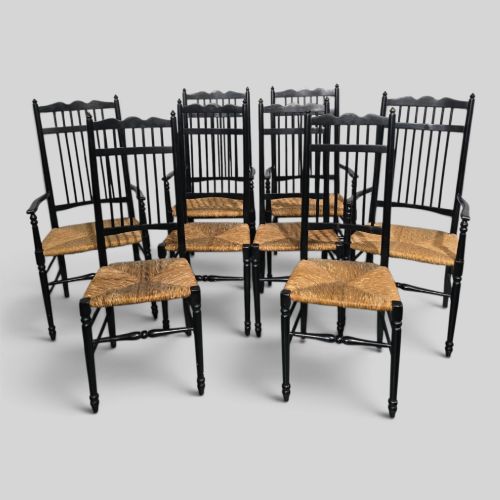
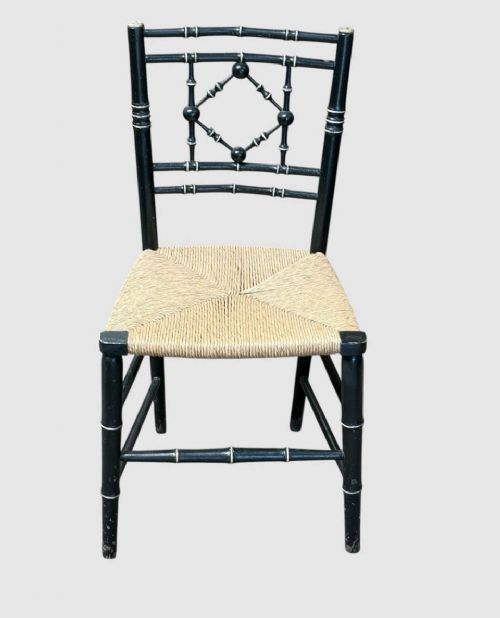
When you search for a black rush seat chair, you find seating shaped by regional traditions and later design movements, spanning the Georgian, Regency, and nineteenth century periods. These pieces appear as side chairs, dining chairs, armchairs, rocking chairs, and a child's chair, reflecting diverse domestic uses from country houses to urban artistic interiors.
You are most likely to meet examples from the Arts and Crafts and Aesthetic Movement circles, particularly ebonised beech and timber frames fitted with natural rush. The selection includes individual seating, pairs, and full sets, uniting dark painted surfaces with woven rush seats.
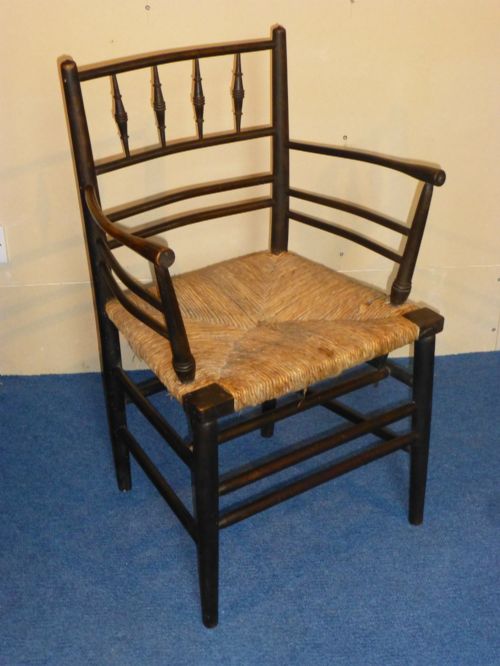
The forms range from simple provincial rockers to architect-designed Sussex chairs associated with Morris and Co. These designs bridge utilitarian country seating and sophisticated nineteenth-century aesthetic ideals.
How they were made
Makers shaped frames from beech and other timbers, applying dark paint or ebonising the wood to achieve a sleek, uniform finish that contrasted with lighter interiors. Some pieces retain original paint, showing the surface treatment applied during manufacture.
Craftsmen wove natural rush tightly around the seat rails to form a durable, textured pad that provides flexible support. Joinery relied on traditional turning and pegged construction suited to domestic seating.
Styles represented across the inventory include Arts and Crafts, the Aesthetic Movement, Regency Country, and American Provincial forms.
What varies in quality
The refinement of the turning and the integrity of the ebonised finish dictate the distinction between standard provincial production and high-style workshop pieces. Evidence of attribution to specific designers or makers elevates certain examples.
The tightness and preservation of the natural rush seating, alongside the retention of original surface paint, mark the difference between heavily altered pieces and those surviving in sound original condition.
Morris and Co·Philip Webb·Rossetti·Liberty of London·Ford Maddox Brown·Hitchcock
The Black Rush Seat Chair Glossary
- Ebonised wood
- Timber stained or painted black to imitate expensive ebony. This finish was widely favored during the nineteenth century for furniture influenced by the Aesthetic Movement.
- Rush seat
- A seating surface woven from dried marsh grass twisted into cord. It provides a resilient, textured platform common in vernacular and Arts and Crafts chairs.
- Arts and Crafts
- A design movement valuing handcraft, vernacular traditions, and simple construction over mass production. Chairs from this style often feature clean turned frames and rush seats.
- Side chair
- An upright chair without arms, designed primarily for dining or occasional use around a room. These forms make up a large portion of traditional seating.
- Sussex chair
- A lightweight nineteenth-century chair design inspired by traditional rural seating, featuring spindle backs and rush seats. It became a staple product of Morris and Co.
Black Rush Seat Chair: Frequently Asked Questions
What is a black rush seat chair?
A black rush seat chair is a piece of wooden seating finished with dark paint or ebonising, paired with a woven marsh-grass seat. These objects range from nineteenth-century Arts and Crafts designs to earlier country furniture.
They combine vernacular utility with decorative dark finishes, making them versatile additions to both traditional and modern interiors.
How were these chairs used historically?
These chairs served multiple domestic functions as dining seats, bedroom furniture, armchairs for reading, and rocking chairs for nurseries. Their sturdy construction suited daily family life.
Simpler forms fulfilled utilitarian roles in provincial homes, while designer-attributed models furnished artistic urban drawing rooms.
How do I live with rush seat chairs?
Living with rush seat chairs involves placing them away from direct heat sources and dampness, which can dry out or rot natural plant fibres. Regular gentle dusting keeps the ebonised surfaces clean.
Because the woven seats flex with weight, using them with care ensures the twisted rush remains tight and supportive over time.
How can I tell the periods apart?
Earlier pieces from the Georgian and Regency eras often display distinct regional joinery and original country paint. Later nineteenth-century examples frequently align with the Aesthetic Movement or Arts and Crafts ideals through ebonised beech and specific spindle-back forms.
Design attributions and workshop labels further help anchor pieces to specific decades within the Victorian period.