




Turned Wood Hall Chair
A turned wood hall chair is a sturdy timber seat that brings robust historic character and practical function to an entranceway.
Turned Wood Hall Chair
A turned wood hall chair is a rigid wooden seat designed for an entrance or hallway, drawing on centuries of domestic furnishing traditions. When searching for this form, a buyer encounters pieces originating from the seventeenth century through to the Edwardian era.
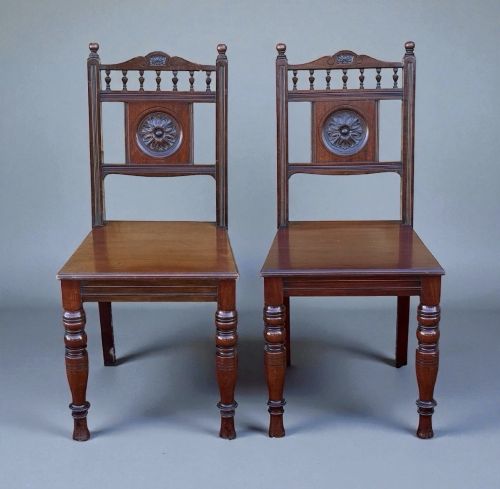
The selections on this page range from early oak and elm joint chairs with bobbin turnings to later Victorian and Edwardian beech or mahogany side chairs. Makers utilised sturdy timbers to withstand the brisk traffic of a hallway, resulting in upright backs and solid seats intended for brief seating.
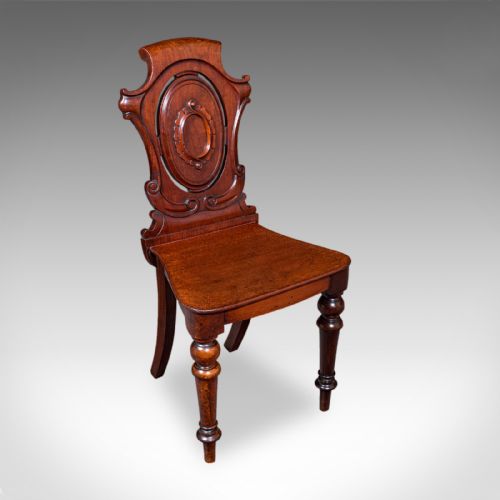
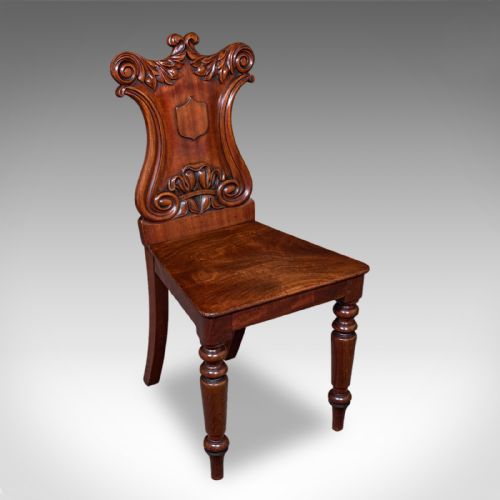
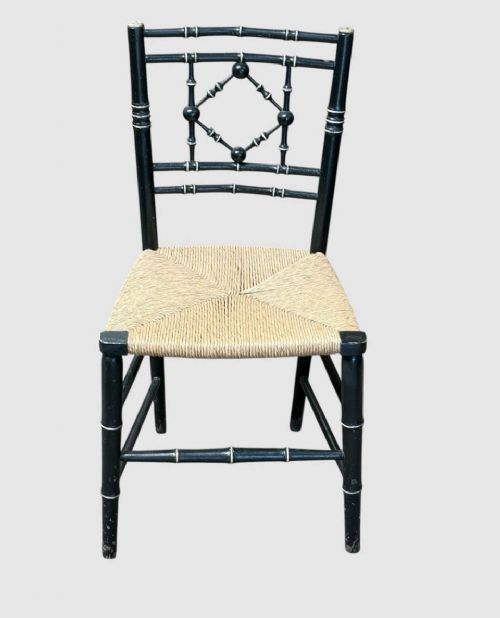
While many examples focus on utilitarian strength, others incorporate elaborate carved panels, shield backs, or faux bamboo framing reflecting Regency and Aesthetic Movement tastes. The form bridges the gap between functional corridor furniture and decorative artistic expression.
Materials and construction
Carpenters and cabinetmakers relied on indigenous hardwoods like oak, beech, mahogany, and walnut to construct these chairs. Oak and elm dominate the earlier seventeenth and eighteenth-century examples, whilst beech, mahogany, and satinwood appear more frequently in nineteenth-century and Edwardian pieces.
Turning techniques define the structural members, utilising lathes to shape cylindrical, bobbin, or bamboo-style components for legs, stretchers, and spindles. These turned elements are typically joined using traditional mortise and tenon joints, often secured with wooden pegs in earlier periods.
Secondary materials such as cane, rush, and brass occasionally supplement the timber frames for seats or decorative mounts. The reliance on solid timber construction ensures the structural longevity of these hallway seats.
The site records regional variations including Scottish reception seats, Welsh folk art spinning chairs, and Ceylonese satinwood examples.
Assessing quality and craftsmanship
Quality in a turned wood hall chair rests in the crispness of the lathe work and the integrity of the timber selection. Finer pieces display deeply cut bobbin turnings and well-proportioned components that maintain structural harmony without feeling overly heavy.
The treatment of the wood surface reveals the standard of manufacture, where period patination and original timber figure elevate a piece above standard utility. Subtle details such as hand-carved motifs or integrated panel work distinguish bespoke workshop production from mass-produced later variants.
The Turned Wood Hall Chair Glossary
- Bobbin turning
- A type of lathe-turned woodwork featuring spherical or spool-shaped segments repeated along the length of a spindle or leg. This decorative technique appears frequently on seventeenth-century and nineteenth-century chairs.
- Joint chair
- An early form of wooden seating constructed using mortise and tenon joints held together by wooden pins rather than glue. These sturdy seats date primarily to the seventeenth century.
- Side chair
- A light, armless chair designed to sit against a wall or around a table when not in use. Hall chairs and occasional chairs fall into this broad category.
- Faux bamboo
- A decorative treatment where hardwood is carved or turned to resemble the segmented stalks of natural bamboo. This style gained popularity during the Regency and Aesthetic Movement periods.
- Shield back
- A chair back shaped in the outline of a heraldic shield, commonly found on formal dining and hall seating from the late eighteenth and nineteenth centuries.
Turned Wood Hall Chair: Frequently Asked Questions
Where should I place a hall chair?
A turned wood hall chair suits narrow entranceways, hallways, or landings where a compact, upright seat is practical without obstructing movement. Because these chairs were originally made for brief seating in reception areas, they function well as accent pieces.
Pairing one with a small console table or placing it in an alcove lets the turned timber details stand out as a focal point in a room.
How do I date an antique wooden chair?
Dating relies on examining the timber species, joinery methods, and the style of the turnings. Earlier seventeenth-century examples often feature heavy oak construction with peg joinery and bobbin details, whereas nineteenth-century versions utilise beech, mahogany, or walnut.
Tool marks, wear patterns, and the colour of the timber patina also offer clues to the age and workshop origin of the piece.
Are these chairs comfortable for daily use?
Most historic hall chairs feature rigid wooden seats and upright backs designed for temporary use rather than lounging. Their primary purpose in historic homes was functional and decorative rather than ergonomic.
If utilised as a daily desk or dining seat, adding a loose cushion can improve comfort while preserving the historic timber frame.
What is the difference between a hall chair and an occasional chair?
A hall chair is traditionally a rigid, all-wood side chair designed specifically for entranceways and corridors, often featuring a solid timber seat and carved back. An occasional chair is a lighter, more versatile seat intended to be moved around a living space as needed.
Both forms utilise turned wood elements across various nineteenth and twentieth-century styles, but hall chairs generally prioritise a formal, architectural presence.