


Antique Rush Chair
An antique rush chair brings honest vernacular craftsmanship and tactile woven seating into daily domestic life.
Antique Rush Chair
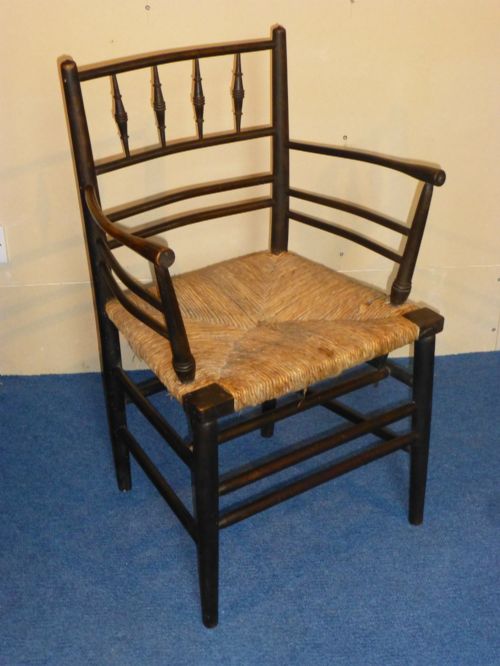
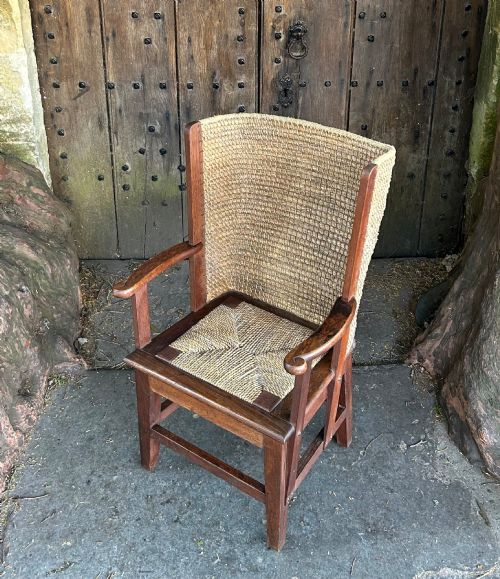
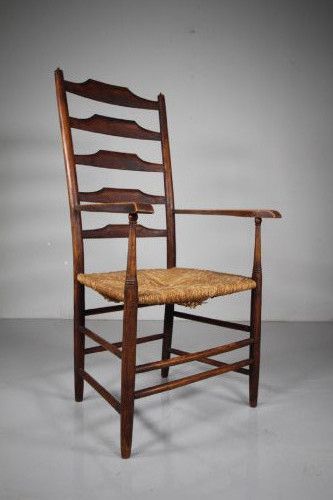
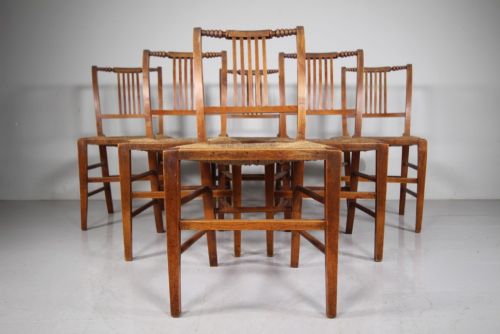
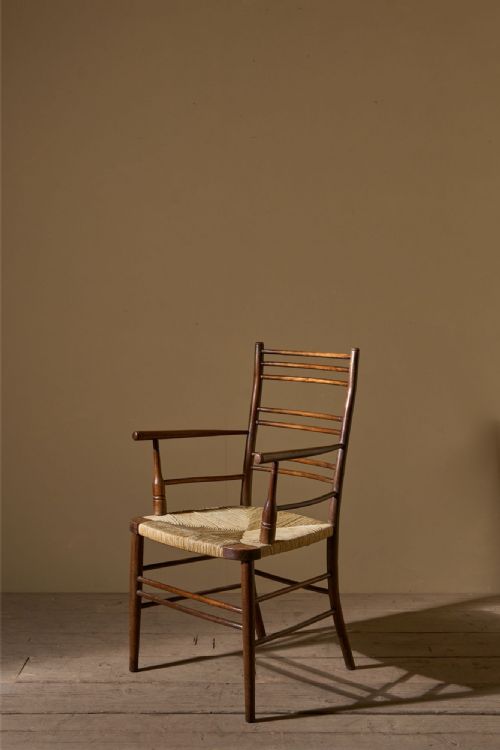
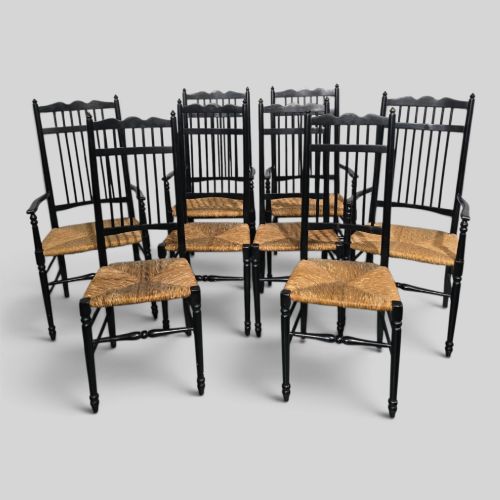
An antique rush chair is a traditional seating form defined by its woven natural marsh-grass seat and vernacular timber frame. When exploring this selection, buyers encounter everything from simple 18th-century country ladder-backs to sophisticated Arts and Crafts designs.
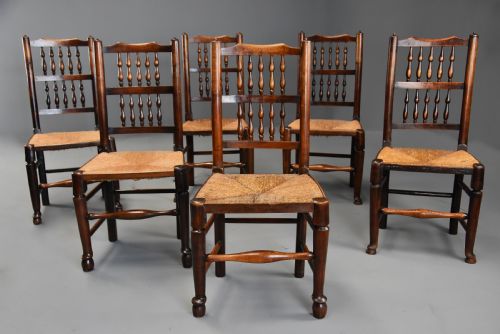
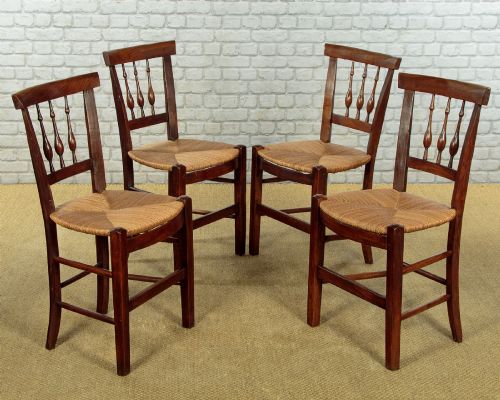
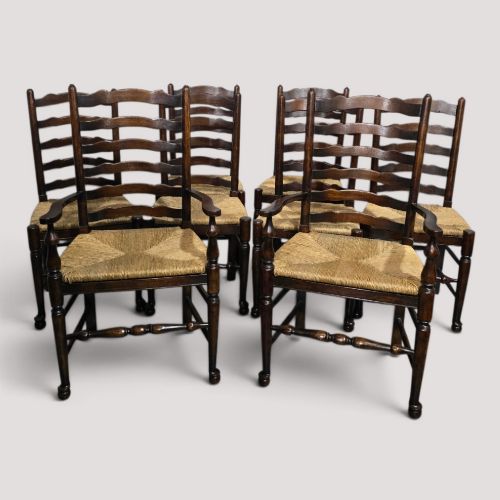
The most common forms on this page include dining sets, kitchen armchairs, and rocking chairs originating from English, French, and regional workshops. These pieces span centuries of domestic use, showing regional variations from Lancashire to provincial France.
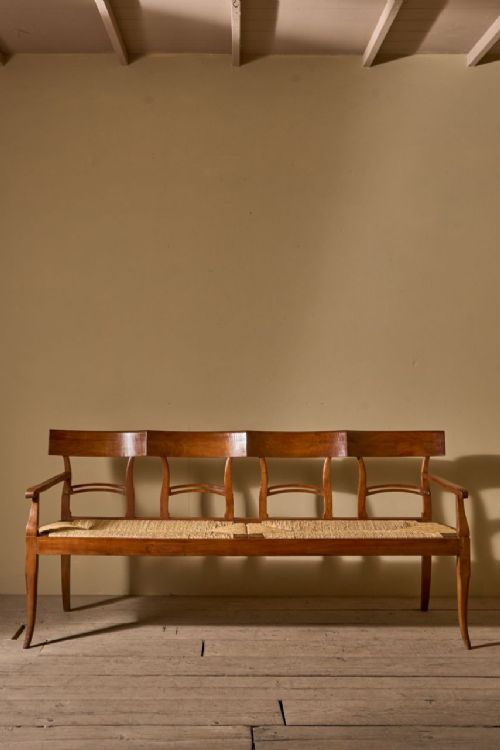
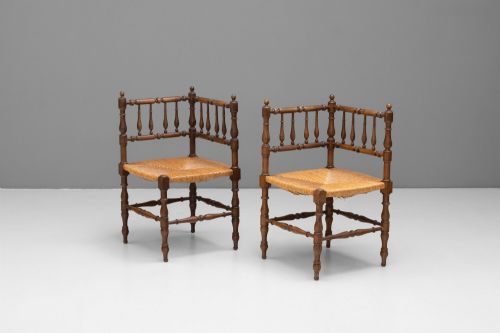
Beyond standard dining and side chairs, the selection includes benches, corner chairs, and specific movement pieces associated with makers like Morris & Co. Each piece relies on the tensile strength of twisted rush fitted tightly over wooden seat rails.
How They Were Made
Makers constructed the timber frames using local hardwoods such as ash, elm, oak, beech, and fruitwood, often turning spindles on a lathe or shaping components with drawknives. Joinery relies on traditional pegged mortise and tenon joints designed to withstand daily strain.
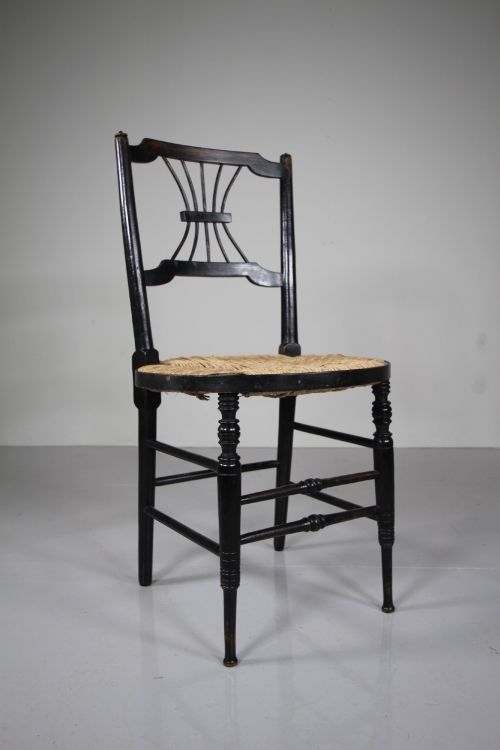
The seats are hand-woven from dried marsh rush, twisted into continuous cords and worked tightly around the wooden rails in a characteristic four-corner pattern. Some frames feature original painted surfaces, ebonised finishes, or natural patinated timber.
Regional vernacular makers utilised green wood technology where appropriate, allowing unseasoned timber to shrink around dried joints for permanent tightness. Structural integrity depends entirely on the symbiotic relationship between the rigid wooden skeleton and the flexible woven plant fibres.
Listings feature robust framing materials including oak, ash, elm, and beech across 18th, 19th, and early 20th-century periods.
What Varies in Quality
Quality in an antique rush chair rests primarily on the integrity of the timber frame and the tightness of the original or period-correct woven rush. Pieces retaining their initial surface finish - whether early paint, ebonising, or untouched patinated hardwood - command greater appreciation.
Proportion and turning detail distinguish vernacular work of high ambition from simple utility items. Chairs with well-balanced spindle backs, elegant rake to the legs, and comfortable armbows reflect superior regional design standards.
The precision of the rush weaving itself indicates the maker's skill, with uniform tension and neat diagonal corners demonstrating superior craftsmanship. Altered frames or completely replaced modern seating material change the historic character of a piece.
William Morris·Philip Webb·Philip Clissett·Rossetti·Morris & Co
The Antique Rush Chair Glossary
- Rush
- The dried stem of marsh plants, specifically Scirpus lacustris, twisted by hand into cords and woven to form resilient, supportive seats. This material provides a flexible surface that conforms comfortably to the sitter over decades of use.
- Ladder-back
- A chair style featuring horizontal arched slats between the rear upright posts. This form is common in regional English and French country furniture from the eighteenth and nineteenth centuries.
- Vernacular
- Everyday domestic furniture made by regional joiners and country craftsmen for local use rather than high urban fashion. These pieces utilise locally available timbers and traditional regional building methods.
- Spindle back
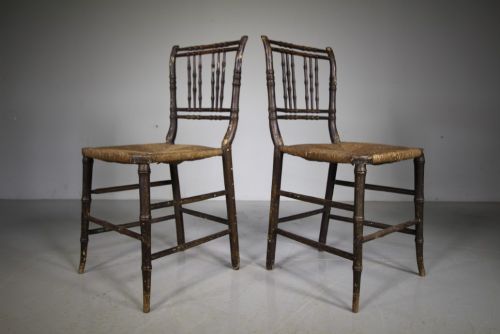
- A chair back constructed from a series of thin, turned wooden rods inserted into horizontal rails. This technique lightened the frame while maintaining structural strength.
- Carver
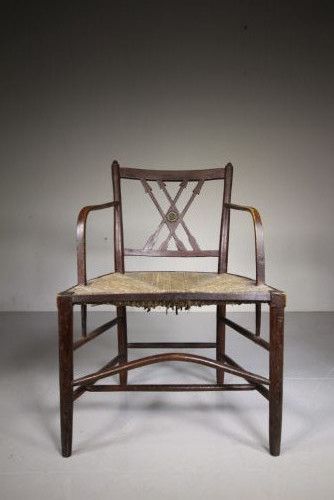
- A traditional term for an armchair, typically designed to sit at the head of a dining table. These chairs feature supporting elbow rests alongside the standard ladder-back or spindle frame.
Antique Rush Chair: Frequently Asked Questions
How do I care for a rush seat?
Keep rush seats dry and away from direct heat sources to prevent the natural plant fibres from becoming brittle and snapping.
Cleaning should involve only a soft brush to remove dust; avoid liquid cleaners or excess moisture which can rot the twisted marsh grass over time.
Are these chairs comfortable for daily use?
Traditional rush seats offer a surprisingly springy and supportive surface that adapts well to sitting for extended periods.
Many buyers use these pieces daily around kitchen tables or as fireside armchairs, provided the wooden frame remains tight and stable.
How can I tell an 18th-century chair from a 19th-century copy?
Examination of the timber tool marks, wear patterns, and construction joints reveals the age and method of manufacture.
Earlier country pieces often display hand-rived parts and subtle asymmetries characteristic of regional workshop production before industrial standardisation.
What does a harlequin set mean?
A harlequin set is a collection of dining chairs that match in general style, period, or material but vary slightly in individual details.
Country dining sets were frequently gathered together over time rather than purchased all at once from a single workshop.