

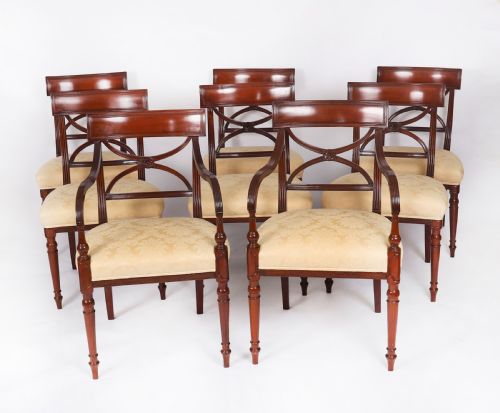


Reeded Back Armchair
A reeded back armchair offers crisp architectural shaping, appearing in mahogany across Georgian, Regency, and Victorian periods.
Reeded Back Armchair
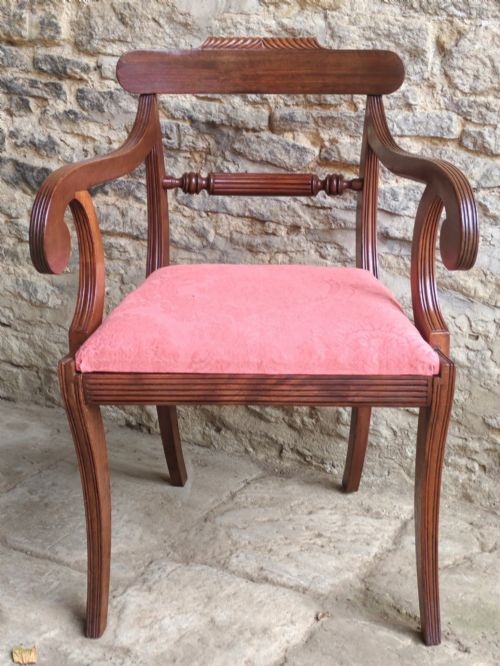
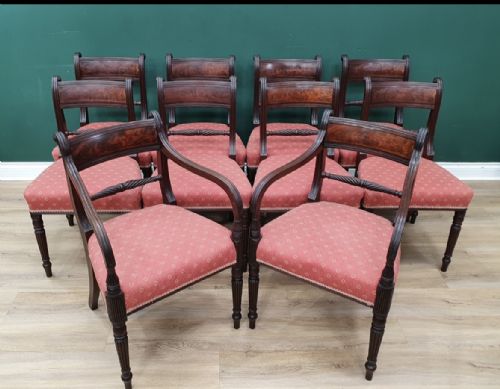
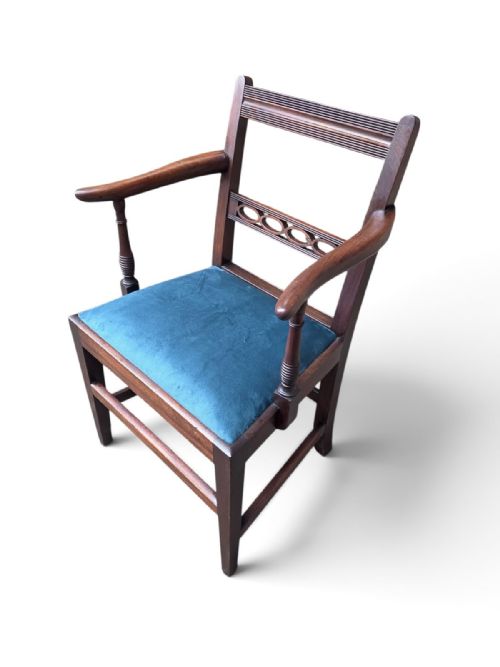
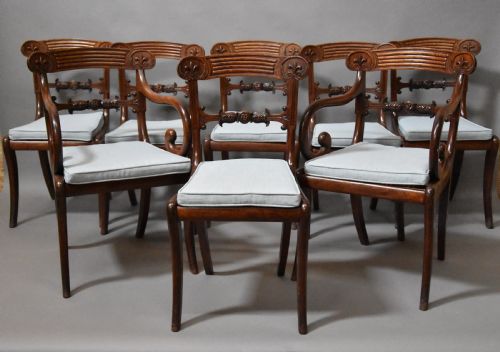
When searching for a reeded back armchair, buyers encounter seating shaped by classical influences from the Georgian, Regency, and Victorian eras. These pieces typically function as carver chairs, open armchairs, or barrel back designs used in dining rooms and libraries.
Mahogany dominates the listings, frequently paired with fabric, leather, cane, or velvet upholstery. The examples span single armchairs, pairs, and carvers originating from sets of dining chairs.
The aesthetic bridges formal Georgian proportions and the bolder decorative turns of the 19th century, including Anglo-Indian Colonial variations and Hepplewhite or Regency styles.
How they were made
Cabinetmakers constructed these frames primarily in solid mahogany, sometimes incorporating secondary timbers like timber and brass details. Woodworkers shaped the signature reeding directly into the stiles and rails using specialised moulding planes.
Upholstery techniques varied from drop-in seats to complex sprung foundations covered in velvet, leather, or woven fabric. Cane panels appeared on specific bergere forms, requiring precise hand-weaving through drilled frame margins.
Reeded Back Armchair Retail Price Guide 2026
Typical asking prices for reeded back armchair among the pieces listed under this phrase on Sellingantiques today, from the lower quarter to the upper quarter. They describe what is for sale here now, not the wider market.
Listings feature mahogany frames almost exclusively, spanning Georgian, Regency, and Victorian periods with occasional brass and cane additions.
What varies in quality
The crispness of the carved reeding defines the visual standard across these chairs, with superior pieces showing sharp, uniform parallel channels. Hand-finished detailing on the arms and crest rails indicates higher workshop competency.
Timber selection and structural joinery separate standard examples from finer commissions. Pieces retaining their original timber surfaces and sound frame integrity command greater appreciation.
The Reeded Back Armchair Glossary
- Reeding
- Parallel convex mouldings carved into wood surfaces, resembling a series of small reeds laid side by side. This decorative technique appears frequently on the back supports and legs of Regency furniture.
- Bergere
- An enclosed upholstered armchair with a wooden frame, often featuring cane panels on the back and sides. These pieces date predominantly to the Regency period and later revivals.
- Carver
- An armchair designed with open sides, historically placed at the head of a dining table and matching the surrounding single chairs. They frequently share the reeded back design of the set.
- Stile
- The upright vertical member of a chair back frame into which the horizontal rails and splats are tenoned. In reeded chairs, the stiles carry the carved fluting upwards to the crest.
Reeded Back Armchair: Frequently Asked Questions
How do I date a reeded back armchair?
Dating relies on observing timber characteristics, construction joints, and stylistic markers across the Georgian, Regency, and Victorian periods. Earlier pieces from the late 18th century display leaner proportions compared to heavier Victorian interpretations.
Secondary woods and upholstery methods also provide clues, though many chairs received new covers or minor repairs during their working lives.
Are these chairs suitable for daily use?
Solid mahogany frames provide sturdy support for everyday seating when the structural joints remain sound. Professional assessment of the internal webbing and joints ensures safe daily deployment in modern interiors.
Leather and durable fabric upholstery options withstand regular use better than delicate silks or fragile antique velvets.
What is the difference between a carver and an armchair?
A carver traditionally refers to an armchair designed specifically to match a set of dining chairs, offering a wider seat and open arms. General armchairs often served as standalone pieces for libraries or parlours.
Both forms utilise the characteristic reeded back detailing seen across the available inventory.
How do I clean mahogany frames?
Maintenance requires gentle dusting with a dry, soft cloth to prevent particulate build-up on the polished mahogany surfaces. Periodic application of microcrystalline wax preserves the timber without creating heavy buildup.
Harsh chemical cleaners and excessive moisture should remain far from both the wood and the upholstery fabrics.