
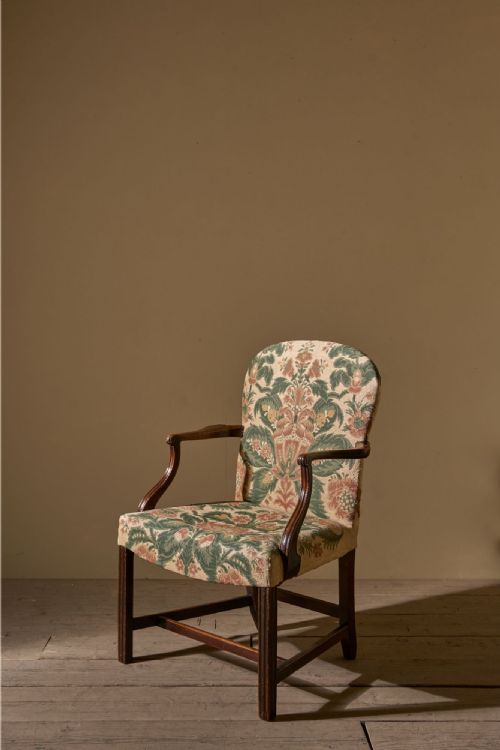
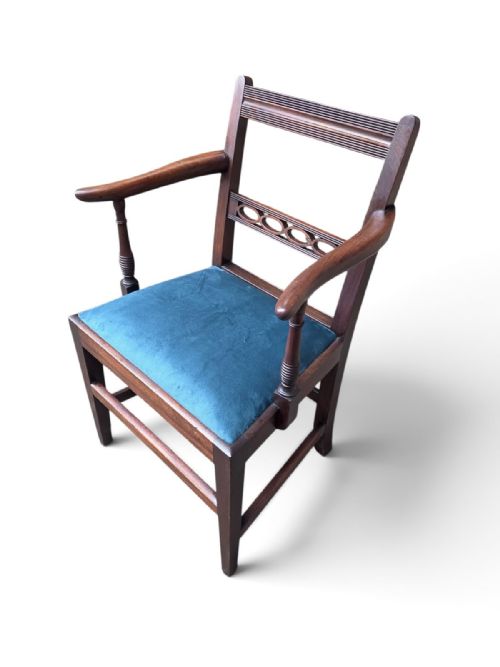
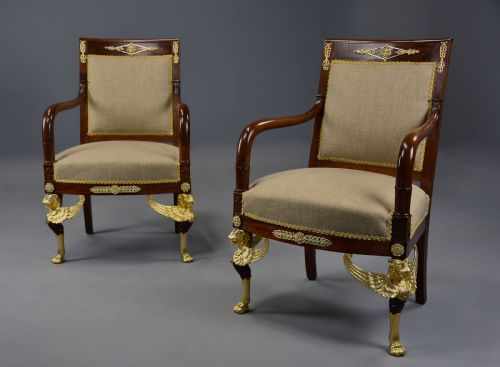
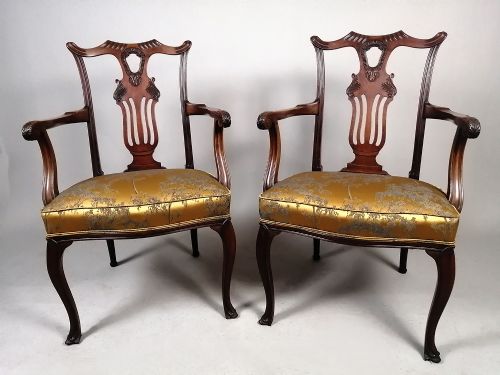
Antique Mahogany Open Armchair
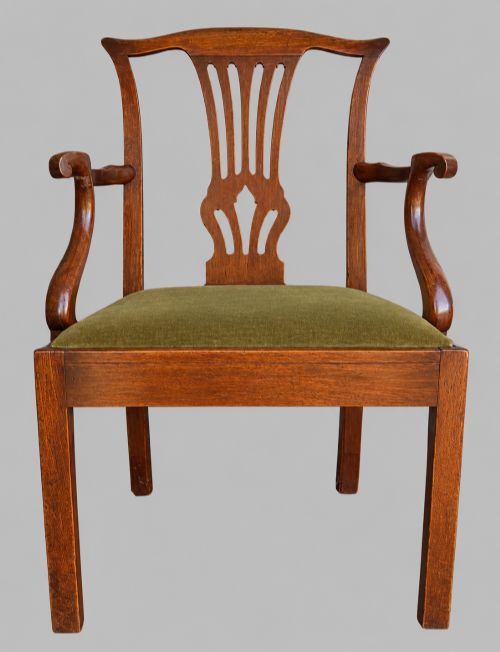
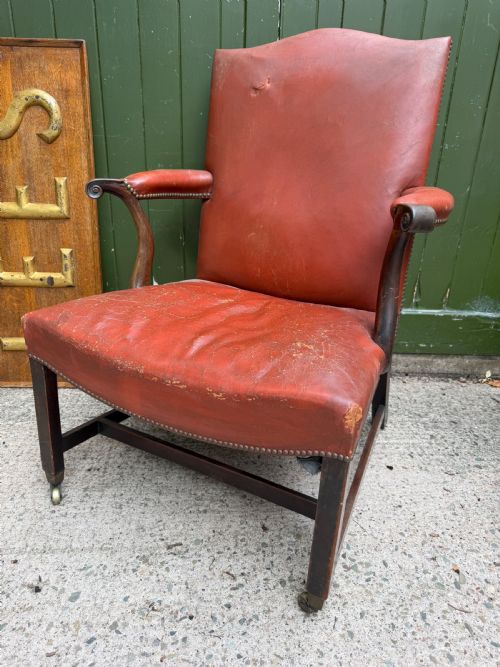
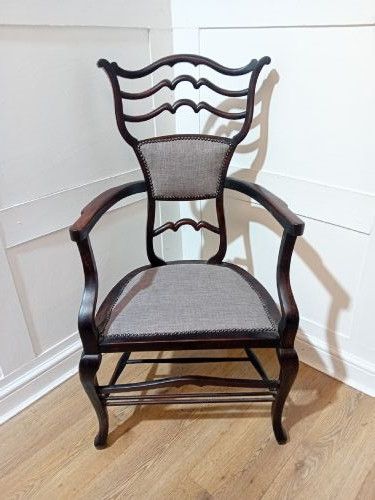
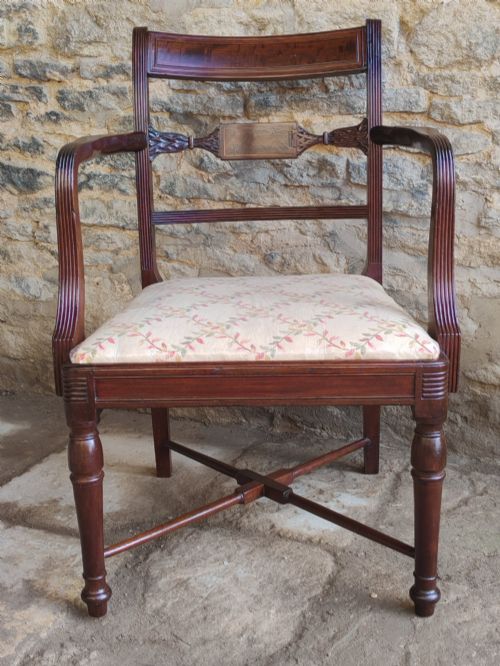
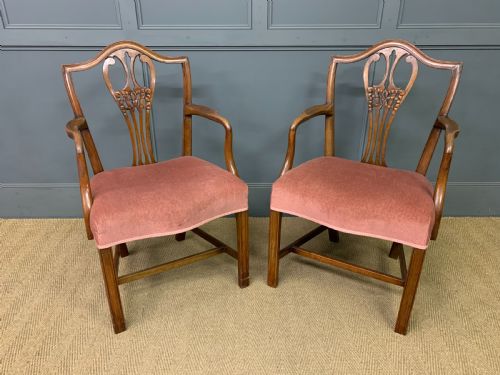
An antique mahogany open armchair offers a sturdy timber frame paired with open sides, making it a functional seat for a desk, library, or drawing room.
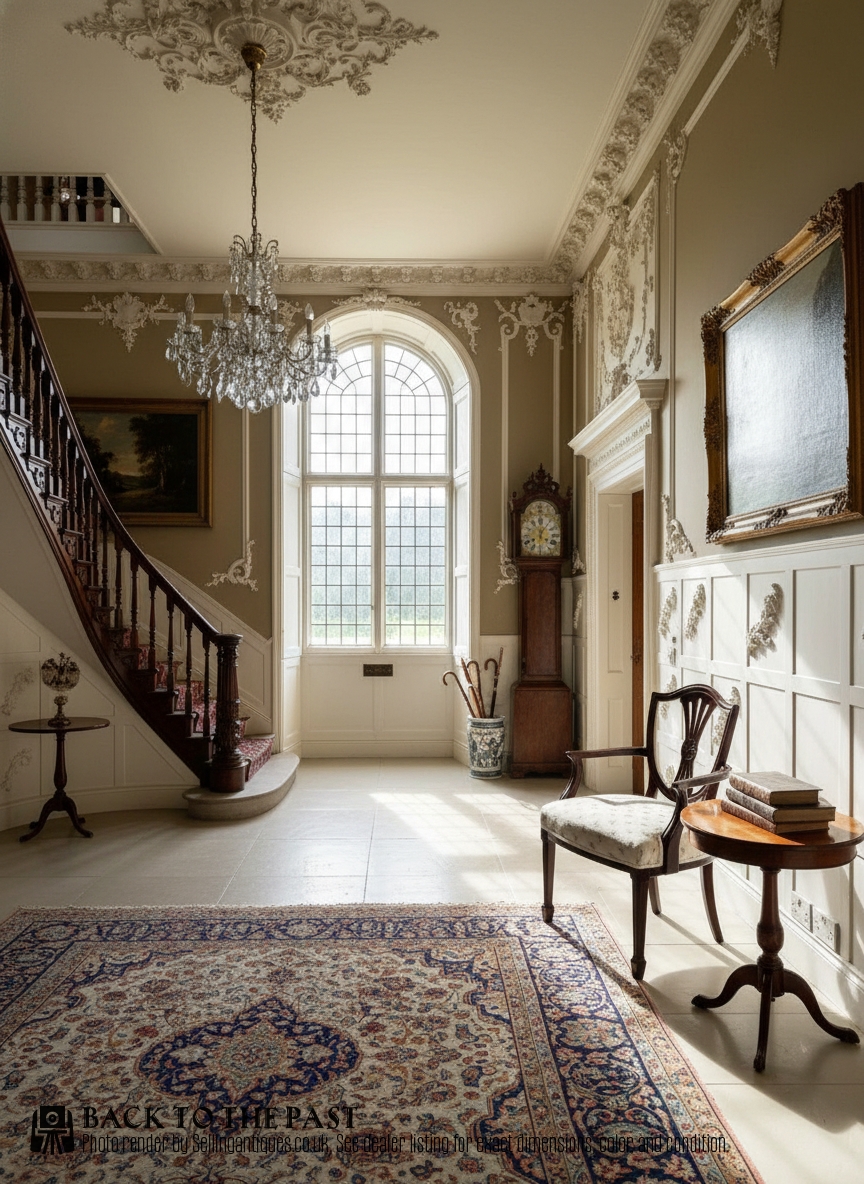
Defining the antique mahogany open armchair
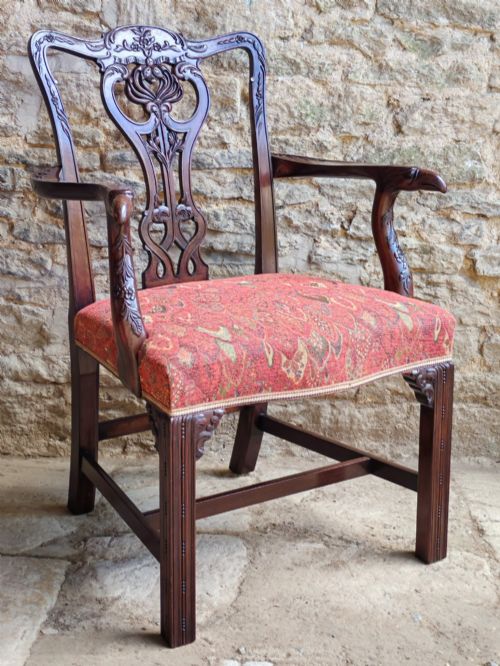
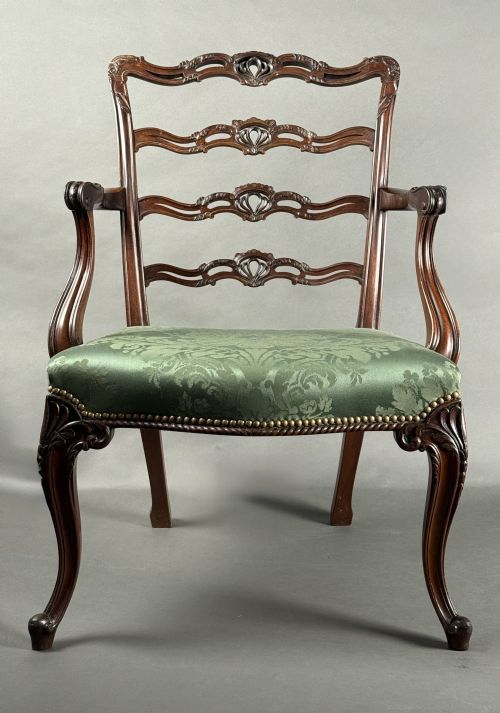
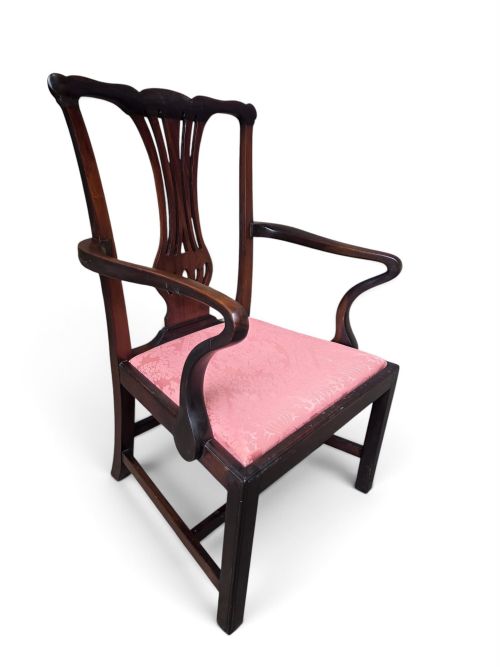
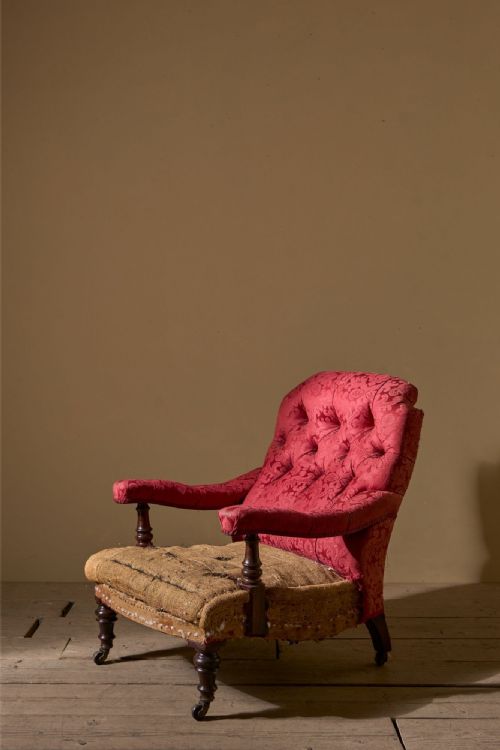
An antique mahogany open armchair is a seating form defined by its exposed wooden framing and unobstructed side arms, distinct from fully upholstered wingbacks or enclosed club chairs. These pieces appear across several eras, running from eighteenth-century Georgian and Chippendale interpretations down to nineteenth-century Victorian, Regency, William IV, and Edwardian revivals.
The versions most commonly met on this page span the sturdy library elbow chairs of the Georgian period and the lighter, sometimes inlaid salon or desk chairs of the Edwardian years. Makers built them in forms ranging from grand over-scaled library seats to slender carvers meant for writing desks and occasional tables.
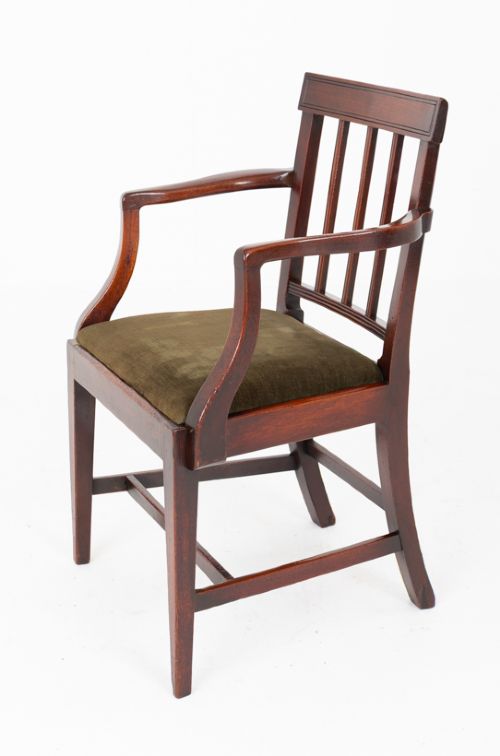
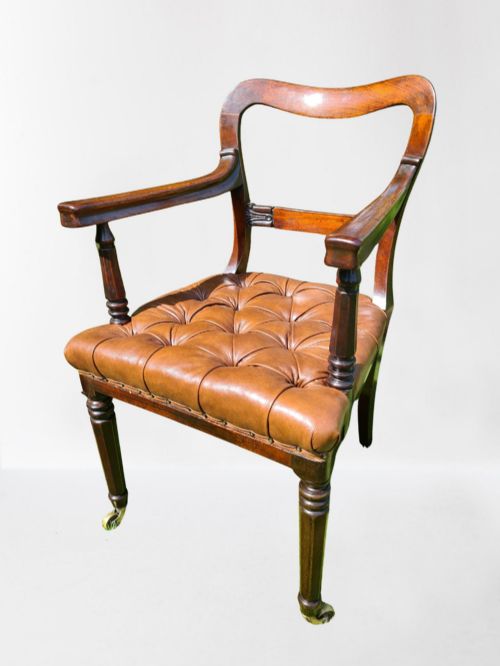
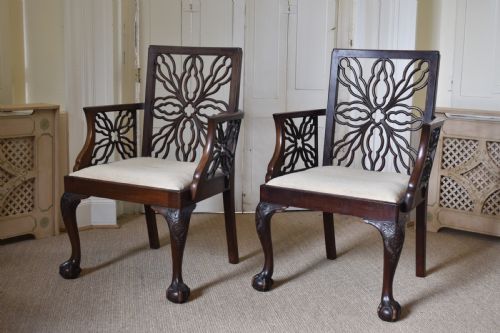
The frame construction typically involves open armrests supported by vertical posts, a fixed or drop-in seat pad, and standing legs that may terminate in claw and ball feet, castors, or simple tapered profiles.
Materials and construction methods
The primary material across these pieces is mahogany timber, selected for its dense grain and structural stability, sometimes embellished with wood inlay, marquetry, or satinwood banding. Workshops integrated various secondary materials for comfort and function, utilising leather, tapestry, fabric, linen, and upholstery over webbed or stuffed seat foundations.
Joinery techniques relied on traditional mortise and tenon joints to secure the seat rails, back supports, and arm junctions under daily weight. Metal elements such as brass appear periodically, utilised for desk chair swivels, castors on the feet, or decorative tacks securing the edge of the leather and fabric covers.
Retail Price Guide 2026
Typical UK retail prices for mahogany open armchair, calculated from the Sellingantiques database of over a million retail prices indexed since 2003. This retail price guide relies exclusively on Sellingantiques data; no external sources or auction records are used, so the figures do not describe the wider market.
Some Edwardian salon carvers were deliberately built slim to accommodate the era's grandest skirts without knocking the tea table.
Distinctions in craftsmanship and material grade
The division between standard examples and finer items rests in the depth of hand-carving on the mahogany frame, particularly along the crest rail, knuckles, and front legs. Superior pieces display crisp, articulate detailing in motifs like acanthus leaves or ball and claw feet, whereas simpler pieces rely on plain turned or straight members.
Timber selection and joinery precision dictate longevity, with dense, well-figured mahogany holding structural integrity far better than secondary woods finished to mimic it. The integration of the arms into the upright supports and the retention of harmonious proportions further separate utilitarian workshop output from master cabinet work.
The Antique Mahogany Open Armchair Glossary
- Mahogany
- A durable tropical timber known for its deep reddish-brown colour and stable grain. It served as the primary structural wood for fine English furniture from the eighteenth century onwards.
- Elbow chair
- A traditional descriptor for a wooden chair fitted with side arms. These seats were frequently placed at desks, dining tables, or reading corners.
- Marquetry
- The decorative technique of applying thin veneers of different woods to form pictorial or geometric patterns on a surface. It is often found on the crest rails and splats of Edwardian examples.
- Gainsborough chair
- A wide, low-seated library armchair with an upholstered back and open padded arms, resting on short legs. Eighteenth-century versions were designed for comfortable reading.
- Claw and ball
- A carved furniture foot depicting a bird's talon gripping a spherical ball. This decorative feature is characteristic of eighteenth-century Chippendale design.
Frequently Asked Questions
Where were these armchairs used?
These open armchairs originally served multiple functions in domestic interiors, operating as desk chairs, library seating, or occasional chairs in drawing rooms. Their open sides allowed individuals wearing voluminous historical garments to sit down without restriction.
Over time, homeowners repurposed them as comfortable reading seats or fireside companions. Today, they adapt easily to modern studies, bedrooms, and living spaces as statement accent seating.
How do I date an antique armchair?
Dating relies on observing structural proportions, stylistic motifs, and timber characteristics. Eighteenth-century pieces often display robust mahogany frames with hand-carved details, while Edwardian revivals tend to feature lighter proportions and decorative veneer inlay.
Examining the construction methods underneath the seat and checking for hand-cut joinery helps confirm the period of manufacture. Comparing the decorative vocabulary against documented historical styles provides further chronological context.
What is the difference between a carver and an elbow chair?
The terms carver and elbow chair both describe seating fitted with side armrests. Historically, carver chair often referred to dining armchairs that matched a set of single side chairs, while elbow chair functioned as a general descriptor for any seated furniture with arms.
Both types share open framing and were built to support the arms while reading or writing. On this page, these terms overlap to describe versatile open-sided seating.
How do I care for mahogany furniture?
Mahogany requires stable indoor humidity and protection from direct sunlight to prevent the timber from drying out or fading. Dusting the carved frame regularly with a soft, dry cloth preserves the polished surface.
Conditioning the wood periodically with appropriate natural wax maintains its lustre. Upholstered elements should be vacuumed gently and kept clean according to their specific fabric type.