

Mahogany Dining Carver
A mahogany dining carver brings structural timber and generous elbow room to the head of a table.
What They Are
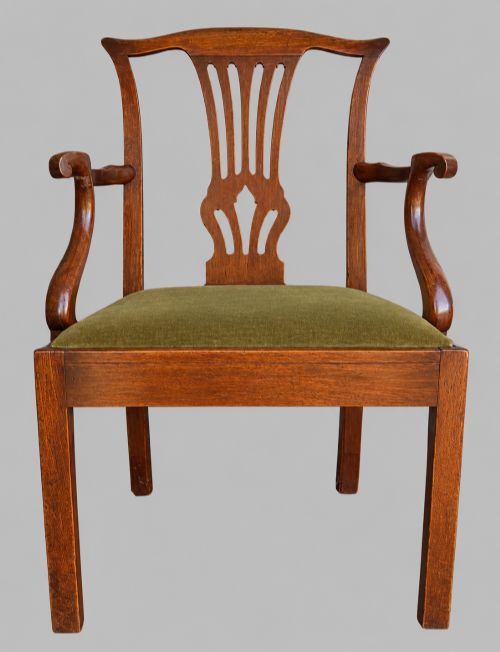
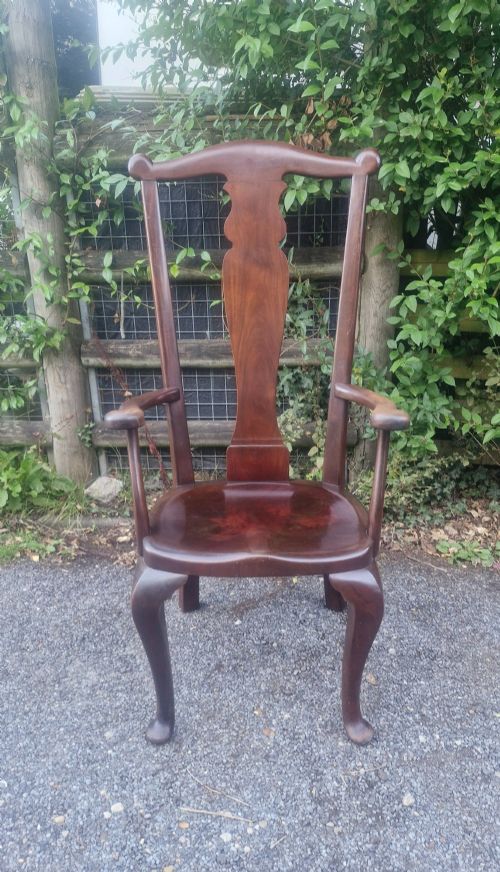
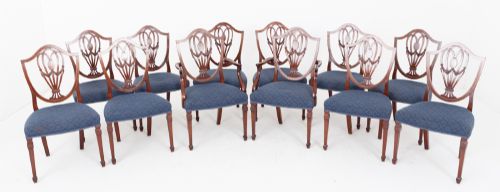
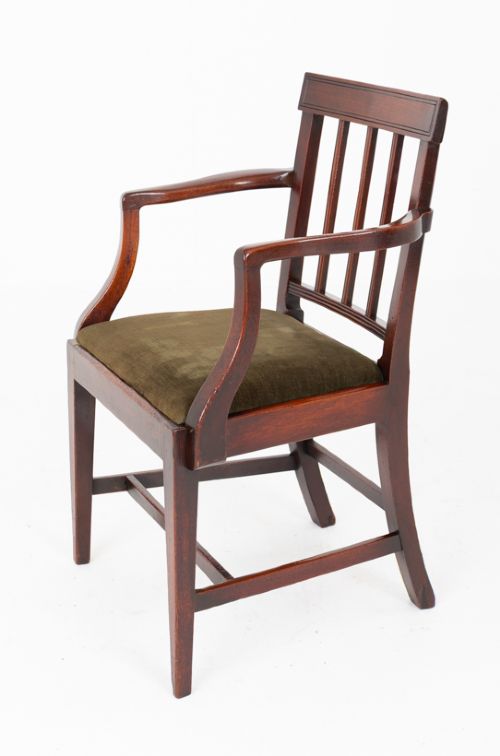
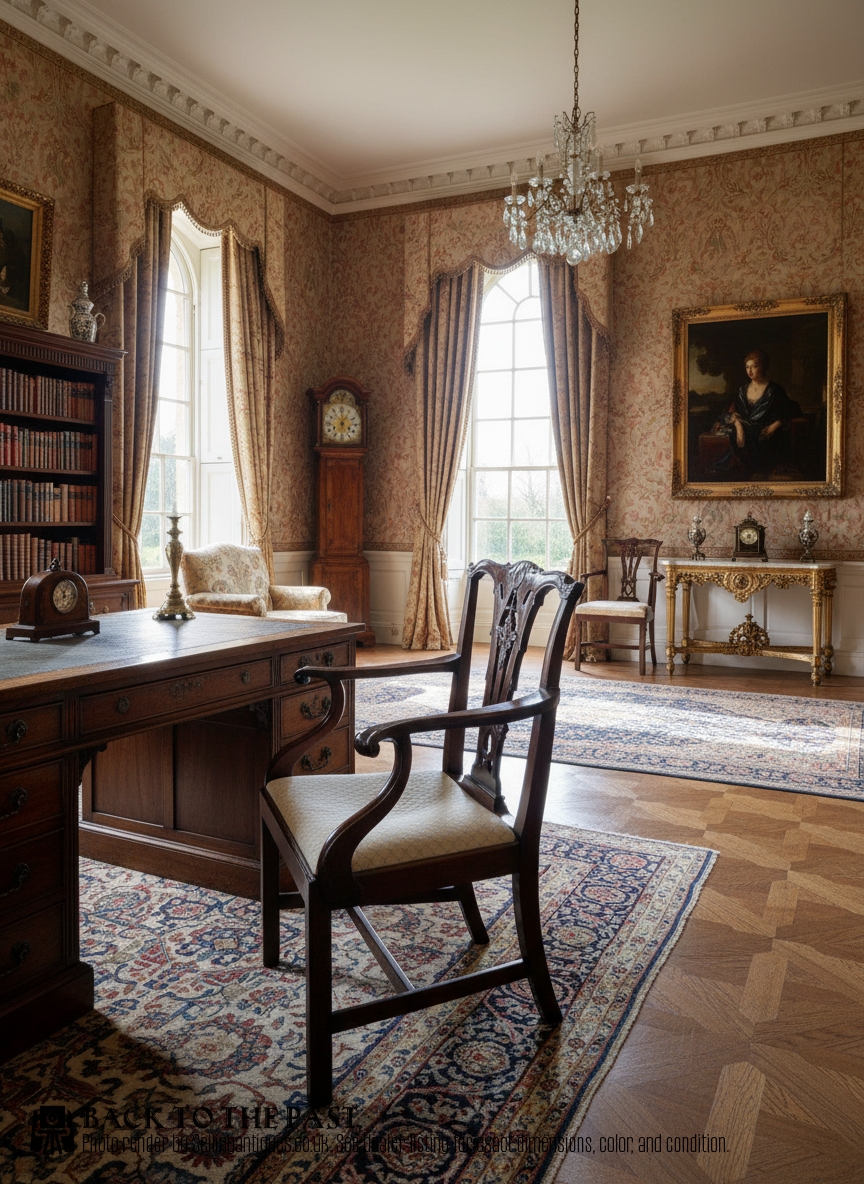
A mahogany dining carver is an armchair designed to match a set of single dining chairs, standing at either end of a table. These pieces function as robust seats for formal dining or as occasional desk chairs in domestic rooms.
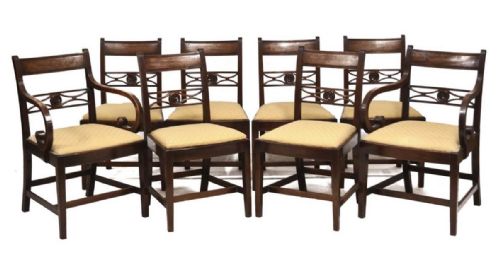
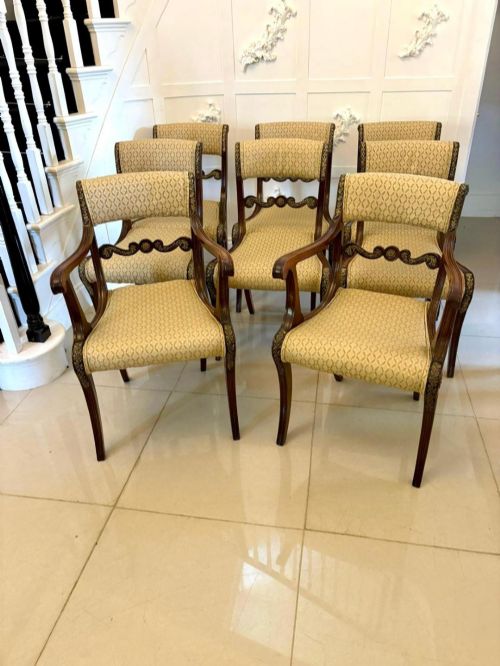
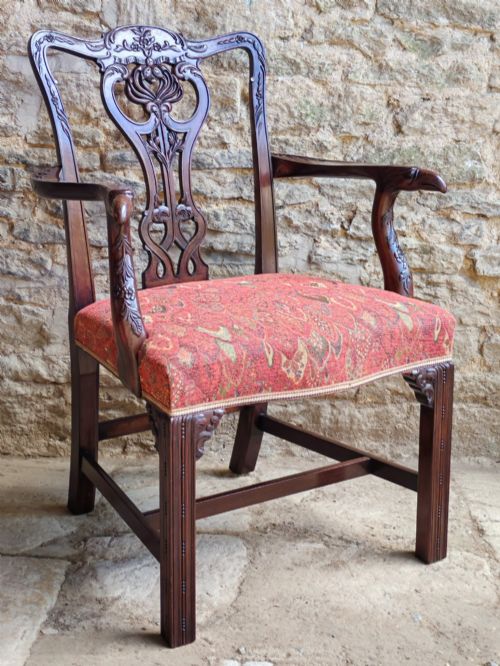
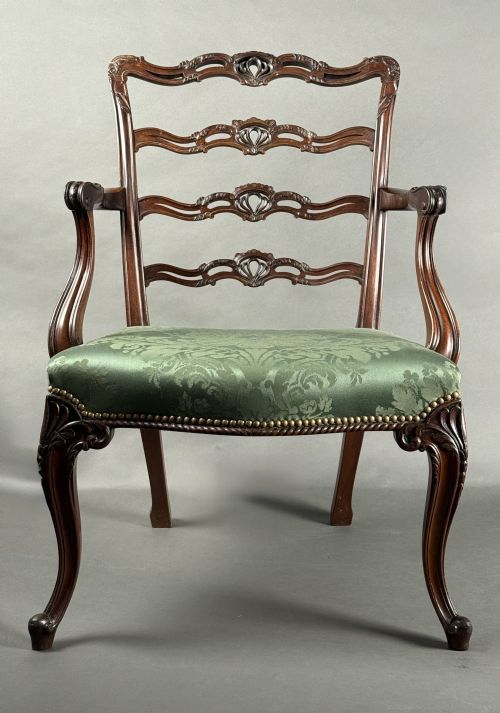
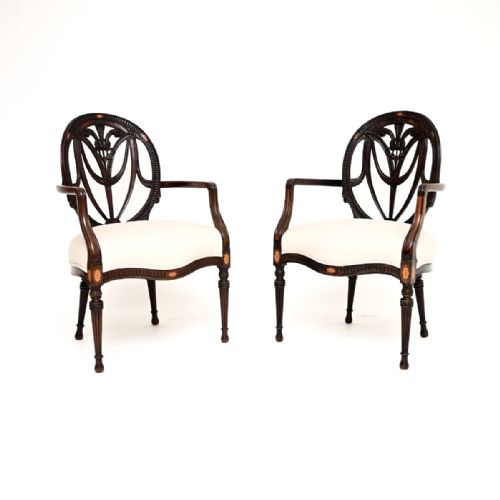
The pieces on this page span the 18th century, the Regency and William IV periods, and the Victorian era, alongside later revivals. You will encounter open armchairs and elbow chairs shaped in the George III, Hepplewhite, and Chippendale traditions.
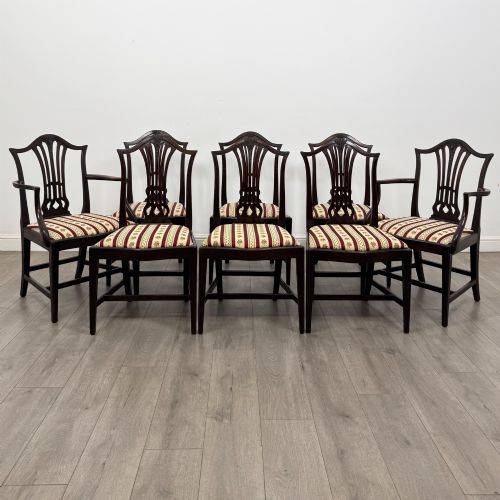
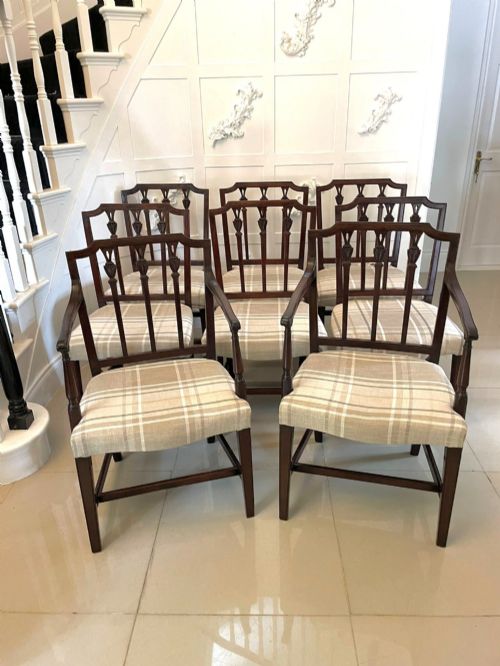
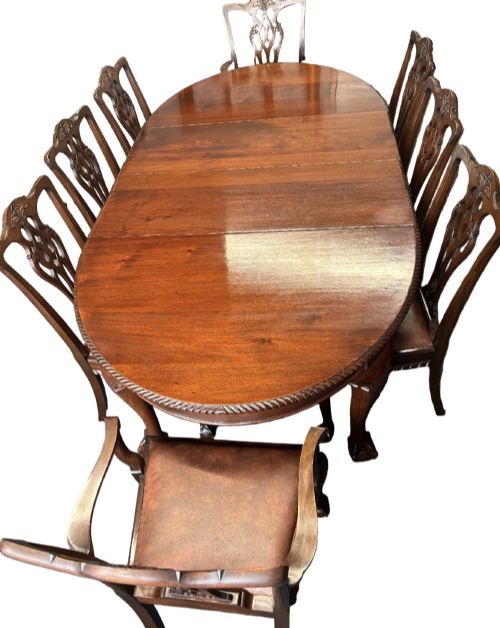
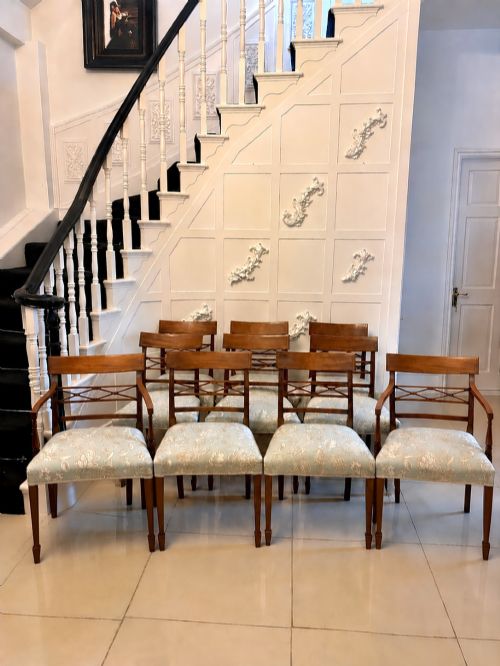
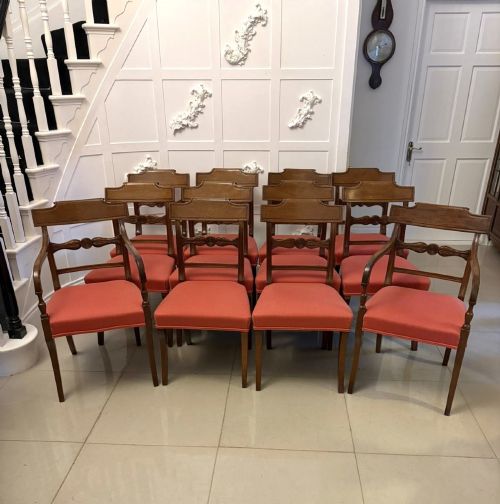
Makers and workshops constructed these seating forms to accompany larger dining sets, frequently pairing two carvers with six, eight, or ten single chairs. Surviving examples emerge either as single library chairs or as matched pairs from larger dining suites.
How They Were Made
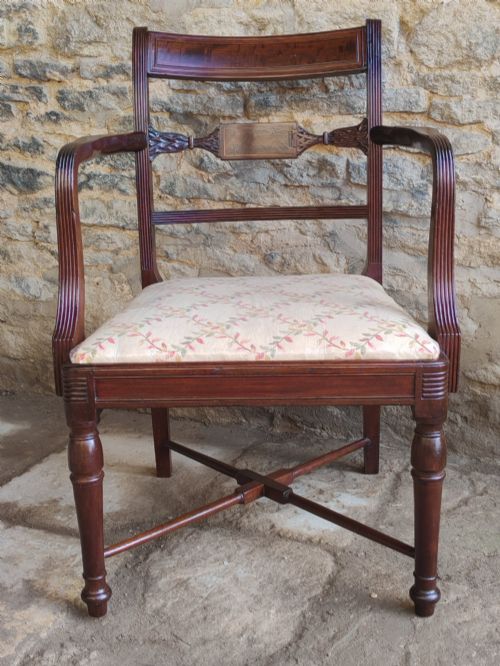
Cabinet makers built these carvers from solid mahogany timber, utilising its dense grain to shape curved splats, scroll arms, and raked back legs. Frames joined through traditional mortise and tenon joinery to withstand daily weight and movement.
Upholstered versions incorporate drop-in pads or padded seats covered in fabric, velvet, or tapestry. Brass fixings and cane seating appear across select Regency and Victorian examples, adding texture to the wooden framework.
Retail Price Guide 2026
Typical UK retail prices for mahogany dining carver, calculated from the Sellingantiques database of over a million retail prices indexed since 2003. This retail price guide relies exclusively on Sellingantiques data; no external sources or auction records are used, so the figures do not describe the wider market.
Listings feature mahogany timber across forms including open armchairs, desk chairs, and bar-back library seats spanning the 18th century to the Victorian era.
What Varies in Quality
Quality rests in the crispness of carved details, such as the depth of ribbon backs on Chippendale styles or the fluid sweep of bar-back Regency arm rails. Superior timber selection shows rich, dark figuring across the crest rail and arms.
Structural integrity dictates the enduring value of a carver, separating rigid original joinery from loose frames that have suffered heavy use. The harmony between the proportions of the elbow supports and the upright back legs reveals the maker's competence.
Waring and Gillow·Gillows
The Mahogany Dining Carver Glossary
- Carver
- An armchair designed to match a set of dining chairs, traditionally placed at the table ends. These seats feature supportive elbow rests.
- Elbow chair
- An alternative term for an armchair, descriptive of the low wooden rests that support the arms. Such chairs frequently served dual roles at desks or dining tables.
- Bar-back
- A chair design featuring a horizontal transverse splat across the backrest, characteristic of Regency and William IV seating. This solid bar often displays gentle curvature to fit the spine.
- Splatt
- The vertical central strip of wood within a chair back connecting the crest rail to the seat. Cabinet makers carved and pierced these elements in George III and Chippendale designs.
- Harlequin set
- A collection of dining chairs assembled to match in style and timber while originating from slightly different workshops or dates. These groupings maintain a unified visual effect around a dining table.
Frequently Asked Questions
What is a mahogany dining carver used for?
A mahogany dining carver provides a seated person with arm supports at the head or foot of a dining table. They offer a more substantial seat than single chairs for the host.
Beyond the dining room, these armchairs frequently function as desk chairs in libraries or studies. Their sturdy timber frames accommodate prolonged sitting for reading or writing.
How do I date a mahogany carver?
Dating relies on observing stylistic markers, such as the sweeping scroll arms of the Regency period or the pierced splats of George III Chippendale revivals. Timber patination and construction methods inside the seat frame also indicate the age of the piece.
Reference points include the heavy bar backs of William IV designs versus the lighter proportions of 18th-century pieces. Revivals from the late 19th century mimic these earlier forms while retaining Victorian manufacturing signatures.
Can I mix a carver with single chairs?
Mixing a carver with single chairs follows historical precedent, as dining sets were often sold with two armchairs and several side chairs. Ensuring the timber species, such as mahogany, and the overarching style harmonize creates a cohesive arrangement.
Harlequin sets deliberately combine slightly varied chairs from the same era around one table. This approach achieves an authentic period aesthetic rather than a rigid factory-matched uniformity.
How do I care for mahogany timber?
Mahogany requires stable room temperatures and protection from direct sunlight to prevent the timber grain from drying out or fading. Applying mild beeswax preserves the natural lustre of the polished wood surface.
Avoid placing wooden furniture near direct heat sources which can cause joints to loosen. Regular dusting with a soft cloth keeps the carved details free from particle buildup.