
Regency Elbow Chair
These regency elbow chair examples combine classical proportion with practical comfort, offering a striking seat for a desk, library or dining table.

What a regency elbow chair is
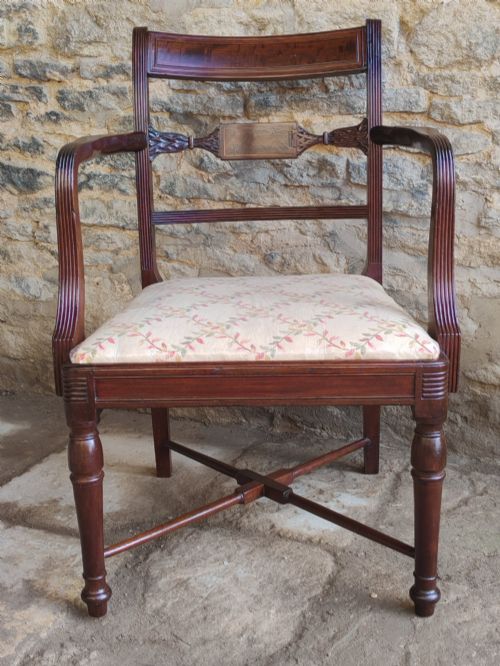
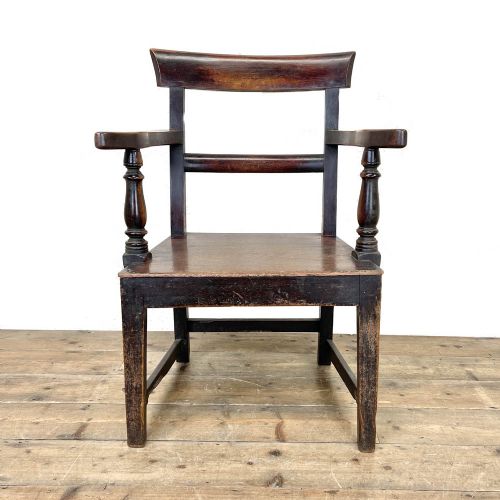
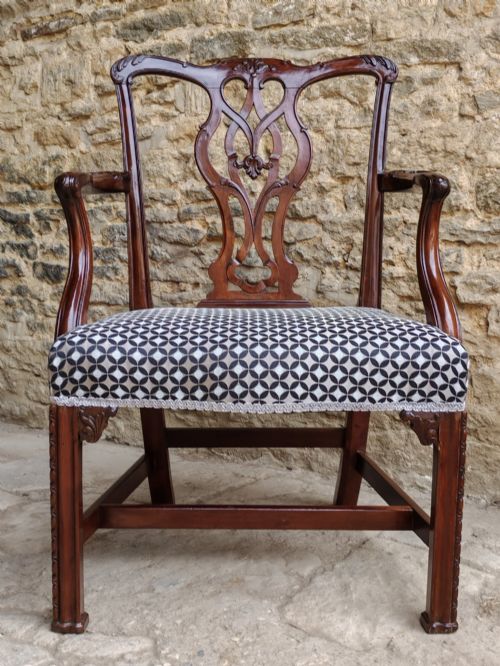
A regency elbow chair is a seating form designed for the dining room, library, or desk, dating predominantly from the early nineteenth century. These pieces appear in forms such as open armchairs, carvers, and desk chairs, originating from the Regency period and broader nineteenth-century timeline.
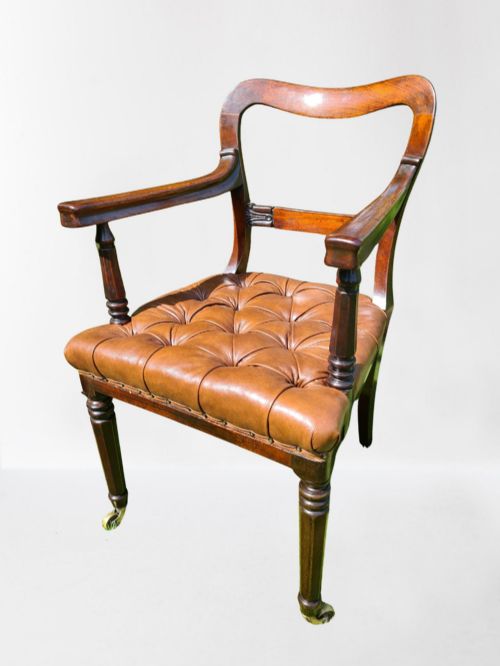
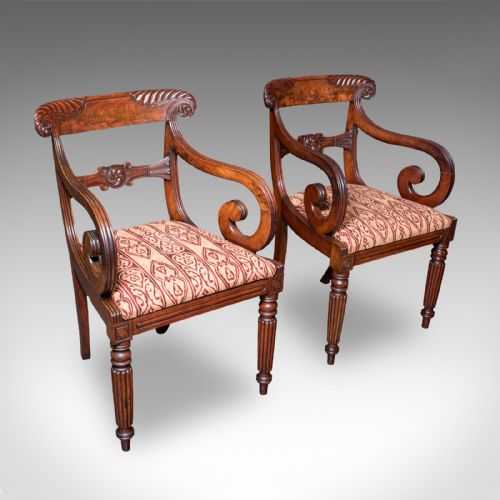
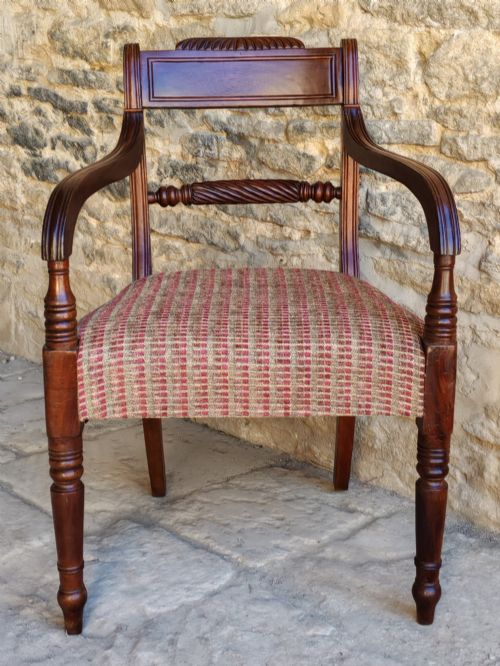
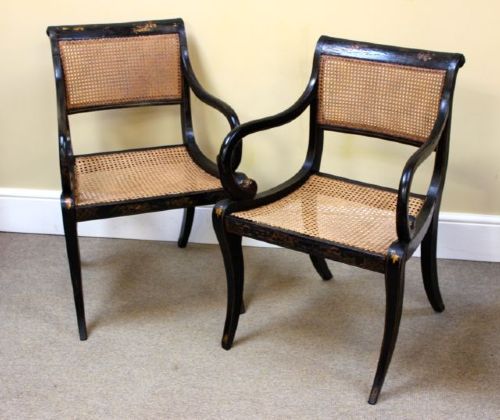
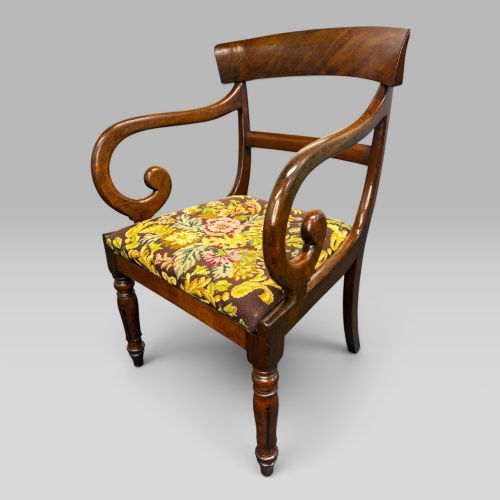
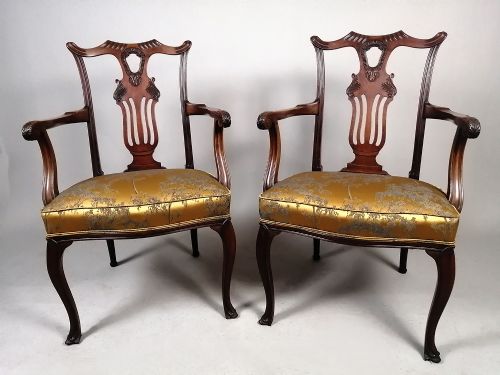
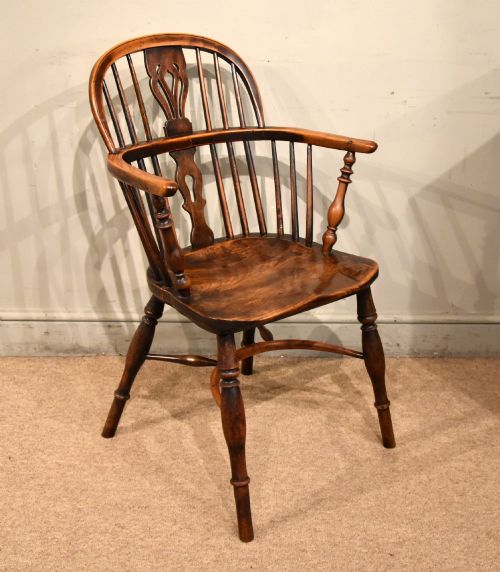
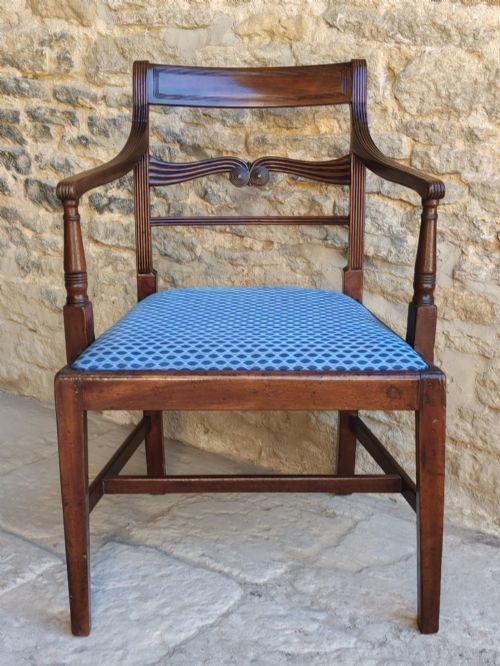
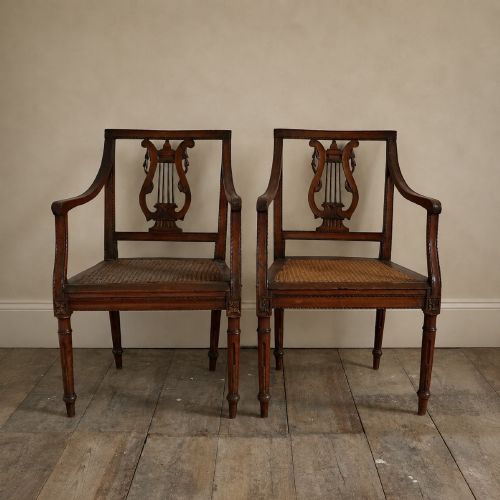
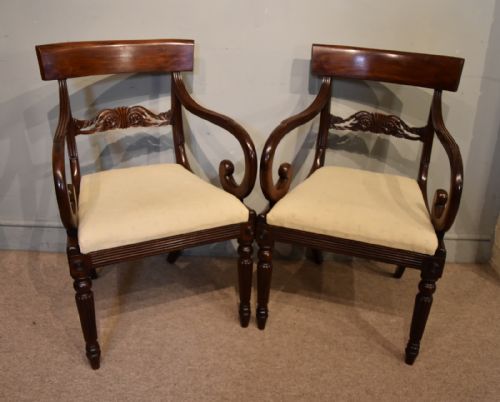
The most common version met on this page is constructed from mahogany, often featuring a carved or bar-back frame with arms designed to fit beneath a table edge. Surviving examples demonstrate a variety of seating provisions, including drop-in velvet pads, cane panels, leather, and traditional upholstery fabric.
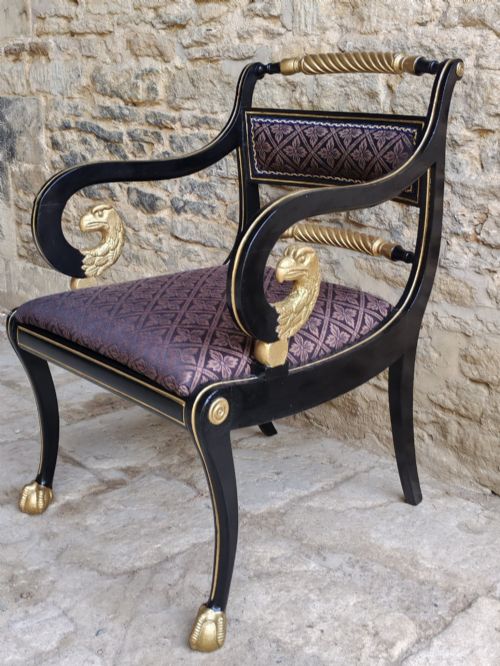
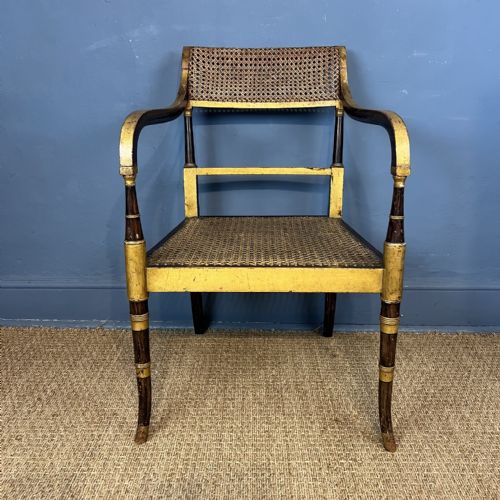
Makers and designers of the period adapted classical Grecian and Roman motifs into domestic furniture, resulting in balanced proportions and refined silhouettes. Buyers encounter painted finishes, ebonised surfaces with gilt highlights, and rich timber grains that reflect the aesthetic ambitions of the era.
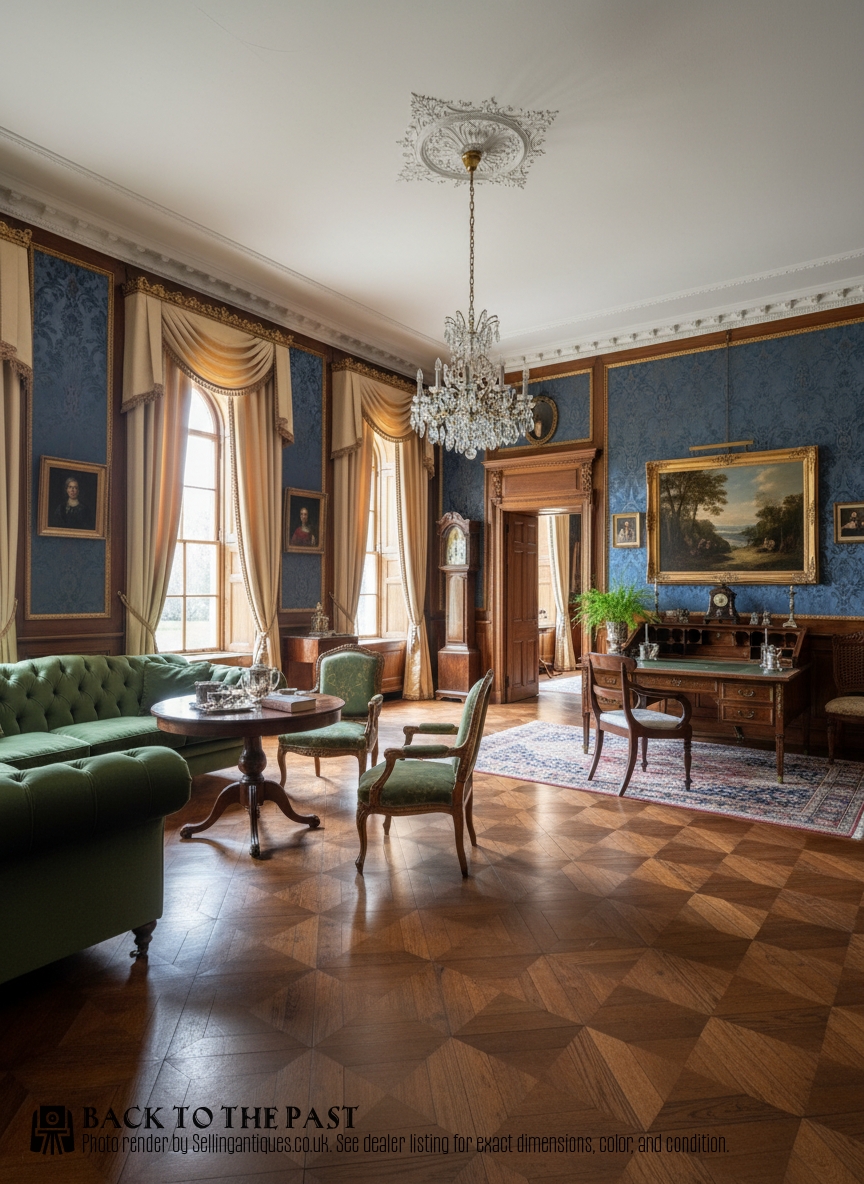
How they were made
Cabinet makers utilised dense timbers such as mahogany, alongside beech for painted or ebonised frames, shaping structural components with hand tools and traditional joinery. Decorative enrichment frequently involved brass inlay, brass repairs, and applied gilding to accentuate structural lines and back rails.
Surface treatments ranged from polished mahogany revealing natural grain to painted and gilded finishes that transformed cheaper woods into imitation exotic materials. Seating platforms relied on woven cane, drop-in wooden frames padded with velvet or silk cotton, and deep stuffing held by durable upholstery fabric and leather.
Retail Price Guide 2026
Typical UK retail prices for regency elbow chair, calculated from the Sellingantiques database of over a million retail prices indexed since 2003. This retail price guide relies exclusively on Sellingantiques data; no external sources or auction records are used, so the figures do not describe the wider market.
Listings demonstrate a strong preference for mahogany timber, complemented by occasional painted beech and ebonised finishes across nineteenth-century examples.
What varies in quality
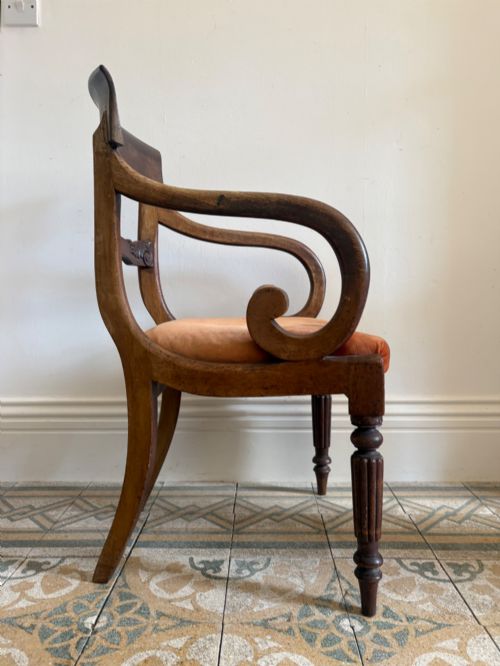
Quality in a regency elbow chair rests upon the crispness of carved details, the selection of figured timber, and the harmony of the overall proportion. Superior examples exhibit fluid scroll arms, precise brass inlay, and robust joinery that survives centuries of use without excessive reinforcement.
The distinction between standard utility seating and high-status library or desk chairs lies in the sophistication of the design, such as bar-backs with intricate splats or X-framed supports. Workshops that invested time in careful turning, balanced framing, and high-grade upholstery materials produced pieces that retain their sculptural integrity.
John Gee·Bertram and Son
The Regency Elbow Chair Glossary
- Elbow chair
- An armchair featuring low arms set back from the front edge of the seat, originally intended to fit beneath a table or desk.
- Bar-back
- A chair back featuring a horizontal wooden slat or rail across the uprights, frequently shaped or reeded in the manner of classical architecture.
- Drop-in seat
- A removable wooden frame upholstered separately and dropped into a rebate in the chair rails.
- Ebonised
- Wood treated with a dark stain or finish to imitate expensive ebony, a technique popular for classical revival furniture.
- Sabre leg
- A curved chair leg that tapers outwards towards the foot, mimicking the shape of a cavalry sword.
Frequently Asked Questions
What is a regency elbow chair?
A regency elbow chair is an early nineteenth-century armchair featuring supporting arms, built primarily for use at desks, dining tables, or in reception rooms.
These chairs reflect classical design influences through curved woodwork, bar-backs, and restrained ornamentation characteristic of the Regency style.
Where were they used?
Historically, these chairs functioned in multiple domestic spaces including libraries, morning rooms, bedrooms, and dining halls.
Their proportions allowed them to slide neatly beneath desks and dining tables while providing comfortable arm support for reading or writing.
How do I identify a genuine piece?
Authentication relies on examining timber ageing, traditional joinery methods, and stylistic cues such as sabre legs, brass inlay, and bar-backs.
Evidence from nineteenth-century construction shows specific material combinations like mahogany frames with cane or drop-in velvet seats.
Are cane seats original?
Cane seating was widely utilised during the Regency period, particularly on painted or ebonised chairs designed for lighter domestic spaces.
Many surviving pieces retain their woven cane panels, though some have undergone careful restoration or replacement over the decades.