


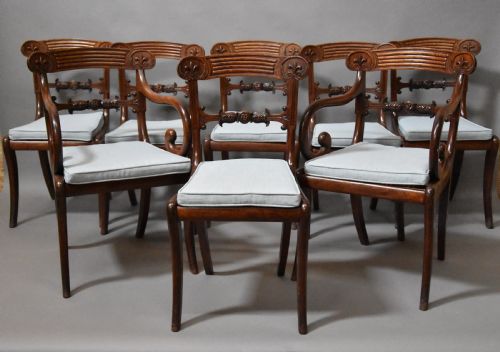
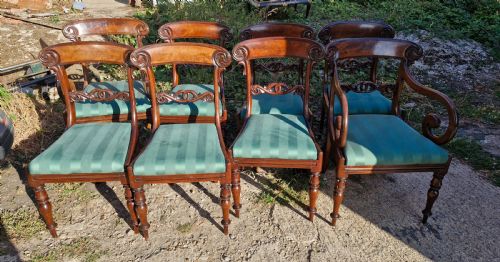
Regency Dining Armchair
A regency dining armchair brings classical line and sturdy seating to the table, uniting the carver form with early nineteenth-century design.
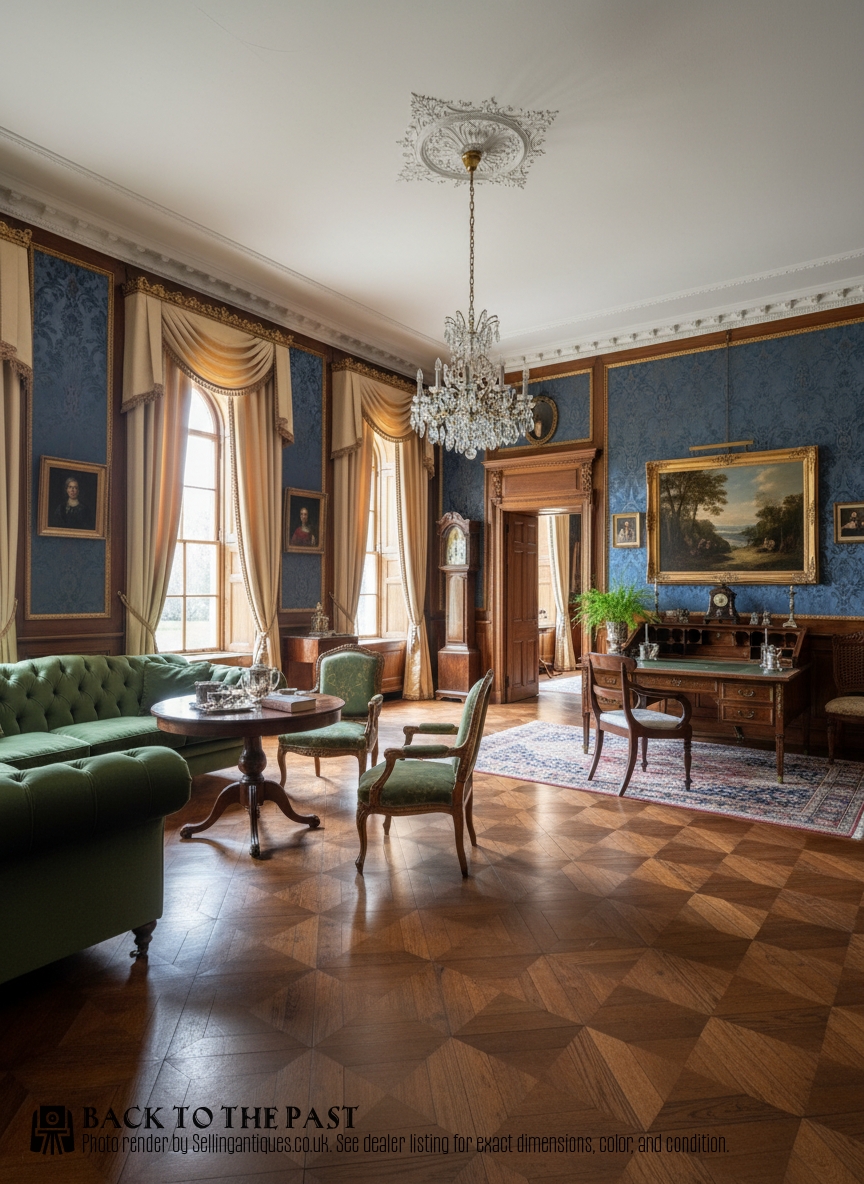
Regency Dining Armchair
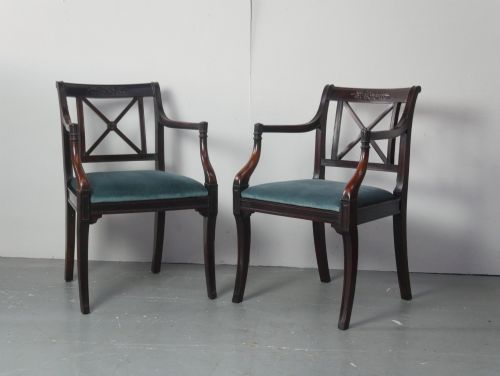
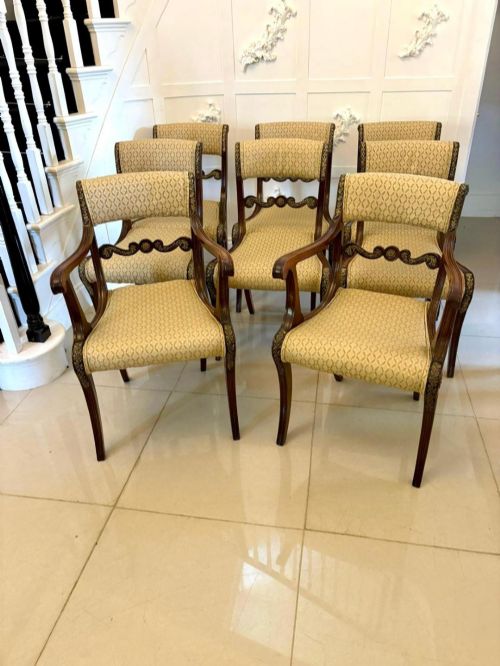
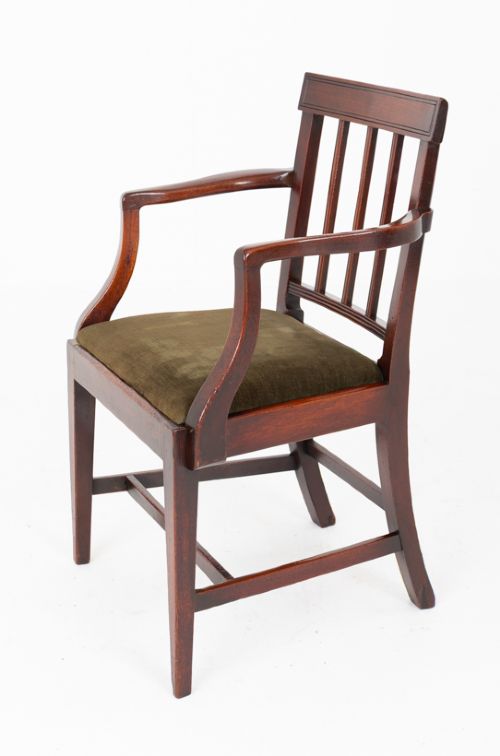
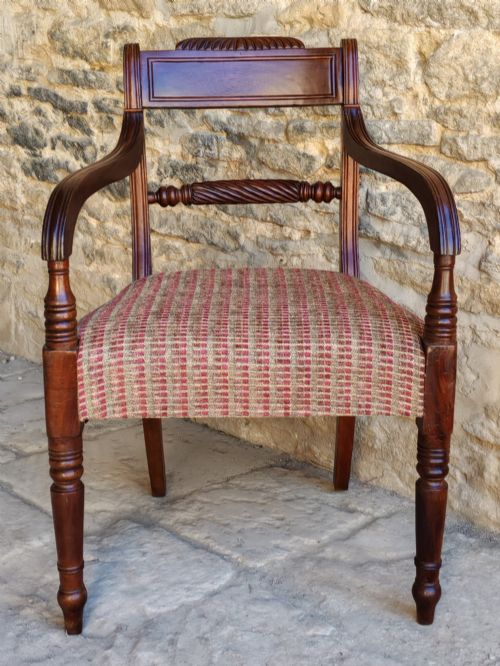
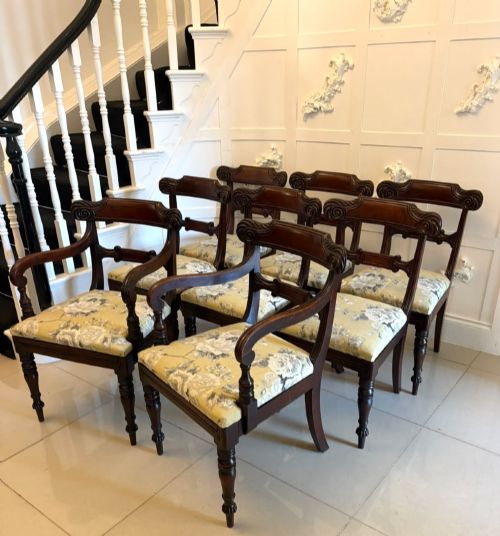
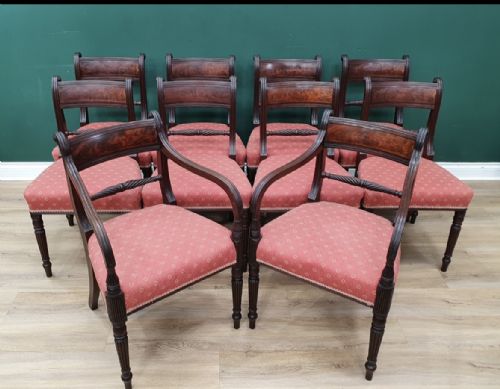
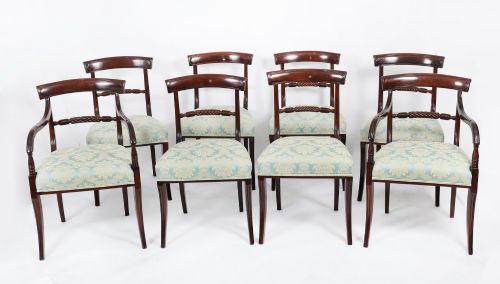
A regency dining armchair serves as the principal seat at the head of a table, often found paired with matching single chairs or within larger dining sets. These pieces encompass carvers, elbow chairs, and desk chairs originating primarily from the nineteenth century, alongside later revival iterations.
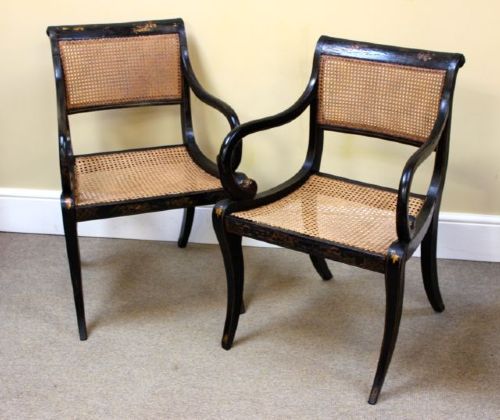
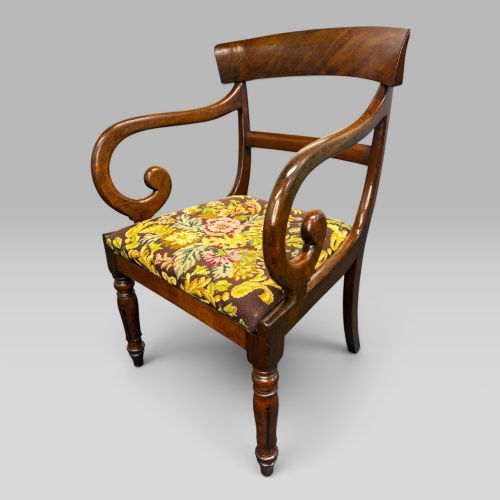
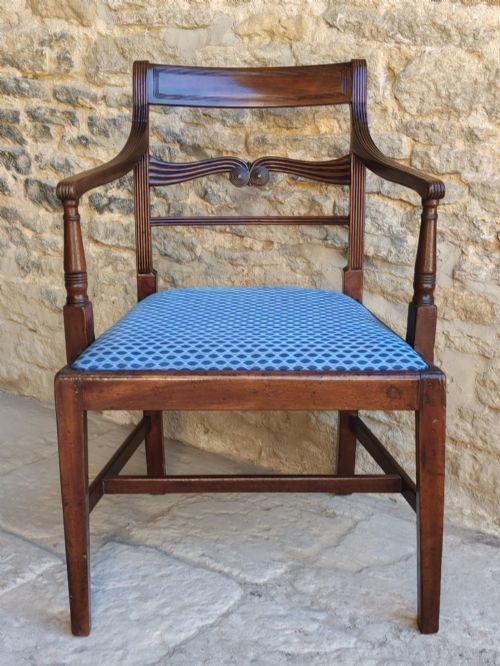
The form embraces distinct regional variations and stylistic subsets, including bar-back, rope-back, and shield-back designs, as well as Windsor and bergere seating. Makers constructed them from timbers such as mahogany, yew, elm, and fruitwood, incorporating cane seats or fabric upholstery.
Buyers encounter genuine period examples alongside twentieth-century reproductions built in the same classical idiom. The selection spans single items, matched pairs, and extensive dining sets designed for formal domestic interiors.
How They Were Made
Cabinetmakers relied heavily on dense mahogany, shaping structural elements and carved details from solid timber and selected veneers. Secondary woods like elm and fruitwood frequently appeared in country-made armchairs and Windsor forms.
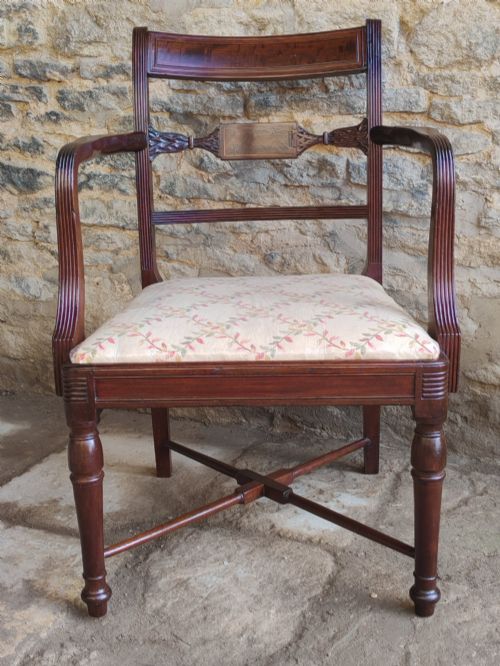
Joinery methods involved traditional mortise and tenon construction to withstand daily use at the dining table. Seat platforms utilised dropped-in cane panels, webbing beneath floral upholstery, or solid wood squabs tailored to the specific chair type.
Regency Dining Armchair Retail Price Guide 2026
Typical asking prices for regency dining armchair among the pieces listed under this phrase on Sellingantiques today, from the lower quarter to the upper quarter. They describe what is for sale here now, not the wider market.
Some nineteenth-century carvers served double duty as office desk chairs when the master of the house had paperwork to finish.
What Varies in Quality
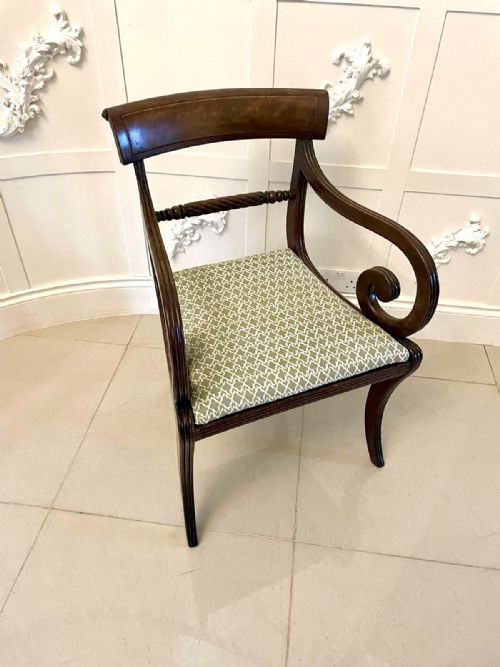
The refinement of carving separates standard workshop production from exhibition-quality pieces, particularly in the execution of scroll arms, reeded legs, and classical back rails. Crisp lines and deep relief work indicate skilled craftsmanship rather than hasty commercial output.
Timber selection and grain matching across a set dictate overall visual harmony, especially when single chairs are gathered into a matched dining group. Original structural integrity, minimal timber replacement, and the retention of an authentic surface finish distinguish better surviving examples.
The Regency Dining Armchair Glossary
- Carver
- An armchair designed to match a set of single dining chairs, traditionally placed at the ends of the dining table.
- Bar-back
- A chair back featuring a horizontal splat or wooden rail shaped like a classical architectural frieze.
- Bergere
- An enclosed armchair with upholstered sides and a cane or padded seat popular in classical seating design.
- Sabre leg
- A concave, outwardly curving leg tapering towards the foot, characteristic of the Regency period.
- Cane
- Woven rattan material used to create resilient, lightweight seat panels in classical chairs.
Regency Dining Armchair: Frequently Asked Questions
How do I use a carver with single chairs?
Place the armchair at the head or foot of the dining table while positioning the matching single chairs along the sides. This arrangement denotes hierarchy at the table while maintaining a unified decorative scheme.
Ensure the arms of the chair clear the underside of the dining table so the seat pushes in properly when not in use.
Can I mix these chairs with a modern table?
These mahogany and timber armchairs anchor modern dining spaces by introducing rich grain and classical proportion. The dark wood tones complement contemporary glass, metal, or plain oak surfaces.
Check the seat height and arm clearance against the apron of a modern table to guarantee comfortable dining.
What is the difference between a carver and a desk chair?
Carvers and desk chairs share similar armchair frames, but desk variants often feature lower proportions or swivel mechanisms suited to library and study use. Dining armchairs prioritize comfortable seating height relative to standard dining tables.
Many nineteenth-century examples served dual purposes in period homes depending on where they stood.
How do I care for antique upholstery and cane?
Vacuum upholstered seats gently with a soft brush attachment to remove dust without stressing fragile historic textiles. Keep cane panels lightly humidified in dry winter months to prevent the natural rattan from becoming brittle.
Avoid placing antique chairs near direct heat sources or strong sunlight to protect the wood finish and fabric.