
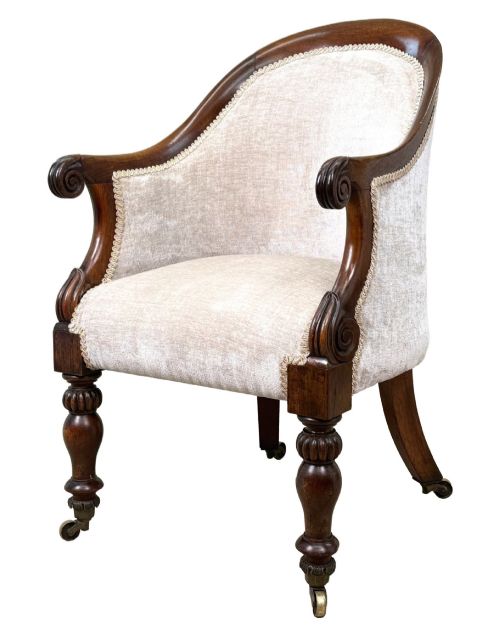

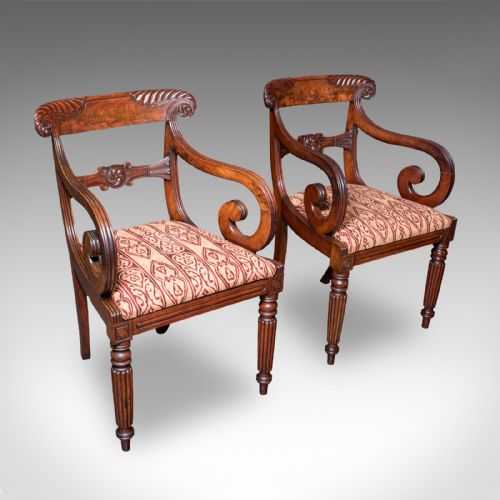
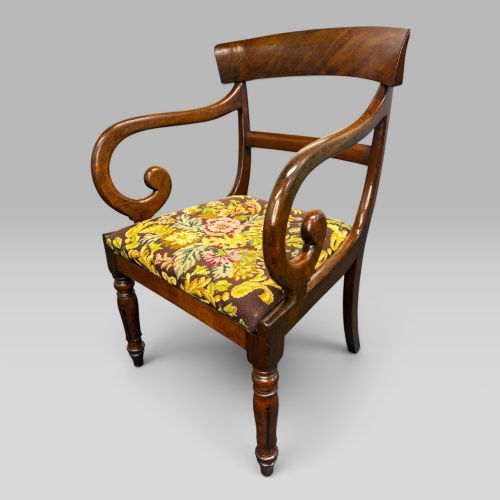
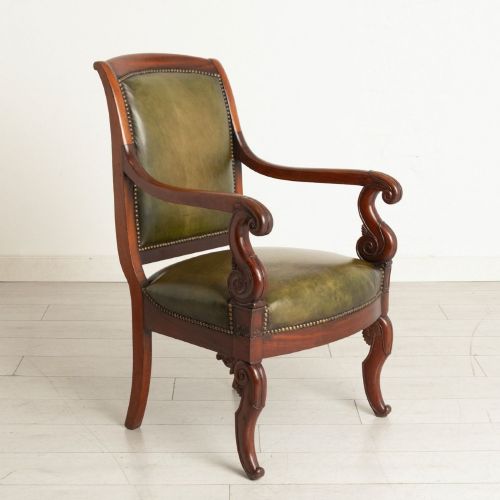


Regency Scroll Arm Chair
A regency scroll arm chair offers sculptural wood and sweeping arms that anchor a library or study with undeniable presence.
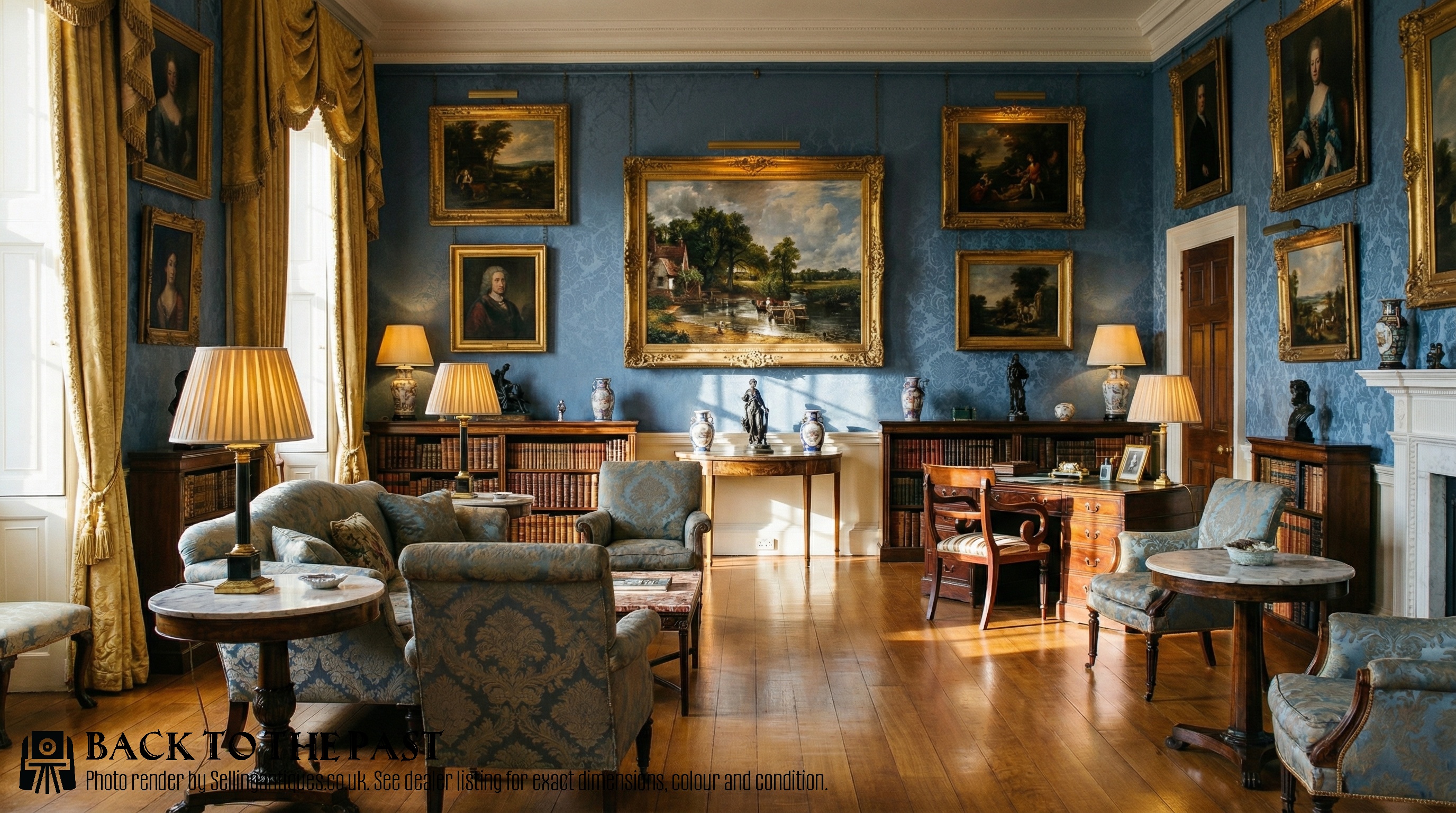
What a regency scroll arm chair is
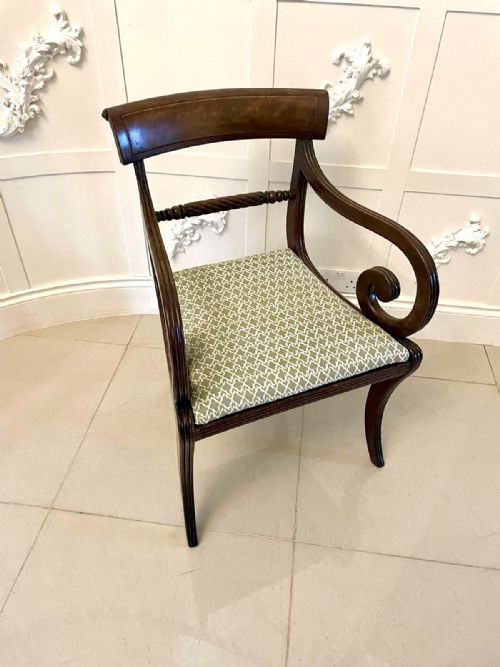
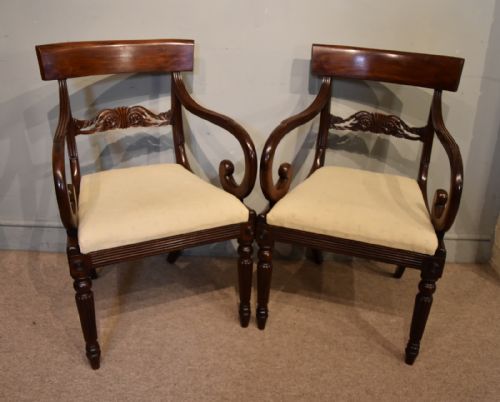
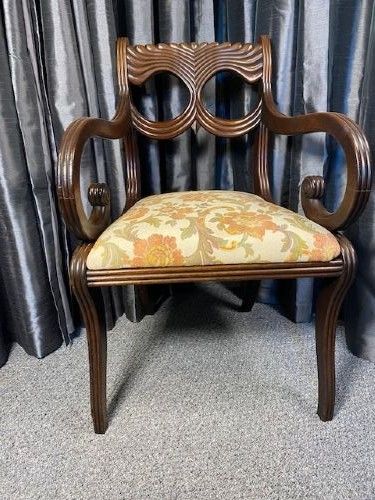
A regency scroll arm chair represents a specific form of English seating designed during the early nineteenth century. These pieces function as library chairs, desk chairs, and open armchairs suited to studies and reading rooms.
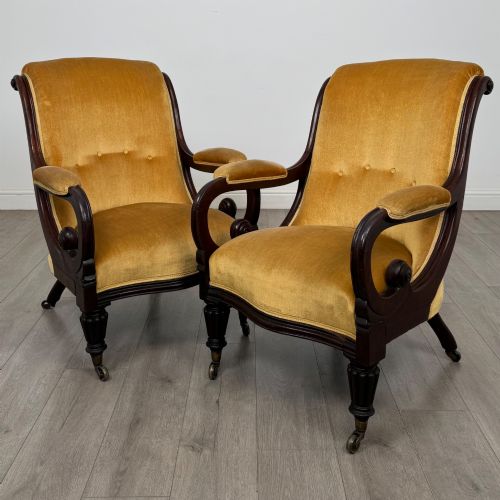
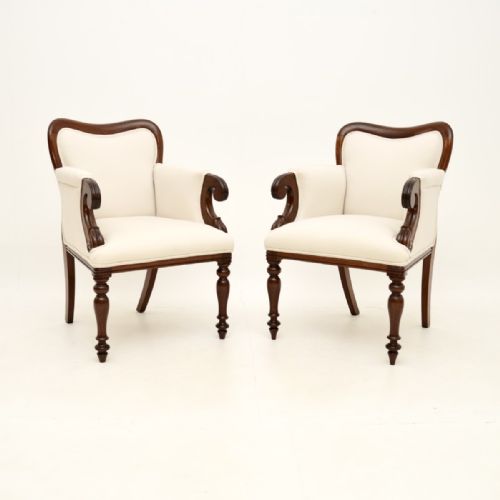
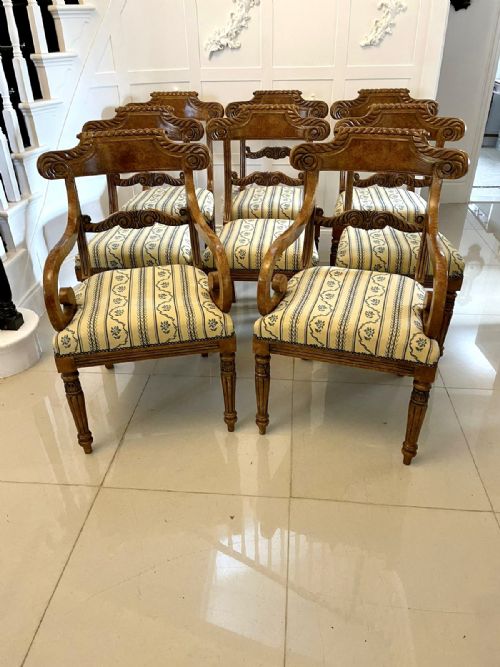
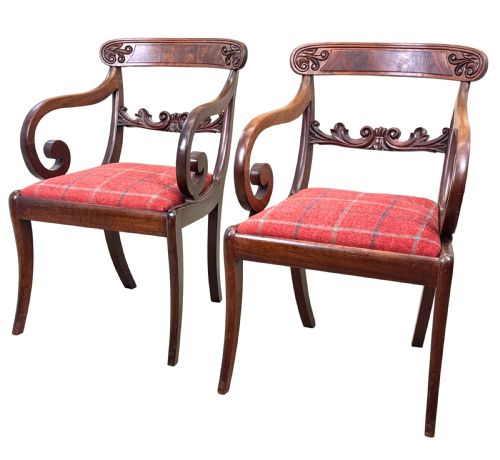
The version most commonly met on this page is constructed from mahogany or rosewood, frequently featuring sabre legs and scrolled terminal arms. Surviving examples often appear as single library seats, desk chairs, or occasional pairs.
Makers of the period adapted classic forms for domestic utility, producing elbow chairs and reading seats with upholstered panels. The phrase regency scroll arm chair brings together classical revival proportions with practical nineteenth-century comfort.
How they were made
Cabinetmakers utilised solid mahogany and rosewood to form the structural frames, often steam-bending the timber to create the characteristic upward curve of the armrests. Brass inlay appears on finer examples, contrasting with the dark grain of the wood.
Upholstery techniques involved webbing and stuffing mounted over wooden frames, finished with textile, leather, or needlepoint covers. Sabre legs were shaped from the solid stock to provide stability without heavy stretcher rails.
Retail Price Guide 2026
Typical UK retail prices for regency scroll arm chair, calculated from the Sellingantiques database of over a million retail prices indexed since 2003. This retail price guide relies exclusively on Sellingantiques data; no external sources or auction records are used, so the figures do not describe the wider market.
Some nineteenth-century readers found the scroll arm so accommodating they fell entirely asleep before finishing page ten.
What varies in quality
The standard of carving and the selection of timber dictate the rank of a piece, with figured mahogany and richly grained rosewood marking the upper tier. Crisp execution of the scrollwork at the arm terminals reveals the hand of a skilled maker.
Proportion and structural integrity separate robust library seating from ordinary domestic chairs. Pieces retaining their original show wood, stable sabre legs, and high-grade upholstery foundations command greater regard among collectors.
Gillows
The Regency Scroll Arm Chair Glossary
- Sabre leg
- A curved furniture leg that tapers towards the foot, sweeping outward in imitation of classical Greek forms.
- Carver chair
- An armchair, often designed for the head of a dining table or as a companion to side chairs.
- Library chair
- A sturdy upholstered armchair built for reading and extended sitting in a study or library.
- Needlepoint upholstery
- Canvas worked with wool or silk threads in counted stitches to cover furniture seats and backs.
- Elbow chair
- An alternative term for an armchair, describing the prominence given to the armrests.
Frequently Asked Questions
What is a regency scroll arm chair?
A regency scroll arm chair is an English seating form from the early nineteenth century distinguished by carved, scrolling armrests. These pieces served as library, desk, and reading chairs.
They combine classical revival design with practical nineteenth-century comfort, utilising mahogany or rosewood frames.
How were they used originally?
These armchairs were positioned in libraries, studies, and offices for reading, writing, and desk work. Their sturdy construction suited long hours of scholarly or administrative labour.
Pairs were also placed in withdrawing rooms and parlours as part of formal seating arrangements.
How do I live with one?
A regency scroll arm chair functions effectively as a desk chair, a reading seat, or an accent piece in a living room. Its compact footprint allows it to sit comfortably beside bookcases or writing tables.
Protect the upholstery from direct sunlight and treat the timber with appropriate wax to maintain the grain.
How do I date a regency scroll arm chair?
Dating relies on stylistic markers such as sabre legs, brass inlay, and the specific profile of the scroll arm. The period spans the early nineteenth century around eighteen hundred to eighteen thirty-five.
Construction methods and timber selection also assist in determining the age of the frame.