
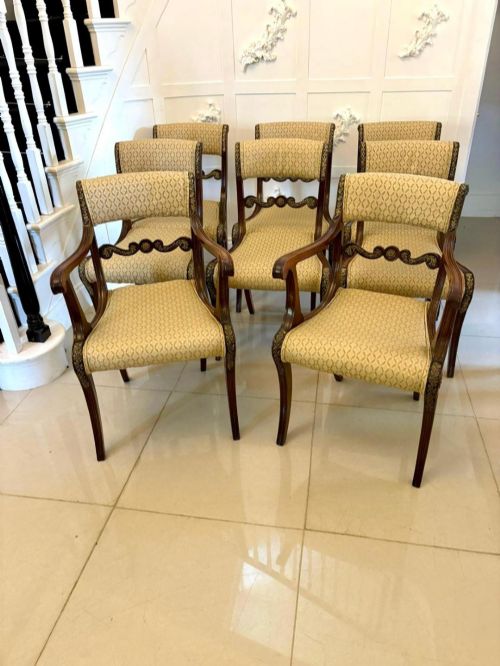
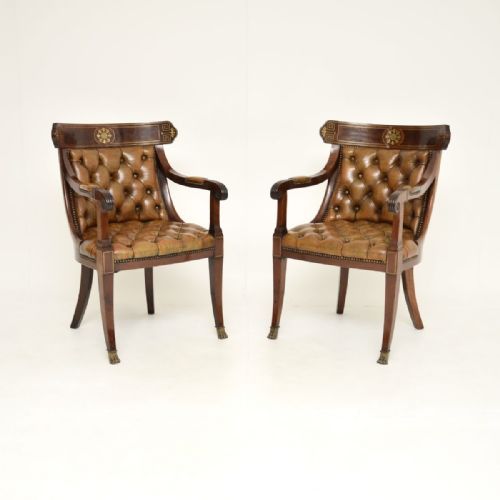


Brass Inlaid Armchair
A brass inlaid armchair brings striking linear contrast into a room, pairing warm timber with gleaming metal work.
Brass Inlaid Armchair
When you search for a brass inlaid armchair, you encounter seating designed primarily during the Regency and nineteenth-century periods, alongside examples from Anglo-Indian and Chinese traditions. These pieces combine supportive wooden frames with decorative metal strips or wire set flush into the timber surface.
The version you are most likely to meet on this page is the Regency mahogany or rosewood elbow chair, often featuring delicate stringing or figural motifs along the top rail and splat. Dining chairs and library armchairs also appear frequently, spanning formal seating through to occasional chairs.
The selection ranges from grand George IV library bergere seats to nineteenth-century horseshoe chairs and Savonarola styles. Each piece demonstrates how makers integrated metalwork into domestic seating to catch the light and elevate the furniture above plain timber.
How they were made
Maker workshops built these chairs using dense cabinet timbers such as mahogany, rosewood, satinwood, and hardwood, which provided a stable base for detailed inlay work. Craftsmen channelled grooves directly into the wood surface to receive fine brass wire or cut-out sheet brass.
Upholstery completed the construction, utilising leather, fabric, and traditional stuff-over techniques to ensure comfort in libraries, dining rooms, and parlours.
Listings span the Georgian, Regency, Victorian, and Edwardian periods, utilising mahogany, rosewood, leather, and brass.
What varies in quality
The sophistication of the brass inlay separates standard production from exceptional pieces, particularly where metal is cut into complex pictorial or geometric motifs rather than simple straight lines. Precision in the fit between the brass and the surrounding timber indicates high workshop competence.
Selection of the primary wood grain also drives distinction, with figured mahogany, richly grained rosewood, and contrasting satinwood commanding greater visual presence. Finally, the structural integrity of the frame and the quality of the turning or carving on the arms and legs determine the overall success of the chair.
Gillow·Howard & Son's
The Brass Inlaid Armchair Glossary
- Regency
- A British design period spanning the early nineteenth century, characterised by classical revival motifs and refined cabinet-making. It draws heavily on Greek, Roman, and Egyptian precedents.
- Bergere
- An enclosed upholstered armchair with wooden framing visible around the sides and back. It often incorporates cane panels or deep leather squab cushions.
- Library chair
- A substantial seating form designed for reading and study, frequently fitted with upholstered arm rests and generous proportions. These pieces prioritise comfort during extended periods of sitting.
- Stringing
- A thin inlay of contrasting wood or metal set into the surface of a panel or frame in a linear path. It creates delicate borders that outline structural elements.
- Elbow chair
- An alternative historical term for an armchair, referencing the supportive wooden curves designed to hold the arms. You find this descriptor frequently in nineteenth-century inventories.
Brass Inlaid Armchair: Frequently Asked Questions
How do I date a brass inlaid armchair?
Dating relies on timber choice, framing style, and the profile of the legs. Regency pieces typically exhibit classical reeding, sabre legs, and dense mahogany or simulated rosewood finishes.
Later nineteenth-century examples often incorporate broader stylistic influences, including Anglo-Indian or Chinese forms, while twentieth-century revivals display cleaner machine-cut precision in their brass work.
Were these chairs used at desks?
Many brass inlaid armchairs served dual purposes in libraries, dressing rooms, and offices. Their open elbow design allowed users to sit comfortably while writing or attending to correspondence.
Library chairs and desk elbow chairs on this page feature supportive heights and sturdy frames built for daily administrative tasks.
What woods were used for these frames?
Makers relied on durable hardwoods that could accept precise channelling for metal inlay. Mahogany and rosewood dominate the Regency selections, offering rich dark tones that contrast sharply with bright brass.
Satinwood and various exotic hardwoods appear in specific regional or specialised pieces, bringing lighter golden hues and varied grain patterns to the surface.
How do I care for the brass inlay?
Maintenance requires gentle dusting with a soft, dry cloth to prevent dirt accumulation in the channels around the metal. Avoid harsh commercial brass cleaners that might stain or dissolve the surrounding wood finish.
Applying microcrystalline wax occasionally helps protect both the timber and the flush brass work from atmospheric moisture and handling wear.