
Vintage Office Armchair
A vintage office armchair anchors the workspace with enduring character, bringing together sturdy timber frames and supportive leather seats from the nineteenth and early twentieth centuries.
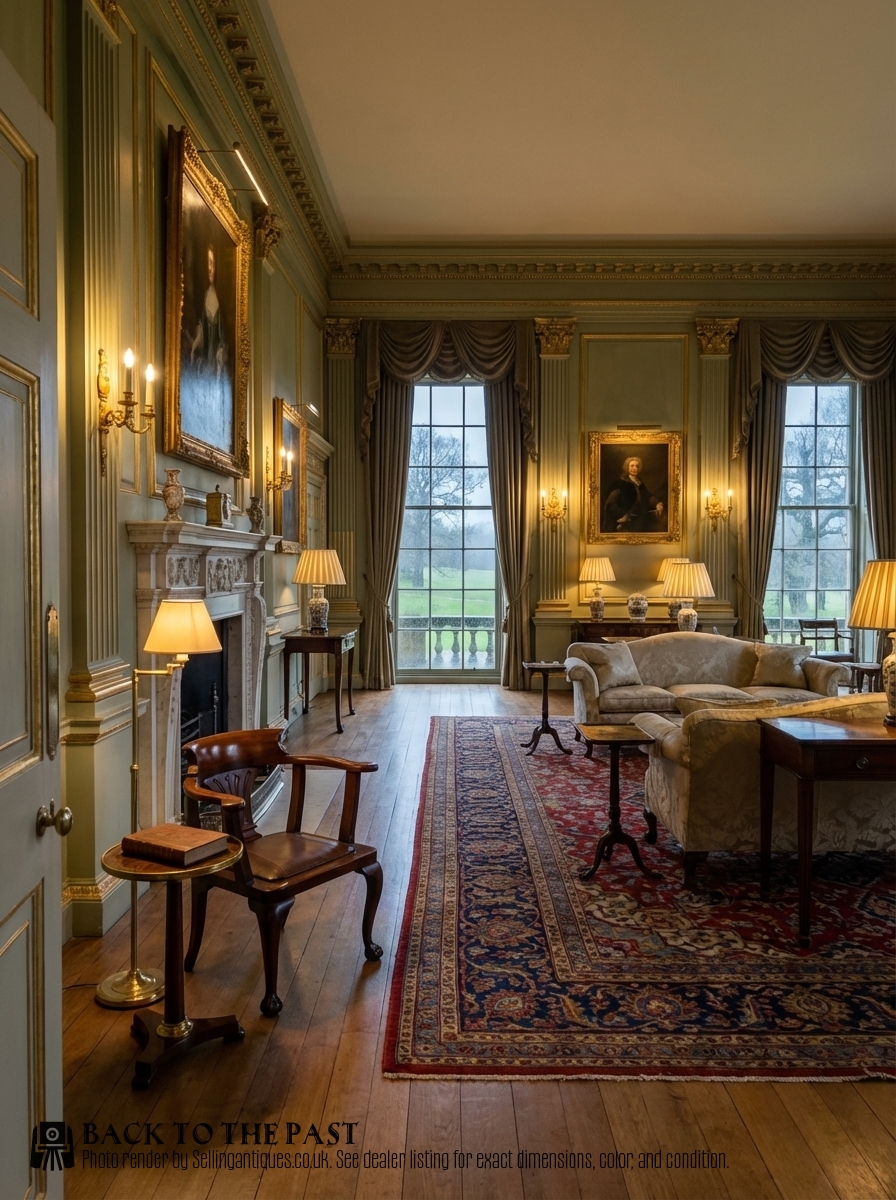
Vintage Office Armchair
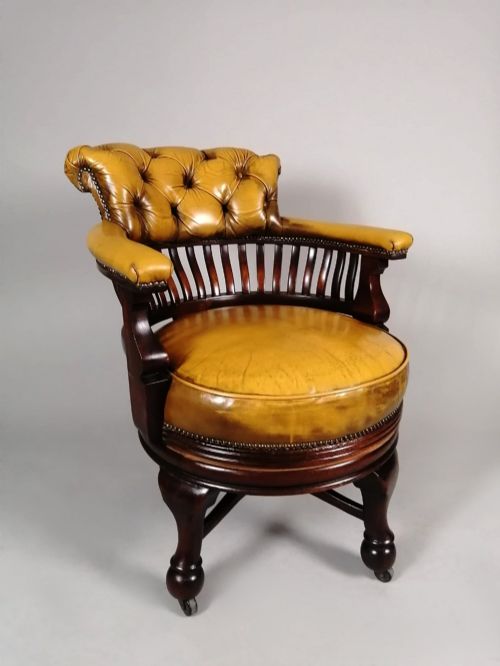
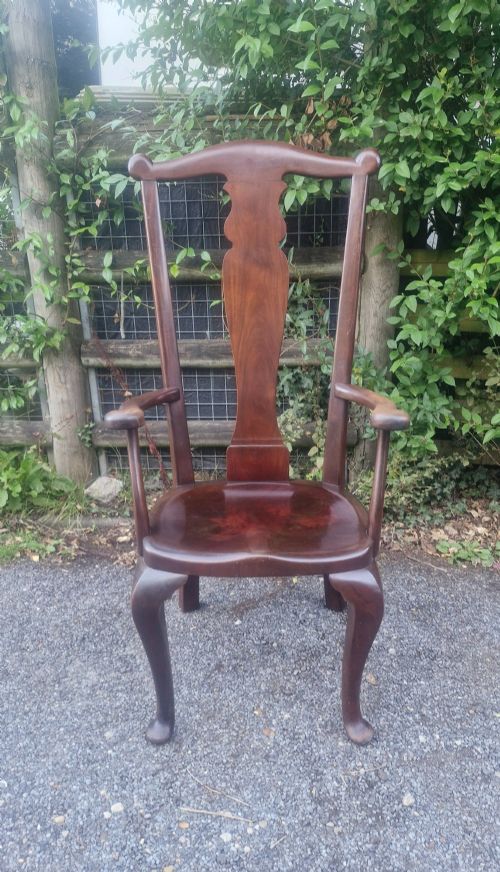
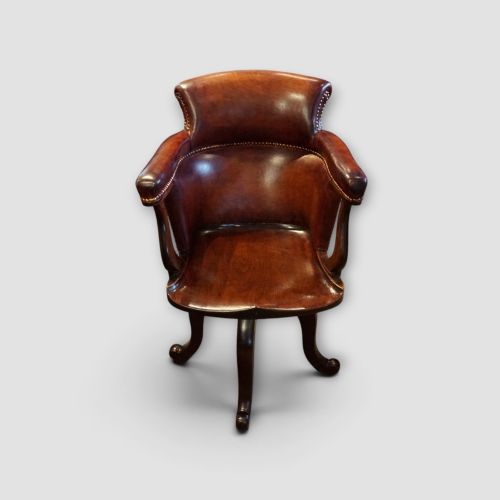
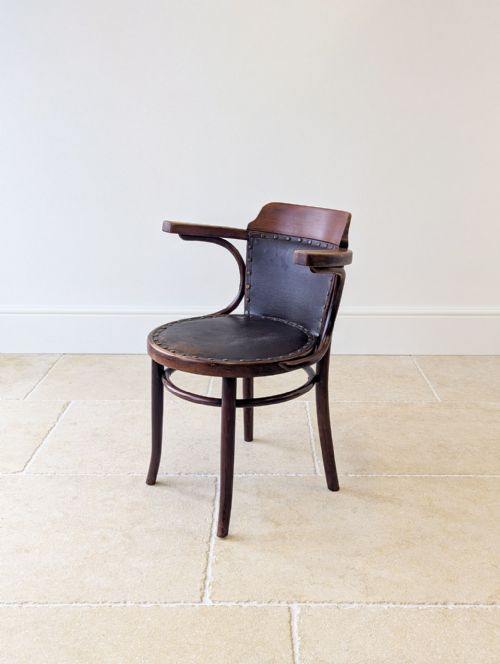
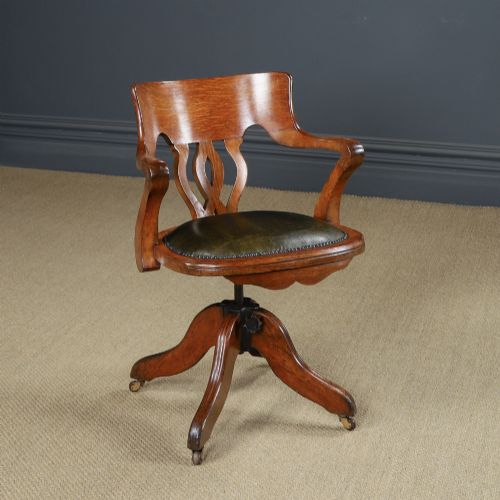
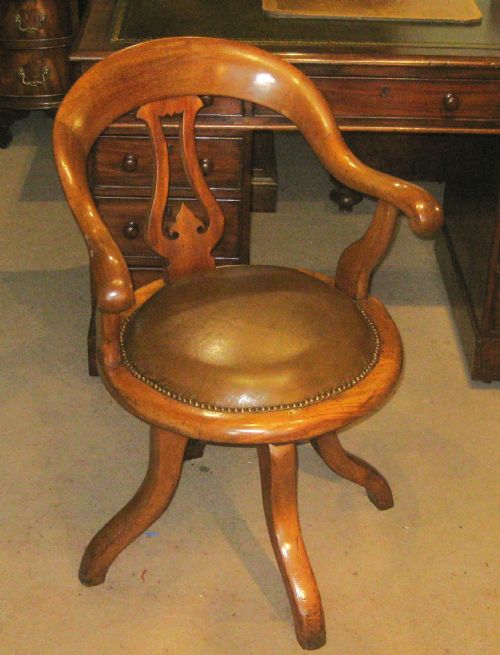
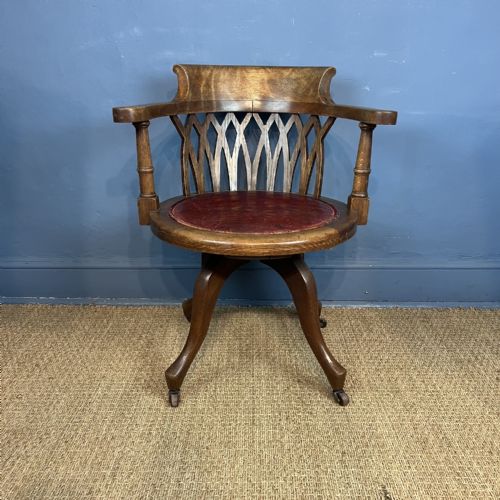
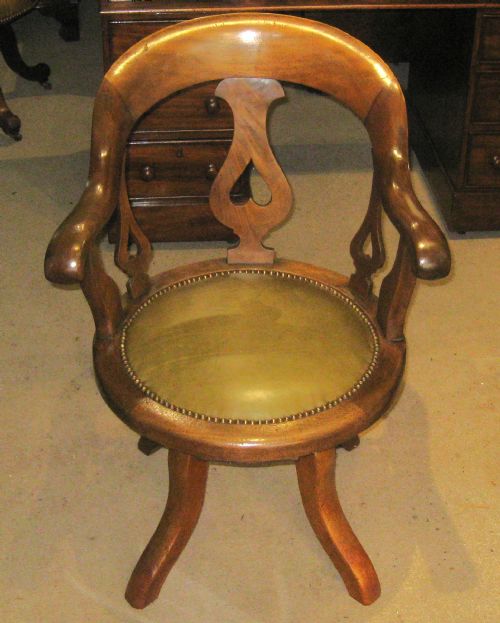
When searching for a vintage office armchair, buyers encounter functional seating designed for study and administration across several distinct eras. The selection spans the Victorian and Edwardian periods alongside the early twentieth century, showing a strong presence of revolving desk chairs and traditional captain chairs.
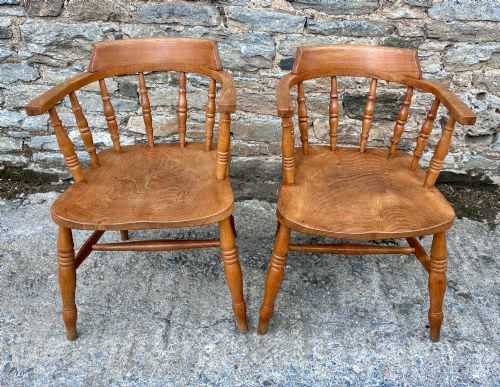
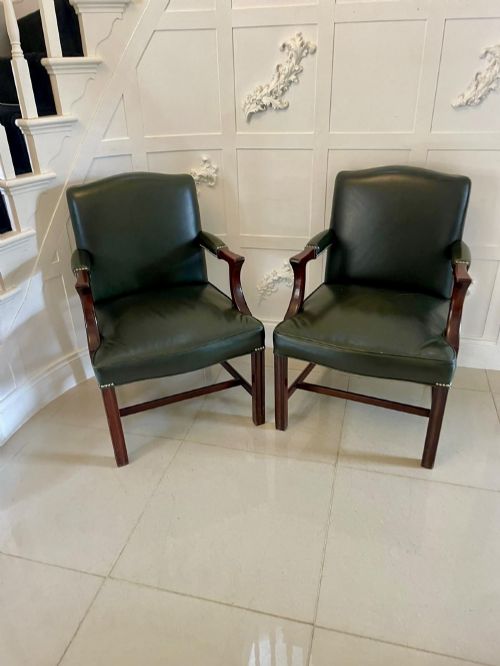
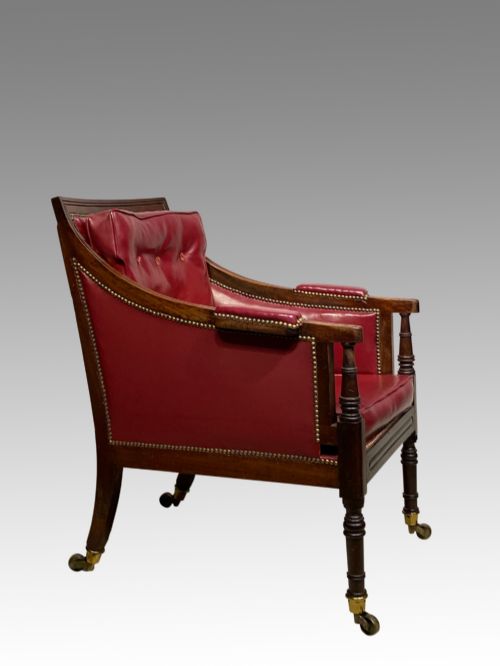
Most examples found on this page take the form of desk chairs, library armchairs, and smoker bows. These pieces reflect the heavy use of professional and domestic studies from the eighteen-eighties onwards, balancing supportive high backs with sturdy bases suited for daily sitting.
Origins stretch across English country house workshops and urban cabinet makers, using robust native timbers. Buyers meet variations including swivel mechanisms, fixed wooden frames, and upholstered leather seats designed to endure long hours of clerical work.
How they were made
Makers constructed these frames predominantly from solid hardwoods such as mahogany, oak, elm, beech, and walnut, often pairing them with supple leather pads and brass hardware. Turn-of-the-century workshops utilised steam-bending techniques for captain chairs and smoker bows, creating curved wooden backrests from single pieces of timber.
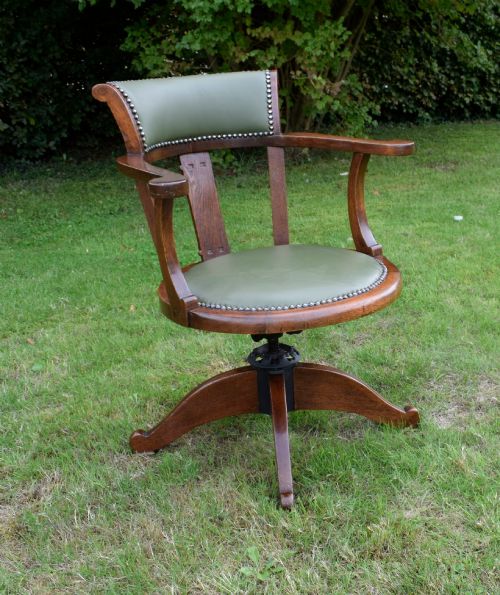
Revolving models incorporate iron and brass swivel mechanisms beneath wooden seats, allowing for tilt and rotation functionality. Upholstered versions feature studded leather seats and high backs secured to mahogany or oak frames with traditional joinery methods.
Vintage Office Armchair Retail Price Guide 2026
Typical asking prices for vintage office armchair among the pieces listed under this phrase on Sellingantiques today, from the lower quarter to the upper quarter. They describe what is for sale here now, not the wider market.
The selection includes revolving office chairs, Windsor-style captain chairs, and upholstered library armchairs with brass and iron hardware.
What varies in quality
The distinction between standard commercial seating and finer examples lies in the selection of timber and the ambition of the carved detail. Superior pieces utilise figured mahogany, rich oak, or substantial yew wood paired with carefully moulded arms and deep-buttoned leather upholstery.
Mechanism engineering also separates the range, where fluid swivel and tilt actions built from heavy brass and iron distinguish higher grade office chairs from simpler fixed wooden models.
The Vintage Office Armchair Glossary
- Captain Chair
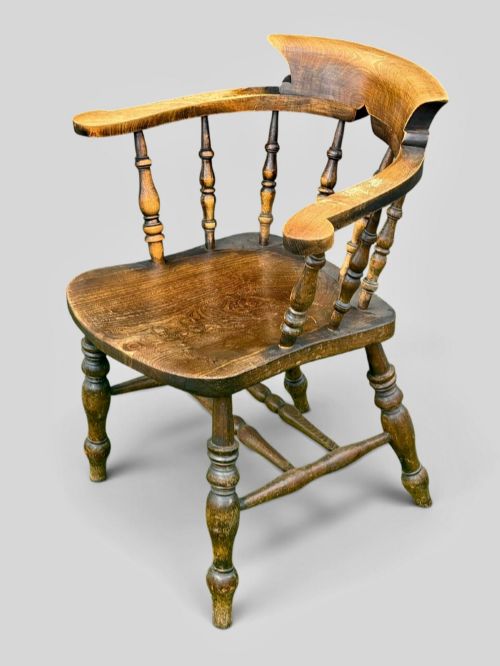
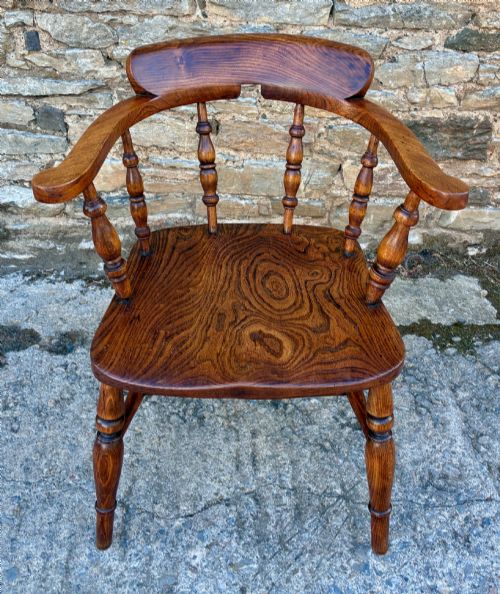
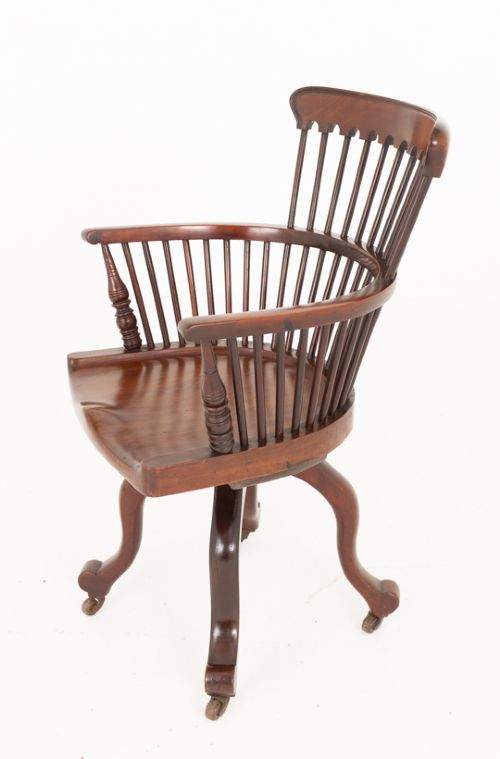
- A low-backed wooden armchair with a horseshoe-shaped backrest supported by turned spindles. These chairs originate from nineteenth-century seating designs used in offices and ships.
- Smoker's Bow
- A sturdy wooden armchair related to the Windsor tradition, featuring a rounded back rail and a solid elm or beech seat. They often served as comfortable seating in studies and smoking rooms.
- Revolving Desk Chair
- An office seat mounted on a central pivot column that allows the sitter to rotate. Many Victorian and Edwardian versions combine this swivel function with a wooden or iron underframe.
- Chippendale Revival
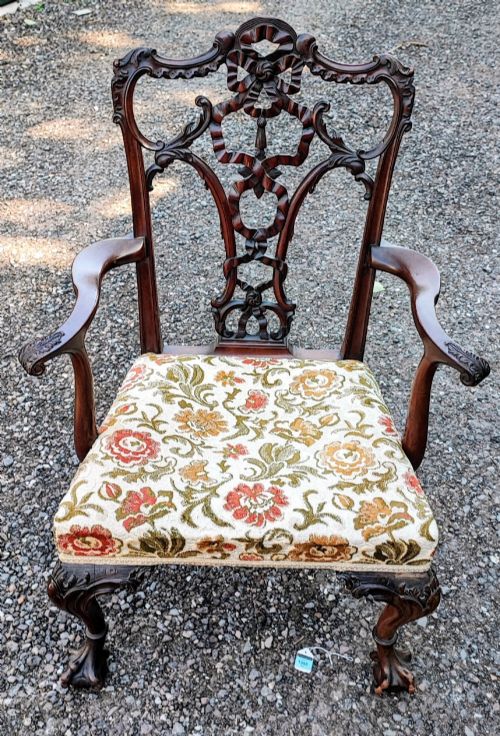
- A decorative style popular in the late nineteenth and early twentieth centuries that reinterprets eighteenth-century carved mahogany motifs. Pieces often display intricate splats and cabriole legs.
- Wingback
- An armchair with side panels attached to the backrest designed to shield the sitter from drafts. These appear in library and office settings upholstered in leather or fabric.
Vintage Office Armchair: Frequently Asked Questions
How do I identify a Victorian desk chair?
Victorian desk chairs generally display dark mahogany or oak timbers, often featuring turned wooden legs and heavy brass hardware. Many from this era incorporate revolving mechanisms or leather upholstery.
Look for construction methods typical of the late nineteenth century, such as hand-cut joinery and dense, patinated wood surfaces that show decades of use.
Were all vintage office armchairs made with leather seats?
Not all examples feature leather; many traditional captain chairs and library seats are constructed entirely from solid elm, oak, or mahogany with carved wooden seats. Leather upholstery appears frequently on Edwardian and Victorian revolving desk chairs.
Buyers will find a mix of bare timber surfaces and studded leather pads across the different styles listed.
How do swivel mechanisms work on antique desk chairs?
Antique swivel chairs use a central iron or brass spindle secured beneath a wooden seat, often mounted on a four-legged or five-legged timber base. Some Edwardian models include tilt mechanisms alongside the rotation function.
These mechanical parts allowed office workers to adjust their position and turn easily between desks and filing areas.
Can I use an antique office armchair for daily work?
These sturdy wooden and leather chairs were originally built for heavy administrative duties in nineteenth-century offices and studies. Their robust frames and ergonomic curved backs make them well-suited for modern desk use.
Ensure that any swivel or tilt hardware operates smoothly and that the wooden structure remains solid before regular daily sitting.