
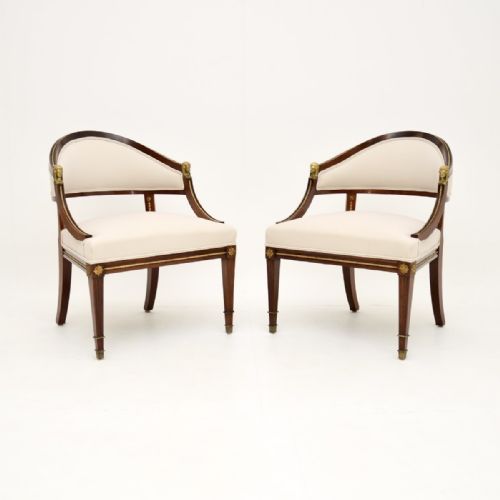
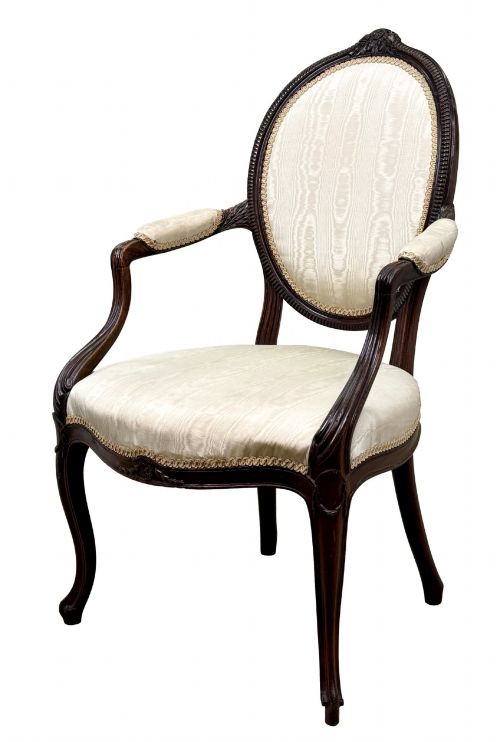
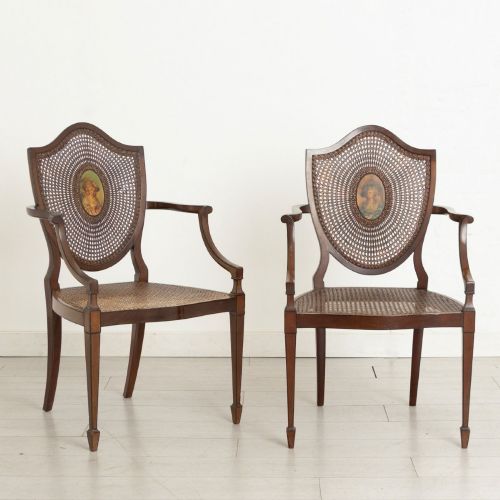
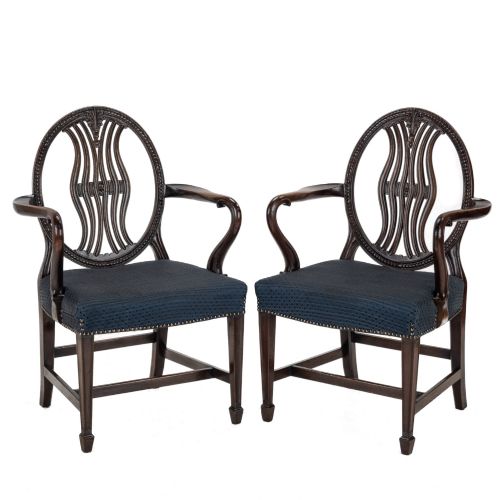
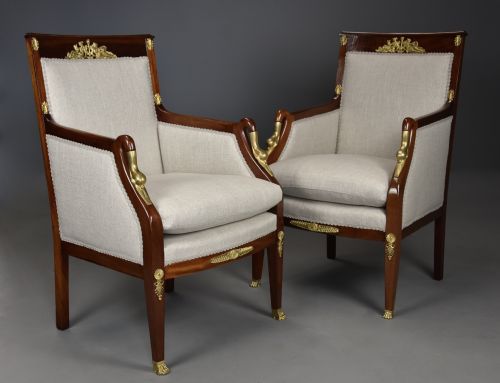

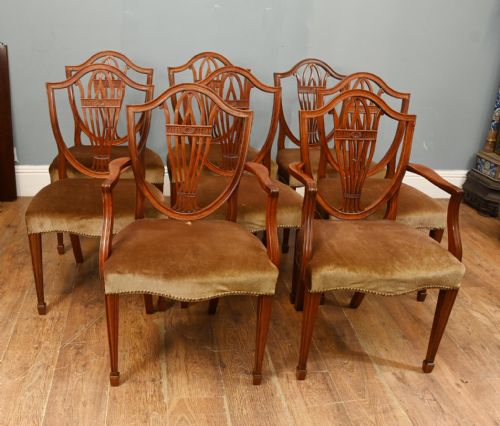


Neoclassical Mahogany Armchair
A neoclassical mahogany armchair brings architectural line and rich timber tone into any room.
What these armchairs are
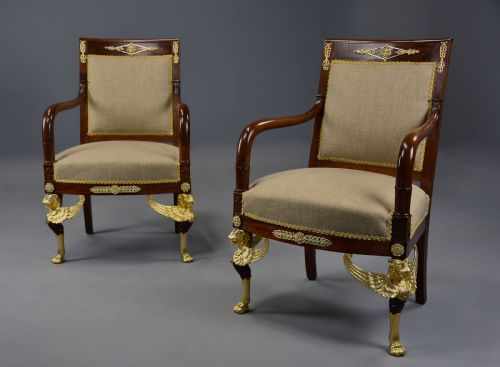
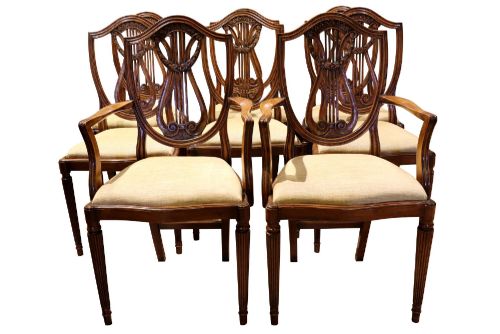
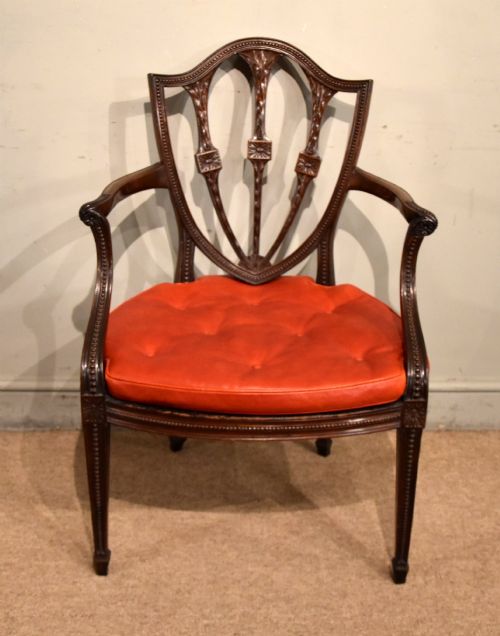
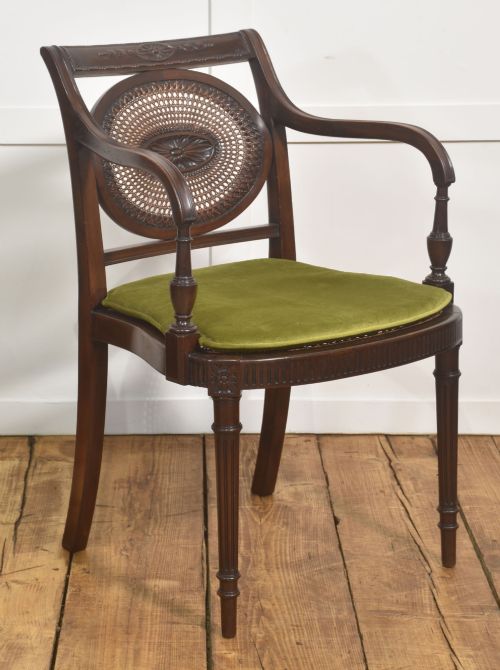
A neoclassical mahogany armchair combines strict classical proportion with the deep, warm grain of mahogany. These chairs draw on 18th century and subsequent revival periods, reflecting Georgian, Sheraton, and French Empire influences.
The form spans straightforward salon chairs to mounted empire seats featuring ormolu and leather. English and Swedish origins appear frequently across the pieces.
Examples range from solid 18th century seating to later 19th and early 20th century revivals. Buyers often encounter George III style frames and inlaid Edwardian interpretations.
How they were made
Cabinetmakers built these frames primarily from mahogany, often enhancing surfaces with inlay wood, brass details, or cast ormolu mounts. Joinery relied on traditional hand-cut techniques to ensure structural integrity across open arm designs.
Upholstery materials include leather, silk, damask, and standard fabric covering padded seats and backs. Metal mounts and decorative carvings were meticulously applied by hand to accent the structural lines.
Retail Price Guide 2026
Typical UK retail prices for neoclassical mahogany armchair, calculated from the Sellingantiques database of over a million retail prices indexed since 2003. This retail price guide relies exclusively on Sellingantiques data; no external sources or auction records are used, so the figures do not describe the wider market.
Materials recorded across the inventory include solid mahogany, ormolu mounts, inlaid wood, leather, silk, and damask upholstery.
What varies in quality
Quality rests in the crispness of the carved detail and the selection of the mahogany timber itself. Superior frames show thoughtful grain matching and sharp execution of classical motifs without soft edges.
The integration of decorative elements like ormolu mounts and inlay work defines the upper tiers of the craft. Secondary materials and the precision of the joinery further separate standard production from exceptional examples.
The Neoclassical Mahogany Armchair Glossary
- Mahogany
- A dense tropical hardwood prized for its deep reddish-brown colour and stable grain. It forms the primary structural material for these chairs.
- Ormolu
- Gilded bronze mounts applied for decorative contrast against dark wood. This technique typifies French Empire styling.
- Inlay
- The technique of embedding contrasting woods into the primary surface to create geometric or floral patterns. Sheraton and Edwardian pieces frequently utilise this method.
- George III style
- A revival aesthetic mimicking the proportions and decorative vocabulary of the late eighteenth century. Makers often returned to these patterns during the Victorian and Edwardian eras.
Frequently Asked Questions
How do I date a neoclassical mahogany armchair?
Dating relies on examining the timber preparation, tool marks, and stylistic revival cues. Earlier pieces show hand-sawn elements, while later revivals incorporate machine precision alongside period motifs.
Comparing the secondary woods and upholstery construction methods provides further chronological markers for these chairs.
Are these chairs suitable for daily use?
Many solid mahogany frames remain robust enough for regular seating when properly maintained. The underlying joinery determines the structural capacity of each specific chair.
Checking the stability of the arms and legs ensures safe everyday placement in a home.
What is the difference between Georgian and revival pieces?
Original Georgian pieces date directly to the eighteenth century and carry period manufacturing traits. Revival pieces originate from later decades like the Victorian or Edwardian eras while copying those earlier designs.
Both categories utilise mahogany and classical lines, but the period of creation differs by a century or more.
How do I care for mahogany and leather?
Mahogany benefits from occasional gentle waxing to protect the finish and preserve the wood tone. Leather upholstery requires conditioning to prevent drying and cracking over time.
Keeping these chairs away from direct heat sources and strong sunlight protects both the timber and the fabric.