


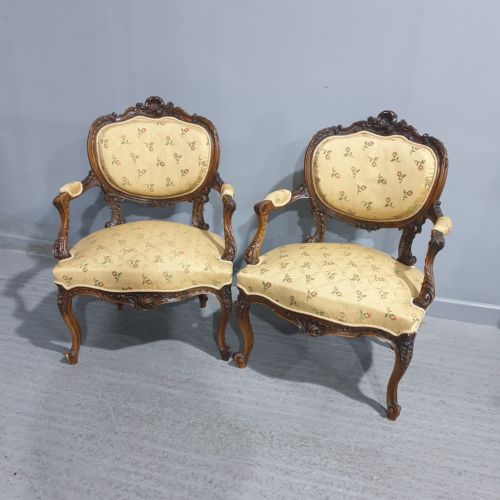

Carved Mahogany Fauteuil
A carved mahogany fauteuil brings classical proportion and exposed timber warmth into a sitting room.
Carved Mahogany Fauteuil
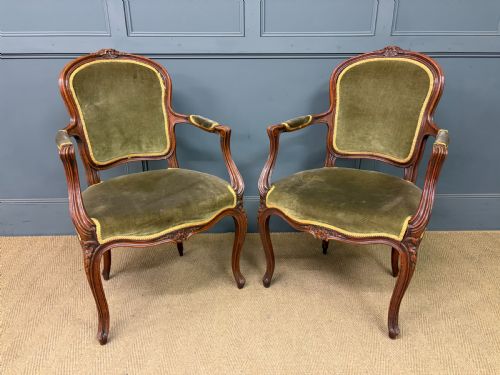
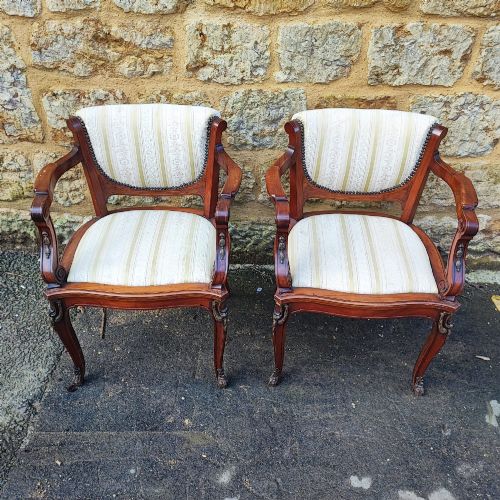
A carved mahogany fauteuil is an open-armed seating form rooted in continental and English traditions, appearing across eighteenth, nineteenth, and early twentieth century periods. When searching for this specific phrase, buyers encounter both English Georgian interpretations and continental French Empire or Louis revival styles.
The pieces listed on this page span the eighteenth, nineteenth, and early twentieth centuries, capturing formats from library armchairs to salon seating. Examples emerge in single pieces, pairs, or matched sets, predominantly constructed from solid mahogany with carved wooden frames.
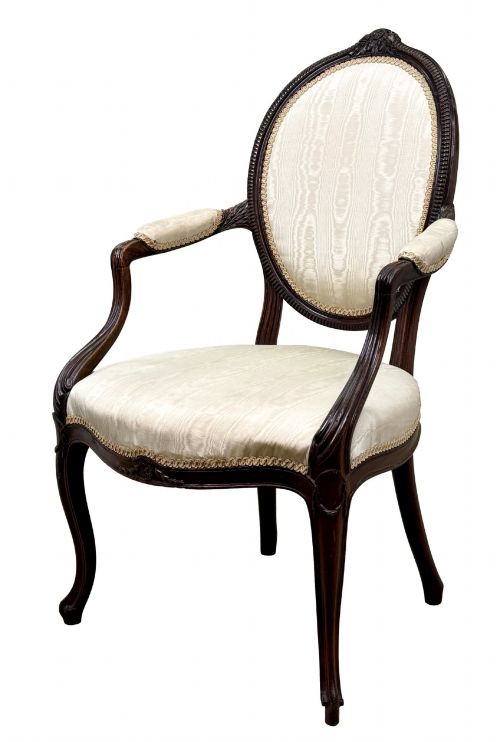
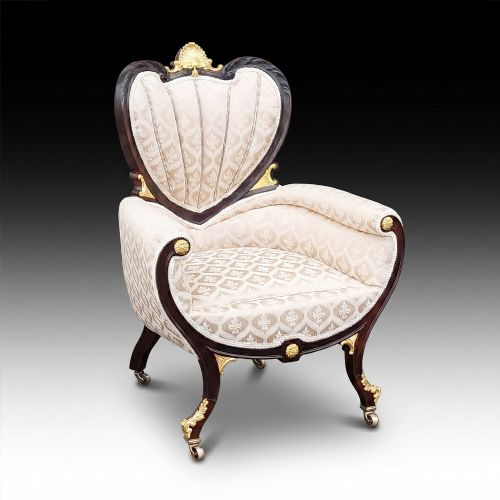
Origin points diverge between English workshop styles such as Hepplewhite and continental French designs featuring ormolu mounts and gilt bronze. Buyers frequently meet nineteenth-century revival iterations that adapt earlier eighteenth-century proportions for later Victorian and Edwardian interiors.
Distinctions in Quality and Execution
The depth and crispness of the carved mahogany ornamentation separate standard production from superior examples, with hand-chiseled foliage and moulded edges showing greater artisan control. The quality of cast metal mounts, where present, dictates the refinement of French Empire and revival pieces.
Proportional harmony between the open arms, cabriole or tapered legs, and upholstered backrest determines the visual success of the chair. Structural integrity of the underlying mahogany frame and the preservation of original timber surfaces govern the enduring standing of each piece.
Carved Mahogany Fauteuil Retail Price Guide 2026
Typical asking prices for carved mahogany fauteuil among the pieces listed under this phrase on Sellingantiques today, from the lower quarter to the upper quarter. They describe what is for sale here now, not the wider market.
Listings span from the eighteenth century to the early twentieth century, incorporating Victorian, Georgian, and French Empire styles.
The Carved Mahogany Fauteuil Glossary
- Mahogany
- A durable tropical hardwood prized for its reddish-brown colour and stable grain pattern. Cabinetmakers selected this timber for its capacity to hold intricate carved detail.
- Ormolu
- Ground gold amalgamated with mercury and applied to bronze metal mounts. This decorative technique adorned French Empire and revival furniture frames.
- Hepplewhite
- An eighteenth-century English furniture style associated with graceful curves and shield-back chair designs. Pieces in this tradition often employ mahogany with delicate spade feet.
- Directoire
- A transitional French design style bridging Louis XVI and Empire periods. The aesthetic favours restrained neoclassical lines over ornate baroque carving.
Carved Mahogany Fauteuil: Frequently Asked Questions
What is a fauteuil?
A fauteuil is an upholstered armchair featuring open wooden sides and exposed frame members. The design originated in France to accommodate voluminous period fashion.
Makers shaped the wooden arms to provide comfortable support while displaying carved decorative motifs along the frame.
How do I identify a French Empire armchair?
French Empire armchairs display classical architectural motifs, heavier proportions, and dark mahogany surfaces. Ormolu mounts cast in bronze frequently accent the structural members.
These chairs often incorporate sculptural arm supports shaped like swans, sphinxes, or classical columns reflecting nineteenth-century taste.
Where should I place a mahogany armchair?
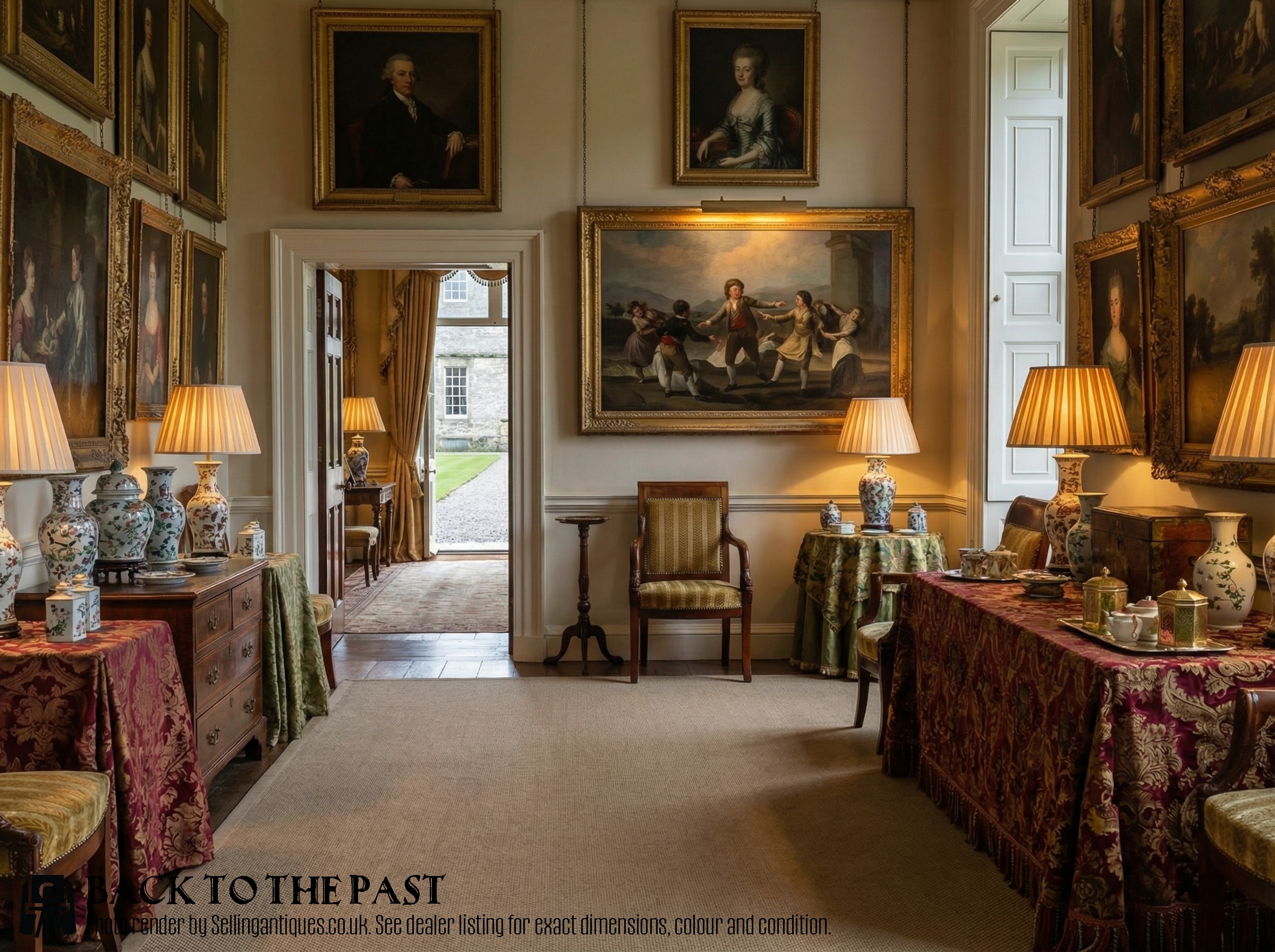
A carved mahogany armchair functions effectively as a desk chair, a library seat, or an occasional chair in a drawing room. The open frame keeps visual weight low in smaller spaces.
Pairing matching armchairs near a fireplace or reading table creates a balanced seating arrangement within a traditional interior.
How do English and French styles differ?
English styles from the eighteenth century, such as Hepplewhite, emphasise understated mahogany carving and balanced geometric framing. French models lean toward ornamental gilt bronze mounts and pronounced curvilinear shapes.
Revival pieces from the nineteenth century often blend these continental and domestic characteristics into eclectic library and salon seating.