


Patterned Damask Armchair
A patterned damask armchair brings tactile depth and rich historical character to a room, offering both formal elegance and deep comfort.
Patterned Damask Armchair
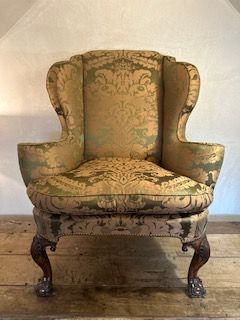
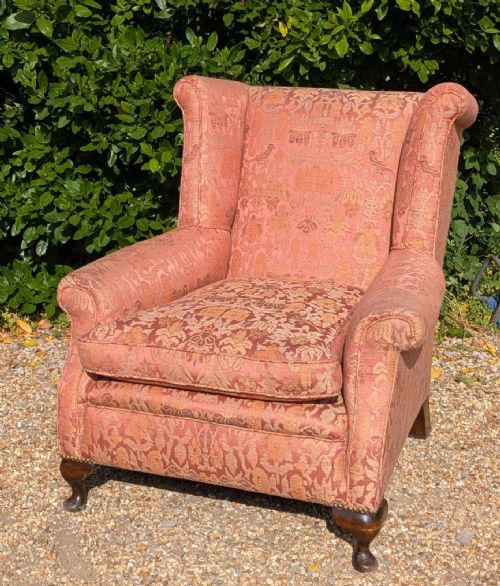
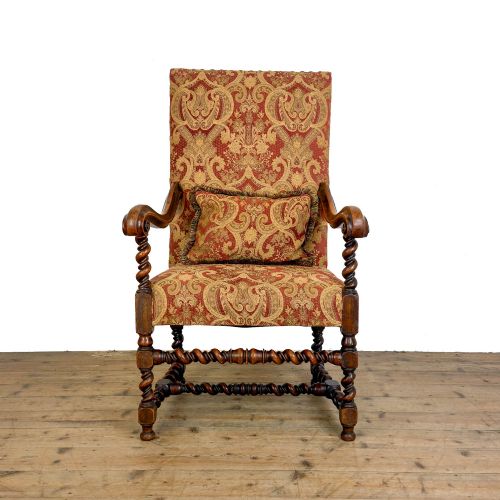
When searching for a patterned damask armchair, collectors encounter a diverse range of forms spanning from the eighteenth century through the Edwardian era and the early twentieth century. These seating pieces encompass winged fireside chairs, library armchairs, and low salon seats upholstered in woven textiles.
The selections available here showcase significant stylistic variety, including Georgian and Victorian framework, alongside revival designs such as Carolean and Queen Anne styles. Buyers are most likely to meet nineteenth-century upholstered armchairs and Edwardian wing chairs featuring traditional wooden frames.
Materials and Construction
The structural frames rely on hardwoods such as mahogany, walnut, and oak, frequently shaped with carved details or turned supports. Brass hardware and castors occasionally complement the timber framework beneath the upholstery.
Textiles form the primary visual surface, utilising damask fabric alongside rosewood or hardwood structures. Interior stuffing techniques incorporate traditional feather fillings and supportive cushioning to achieve structured comfort.
Patterned Damask Armchair Retail Price Guide 2026
Typical asking prices for patterned damask armchair among the pieces listed under this phrase on Sellingantiques today, from the lower quarter to the upper quarter. They describe what is for sale here now, not the wider market.
Feather-filled cushions in these historic armchairs ensure that historic seating remains surprisingly welcoming for modern afternoon reading.
Assessing Quality and Craftsmanship
Quality in these seating pieces rests upon the integrity of the wooden frame and the precision of the joinery beneath the fabric. Finer examples display crisp carving on mahogany or walnut legs and arms rather than heavy, indistinct moulding.
The sophistication of the upholstery work also distinguishes finer items, where the damask pattern aligns thoughtfully across the contours of the chair. Heavier timber frames and well-maintained interior padding indicate higher standards of period manufacture.
Howard and Sons
The Patterned Damask Armchair Glossary
- Damask
- A reversible figured fabric with patterns formed by weaving, traditionally utilising silk, wool, or cotton. This textile provides the characteristic sheen and tactile motif seen on formal period seating.
- Wing chair
- An armchair featuring side panels or wings attached to the arms and back to shield the sitter from draughts. These pieces often date from the eighteenth century onwards.
- Barley twist
- A decorative turning style resembling a twisted rope, commonly found on the wooden legs and stretchers of seventeenth and nineteenth-century chairs.
- Button-back
- An upholstery method where depressions are created by sewing through the padding and securing buttons to the inner frame, popular in Victorian seating.
Patterned Damask Armchair: Frequently Asked Questions
How do I identify a Georgian style armchair?
Georgian style armchairs typically feature mahogany or walnut frames with restrained carving, subtle cabriole legs, or straight structural supports. They often prioritise balanced proportions and classical geometric lines.
Upholstery on these pieces usually follows traditional forms like wing backs or open arms designed for libraries and parlours.
Are these armchairs suitable for daily sitting?
Many period armchairs are structurally robust enough for regular use, particularly Edwardian and nineteenth-century examples built with sturdy hardwood frames. Checking the internal padding and frame stability ensures lasting comfort.
Some fragile eighteenth-century or highly decorative pieces benefit from lighter use to preserve their original timber and fabric integrity.
What distinguishes Victorian seating from Edwardian pieces?
Victorian armchairs frequently utilise darker woods, heavier button-back upholstery, and elaborate tufting designed for formal Victorian interiors. They tend to have a robust, enclosed presence.
Edwardian chairs generally present lighter proportions, brighter wood tones, and simpler upholstery treatments reflecting a shift towards airy domestic spaces.
How should I care for damask upholstery?
Damask fabric benefits from gentle vacuuming with a soft brush attachment to remove surface dust without catching the woven threads. Direct sunlight should be avoided to prevent fading of the textile pattern.
Professional specialist cleaning is recommended for deeper maintenance to protect the delicate weave of period fabrics.