
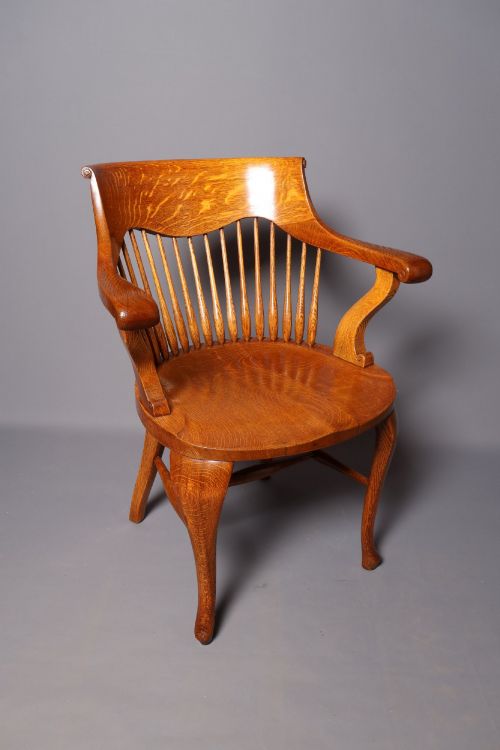
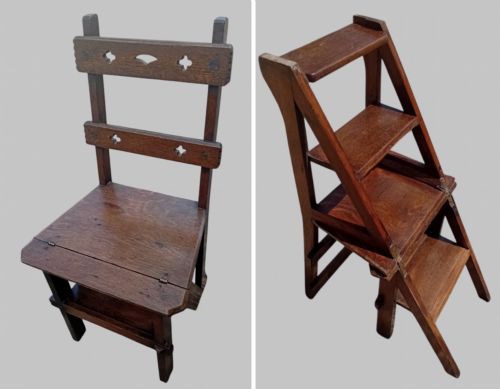


Carved Oak Library Chair
A carved oak library chair brings enduring architectural weight to a study, built from heavy timber and shaped for long hours of reading.
Identifying these seating forms
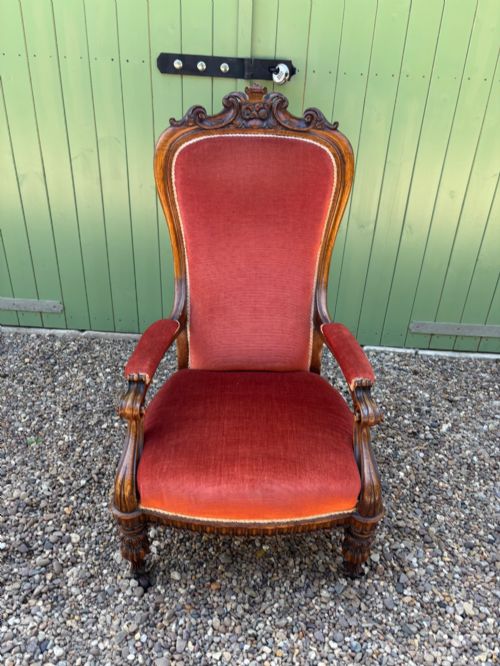
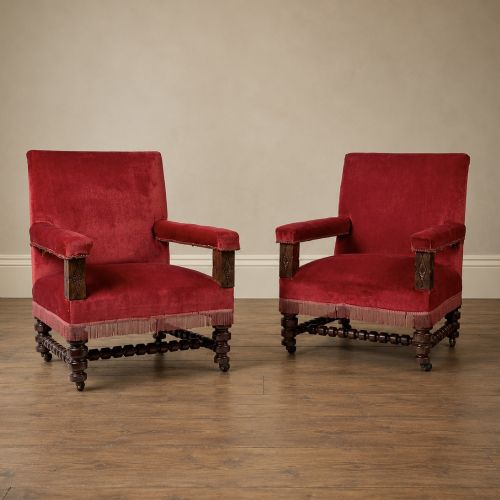
A carved oak library chair is a sturdy seat built for private studies and reading rooms, appearing frequently in Victorian Gothic Revival, Arts & Crafts, and Carolean Revival styles. These heavy seating forms range from open armchairs with barley twist supports to ingenious metamorphic designs that transform into library steps.
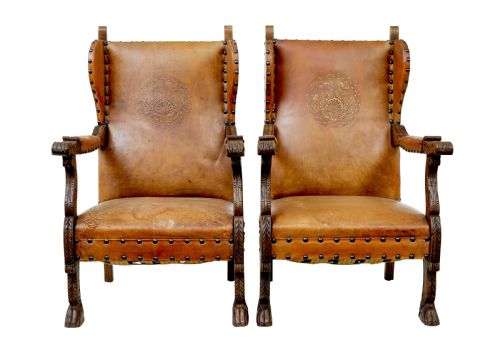
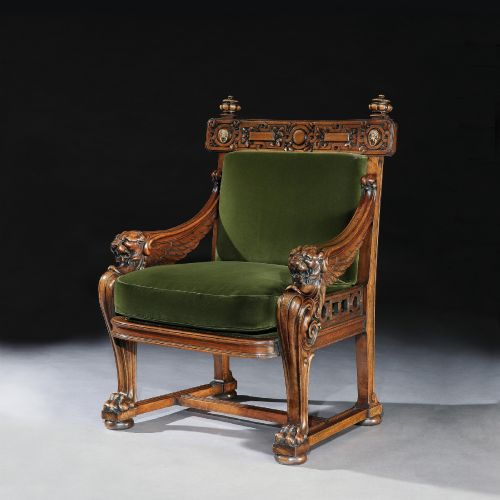
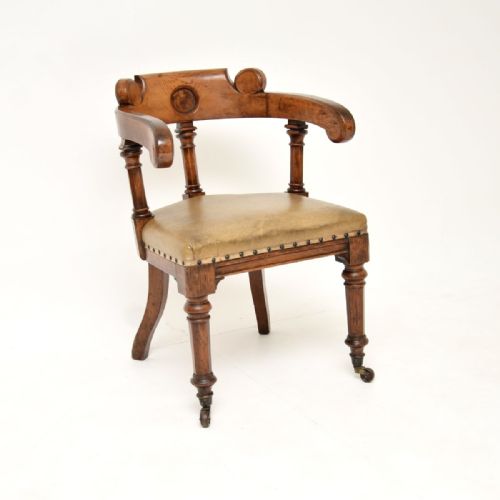
The pieces seen here date primarily from the nineteenth century, including the decades around 1850, 1880, 1890, and 1900. Buyers encounter both standard desk chairs upholstered in leather and grander throne chairs featuring detailed woodwork.
While most examples are constructed from oak, materials such as walnut, brass, cane, and fabric also appear across the selection. The primary function remains a robust, supportive seat designed to anchor a traditional library space.
Materials and construction methods
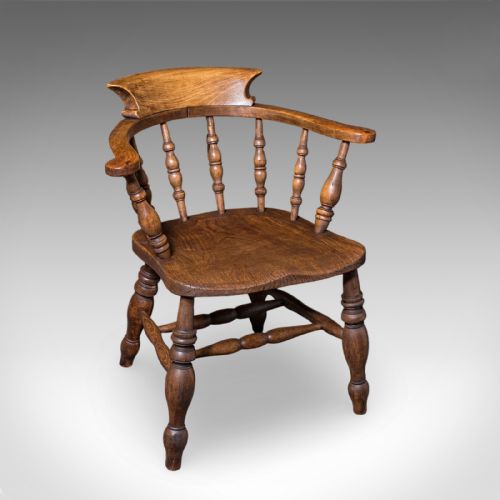
Makers utilised solid timber frames, relying predominantly on oak alongside occasional walnut. Woodcarbers shaped decorative panels, scrolled arms, and turned supports by hand, employing traditional joinery to secure heavy structural loads.
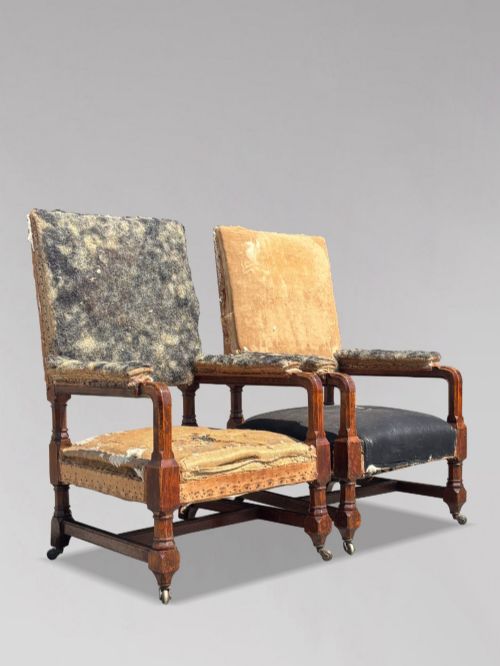
Upholstery materials include supple leather and durable fabric fastened securely to the wooden frames. Brass accents and metal hinges appear on metamorphic iterations to facilitate smooth mechanical movement without compromising strength.
Retail Price Guide 2026
Typical UK retail prices for carved oak library chair, calculated from the Sellingantiques database of over a million retail prices indexed since 2003. This retail price guide relies exclusively on Sellingantiques data; no external sources or auction records are used, so the figures do not describe the wider market.
Some chairs quietly double as staircases, proving that Victorian readers occasionally needed to climb their own furniture to reach the top shelf.
Judging the standard of execution
Depth and precision of the woodwork distinguish the finest examples from standard production pieces. Crisp relief carving on the crest rails and arms indicates skilled craftsmanship rather than rapid mechanical replication.
The integration of functional mechanics separates standard seating from high-end metamorphic library chairs. Seamless transformation into steps relies on robust hinges and precise alignment of the timber elements.
Gillow
The Carved Oak Library Chair Glossary
- Metamorphic chair
- A dual-purpose piece of furniture that converts from a seat into a set of library steps. This ingenious mechanism relies on hidden hinges and folding timber sections.
- Barley twist
- A decorative turning technique resembling a twisted rope, commonly found on the legs and stretchers of nineteenth-century seating. It adds visual movement to heavy wooden frames.
- Puginesque
- A nineteenth-century architectural and design style inspired by Augustus Pugin, featuring severe Gothic Revival characteristics. It emphasises structural honesty and medieval forms.
- Carolean Revival
- A late nineteenth-century revival of seventeenth-century Restoration furniture styles. It is recognised by elaborate carving, cane panels, and scrolling woodwork.
Frequently Asked Questions
What is a metamorphic library chair?
A metamorphic library chair is a multi-functional piece that converts from a comfortable reading seat into a small ladder for reaching high bookshelves.
These clever designs use hidden pivots and folding sections of oak to transform safely while maintaining the appearance of a standard armchair when closed.
How do I care for the leather upholstery?
Leather upholstery requires regular dusting and occasional conditioning to prevent the hide from drying out over time.
Keeping the chair away from direct sunlight and heat sources preserves the natural suppleness of the original or replaced leather.
Are these chairs comfortable for daily desk work?
These pieces were built with generous proportions and supportive armrests intended for long hours of reading in studies.
Many examples feature padded leather or upholstered backs that provide substantial physical support suitable for modern workspaces.
How do I identify a Gothic Revival piece?
Gothic Revival furniture incorporates medieval architectural motifs such as pointed arches, quatrefoils, and heavy structural framing.
Craftsmen working in this Victorian style often utilised dark oak and dramatic carved details to evoke a sense of ancient craftsmanship.