


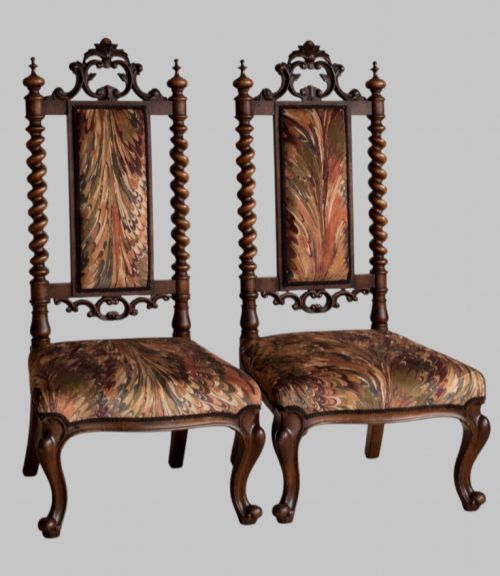
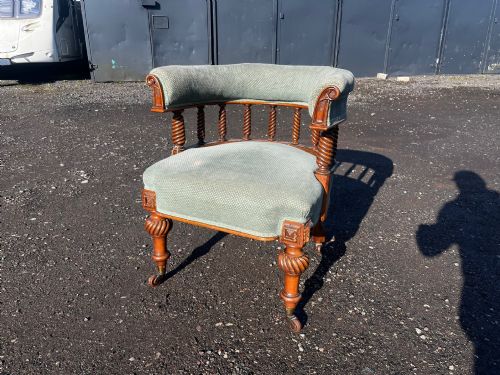
Victorian Barley Twist Chair
These Victorian barley twist chairs offer robust turning and period upholstery, prized for bringing tactile warmth to traditional interiors.
Forms and Origins
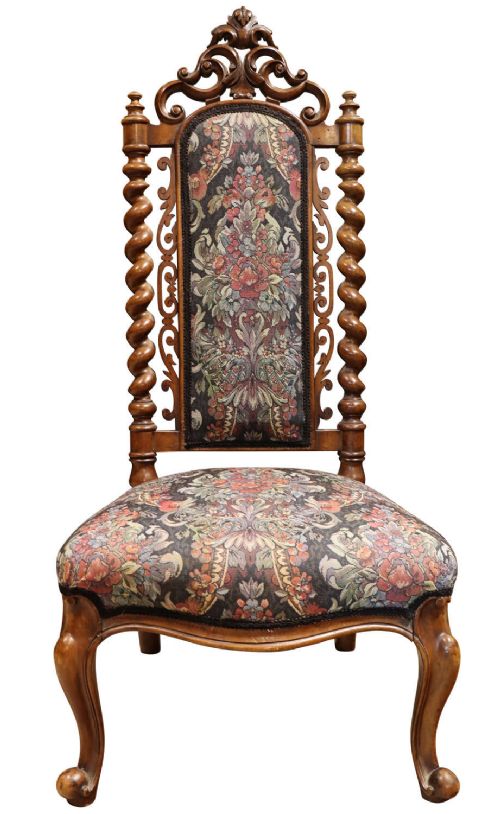
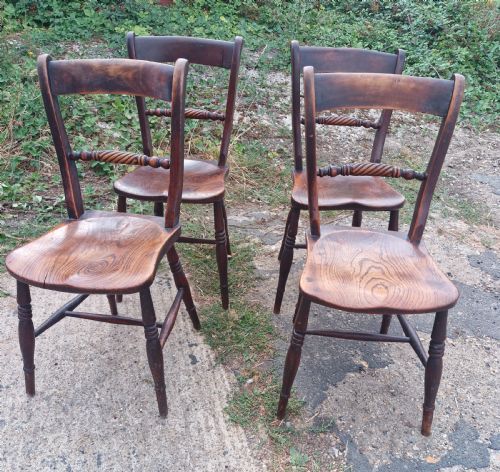
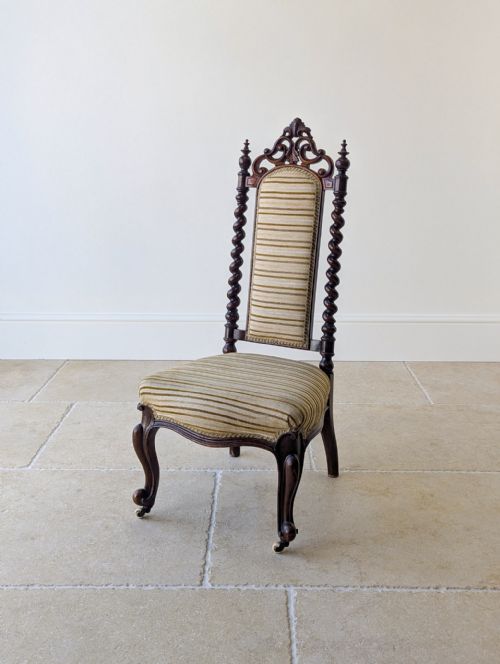
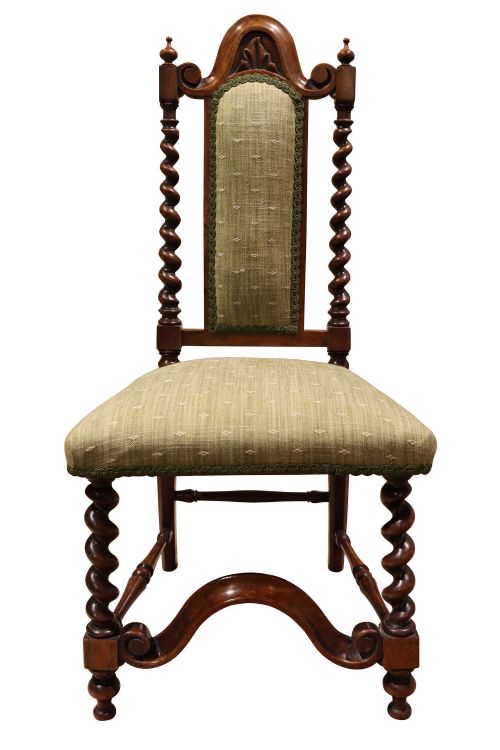
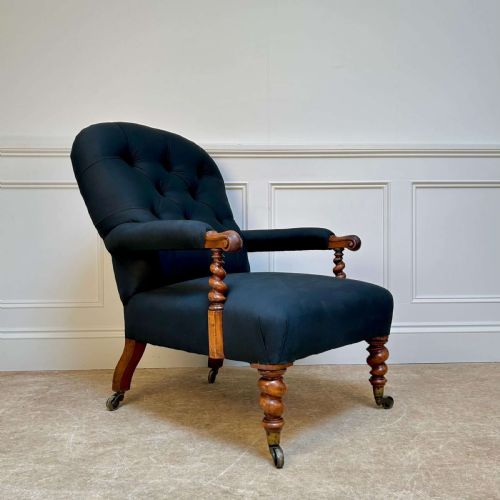
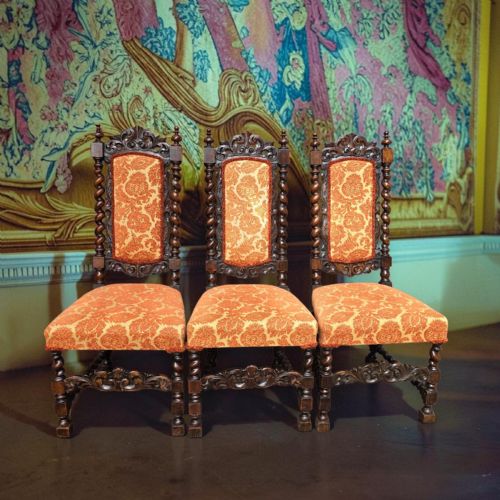
A victorian barley twist chair is typically encountered as a side chair, an armchair, or part of a dining set dating from the nineteenth century. These pieces appear in single examples, pairs, and larger sets of four, six, or eight chairs. Originating across the Victorian era, they draw upon earlier styles, including Victorian Gothic Revival and Victorian Revival interpretations.
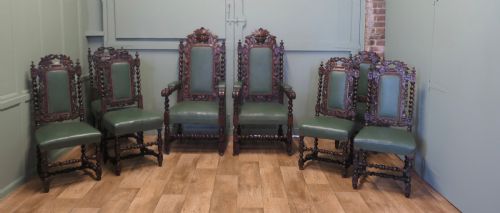
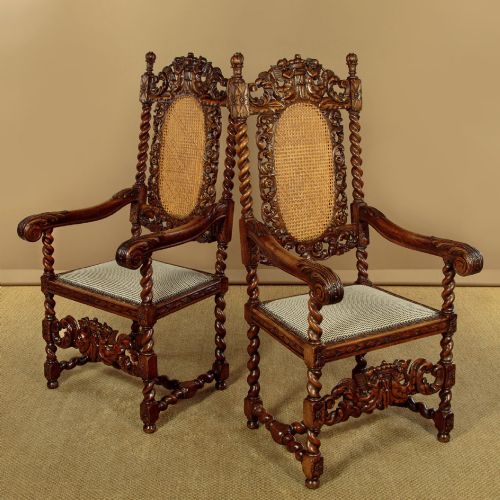
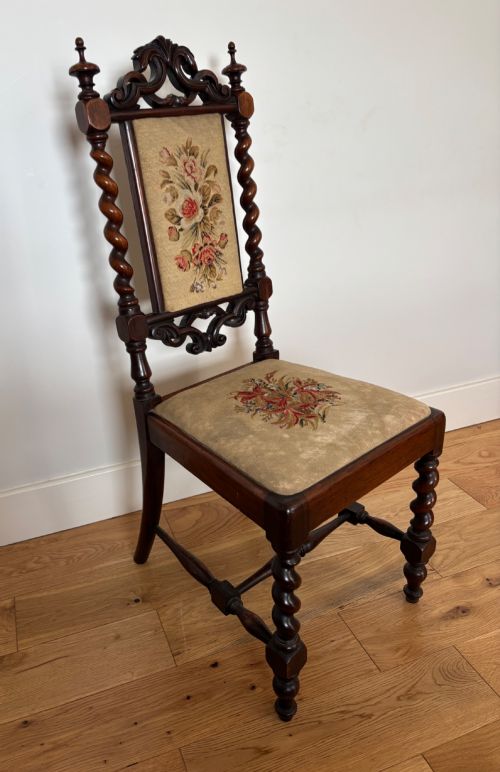
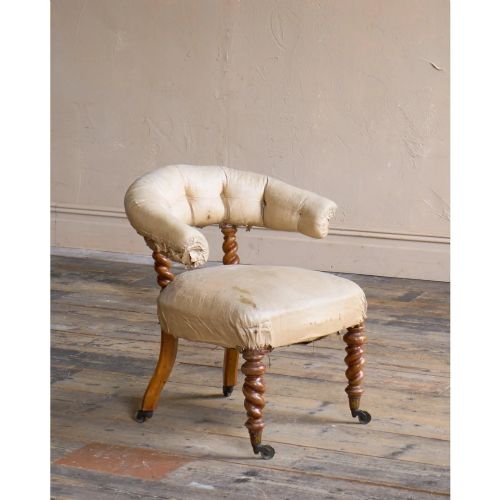
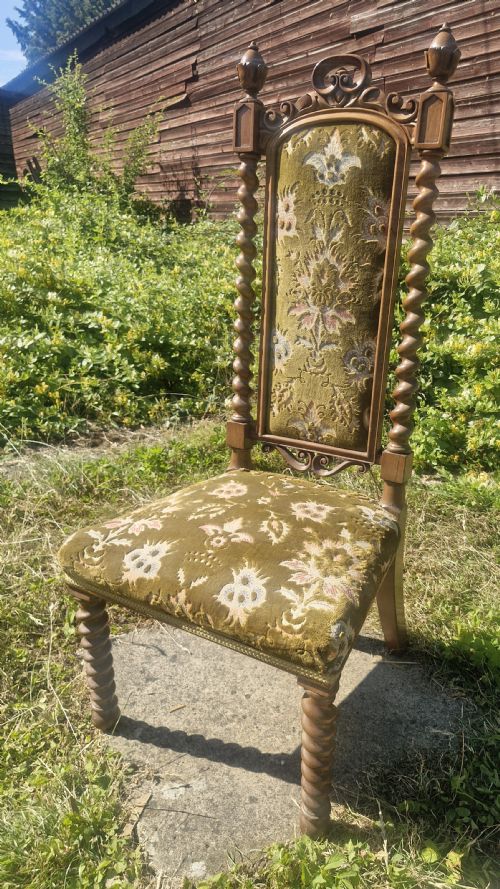
The physical forms range from compact low seat bedroom chairs and high-back parlour chairs to open armchairs and heavy dining chairs. Walnut, rosewood, and oak frequently form the structural framework of these seats. Upholstery varies across the evidence, appearing in fabric, tapestry fabric, velvet, leather, rattan, and bergere.
Construction and Materials
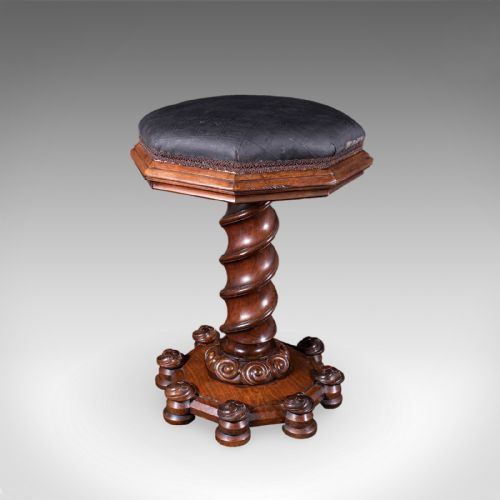
Makers constructed the frames of these chairs using hardwoods such as oak, walnut, rosewood, and ash. The defining twist supports and stretchers were shaped on a lathe to create the characteristic spiral profile. Additional structural stability and decorative detail often involved carved floral leaves, bobbin turnings, and show wood elements.
Upholstery techniques combined traditional stuffing with textiles secured by brass details. Seats and backs were finished in various materials including woven bergere, patterned tapestry, velvet, leather, and plain fabric. Frames occasionally incorporated exposed polished timber alongside upholstered components.
Some adventurous Victorians chose rocking chairs with barley twist frames, ensuring their motion came with a generous dose of spiral turning.
Judging Quality
Quality in these chairs rests upon the depth and crispness of the timber turning and any accompanying hand-carved floral leaf details. Solid oak, walnut, and rosewood frames demonstrate greater longevity and substance compared to softer timber alternatives. The integration of the spiral twist across the legs, supports, and stretchers dictates the visual harmony of the piece.
The grade and integrity of the original or replacement upholstery, whether tapestry, leather, velvet, or bergere cane, significantly affects the character of the seating. Sets that survive complete, such as groups of four, six, or eight dining chairs, hold greater consistency in their timber grain and turned proportions.
The Victorian Barley Twist Chair Glossary
- Barley twist
- A type of furniture turning resembling a spiral rope or the stem of barley. This decorative motif forms the primary structural and visual feature of the frame.
- Bergere
- A type of woven cane seat or back panel common in nineteenth-century seating. It provides a flexible and breathable surface supported by the wooden frame.
- Show wood
- Polished timber framework left visible around the upholstered sections of an armchair or parlour chair. It displays the grain and colour of the walnut or oak.
- Bobbin turning
- A form of lathe turning consisting of small rounded spheres resembling beads on a string. It often accompanies the spiral twist on nineteenth-century chair frames.
Frequently Asked Questions
How do I date a barley twist chair?
Dating relies on timber selection, turning style, and construction methods characteristic of the nineteenth century. Pieces often carry stylistic markers associated with Victorian Gothic Revival or general Victorian production.
Secondary evidence such as screw types, upholstery webbing, and wear patterns help confirm the period of manufacture. Comparing the framing technique to documented nineteenth-century examples provides further chronological context.
Were these chairs used for dining?
Many examples on this page are recorded as dining chairs, often surviving in sets of four, six, or eight pieces. Their sturdy oak or walnut frames made them suitable for regular use around a dining table.
Individual side chairs and armchairs served different domestic functions in parlours, bedrooms, and studies. Lower seat heights and open arms adapted specific forms for lounging or occasional seating.
What woods were used for the frames?
The primary hardwoods recorded in the construction of these chairs are oak, walnut, rosewood, and ash. Oak frequently appears in larger dining sets and heavy armchairs, while walnut and rosewood are common in parlour and side chairs.
These timbers provided the structural strength required to support the lathe-turned spiral legs and stretchers. The choice of wood dictates the natural colour and grain pattern of the exposed frame.
How should I clean the upholstered seats?
Maintenance depends upon whether the covering is fabric, velvet, tapestry, leather, or woven bergere cane. Gentle surface cleaning with appropriate textile attachments preserves the integrity of older materials.
Exposed wooden elements benefit from occasional dusting and preservation with suitable wax polishes. Avoiding excessive moisture protects both the timber joints and the internal stuffing.