
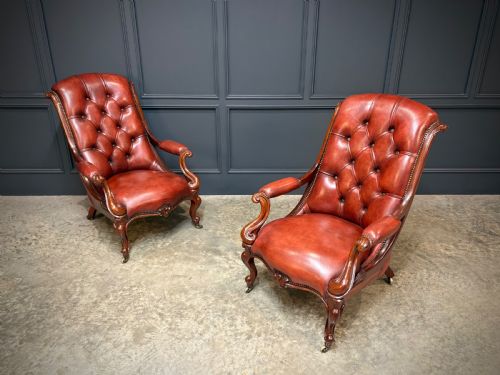


Red Leather Club Chair
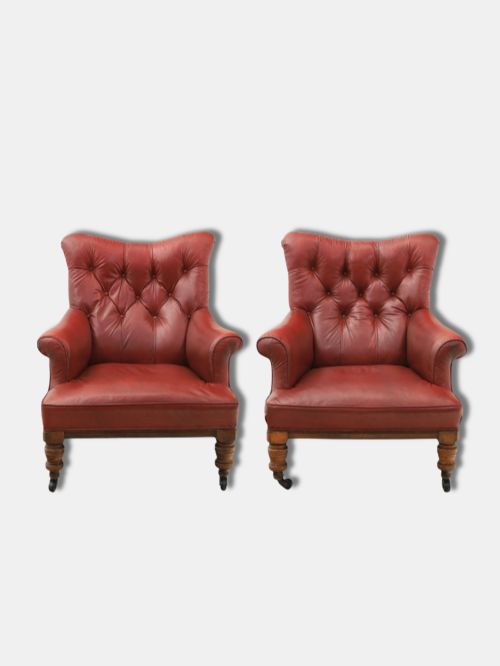
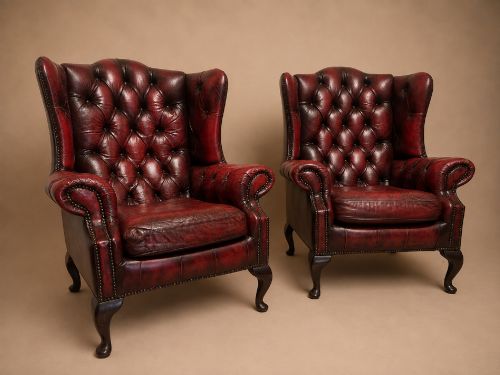
These red leather club chairs bring deep colour and substantial seating to a room, spanning periods from the Georgian era through to the Art Deco decades.
What these pieces are
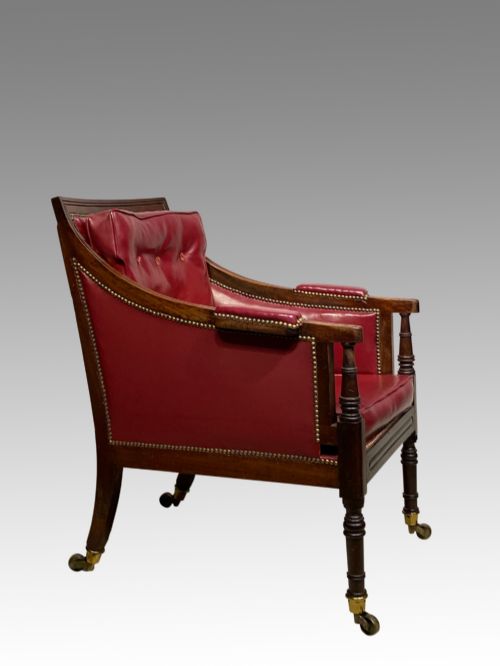
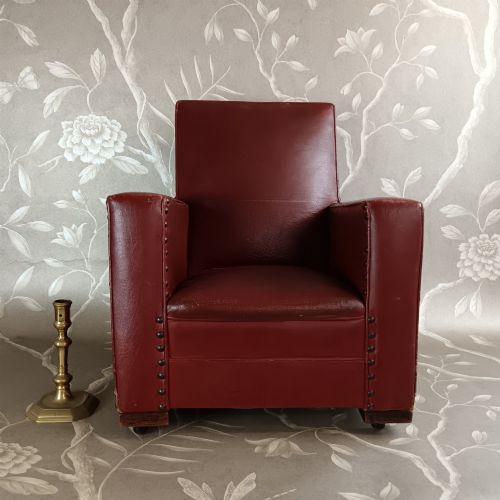
When searching for a red leather club chair, a buyer encounters large upholstered armchairs built for comfort and library use. The selection includes deep library chairs, pairs of country house seating, and oxblood Art Deco club chairs.
The pieces on this page span several centuries, with examples originating from the Georgian period, Victorian era, Edwardian years, and the 1930s. Forms vary from simple mahogany frames to heavy oak and French Renaissance Revival shapes.
Most examples function as low-slung lounging seats or upright library and office armchairs. Buyers find single armchairs alongside matched pairs suitable for a study or drawing room.
How they were made
The construction relies on sturdy wooden frames shaped from mahogany, oak, hardwood, and general timber. Joinery supports the weight of deep padding and daily use over generations.
Upholstery employs durable leather, occasionally specified as Moroccan leather, secured to the frame with brass tacks or studs. Wood elements receive polish to highlight the natural grain of mahogany and oak.
Retail Price Guide 2026
Typical UK retail prices for red leather club chair, calculated from the Sellingantiques database of over a million retail prices indexed since 2003. This retail price guide relies exclusively on Sellingantiques data; no external sources or auction records are used, so the figures do not describe the wider market.
Materials recorded across the inventory include mahogany, oak, brass, and hardwood.
What varies in quality
Quality rests in the presence of carved details such as lions' heads on the arms and the weight of the timber frame. Substantial mahogany and carved oak frames represent higher tiers of craftsmanship compared to simpler structures.
The finish of the leather and the depth of the upholstery determine the tactile appeal. Rich oxblood and burgundy tones with patinated surfaces distinguish the finer examples from standard alternatives.
Howard & Sons
The Red Leather Club Chair Glossary
- Club chair
- A deep, comfortable armchair designed for lounging, traditionally upholstered in leather. These seats offer robust construction and wide armrests.
- Library chair
- An armchair intended for reading rooms and studies, often featuring a supportive upright back and mahogany woodwork. These chairs pair functionality with formal styling.
- Moroccan leather
- A fine goatskin leather historically used for luxury bookbinding and high-end upholstery. This material provides a supple texture and rich finish.
- Fauteuil
- An open-armed upholstered armchair originating in France. These chairs combine exposed wooden frames with padded seating.
- Gothic Revival
- A design style drawing on medieval architectural motifs and dark woods. Pieces in this category display pointed arches and heavy oak construction.
Frequently Asked Questions
What is a red leather club chair?
A red leather club chair is a deep, comfortable armchair upholstered in leather, appearing in shades of oxblood, burgundy, and red.
These chairs serve as substantial seating for libraries, studies, and living rooms across various historical periods.
How do I date a red leather club chair?
Dating depends on the framing timber, the upholstery style, and design markers associated with periods like the Georgian era, Victorian times, or the 1930s.
Mahogany frames and carved details point to earlier centuries, while streamlined shapes indicate Art Deco production.
Are these chairs comfortable for daily use?
These armchairs are built for deep seating and relaxation, utilising sturdy wooden frames and padded leather upholstery.
Their original purpose as library and club furniture means they were engineered to support long periods of sitting.
What woods are used in these frames?
Makers utilised hardwoods including mahogany and oak to construct the structural frames of these armchairs.
Some pieces feature exposed carved woodwork, while others keep the wooden elements largely hidden beneath leather upholstery.