
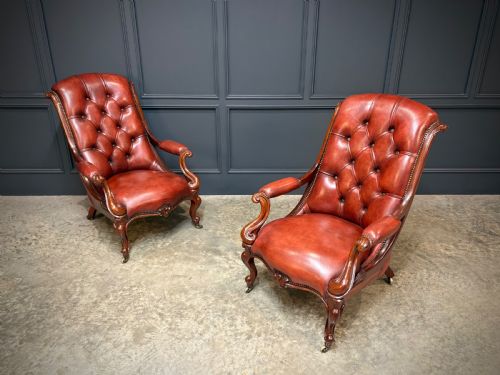


Red Leather Fireside Chair
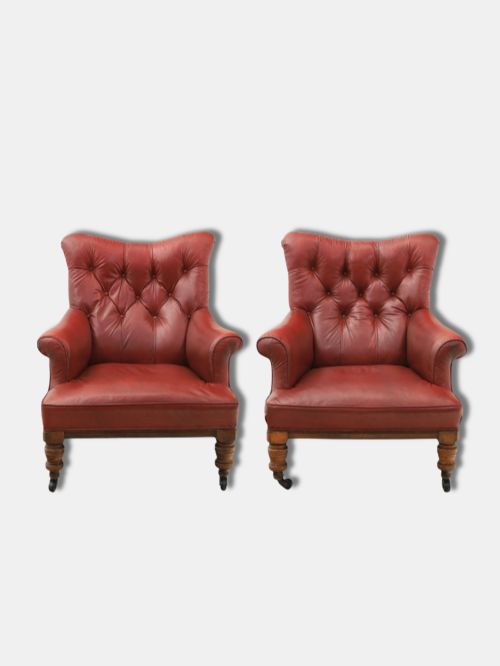
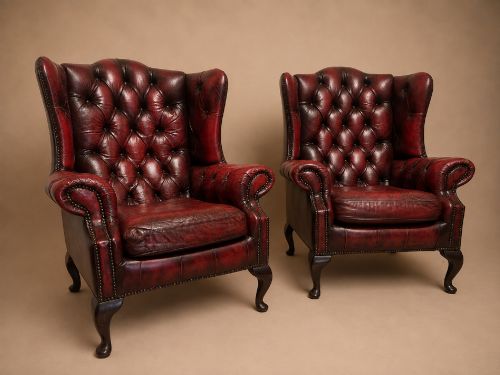
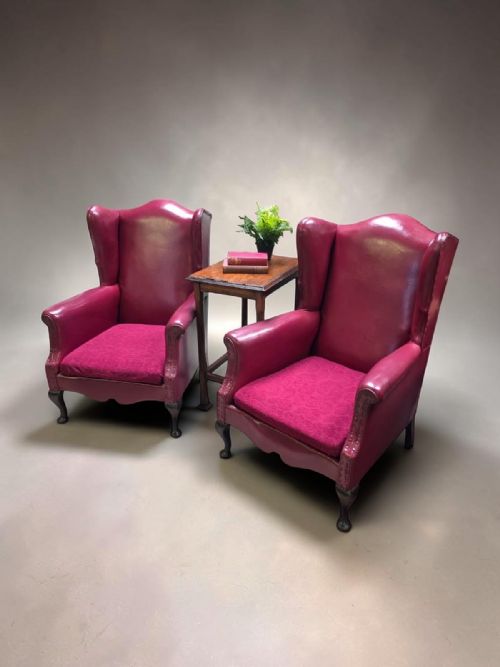
These red leather fireside chairs bring warmth and robust comfort to a room, offering deep seats and sturdy frames built for daily use.
Red Leather Fireside Chair
A red leather fireside chair is a traditional seating form designed for warmth and comfort, often featuring deep proportions and high backs to block draughts. When searching for a red leather fireside chair, buyers encounter styles ranging from Georgian and Victorian library seats to early twentieth century Chesterfield wing chairs and Edwardian framed armchairs.
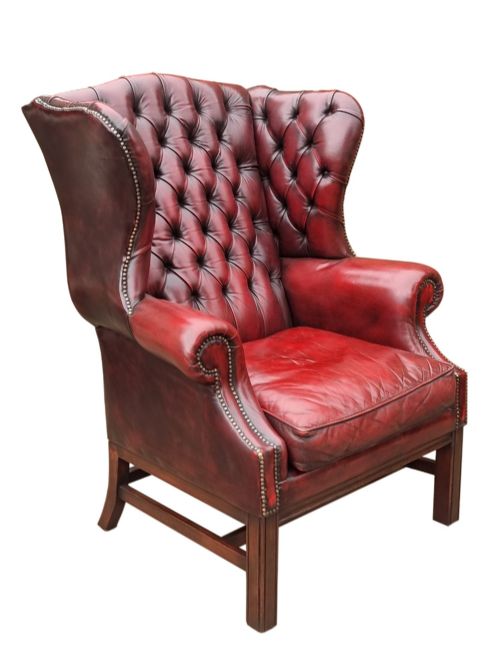
The versions most commonly met on this page include Victorian buttoned models, George III style wing armchairs from around nineteen thirty, and paired Chesterfield armchairs finished in red oxblood hide or rexine. These pieces function as statement accent chairs as well as practical seating for studies, drawing rooms, and studies.
How they were made
Makers built the foundational frames of these armchairs using dense timbers such as mahogany, oak, rosewood, and hardwood. These structural elements frequently featured exposed wooden legs or frames, sometimes displaying carved details or traditional joinery.
Upholstery techniques combined traditional stuffing with durable leather or rexine coverings, often secured with brass tacks or finished with deep buttoning. The resulting surface provided both tactile richness and resilience against frequent use.
Listings feature periods spanning the Georgian era, Victorian century, Edwardian period, and nineteen thirties.
What varies in quality
The calibre of a piece rests on the integrity of its timber frame and the depth of its upholstery work. Superior examples display carefully selected hardwoods, well-executed buttoning, and leather that has developed a rich, even patina over time.
Lesser items may show structural fatigue in the frame or replacement coverings that lack the traditional finish and suppleness of period hides. The harmony between the woodwork and the leather surface ultimately defines the character of the chair.
The Red Leather Fireside Chair Glossary
- Wingback armchair
- A seat featuring protective side panels designed to shield the occupant from draughts near a fireplace. These high backs became popular during the Georgian period and remained staple forms through the Victorian era.
- Chesterfield
- A deep-buttoned, upholstered furniture style traditionally characterised by arms and back of the same height. This form appears frequently in nineteenth and twentieth century leather seating.
- Rexine
- A branded leathercloth material made from woven fabric coated with nitrocellulose, oil, and pigments. It served as a durable substitute for natural hide during the early twentieth century.
- Buttoning
- An upholstery method where tufting pulls the leather deep into the padding to secure the stuffing and create a geometric pattern. This technique adds both structural tightness and visual texture to the backrest.
- Library chair
- A heavy, substantial armchair designed for reading rooms and studies, typically constructed from mahogany or other hardwoods with leather upholstery. These pieces prioritised ergonomic support for prolonged sitting.
Red Leather Fireside Chair: Frequently Asked Questions
What periods do these chairs cover?
The listings span from the Georgian eighteenth century through the Victorian era, Edwardian period, and into the nineteen twenties and thirties. This timeline reflects shifting domestic tastes in seating design.
Buyers will find both formal nineteenth century library chairs and later twentieth century interpretations of traditional wingback forms.
Which woods were used for the frames?
Cabinetmakers utilised durable timbers including mahogany, oak, rosewood, and general hardwoods for structural stability. These woods often formed the visible legs, armrests, and exposed frame borders.
In some instances, the timber remained largely hidden beneath heavy leather upholstery and traditional padding.
How do I care for antique leather?
Leather upholstery benefits from gentle cleaning and occasional conditioning to maintain suppleness and prevent the material from drying out. Avoiding direct sunlight and heat sources preserves the natural patina.
Regular dusting keeps the surface clear of particles that can wear down the hide over time.
What is the difference between leather and rexine?
Natural leather is an animal hide tanned for durability, developing a distinct patina through age and use. Rexine is a coated fabric alternative introduced as a hard-wearing substitute.
Both materials appear on pieces from different decades represented in the inventory.