


Scroll Arm Leather Chair
A scroll arm leather chair combines sturdy timber frames with supple hide, offering lasting comfort for study rooms and libraries.
Scroll Arm Leather Chair
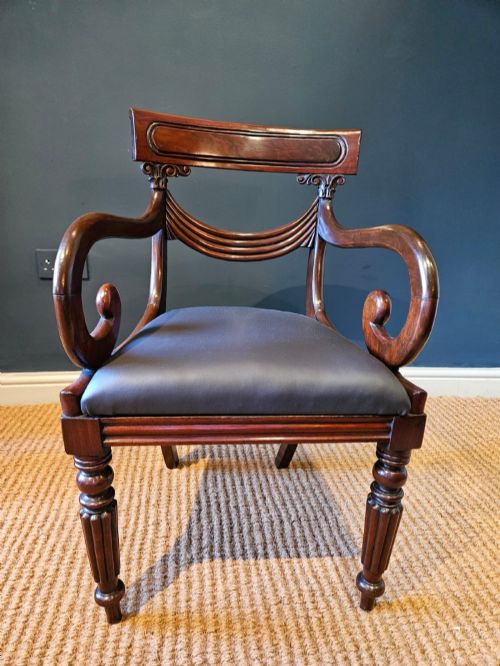
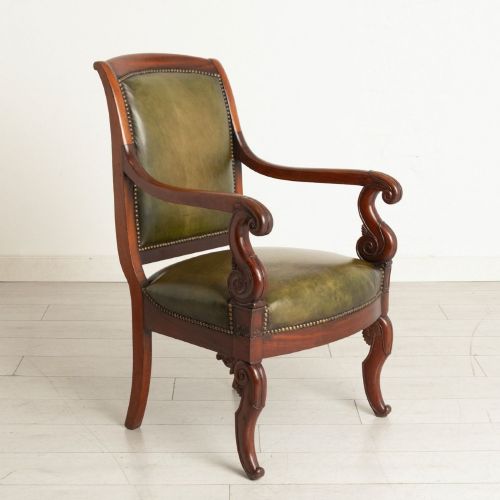
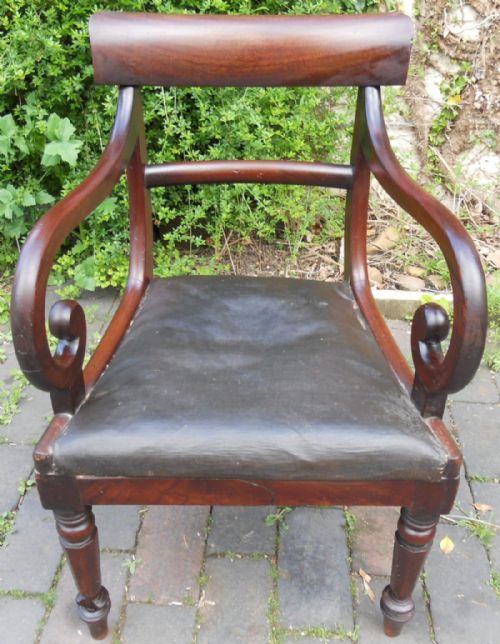
A scroll arm leather chair brings together nineteenth-century forms and functional seating, appearing frequently as library armchairs, desk chairs, and carver chairs. These pieces emerge predominantly from the Regency and Victorian periods, showcasing traditional seating designs intended for daily utility.
Buyers encounter solid timber frames paired with upholstered leather seats and armrests, reflecting the standard requirements of nineteenth-century studies and offices. Mahogany forms the backbone of these listings, accompanied by rosewood, ash, and ebonised wood.
The selection ranges from metamorphic library steps to pairs of armchairs originating from institutional settings like the Royal and Ancient Golf Club St Andrews. Such variety ensures collectors find both standard desk seating and more specialised forms.
How they were made
Cabinetmakers constructed the supportive frames using dense timbers such as mahogany and rosewood, shaping the arms into distinctive outward curves. Joinery techniques relied on traditional framing methods to ensure stability under regular use in libraries and offices.
Upholsterers secured leather coverings across seats and armrests, frequently finishing the edges with brass nail heads for added structural security. Secondary materials like cane, wrought iron, and fabric appear across specific French Riviera and provincial variations.
A pair of armchairs listed here arrived directly from the Royal and Ancient Golf Club St Andrews.
What varies in quality
Timber selection and frame execution define the upper tiers of these chairs, where dense mahogany shows crisp carving along the scrolling arms and legs. Lesser examples utilise simpler turned supports and less refined secondary woods.
The integration of functional mechanisms, such as metamorphic library steps or desk swivel functions, separates standard seating from more complex engineering feats. Original leather surfaces and balanced proportions further distinguish finer workshop output from utility pieces.
Gillows
The Scroll Arm Leather Chair Glossary
- Carver chair
- An armchair, usually designed with open arms, traditionally placed at the head of a dining table or used as a desk chair. These pieces often match a set of smaller side chairs.
- Metamorphic furniture
- Pieces designed to transform into alternative objects, such as an armchair converting into a set of library steps. This clever carpentry served practical functions in compact nineteenth-century spaces.
- Bergere
- An enclosed upholstered armchair featuring wooden framing and cane or upholstered sides. The style originated in France and offers deep, comfortable seating.
- Sabre leg
- A concave tapering furniture leg that curves outward towards the foot, resembling the blade of a cavalry sabre. This form appears frequently on Regency seating.
- Ebonised
- Timber treated with a finish to imitate expensive ebony wood. The process creates a dark, uniform surface often seen on nineteenth-century library furniture.
Scroll Arm Leather Chair: Frequently Asked Questions
How do I date a scroll arm leather chair?
Dating relies upon timber choice, leg shape, and framing styles characteristic of specific periods like the Regency or Victorian eras. Examining construction methods underneath the seat provides further clues regarding age.
Cabinetmakers shifted their stylistic preferences across the nineteenth century, moving from delicate sabre legs towards heavier carved supports. Comparing these physical traits against documented pieces helps establish a reliable timeline.
Were these chairs used only in libraries?
While frequently termed library or desk chairs, these seats served multiple functions in nineteenth-century homes and institutions. Their sturdy build suited studies, offices, and even club rooms.
Examples from institutional settings demonstrate their widespread adoption beyond domestic spaces. Owners placed them wherever comfortable, upright seating was required for reading or writing.
How should I maintain the leather upholstery?
Leather upholstery requires stable environmental conditions away from direct heat sources to prevent the material from drying out or cracking. Regular dusting keeps the surface clean and preserves the hide.
Applying appropriate leather conditioners helps maintain suppleness over time. Avoid harsh chemical cleaners that might strip the historic finish from the surface.