
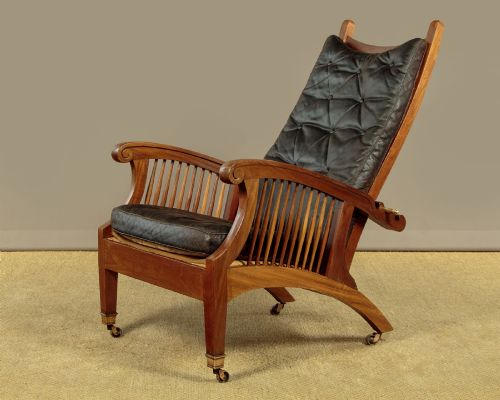
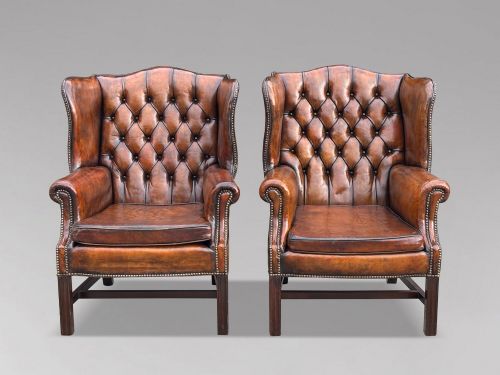
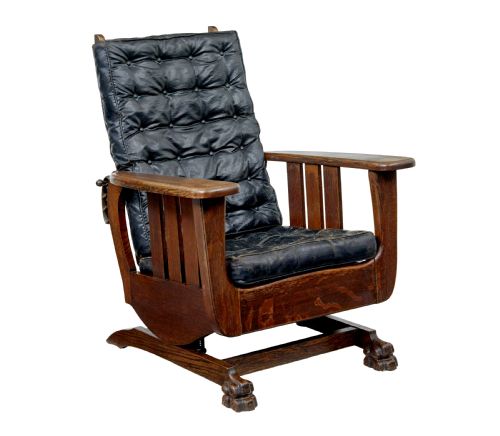
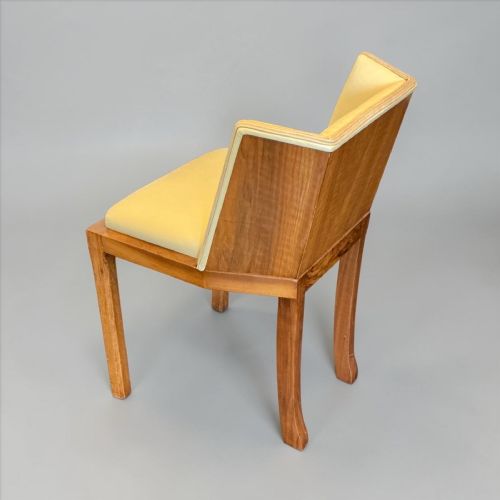
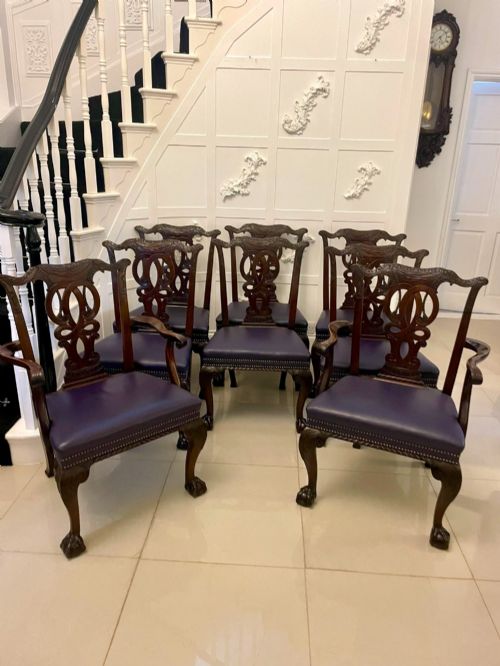
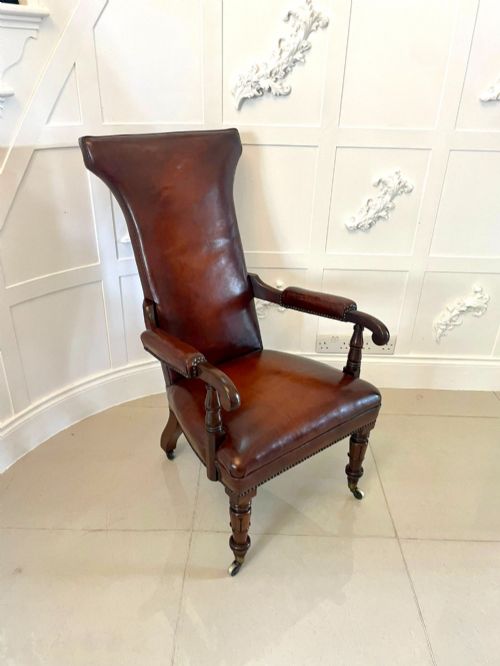
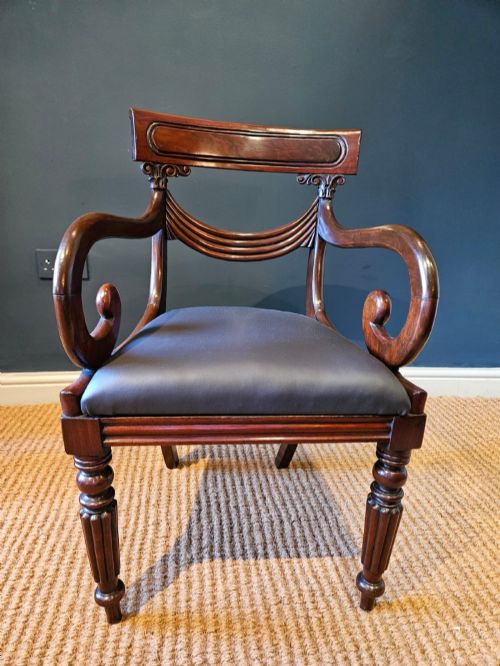
Leather Armchair
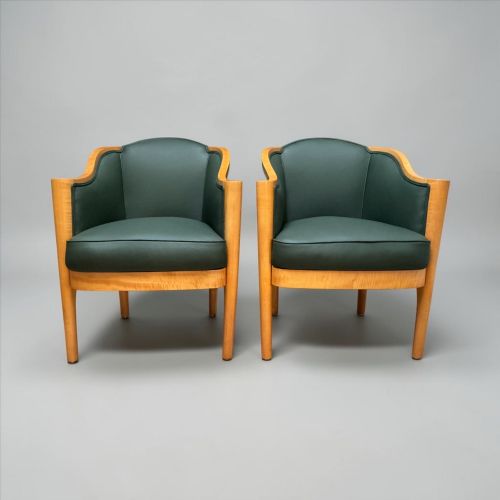
A leather armchair brings deep comfort and rich texture to a room, ranging from buttoned Victorian library seats to sleek Art Deco club chairs.
Leather Armchair
A leather armchair is a sturdy seating option found across numerous periods, uniting practical function with durable hide upholstery.
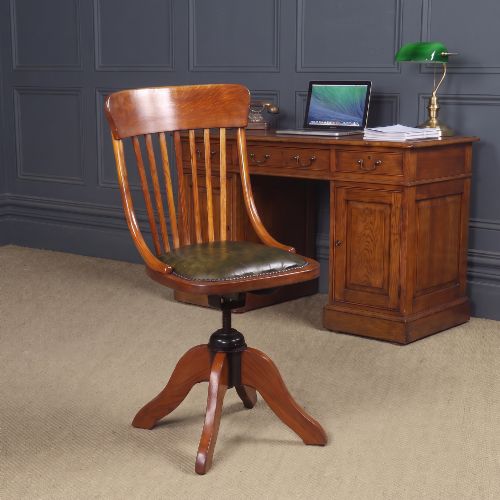
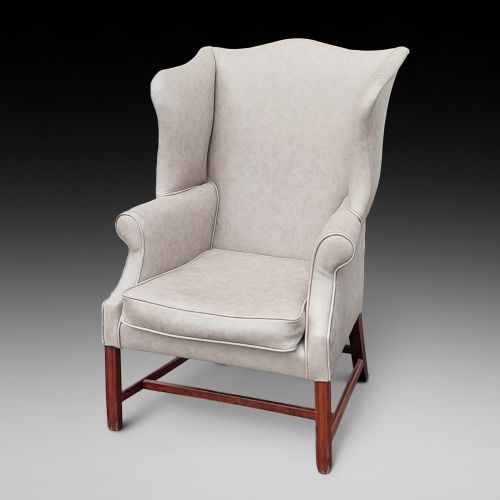
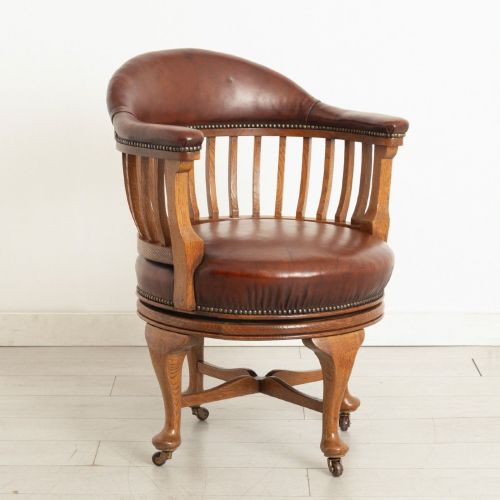
Buyers browsing this selection frequently encounter Victorian wing backs, Edwardian club chairs, and revolving oak desk models.
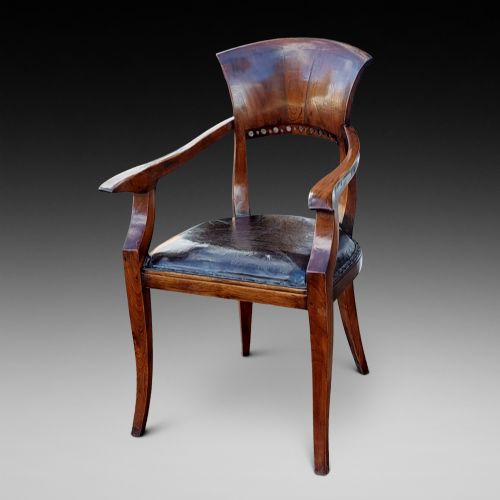
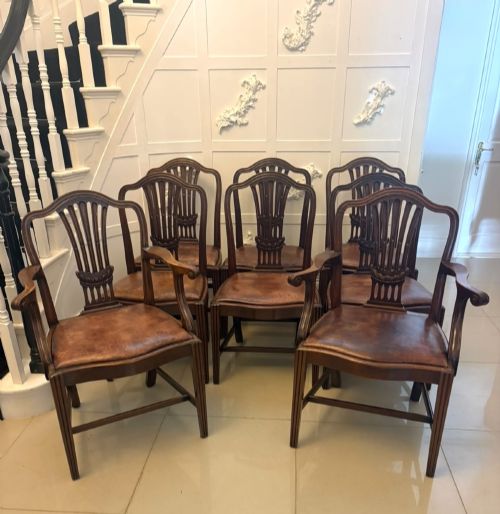
The assortment spans formal library chairs and relaxed fireside pieces, incorporating mahogany, oak, and walnut frames.
Materials and construction
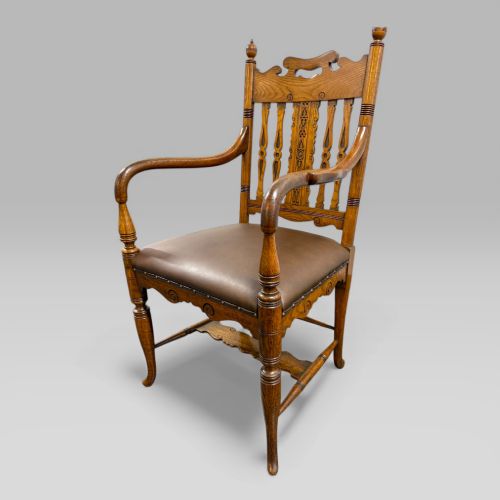
Frames rely on dense hardwoods such as mahogany, oak, walnut, and elm, providing structural integrity for heavy use.
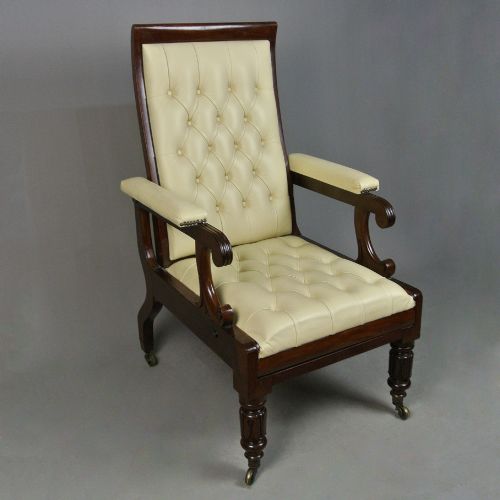
Upholstery consists of supple leather secured to the frame, often complemented by brass castors and button-tufted detailing.
Listings span periods from the eighteenth century through the Art Deco era, utilising oak, mahogany, walnut, and leather.
Judging the standard
The calibre of a piece depends on the depth of the timber carving and the suppleness of the original leather hide.
Patina development and the retention of working mechanisms, such as swivel actions and castors, dictate the standard.
Gillows·Bruce James Talbert·Maurice Adams·Philip Webb·Alexander Greek Thomson
The Leather Armchair Glossary
- Wing back
- A seating style featuring protective side panels designed to shield the occupant from draughts. These upholstered extensions frame the head area.
- Button back
- An upholstery technique where depressions are formed in the padding by pulling thread through the leather to secure symmetrical folds.
- Castor
- A small wheel attached to the base of furniture legs to assist mobility. Brass versions frequently appear on nineteenth-century desk chairs.
- Revolving chair
- A swivel seat mounted on a central spindle. This form is common in Edwardian and George V office and library settings.
Leather Armchair: Frequently Asked Questions
How do I care for antique leather?
Apply specialised leather balms periodically to maintain suppleness and prevent the material from drying out.
Keep these chairs away from direct sunlight and heat sources to preserve the natural finish.
Are these chairs suitable for daily use?
Most solid hardwood frames with robust hide upholstery handle regular seating comfortably.
Revolving and reclining mechanisms should be checked gently before heavy daily operation.
How do I distinguish Victorian from Edwardian styles?
Victorian examples tend towards heavy carved oak or mahogany with deep buttoning and darker tones.
Edwardian pieces often present lighter frames, tapered legs, and simpler club chair proportions.
Where were library chairs typically placed?
These seats belonged in studies, private libraries, and grand offices alongside large writing desks.
Their sturdy wood frames and supportive arms suited long hours of reading and administration.