


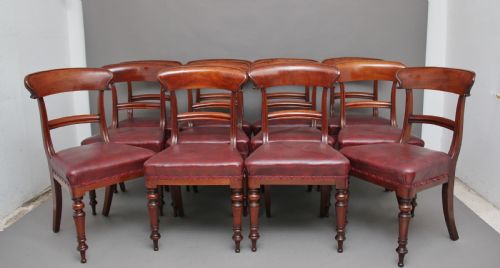


William IV Leather Chairs
William iv leather chairs are sturdy nineteenth-century seats combining rich hides with dark timber frames for a formal interior.
William IV Leather Chairs
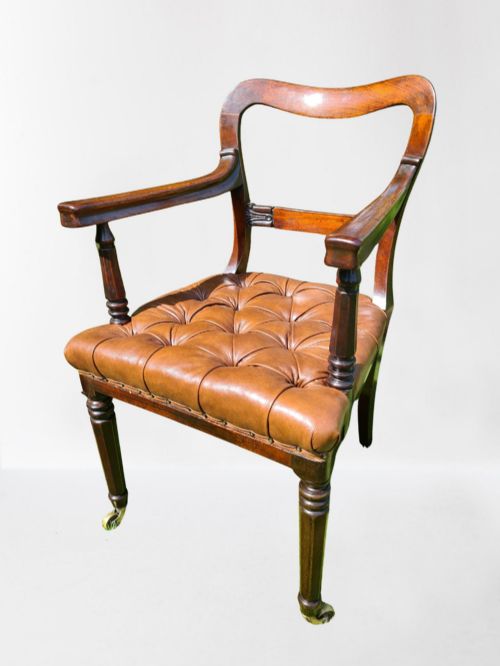
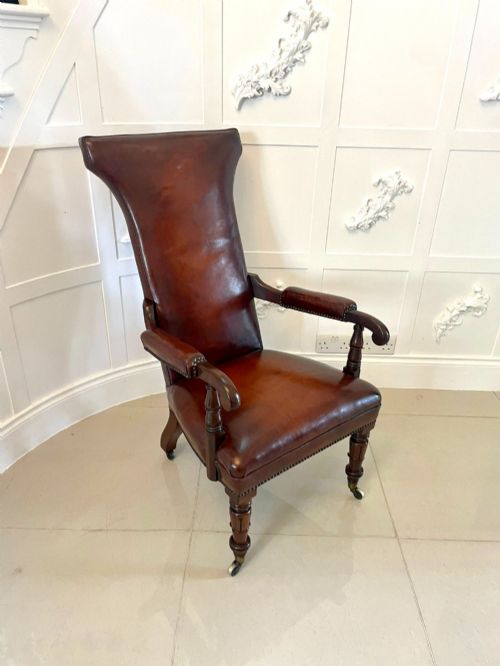
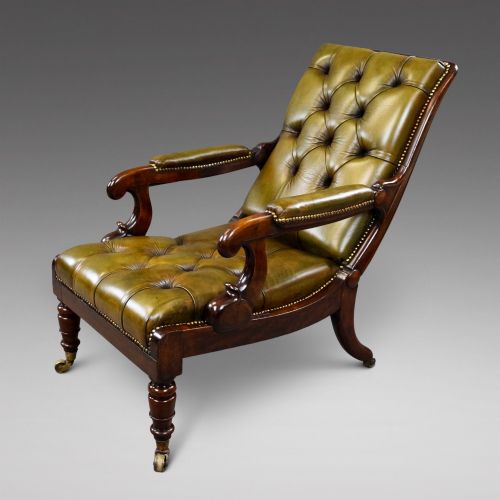
William iv leather chairs appear primarily as library seating, reading chairs, and dining sets originating from the nineteenth century. The typical example pairs a solid timber frame with cushioned leather upholstery, often incorporating revolving or reclining mechanisms for study use.
Library armchairs and desk chairs dominate the selection, though large sets of dining chairs also surface regularly. These pieces span transitional periods from late regency through to early victorian manufacture, maintaining heavy proportions and carved scroll details.
Materials and Construction
Makers built the structural frames using dense hardwoods like mahogany, rosewood, and oak, frequently turned or carved with bold foliage. Seat pads and backrests used durable cattle leather, secured with brass tacks and stuffed with traditional hair or wool wadding.
Specialised seating incorporated brass patent hardware for reclining actions, alongside cane work for bergère panels. Timber components relied on traditional mortise and tenon joinery to withstand heavy daily use in studies and libraries.
Listings demonstrate that mahogany is the primary timber used for nineteenth-century library and dining seating.
Assessing Craftsmanship
The standard of timber carving and the weight of the underlying mahogany or rosewood set individual chairs apart. Superior examples display crisp, deep relief work on the scroll arms and legs rather than flat, machine-cut mouldings.
Originality of the leather and the survival of secondary materials such as cane panels or patent reclining mechanisms dictate the standing of a piece. Retaining period brass castors and unblemished structural framing elevates an armchair above standard utility models.
Robert Daws·W W Peirce
The William IV Leather Chairs Glossary
- Bergere
- An enclosed armchair featuring woven cane panels on the sides and back. This French style remained popular throughout the nineteenth century.
- Library chair
- A heavy, deeply upholstered armchair designed for prolonged reading in a study. These often include reading desks or reclining actions.
- Carver chair
- An armchair designed to match a set of smaller dining chairs, usually placed at the head of a table. They feature open arms to accommodate wide garments.
- Metamorphic
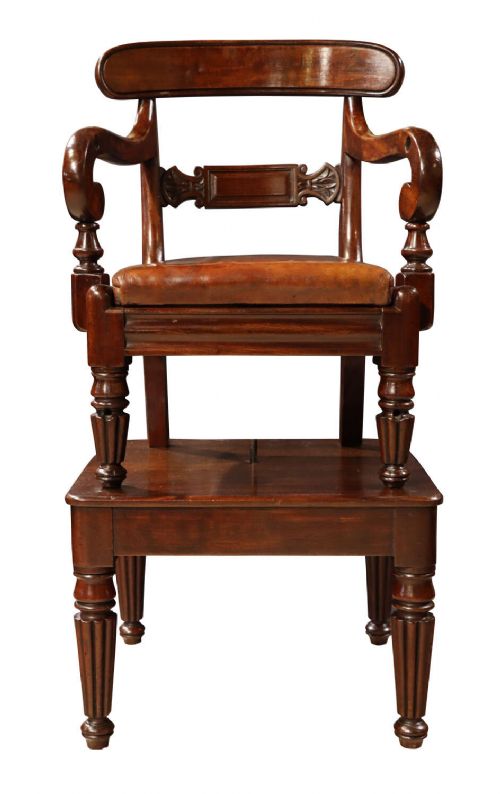
- Describing furniture that transforms into another form, such as a child's high chair converting into a low rocking chair. These utilise hidden hinges and wooden pegs.
- Barback
- A dining chair featuring a horizontal carved top rail resembling the shape of a horizontal bar. This style defines many nineteenth century seating designs.
William IV Leather Chairs: Frequently Asked Questions
How do I identify a William IV leather chair?
Look for heavy mahogany or rosewood frames featuring bold scrolling arms, carved foliage motifs, and turned front legs. These seats usually date from the second quarter of the nineteenth century and combine dark wood with brass-studded leather.
Examine the underside for traditional joinery methods and check for patent reclining mechanisms or brass castors typical of the period.
Were these chairs used for dining or study?
The evidence shows both functions clearly, with large sets of dining chairs appearing alongside single library and desk armchairs. Library versions often feature wide seats and upholstered armrests for extended sitting.
Dining variations include both single chairs and matching carvers with open arms designed to fit around a large mahogany table.
What timber was used most often?
Mahogany is the dominant wood seen across the listings, followed by rosewood and occasional oak. Cabinet makers favoured these dense timbers for their strength and dark natural grain.
Lighter secondary woods sometimes appear in internal framing, but visible surfaces rely on these heavy tropical and native hardwoods.