

Studded Leather Library Chair
A studded leather library chair brings a heavy measure of comfort and dark wood to a room, built for long hours at a desk or beside a fire.
Studded Leather Library Chair
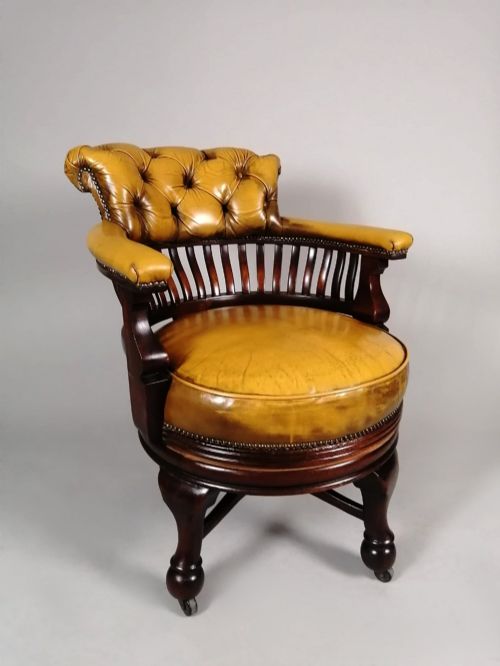
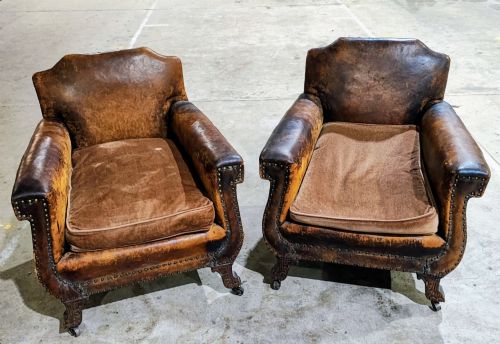
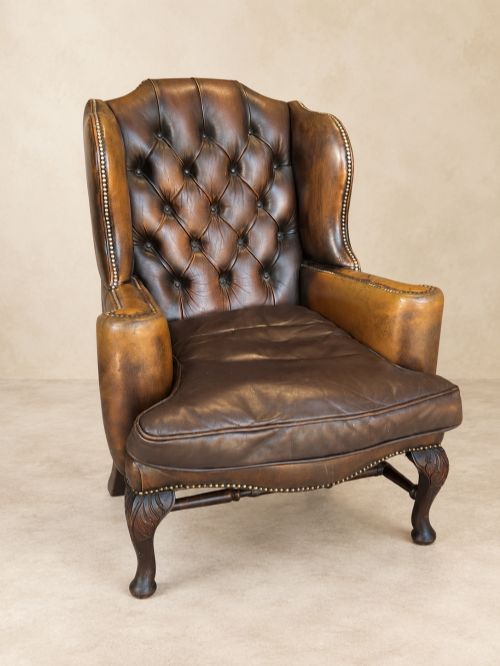
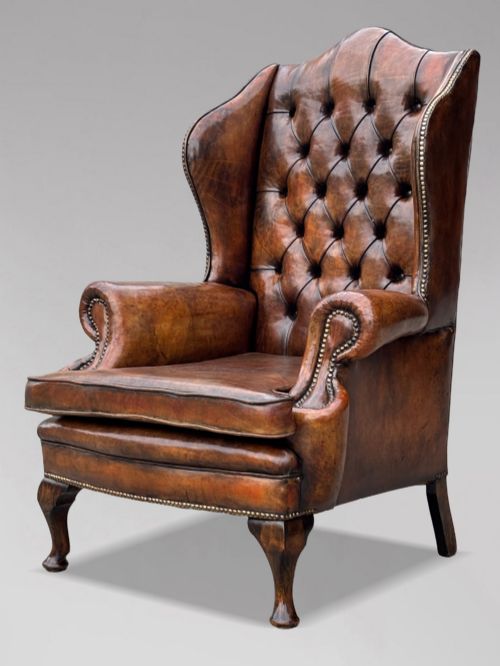
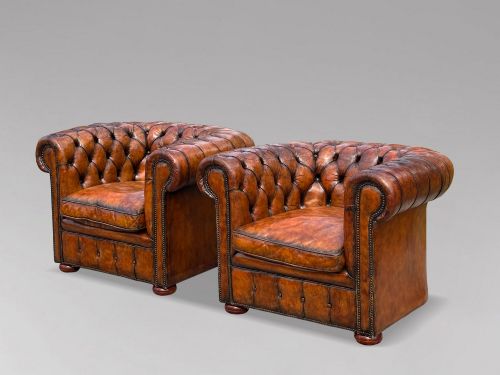
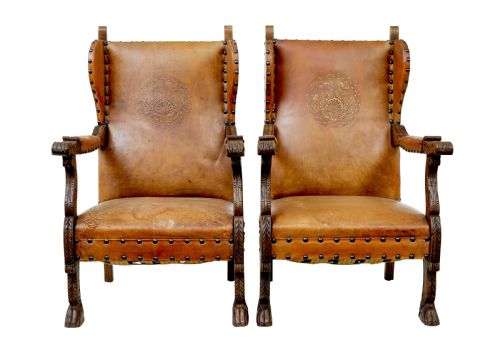
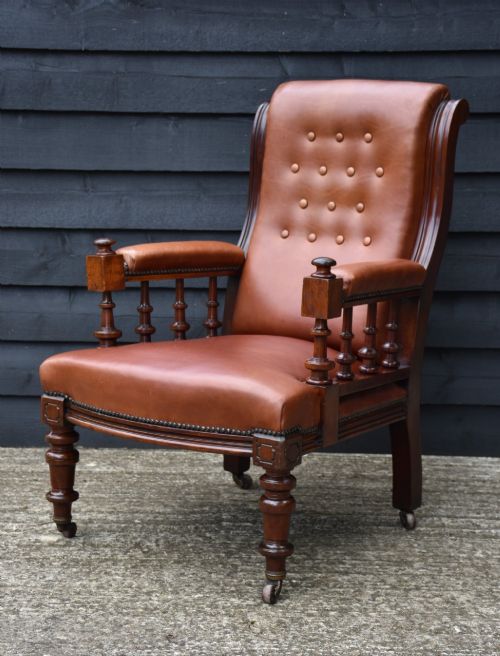
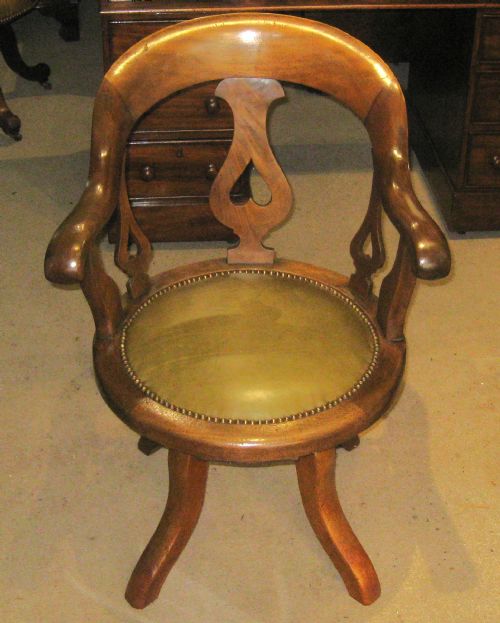
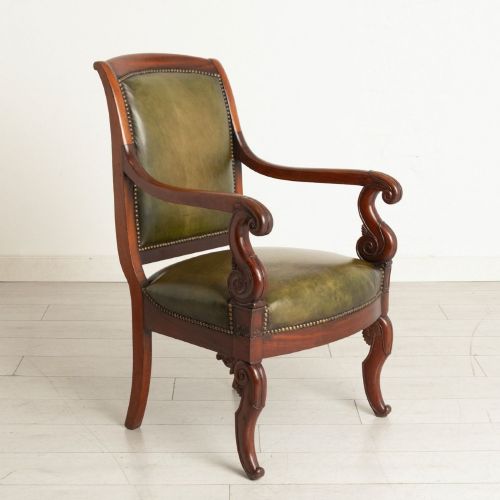
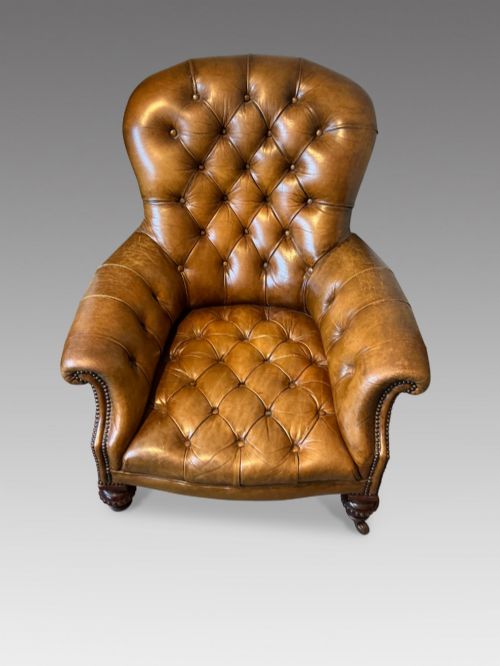
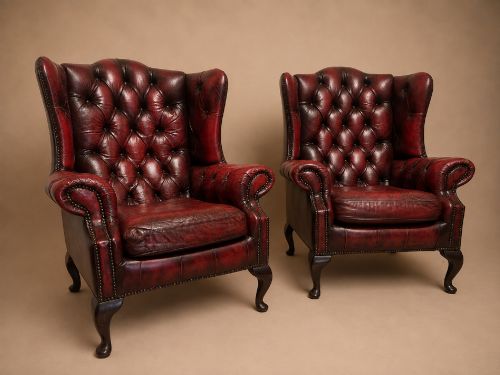
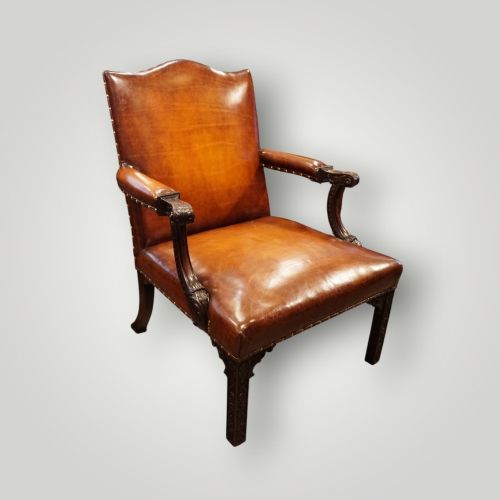
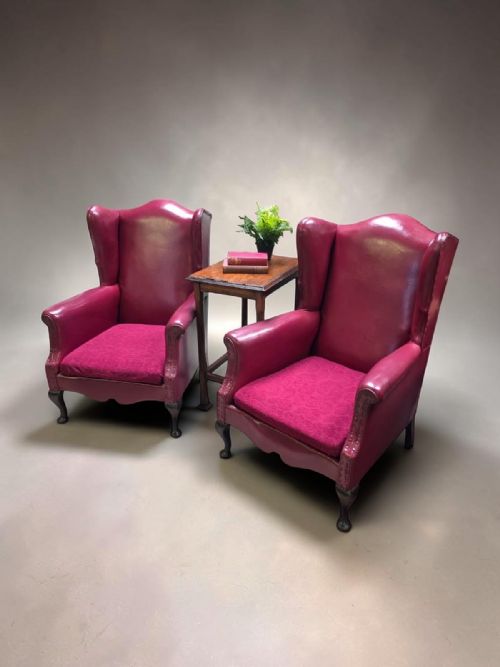
A studded leather library chair spans several decades and forms, from 19th Century mahogany and oak frames to Edwardian club chairs and Georgian styles. You will find desk chairs, reading chairs, and wing armchairs upholstered in leather and finished with brass nail heads.
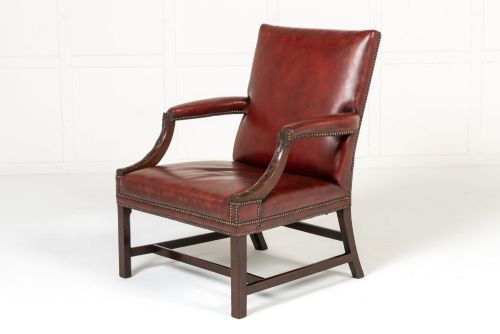
The material combinations alter the silhouette significantly, ranging from heavy Georgian mahogany Gainsborough chairs to lighter oak and beech desk chairs. Many pieces date from the Victorian period through to the 1920s, showing a steady evolution in seating for study and leisure.
Materials and construction methods
Makers relied on sturdy timber frames of mahogany, oak, walnut, and burr elm, secured with traditional joinery to support heavy daily use. Leather hides were stretched across padding and fixed to the wooden frames using individual brass studs.
Surfaces often show hand-dyed finishes on the hide, paired with carved or turned wood on the legs and arms. The metalwork is limited mostly to brass studs and occasionally revolving mechanisms or castors.
Expect an occasional brass castor that squeaks just enough to announce your arrival in the library.
Distinctions in construction and finish
Quality rests in the weight of the timber and the depth of the carving, with pieces featuring blind carving or solid mahogany sitting above simpler beech or oak frames. The condition and treatment of the leather also set examples apart, particularly where hand-dyed hides show rich patination.
The integrity of the frame and the neatness of the brass studding reveal the original maker's skill. Finer chairs balance structural sturdiness with refined proportions in the arms and back.
The Studded Leather Library Chair Glossary
- Gainsborough chair
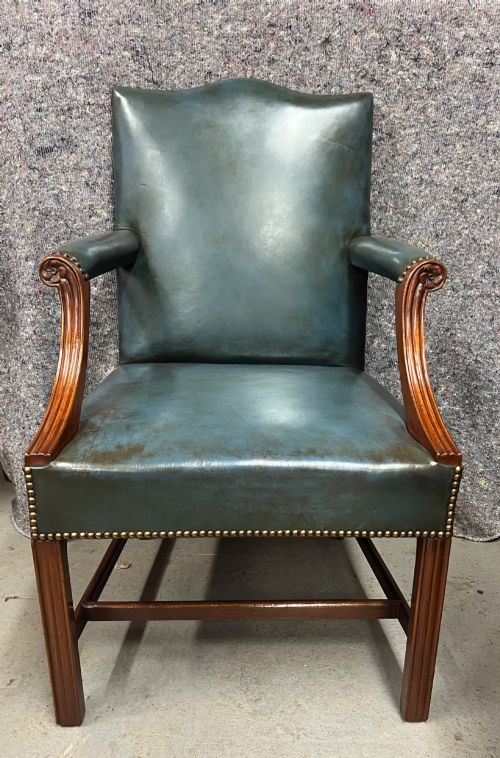
- A wide, low armchair with an upholstered back and seat, open arms, and short wooden legs, commonly used at a desk or in a library. These typically date from the 18th Century onwards.
- Club chair
- A deep, comfortable armchair upholstered in leather, designed for relaxation. These often date from the Edwardian era and the early 20th century.
- Wingback armchair
- A high-backed chair with side panels designed to shield the sitter from draughts. The wings extend from the arms up to the back of the head.
- Revolving desk chair
- A swivel seat mounted on a central wooden or metal pillar, often featuring a circular base with castors for movement around a study.
- Brass studs
- Small, rounded metal nails used to secure leather upholstery to the wooden frame while adding a decorative border.
Studded Leather Library Chair: Frequently Asked Questions
How were these chairs used originally?
These seats were placed in studies, libraries, and large offices to provide comfortable seating for reading, writing, or conducting business. The durable leather surface was practical for daily use.
Revolving versions allowed scholars to turn between desks and bookshelves, while wingback models offered protection from cold draughts in large rooms.
How do I clean the leather?
Leather upholstery requires gentle dusting with a dry cloth and occasional treatment with suitable leather balms to prevent the hide from drying out. Avoid harsh chemical cleaners that can strip the natural finish.
Patination develops over decades of use, so maintenance should preserve the historic surface rather than attempt to make the leather look brand new.
How do I tell a Georgian chair from a Victorian one?
Georgian chairs generally display lighter, more refined proportions with precise hand-carving, often utilising rich mahogany. Victorian examples tend to be heavier and include button-backed upholstery or revolving mechanisms.
Examining the construction methods beneath the seat and the type of timber used helps clarify the period of manufacture.