

Antique Chair on Castors
When you search for an antique chair on castors, you are looking for a mobile seat designed for ease of movement across nineteenth-century rooms.
What an antique chair on castors is
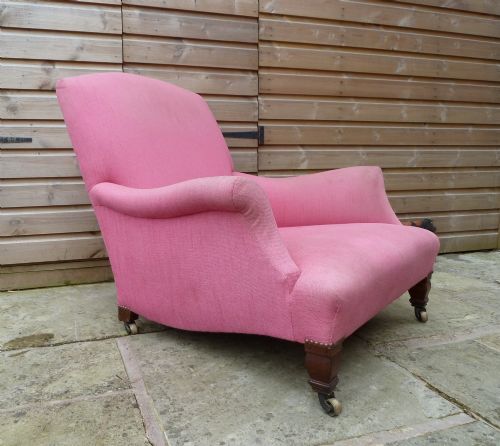
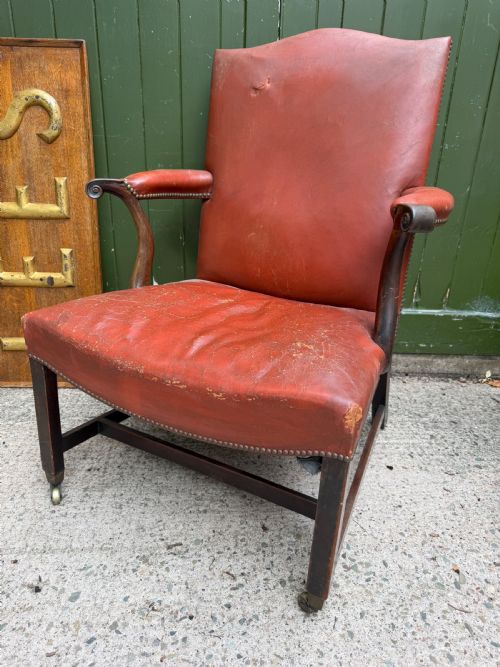
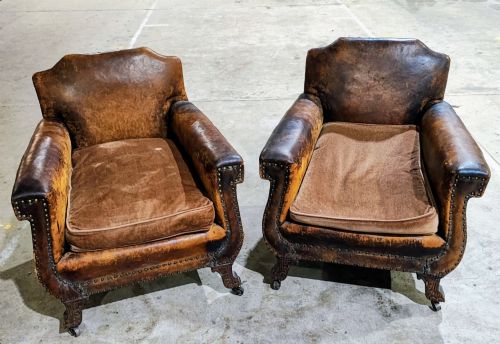
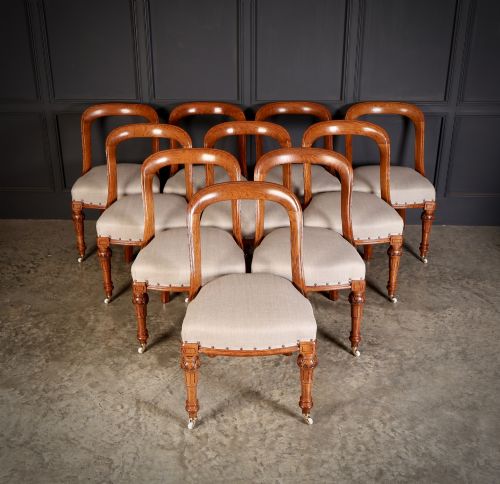
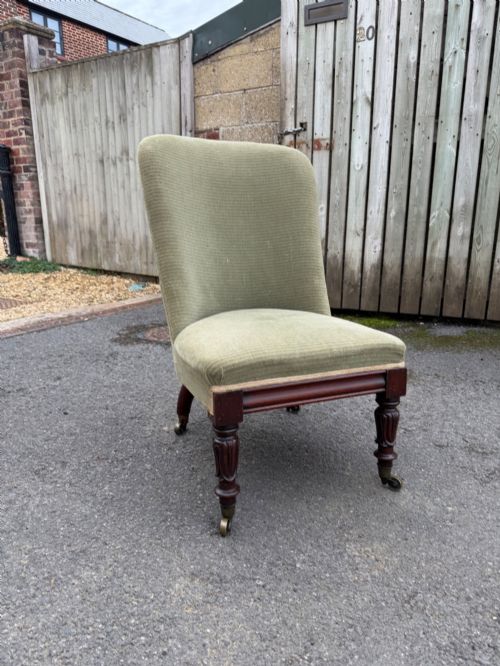
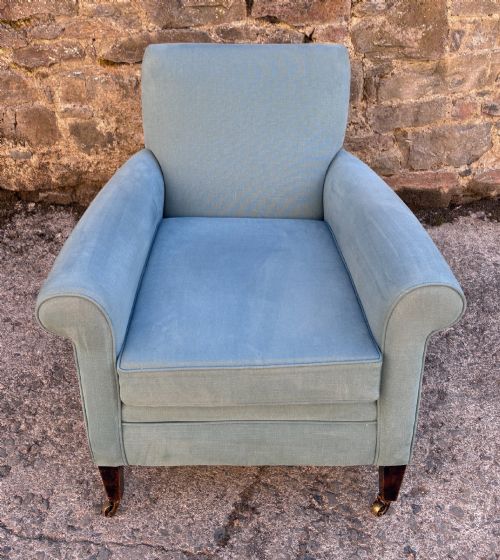
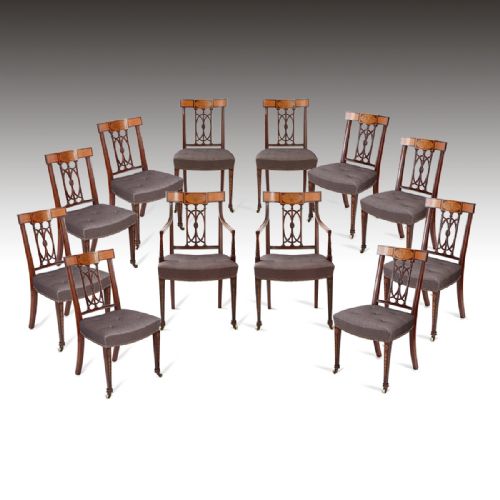
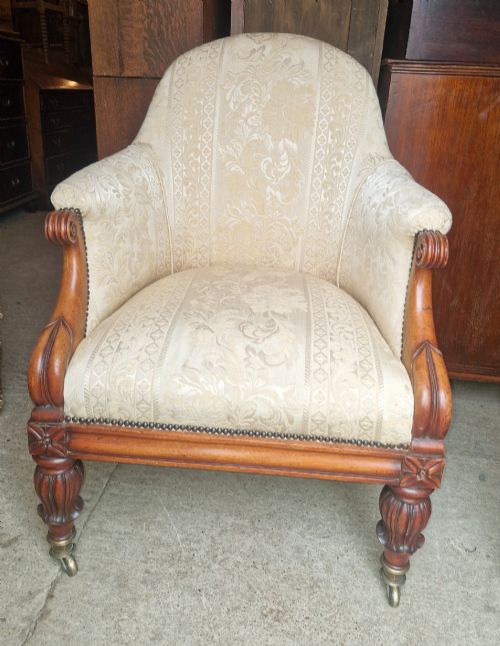
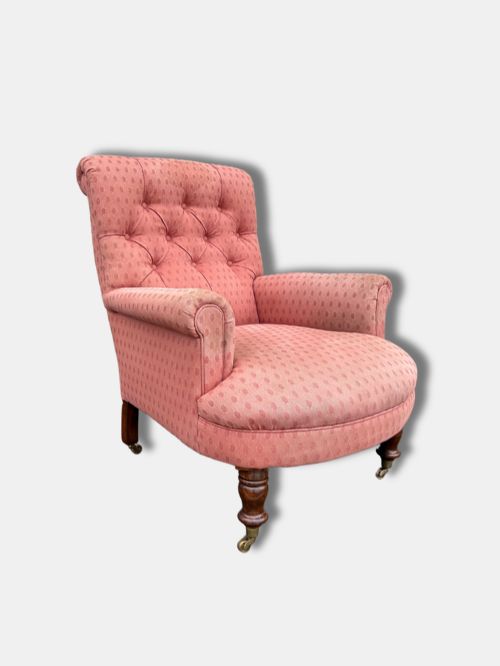
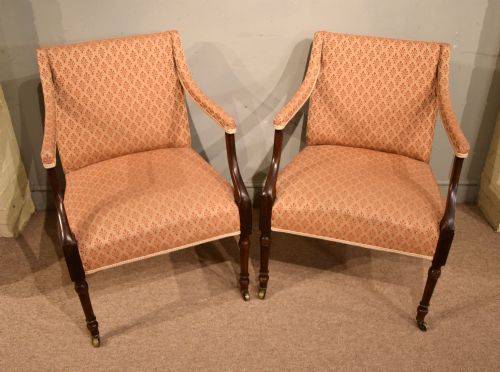
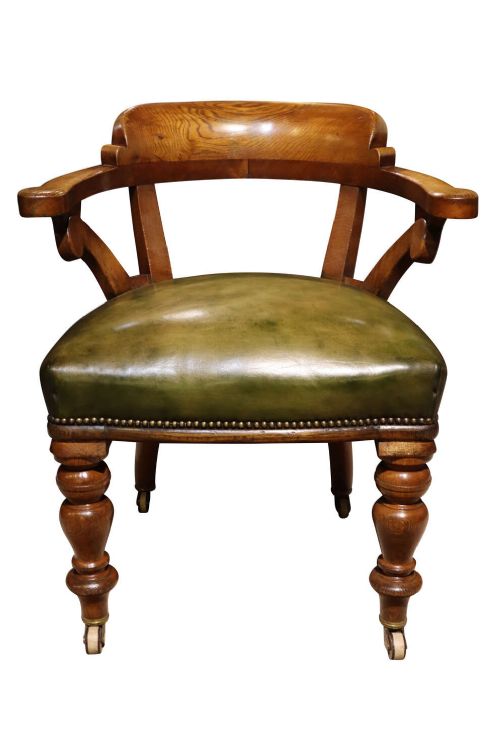
An antique chair on castors is a moveable seat designed in forms such as armchairs, desk chairs, and bedroom chairs. These pieces date primarily from the nineteenth century and encompass Victorian and French Louis XV styles.
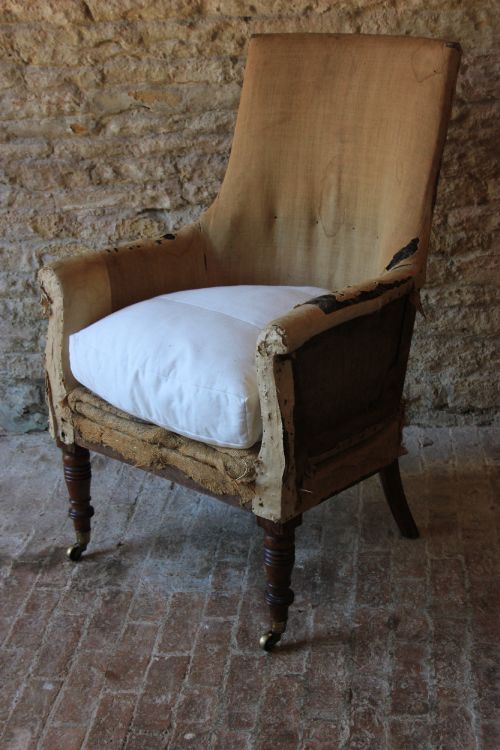
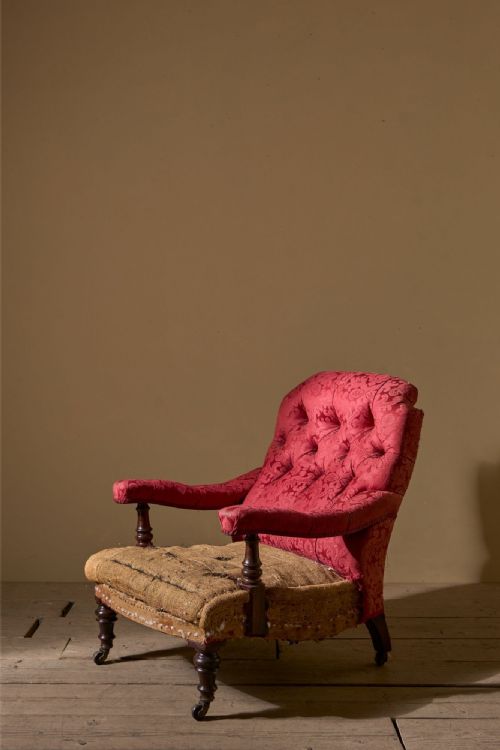
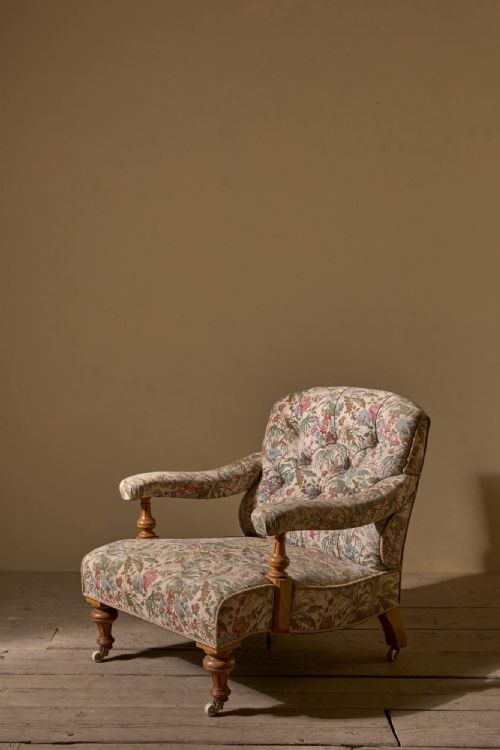
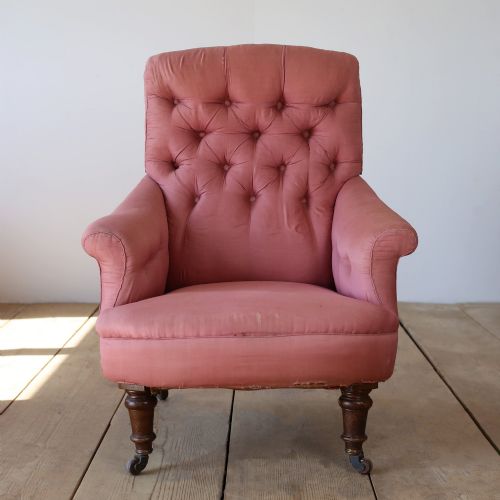
The versions you are most likely to meet on this page include open armchairs, walnut desk chairs, and compact bedroom or nursing chairs. They combine timber frames with upholstered elements intended for daily use in nineteenth-century interiors.
Movable seating from this era serves practical functions while displaying stylistic shifts from early nineteenth-century carved walnut to later Victorian button-backed upholstery and salon seating.
Materials and construction
Makers built these frames using hardwoods such as walnut, mahogany, and rosewood, often shaping the timber with carved details or open arm designs. These structural woods provide the necessary strength for seating mounted on wheels.
Upholstery techniques involved internal foundations covered in hessian and calico, sometimes finished with button backs. Metal and ceramic components formed the castors fitted to the base of the legs to allow smooth rolling.
Retail Price Guide 2026
Typical UK retail prices for chair on castors, calculated from the Sellingantiques database of over a million retail prices indexed since 2003. This retail price guide relies exclusively on Sellingantiques data; no external sources or auction records are used, so the figures do not describe the wider market.
The inventory records armchairs, desk chairs, and bedroom chairs upholstered in calico and hessian, fitted with brass and ceramic castors.
Judgments of quality
Quality rests in the articulation of the timber frame and the balance of the proportions, particularly in how the maker integrated the castor mechanism into the leg design. Finer examples show crisp carving in walnut or rosewood and harmonious scaling.
The sophistication of the upholstery foundation and the choice of secondary materials distinguish finer library and salon seating from simpler utilitarian bedroom chairs.
The Antique Chair on Castors Glossary
- Castor
- A small wheel mounted on a swivel assembly attached to the bottom of a chair leg to allow easy movement. These fittings often incorporated brass and ceramic elements.
- Calico
- A plain-woven cotton fabric used as an underlying cover for upholstery before the application of outer textiles. It provides a sturdy base for padding.
- Hessian
- A coarse woven fabric made from jute fibres, utilised inside upholstered seats to support stuffing and springs. It forms the hidden internal structure of the chair.
- Open armchair
- A seating form featuring uncovered wooden arms rather than fully padded sides. This style highlights the carved mahogany, walnut, or rosewood framework.
Frequently Asked Questions
What rooms were these chairs made for?
These mobile seats were created for studies, bedrooms, and parlours where shifting position easily was desirable. Their castors allowed them to glide across carpets and wooden floors without heavy lifting.
Desk chairs suited workspaces, while smaller bedroom and nursing chairs fitted domestic private quarters. The presence of castors indicates a requirement for flexibility within nineteenth-century room layouts.
How do I identify nineteenth-century styles?
Nineteenth-century seating displays shifting influences ranging from early carved walnut frames to mid-century rosewood and later Victorian upholstered forms. Examining the wood selection and carving style clarifies the chronological context.
French Louis XV style elements appear alongside plain calico finishes and button-backed Victorian nursing chairs. Each form reflects the prevailing aesthetic preferences of its specific decade.
What woods were commonly used?
Cabinet makers utilised dense hardwoods including walnut, mahogany, and rosewood for structural frames. These materials offered the durability required for chairs fitted with rolling mechanisms.
Timber choice often aligns with the decorative ambition of the piece, with richly figured rosewood and walnut reserved for prominent library and salon armchairs.
Why are some chairs smaller in proportion?
Compact dimensions suited specific domestic functions, such as nursing chairs or bedroom seating designed to occupy limited space near firesides. Smaller proportions also accommodated the domestic scales of nineteenth-century chambers.
These reduced dimensions do not indicate lower status; rather, they reflect specialised uses where a smaller footprint was practical.