
Regency Style Armchairs
Regency style armchairs bring classical proportion and polished timber to a room, spanning genuine 19th-century originals and later revival pieces alike.
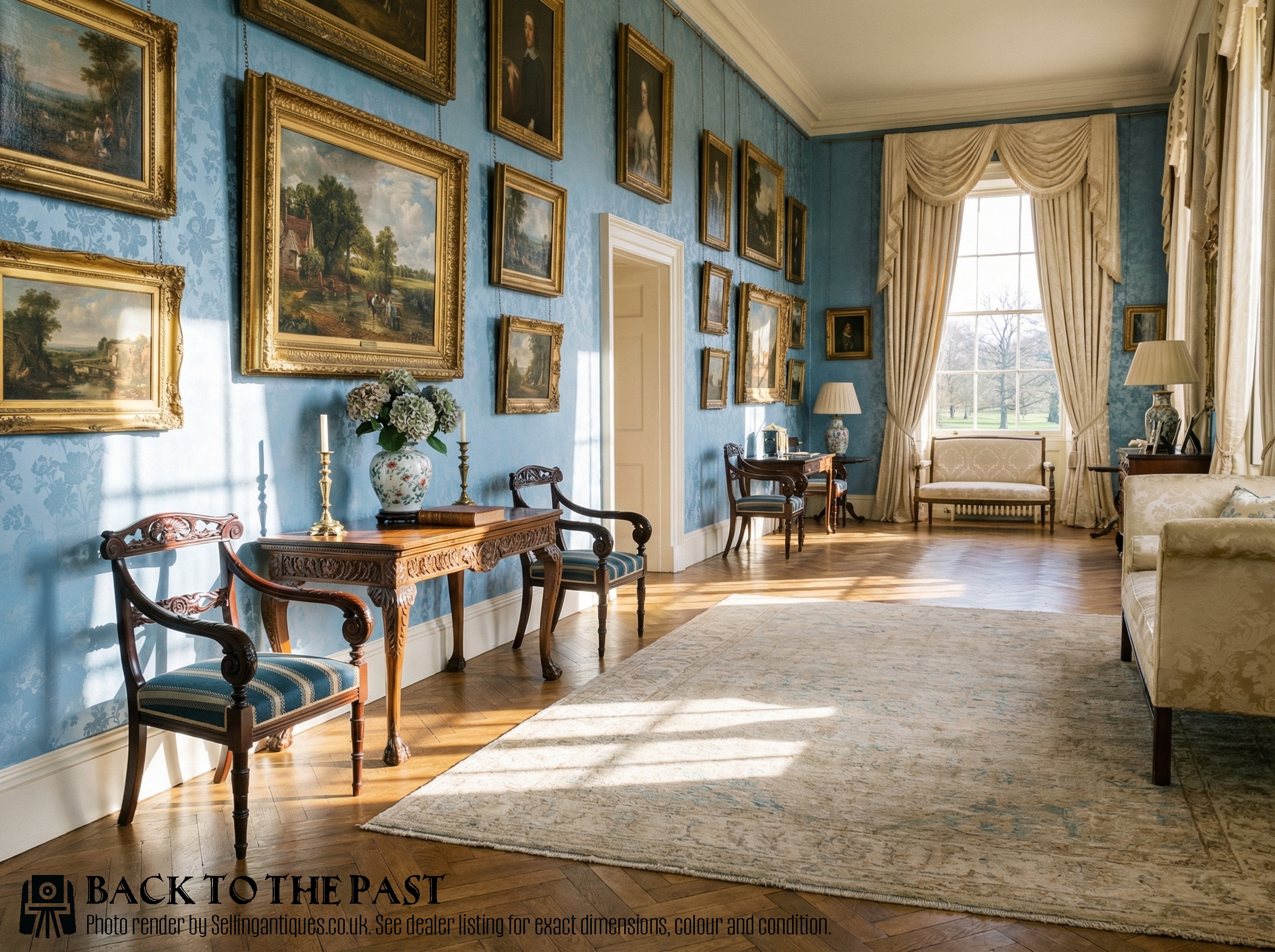
Regency Style Armchairs
When you search for regency style armchairs, you encounter forms designed for libraries, dining rooms, and desks, originating from the early nineteenth century through to early twentieth-century revivals. The listings here contain a mix of authentic period pieces and later Regency Revival examples dating up to the 1930s.
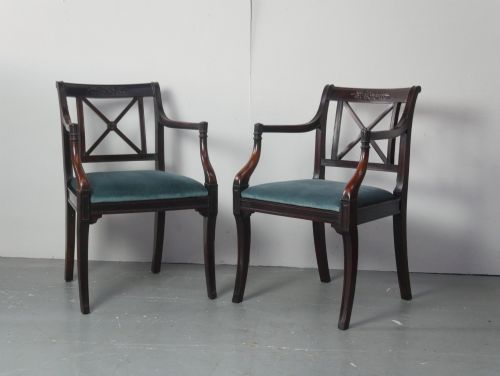
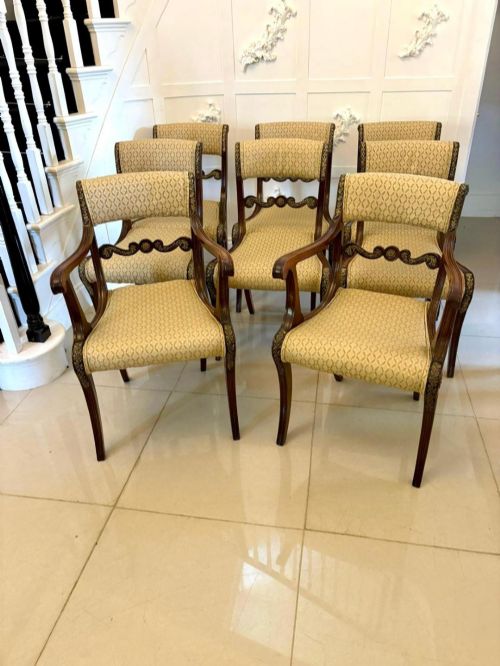
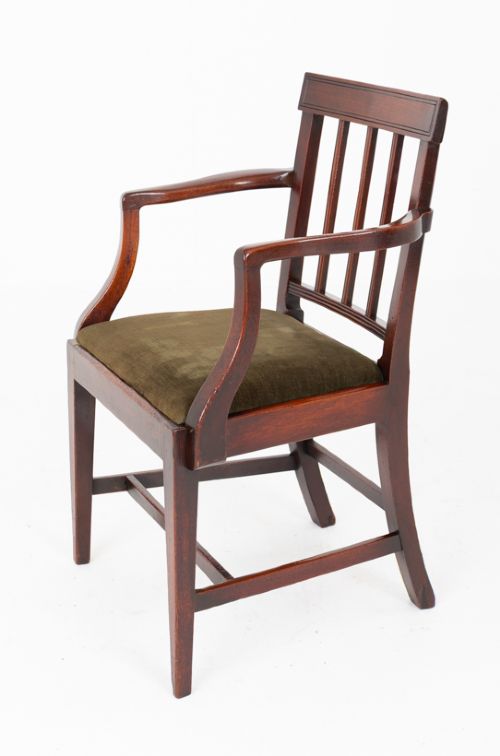
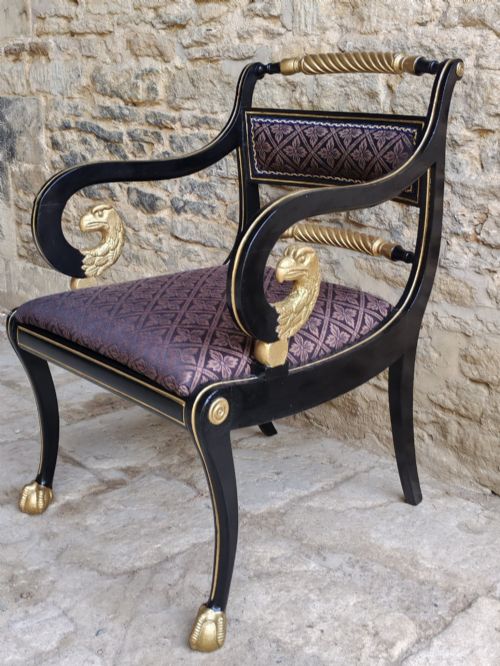
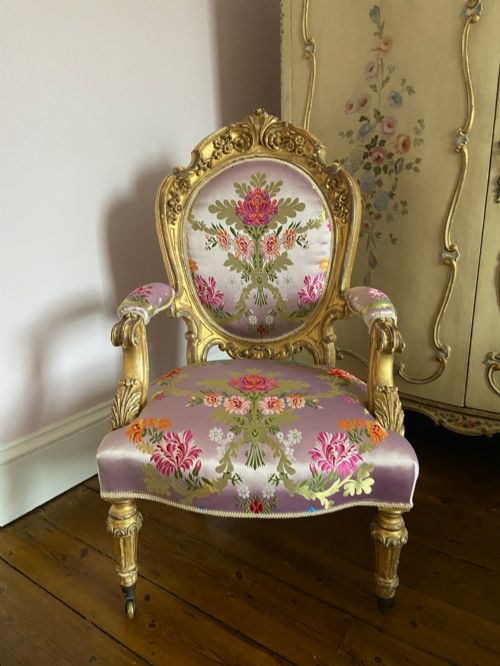
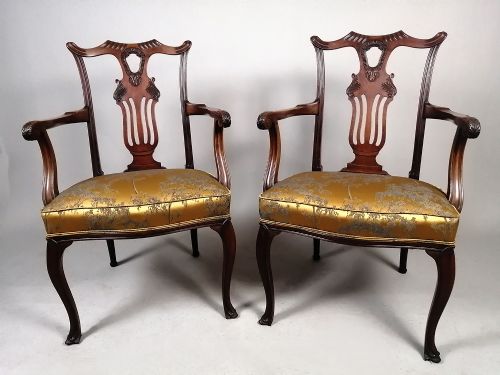
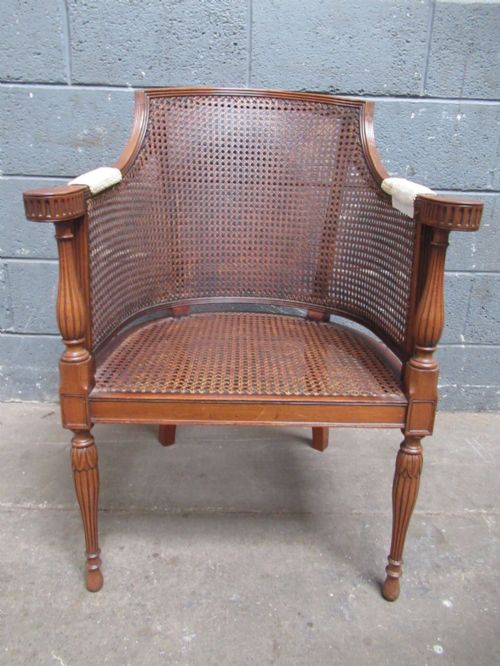
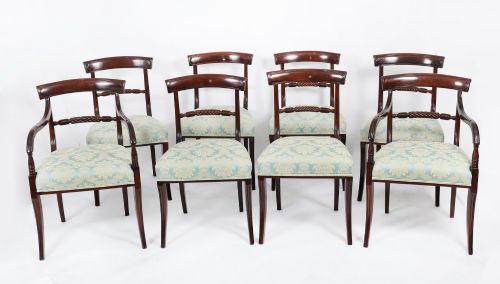
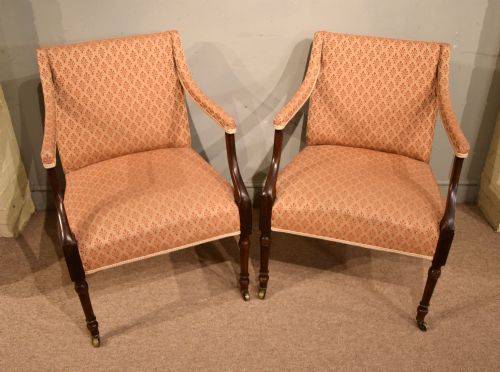
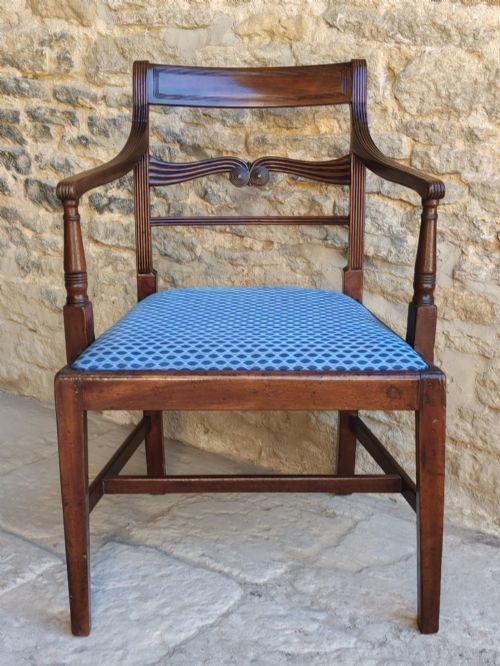
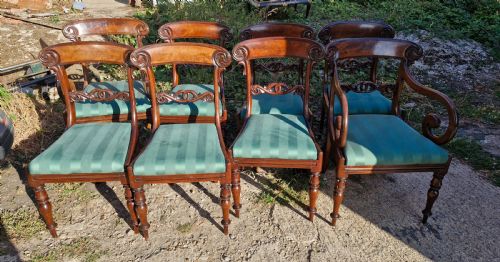
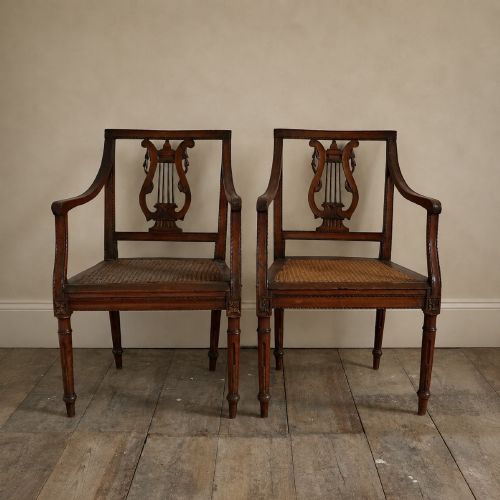
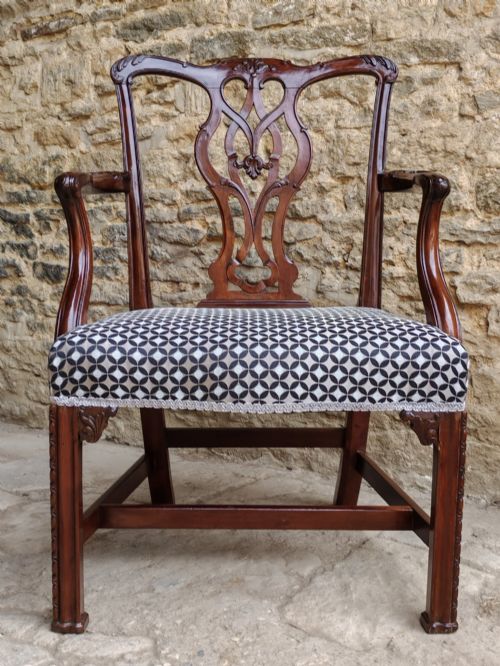
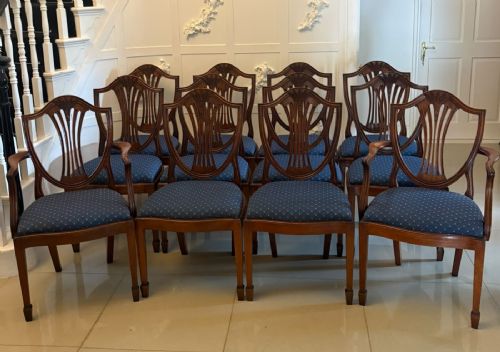
You will find library bergères with caned panels, scroll-armed desk chairs, and pairs of carvers intended for the ends of a dining table. Mahogany is the dominant timber, accompanied by occasional ebonised wood, satinwood, and giltwood frames.
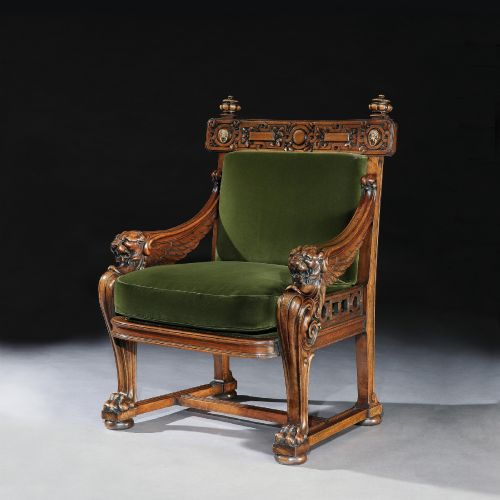
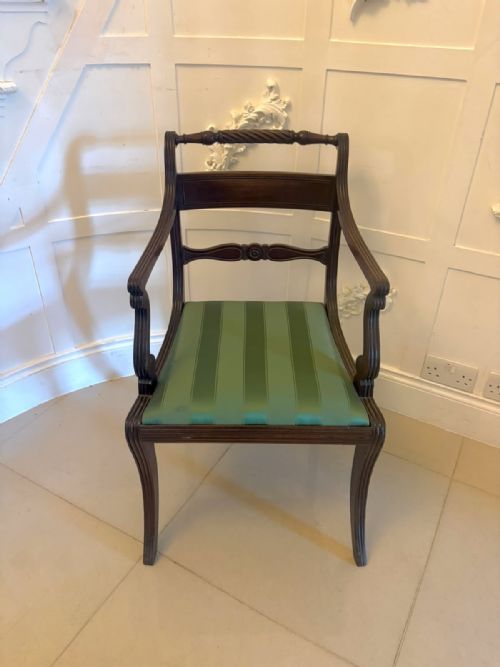
The silhouettes draw heavily on classical antiquity, displaying saber legs, lyre backs, and occasional monopodia supports. Many examples incorporate cane seats or upholstery in leather, velvet, and various woven fabrics.
Materials and construction
Cabinetmakers relied heavily on solid and veneered mahogany, shaping the timber into reeded frames, curved arm supports, and sweeping crest rails. Brass inlays and mounts frequently accent the dark wood surfaces.
Caning appears routinely on library bergères and tub chairs, providing a flexible woven seat and back panel. Drop-in or upholstered pads use traditional stuffing materials finished in leather, velvet, and standard upholstery fabric.
Regency Style Armchairs Retail Price Guide 2026
Typical asking prices for regency style armchairs among the pieces listed under this phrase on Sellingantiques today, from the lower quarter to the upper quarter. They describe what is for sale here now, not the wider market.
Some nineteenth-century makers scaled down these grand classical designs to create unusual child-sized armchairs for affluent nurseries.
Quality variations
The crispness of the carved details distinguishes standard production from superior examples, particularly in the execution of reeding, lion monopodia, and scroll arms. Timber selection also dictates grade, with finely figured mahogany and dense satinwood marking out better pieces.
Construction integrity matters greatly, demonstrated by the tightness of joinery in the complex curves of a lyre back or a tub-shaped frame. Original components, such as matching set members and intact cane work, elevate the standing of any chair.
Gillows
The Regency Style Armchairs Glossary
- Bergère
- An enclosed upholstered armchair with solid sides, often featuring cane panels and a loose seat cushion. They appear frequently in libraries and drawing rooms.
- Carver
- An armchair designed to match a set of smaller dining chairs, traditionally placed at the head and foot of the table.
- Reeding
- Parallel convex mouldings carved directly into the timber frame to imitate classical columns. It is a defining surface treatment on legs and arm supports.
- Lyre back
- A chair splat shaped in the symmetrical outline of a stringed musical instrument. This form is common in nineteenth-century mahogany dining and elbow chairs.
Regency Style Armchairs: Frequently Asked Questions
How do I spot a true period chair?
Authentic pieces from the early nineteenth century generally display hand-cut joinery, aged timber patination, and construction methods consistent with Georgian and Regency workshop practices. Makers of this era used native and imported hardwoods with distinct hand-tool marks.
Revival pieces from later decades often imitate these classical lines closely, but the secondary woods, screw types, and overall finish reveal a twentieth-century origin.
Where were these chairs placed?
Library bergères and open armchairs served quiet study spaces, paired with writing tables or positioned near bookshelves for reading. Dining carvers sat at the heads of large tables in formal dining rooms.
Smaller elbow chairs and tub chairs also found use in bedrooms and drawing rooms as occasional seating for guests.
How do I care for cane seats?
Caned panels require moderate humidity to prevent the natural rattan from becoming brittle and snapping under pressure. Avoid placing them near direct heat sources or in overly dry indoor environments.
Occasional dusting with a soft brush keeps the weave clean without introducing excess moisture that might weaken the natural fibres.
What is the difference between carvers and armchairs?
Carvers traditionally refer to armchairs built specifically to match a larger set of single dining chairs, allowing them to slide neatly under the dining table. General armchairs encompass library chairs, desk chairs, and lounge seating not tied to a dining set.
In marketplace listings, the terms occasionally overlap when describing large single seating pieces.