

Antique Dining Carvers
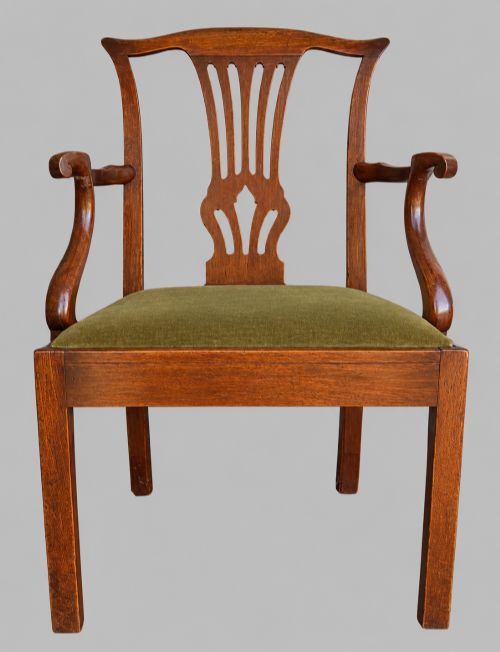
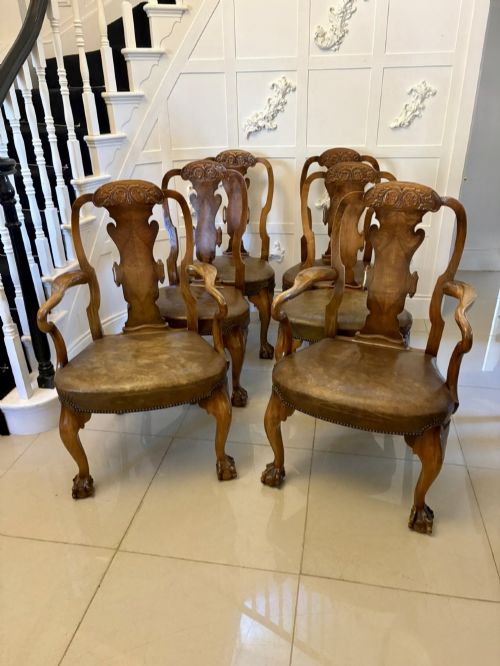
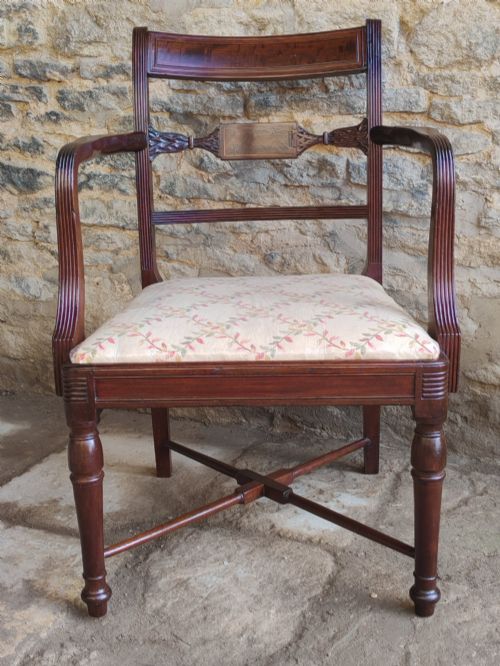
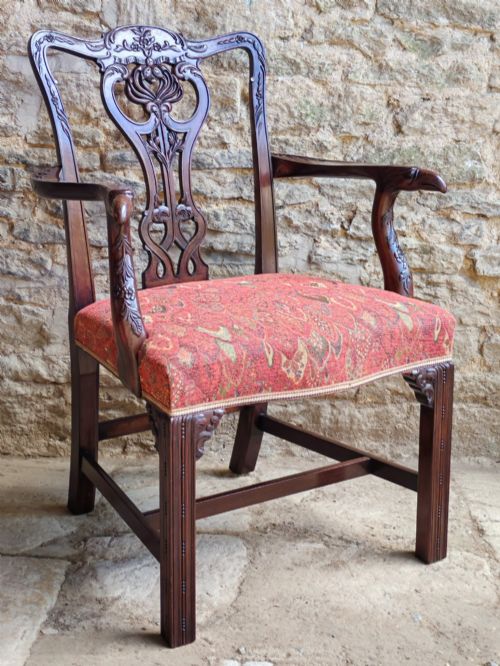
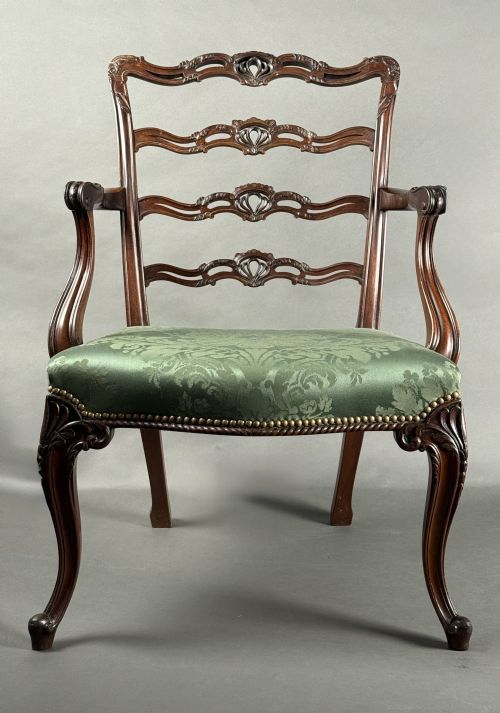
These antique dining carvers are robust seating with supportive armrests, offering formal elegance or country utility at the head of the table.
Antique dining carvers
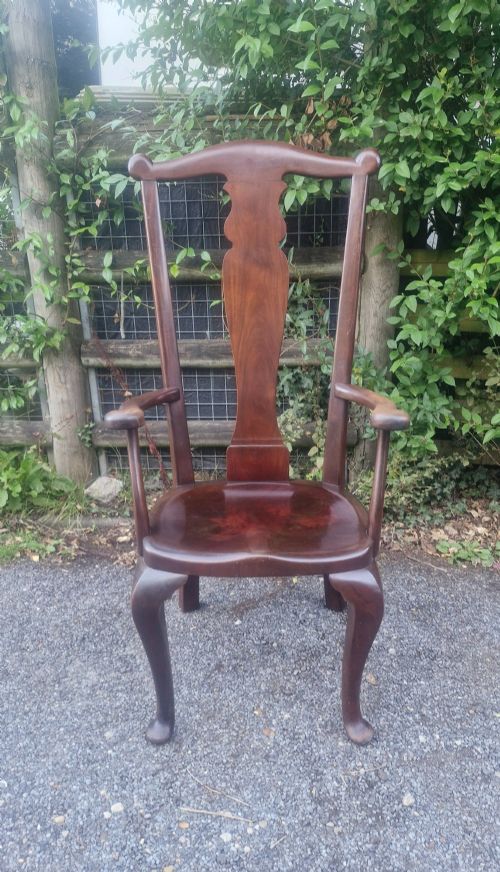
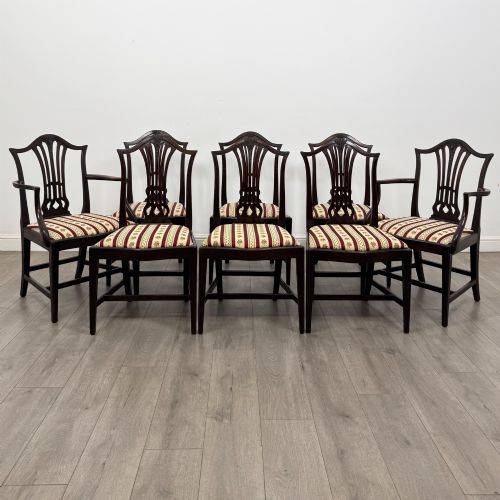
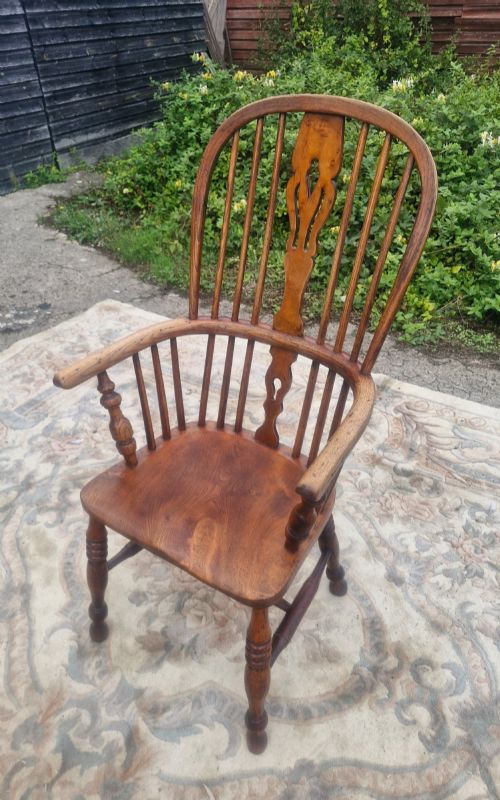
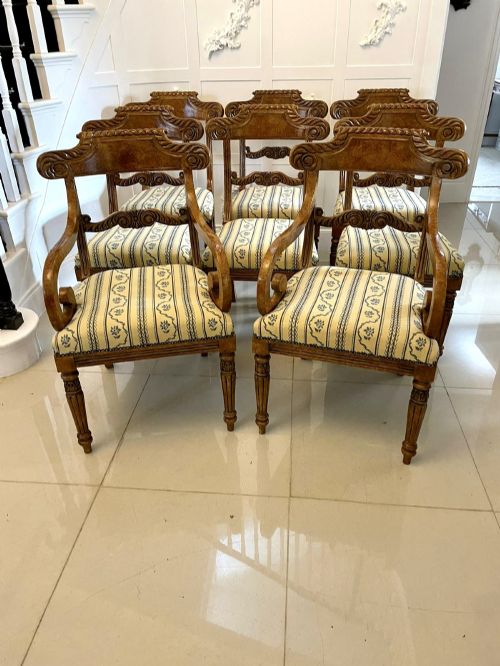
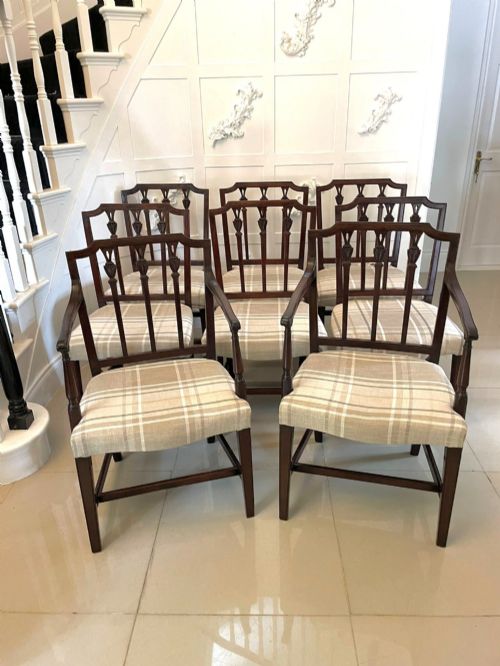
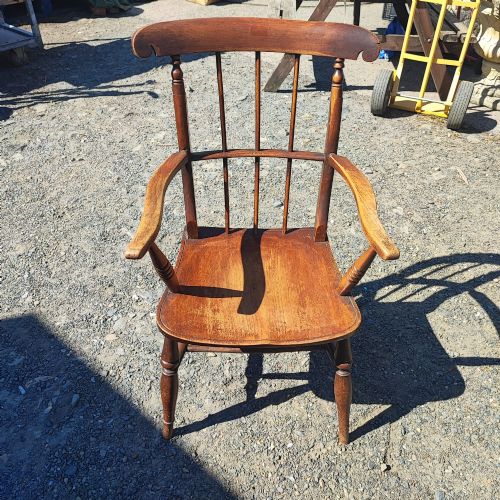
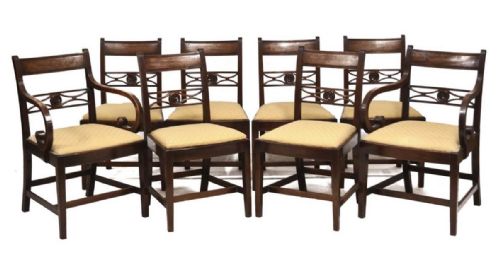
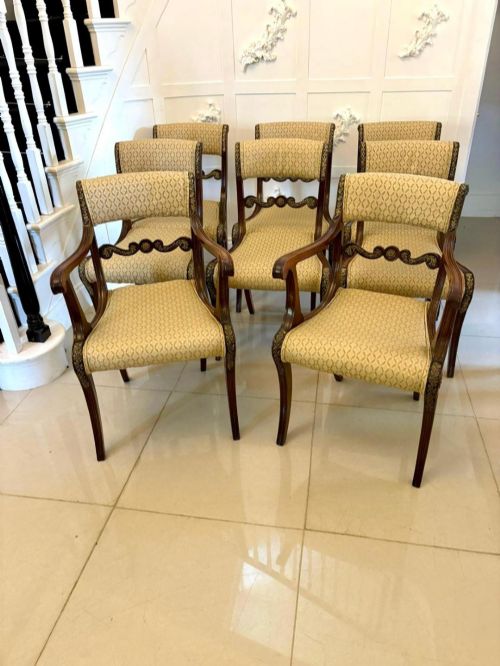
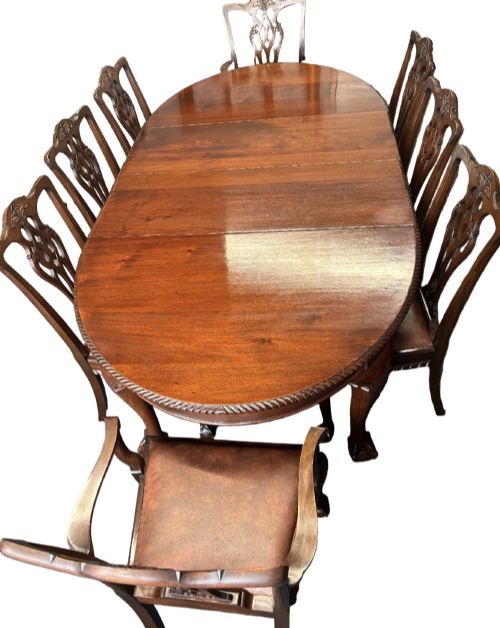
When searching for antique dining carvers, a buyer encounters substantial armchairs designed to sit alongside matching dining sets or stand individually. The versions most likely to meet on this page include mahogany examples from the Regency and Victorian periods alongside country elm, birch and oak forms.
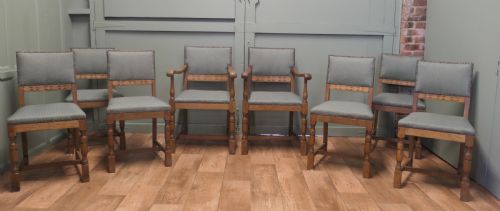
The evidence shows these pieces frequently appear as pairs or as part of larger dining sets featuring both single chairs and carvers. Styles span formal Regency and Hepplewhite designs to rustic country ladder backs, spindle backs and stick backs.
Makers and workshops adapted these elbow chairs for both formal dining rooms and substantial kitchens. The forms maintain steady structural proportions suited to daily domestic use around a dining table.
Materials and construction
Cabinetmakers and joiners constructed these carvers primarily from mahogany, oak, birch, elm and beech. Dense hardwoods provided the necessary strength for frames subjected to regular movement at the dining table.
Upholstery methods utilised velvet, damask and plain fabric over supportive padding. Brass elements occasionally appeared in structural or decorative fixings, while turned and carved wooden components defined the regional styles.
Retail Price Guide 2026
Typical UK retail prices for dining carvers, calculated from the Sellingantiques database of over a million retail prices indexed since 2003. This retail price guide relies exclusively on Sellingantiques data; no external sources or auction records are used, so the figures do not describe the wider market.
Armchairs designated as carvers ensured the host maintained proper posture while carving the roast.
Distinctions in quality
The refinement of the timber carving and the crispness of Regency or Hepplewhite stylistic details separate standard furniture from exceptional examples. Dense Cuban mahogany and finely turned spindle or ladder backs demonstrate superior workshop execution.
Structural integrity of the arm joints and scroll arms governs durability. Original timber surfaces and period upholstery specifications preserve the historical authenticity prized by collectors.
The Antique Dining Carvers Glossary
- Carver
- An armchair designed specifically for use at the dining table, typically featuring elbow rests. These pieces often accompanied sets of single chairs for the head of the table.
- Regency
- A British design style spanning the early nineteenth century characterised by classical restraint, scroll arms and sabre legs. Mahogany remained the favoured timber for formal dining furniture of this period.
- Hepplewhite Style
- An eighteenth-century design vocabulary featuring elegant proportions, shield-back chairs and tapered legs. Later revival pieces often replicated these graceful geometric forms.
- Scroll Arm
- A curved armrest shape resembling a rolled scroll, commonly found on Regency dining carvers. This contour provided both ergonomic support and visual ornamentation.
Frequently Asked Questions
How do I match carvers to single chairs?
Look for matching timber species, such as Cuban mahogany or oak, alongside consistent period styles like Regency or Victorian revival.
Shared design details on the back splats or legs help unify mixed dining sets.
Were carvers used only for dining?
These robust armchairs served versatile roles in kitchens, parlours and formal dining rooms alike. Their sturdy construction suited daily domestic seating needs.
Country versions in elm and birch frequently functioned as heavy-duty household chairs.
How do I identify a Regency carver?
Examine the frame for characteristic scroll arms, sabre legs and rich mahogany grain. These design markers define formal early nineteenth-century seating.
Proportions remain balanced to accommodate dining table heights of the period.
What woods were used for country carvers?
Makers utilised local timbers including oak, elm, birch and beech for rustic and vernacular seating. These woods provided exceptional durability for kitchen and farmhouse environments.
Surface patination develops distinct character on these utilitarian woods over generations.