
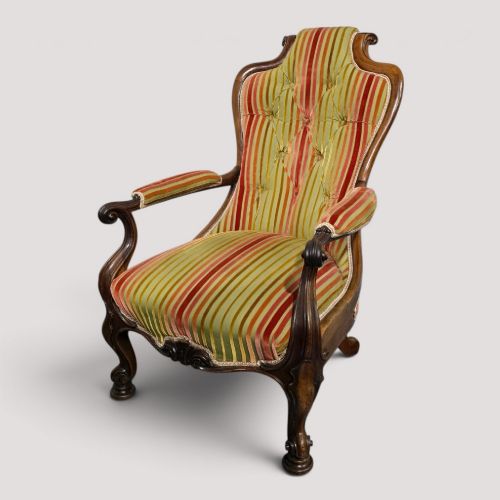
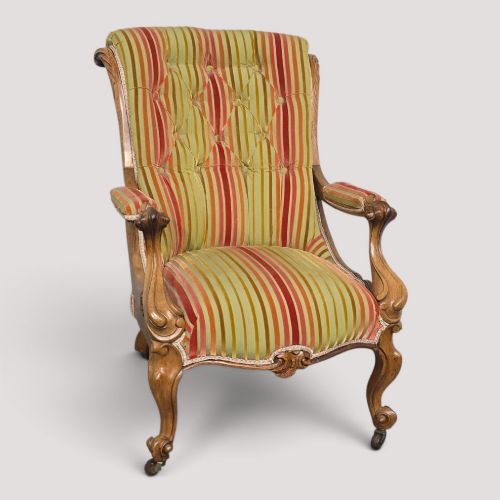

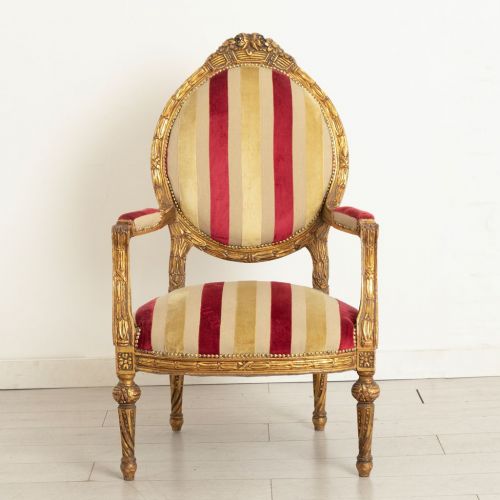
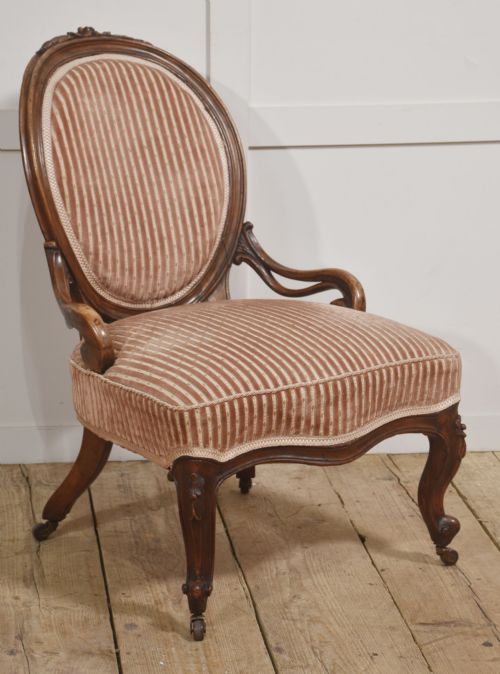

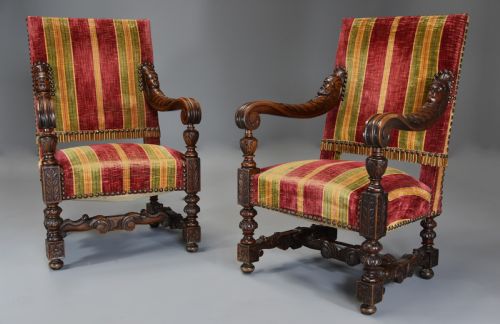


Striped Velvet Armchair
A striped velvet armchair brings rich texture and enduring form into a room, offering both substantial comfort and historic character.
Striped Velvet Armchair
A striped velvet armchair represents a diverse group of seating furniture spanning several centuries, primarily encompassing Regency, Georgian, and 19th century periods. Buyers searching for a striped velvet armchair will find forms ranging from library armchairs and open armchairs to generous wingback chairs and bergere armchairs.
The selections available on this page reflect a rich mix of regional influences and revival styles, including Louis XVI style, Victorian Rococo Revival, French Baroque, and French Louis XVI style. These seating pieces combine traditional upholstered comfort with distinct stylistic flourishes from their respective eras.
How they were made
Makers constructed the frames of these armchairs using dense hardwoods such as mahogany, walnut, and rosewood, alongside decorative giltwood elements. These structural timbers provided the necessary strength for elaborate open frames and high wingback designs.
Upholstery relied on traditional textile techniques using velvet fabrics, often complemented by brass details. The combination of tactile fabric surfaces and robust wooden framing defined the construction approach of the period.
Striped Velvet Armchair Retail Price Guide 2026
Typical asking prices for striped velvet armchair among the pieces listed under this phrase on Sellingantiques today, from the lower quarter to the upper quarter. They describe what is for sale here now, not the wider market.
Some nineteenth-century makers clearly misjudged how much furniture a Victorian library actually needed, resulting in armchairs large enough to hibernate in.
What varies in quality
The distinction between standard examples and finer pieces lies in the precision of the woodwork and the articulation of period styles, such as French Baroque or Louis XVI. Finer frames exhibit deeper carving, better timber selection, and more harmonious proportions.
Quality also rests in the integrity of the upholstered elements and the preservation of materials like rosewood, mahogany, and giltwood. Examples that retain well-executed framing alongside high-grade textile application represent the upper tier of the range.
The Striped Velvet Armchair Glossary
- Bergere armchair
- An enclosed upholstered armchair with wooden framing exposed around the sides and back, typically featuring a cane or upholstered panel. This French form offers a deep and comfortable seat.
- Wingback chair
- A high-backed armchair with side panels designed to shield the sitter from drafts and retain heat from a fireplace. Georgian examples often display generous proportions.
- Giltwood
- Wood that has been coated with a thin layer of gold leaf or powder. This finish appears frequently on pieces influenced by French decorative styles.
- Fauteuil
- An open-armed upholstered armchair with exposed wooden armrests originating in France. They are typically lighter in construction than enclosed armchairs.
Striped Velvet Armchair: Frequently Asked Questions
What periods do these armchairs come from?
The pieces span several historical eras, featuring examples from the Georgian and Regency periods as well as the nineteenth century up to nineteen twenty. Each period brings distinct stylistic characteristics to the frames.
Buyers will encounter various revival aesthetics within these dates, including French Baroque and Louis XVI interpretations.
How were these armchairs used historically?
These seating pieces served primary roles in formal reception rooms, libraries, and parlours. Wingback designs were specifically placed near fireplaces to protect occupants from draughts.
Open armchairs and bergere chairs provided movable seating for conversation and reading within domestic interiors.
What woods are commonly found in the frames?
Makers utilised a variety of hardwoods including mahogany, walnut, and rosewood for structural and decorative stability. Giltwood also appears on pieces following French decorative traditions.
These timbers provided both the structural strength and the polished finish characteristic of period furniture.
How do I identify different styles among them?
Styles are identified through distinct decorative motifs and frame shapes, ranging from clean Regency lines to ornate French Baroque and Rococo Revival curves. Wingbacks indicate earlier Georgian influences while giltwood points towards French court aesthetics.
Examining the woodwork and arm construction helps determine the specific design lineage of each chair.