




Empire Style Armchairs
Empire style armchairs are neoclassical seats defined by architectural form and rich timbers, bringing formal authority and classical proportion to a room.
What empire style armchairs are
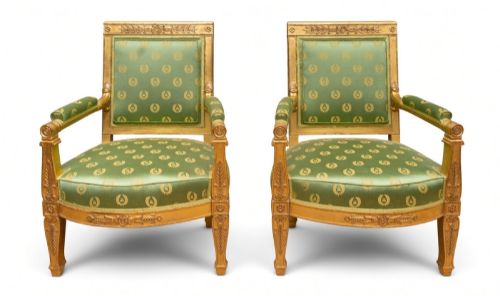
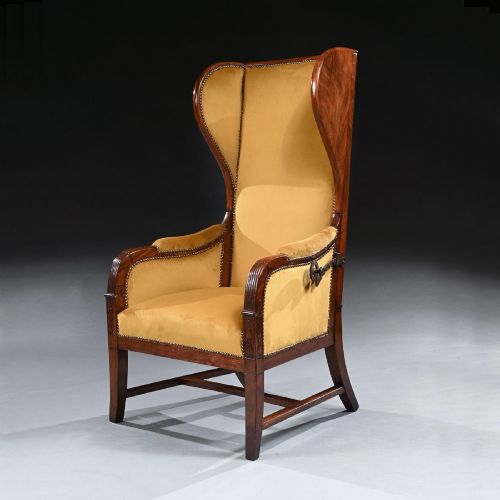
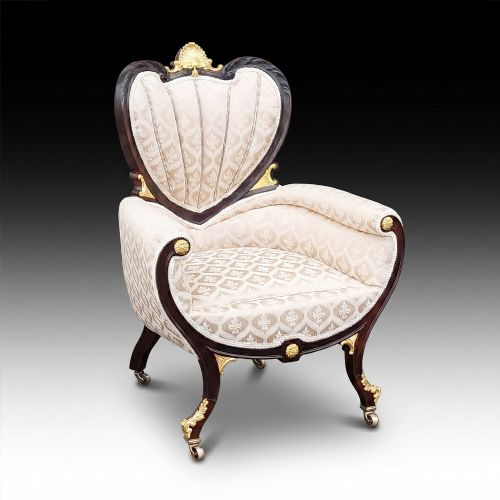
Empire style armchairs draw upon the grand vocabulary of classical antiquity, incorporating structural forms that echo ancient Greece and Rome. When exploring empire style armchairs, you encounter pieces predominantly constructed in the nineteenth century or produced during later revivals around nineteen hundred.
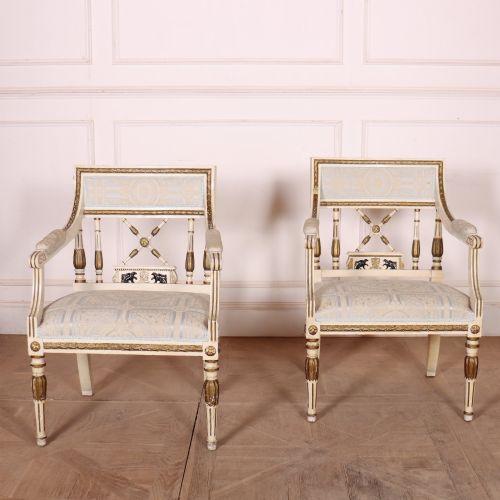
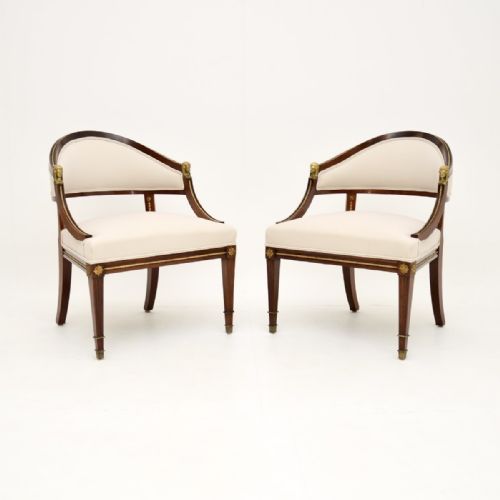
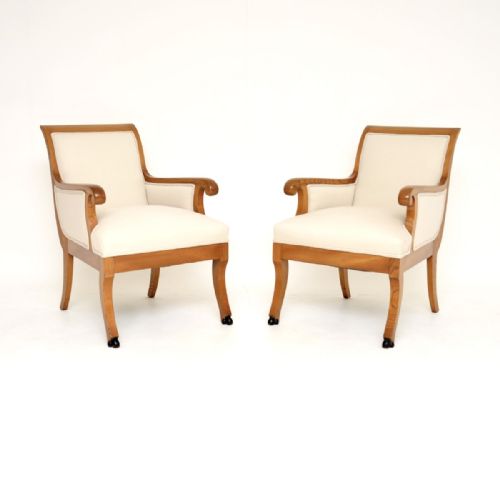
The selection frequently includes matched pairs and occasional sets of four, spanning origins from France, Italy, Sweden, and Denmark. Makers often leaned towards Swedish neoclassical interpretations, French consulate designs, or robust mahogany frames.
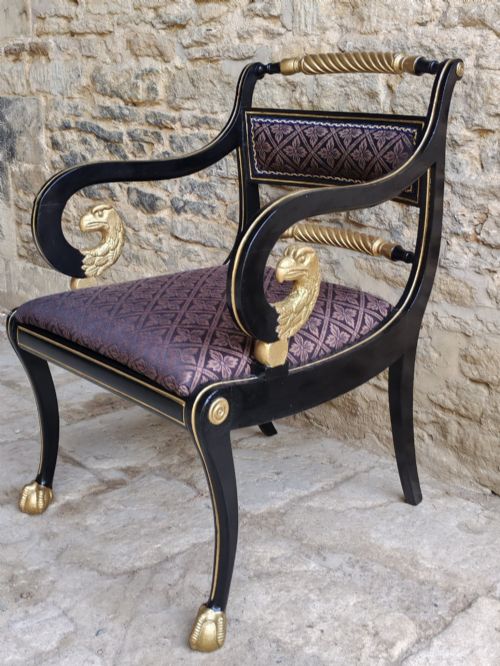
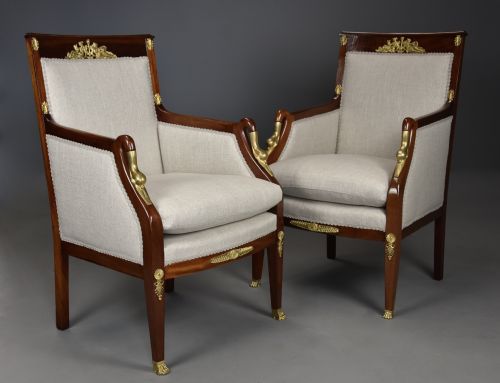
The silhouette relies on scrolled arms, upright backs, and disciplined geometry. These seats anchor a room with architectural weight rather than delicate curves.
How they were made
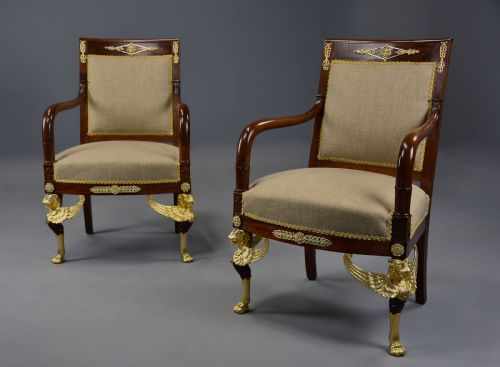
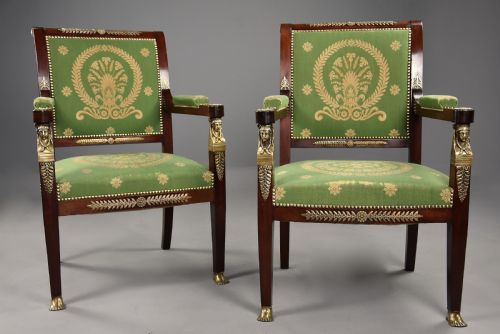
Cabinetmakers utilised dense timbers, chief among them mahogany and rosewood, sometimes supported by giltwood or painted and silvered surfaces. Frames receive structural stability through tight joinery, while brass inlay and ormolu mounts provide metallic contrast against dark wood.
Upholstery relies on traditional textiles including velvet, linen, and patterned fabric. Padding sits over sprung or webbed bases, secured with careful hand-tacking along the wooden borders.
Retail Price Guide 2026
Typical UK retail prices for empire style armchairs, calculated from the Sellingantiques database of over a million retail prices indexed since 2003. This retail price guide relies exclusively on Sellingantiques data; no external sources or auction records are used, so the figures do not describe the wider market.
Swedish and Danish neoclassical designs appear alongside French consulate and Italian regional interpretations in the archive.
What varies in quality
Quality rests in the sculptural ambition of the woodwork and the precision of applied metalwork. Superior examples display crisply carved swan arms, detailed brass inlay, or fire-gilt ormolu rather than simple cast substitutes.
The integrity of the timber frame dictates longevity. Denser grain, restrained proportion, and fluid execution separate standard revival pieces from workshop masterworks attributed to notable makers.
Henry Thomas Peters of Genoa
The Empire Style Armchairs Glossary
- Ormolu
- Gilded bronze applied as decorative mounts to furniture frames. This technique creates sharp metallic highlights against dark mahogany.
- Giltwood
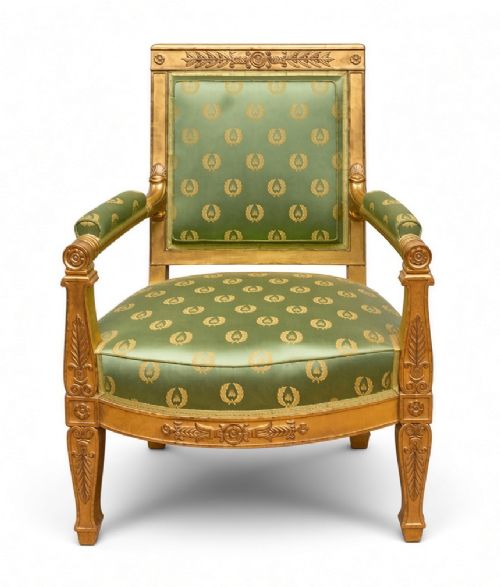
- Timber coated with fine gold leaf to create a brilliant decorative surface. It appears frequently on neoclassical Italian salon seats.
- Consulate
- A transitional French design period preceding the full Empire style. It retains classical severity while introducing simpler domestic proportions.
- Gondola armchair
- A curved seat shape reminiscent of a Venetian boat hull. The rounded back wraps continuously into low arms.
- Neoclassical
- A revival style drawing direct inspiration from archaeological discoveries in ancient Greece and Rome. It prioritises symmetry, columns, and strict proportion.
Frequently Asked Questions
How do I identify Empire style?
Empire style is characterised by heavy classical influences, architectural symmetry, and dark mahogany frames. It often incorporates military or ancient symbols, straight lines, and bronze mounts.
Look for structural severity balanced by rich timber grain and polished metal details that echo Roman furniture.
How do I care for antique mahogany?
Protect the timber by keeping it away from direct sunlight and sudden temperature changes. Dust regularly with a dry cloth and apply natural wax sparingly.
Avoid liquid polishes that build up residue and dull the deep grain of the nineteenth-century wood.
What is the difference between original and revival pieces?
Nineteenth-century originals date from the height of the classical movement, while revival pieces were constructed around nineteen hundred to satisfy renewed historicism.
Both categories utilise traditional joinery and similar timbers, but original pieces carry the direct patina of early production eras.