



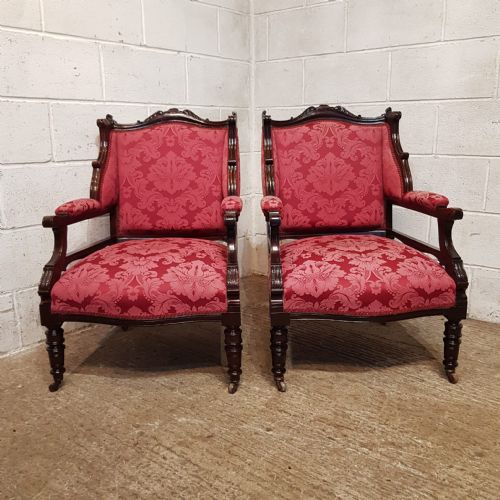
Mahogany Tub Armchair
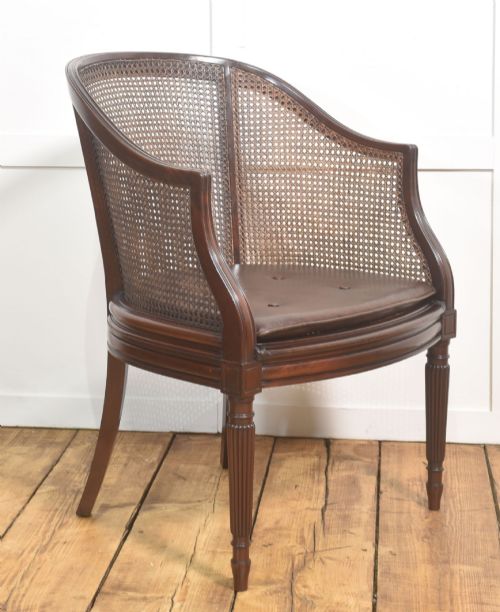
When you search for a mahogany tub armchair, you are looking at solid timber framing combined with deep, enclosing upholstery or cane work designed for sitting in comfort.
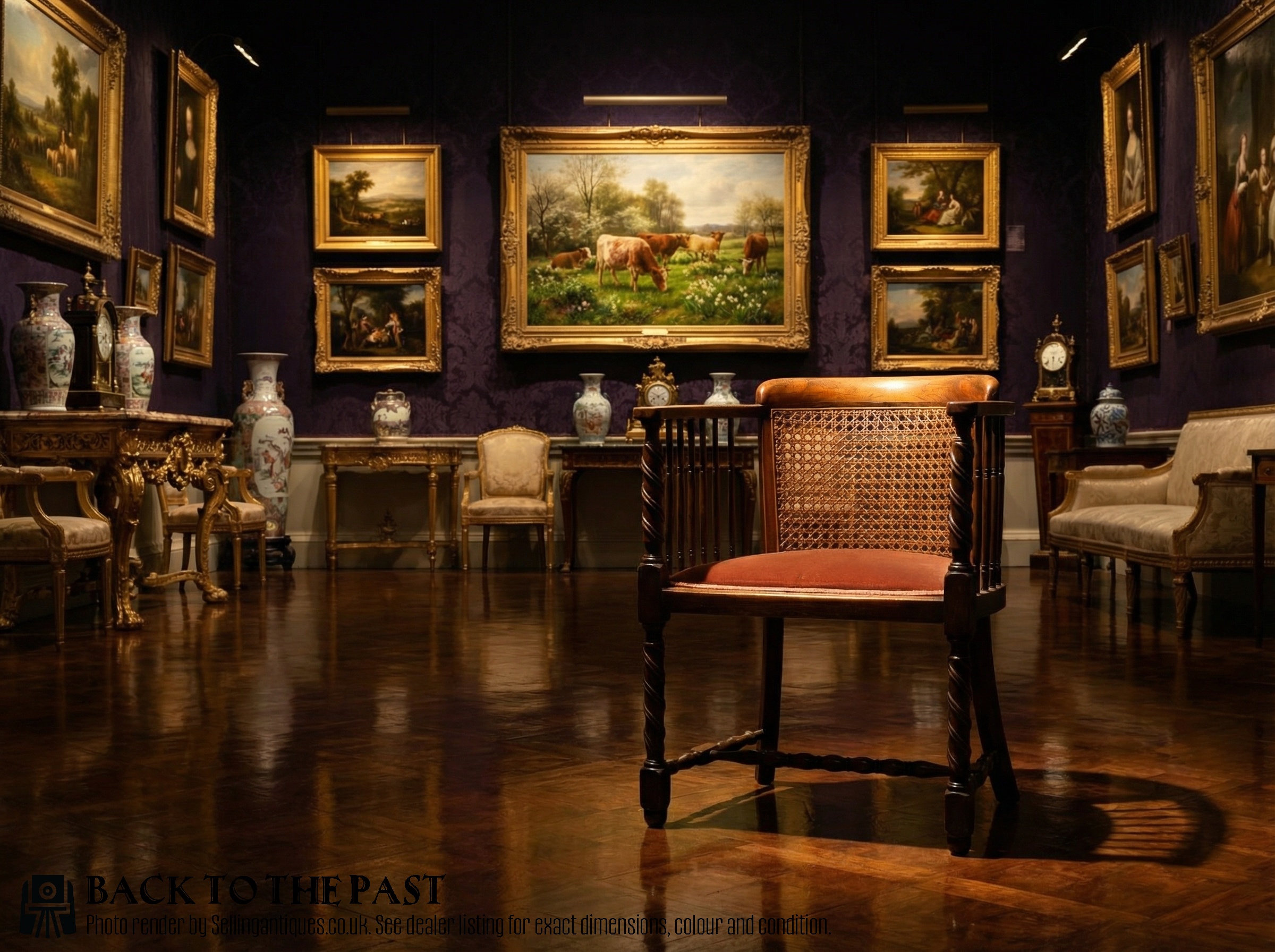
Mahogany Tub Armchair
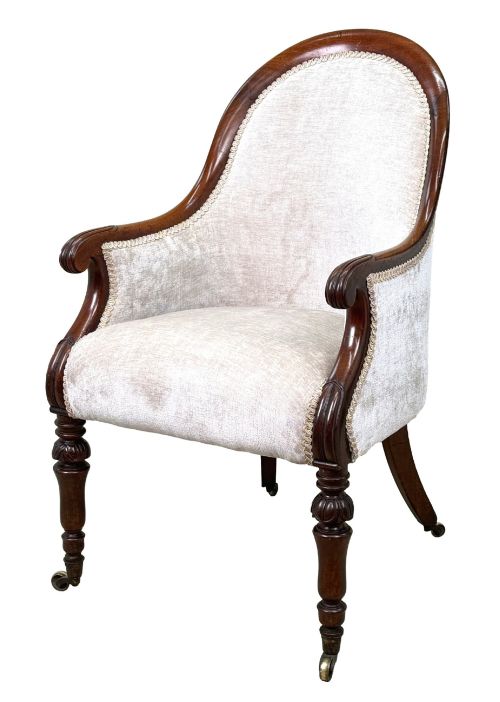
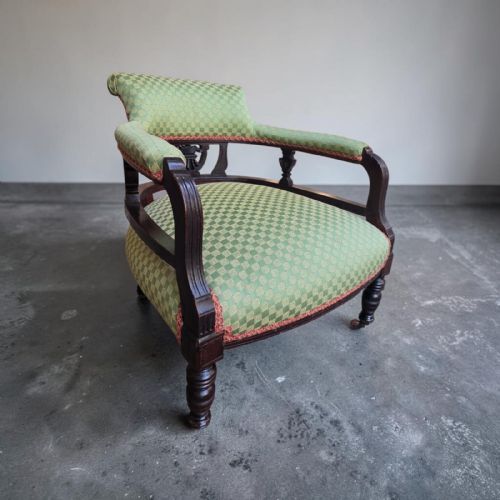
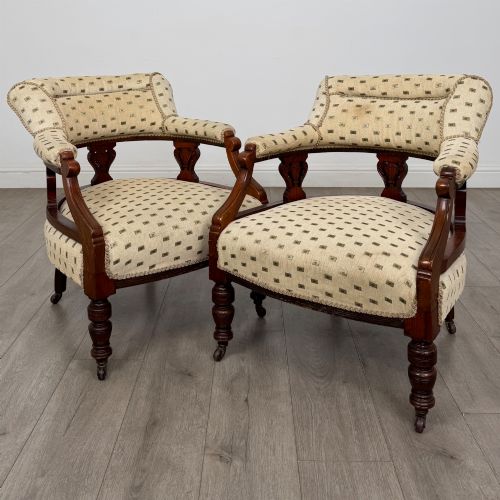
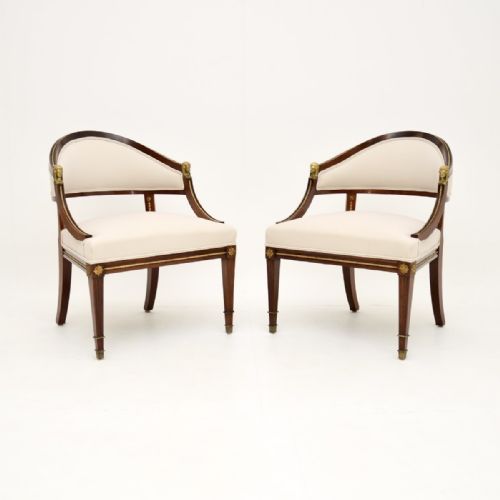
A mahogany tub armchair provides a rounded, enclosing backrest that flows continuously into the arms, offering a secure and supportive seat. These chairs appear across Victorian, Edwardian, and Regency periods, serving as library chairs, desk seats, or occasional pieces in the parlour.
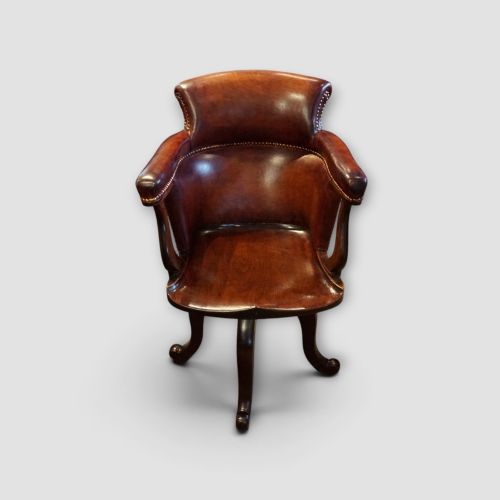
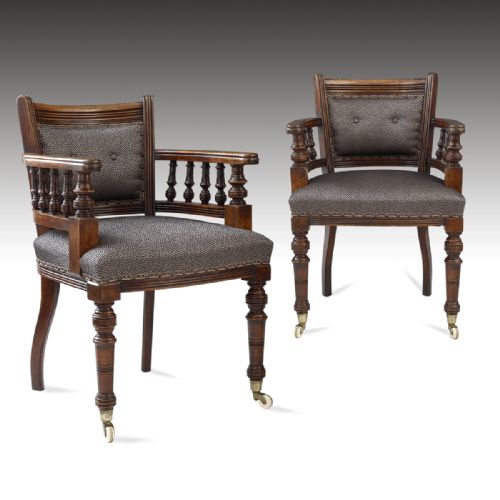
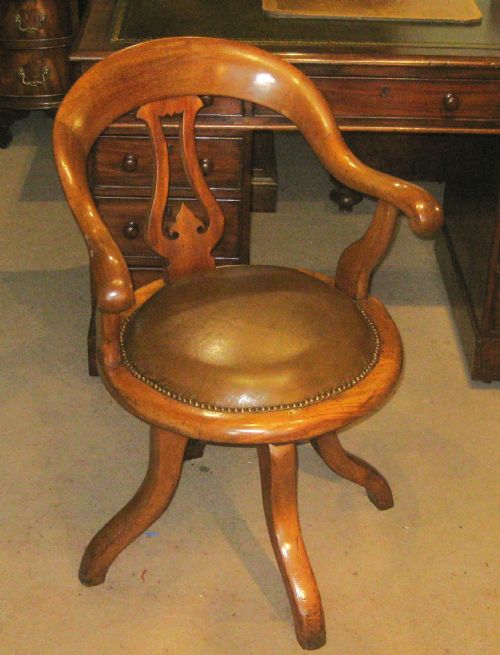
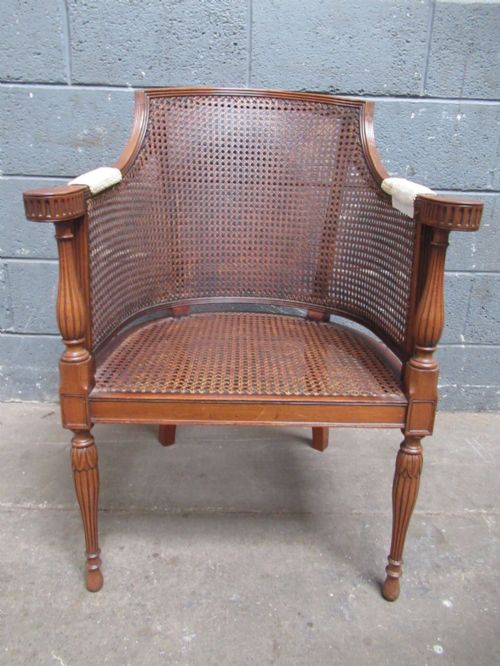
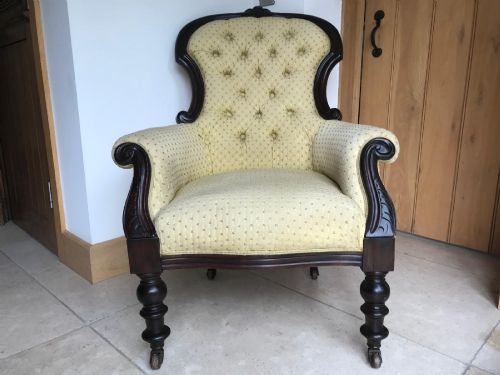
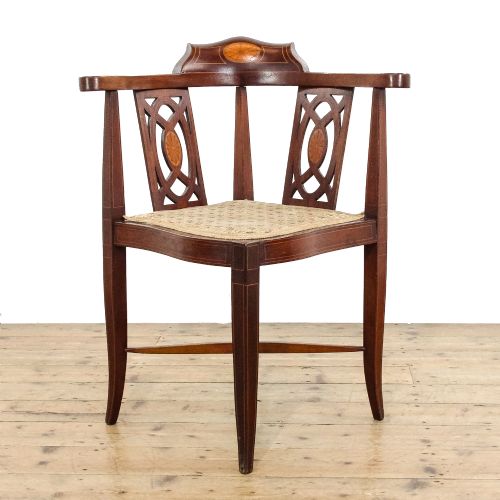
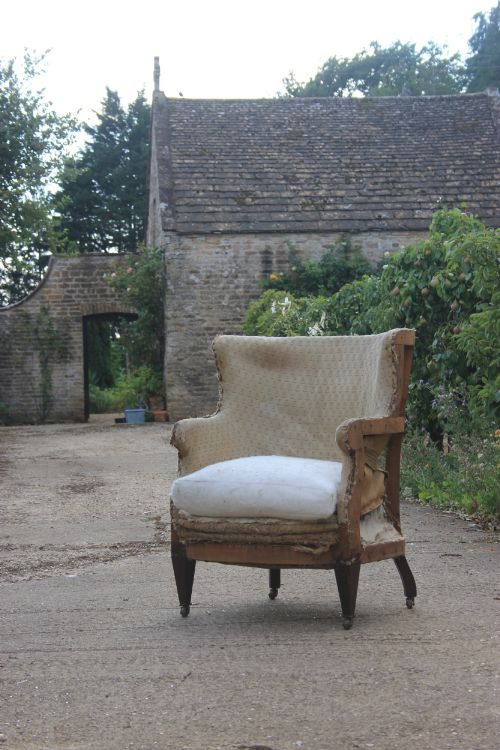
The versions most commonly met on this page date from the late nineteenth and early twentieth centuries, particularly Edwardian examples featuring satinwood inlay and Victorian desk chairs mounted on revolving bases. Their forms range from fully upholstered barrel-backed seating to open caned bergère frames.
How they were made
Cabinet makers utilised dense mahogany for the structural frames, often bending the timber with heat to form the characteristic curved tub shape. Satinwood stringing and brass inlay frequently decorate the surfaces of Regency and Edwardian pieces.
Seating surfaces rely on traditional upholstery fabric, supple leather, woven cane, or buttoned padding supported by internal webbing and horsehair stuffing. Brass castors support the legs on many nineteenth-century library and desk examples.
Mahogany Tub Armchair Retail Price Guide 2026
Typical asking prices for mahogany tub armchair among the pieces listed under this phrase on Sellingantiques today, from the lower quarter to the upper quarter. They describe what is for sale here now, not the wider market.
Listings feature mahogany, brass, leather, fabric, cane, and satinwood across Victorian, Edwardian, and Regency periods.
What varies in quality
The distinction between ordinary production and superior craftsmanship lies in the fluidity of the timber bending and the precision of the joinery along the curved backrest. Finer examples display carefully matched grain patterns and delicate inlay work rather than heavy, utilitarian joints.
Original upholstery materials and secondary woods like mahogany throughout the frame elevate a piece above those rebuilt with modern replacements or lesser timbers. The crispness of carved details and original brass castors further separate standard utilitarian seating from exceptional library armchairs.
Gillows·Cope & Collinson·Maple & Co
The Mahogany Tub Armchair Glossary
- Tub armchair
- A chair with a low, curved, continuous back and armrests forming a cylindrical shape. This design wraps around the sitter to provide enclosed support.
- Bergère
- An enclosed upholstered armchair with wooden framing where the sides are typically filled with cane work. This French style became popular in various forms throughout the nineteenth and early twentieth centuries.
- Satinwood
- A durable, yellowish timber native to India and Ceylon used extensively for contrasting inlay and banding on mahogany furniture. It creates bright decorative lines along the crest rails and legs.
- Castor
- A small wheel mounted on a swivel attached to the foot of a chair leg. These allowed heavy library and desk armchairs to move easily across carpets and wooden floors.
Mahogany Tub Armchair: Frequently Asked Questions
What is a mahogany tub armchair?
A mahogany tub armchair is a seating form defined by a curved, semi-circular back that joins the arms in one continuous line. Built using dense mahogany timber, these chairs provide a supportive, enclosed seat.
They appear frequently in nineteenth and early twentieth-century designs, functioning as library chairs, desk seats, or decorative parlour furniture.
How do I identify a Regency period chair?
Regency pieces often display classical proportions, brass inlay, and Sabre legs that reflect early nineteenth-century neoclassical tastes. The mahogany timber tends to have a rich, dark patina developed over decades.
Makers of this era also utilised brass castors and turned wooden members to achieve a lighter, more refined silhouette compared to heavier Victorian designs.
Where were these chairs used?
These armchairs served primarily in studies, libraries, and grand parlours as comfortable seating for reading and writing. Revolving desk versions stood behind partners' desks and partners' tables in offices.
Caned and upholstered variations also furnished bedrooms and dressing rooms as occasional seating throughout the Edwardian period.
How do I care for leather and mahogany?
Mahogany woodwork benefits from occasional light polishing with traditional wax to maintain the grain and prevent the timber from drying out. Avoid placing these pieces in direct sunlight to protect the polish and leather.
Leather upholstery requires gentle cleaning with appropriate conditioners to keep the hide supple and prevent cracking over time.