
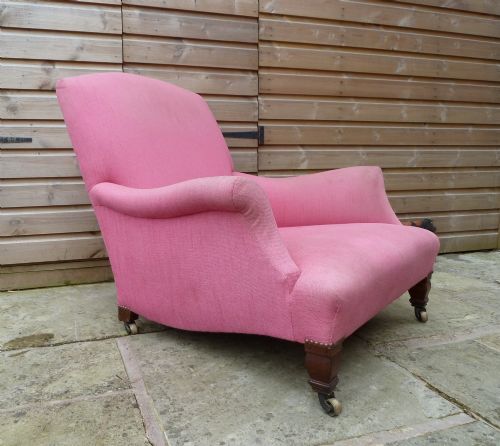
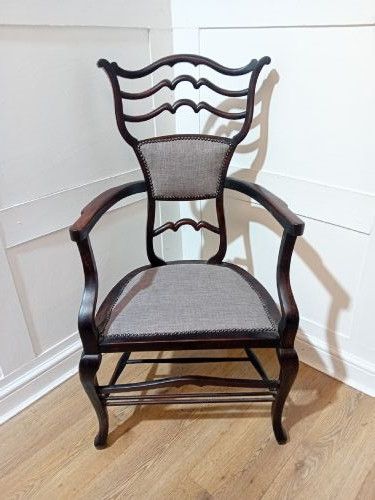
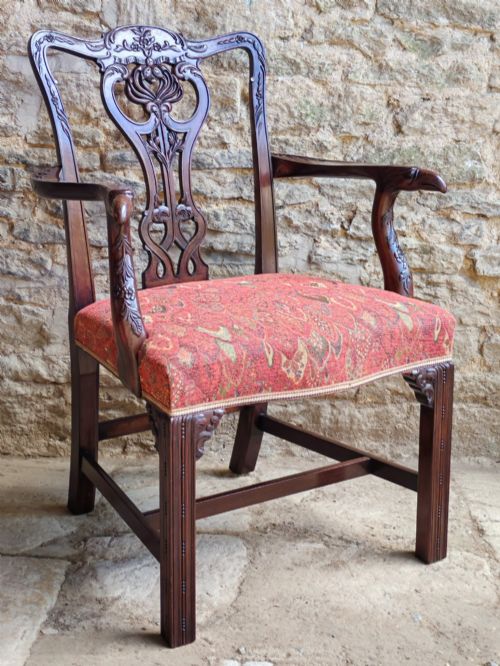


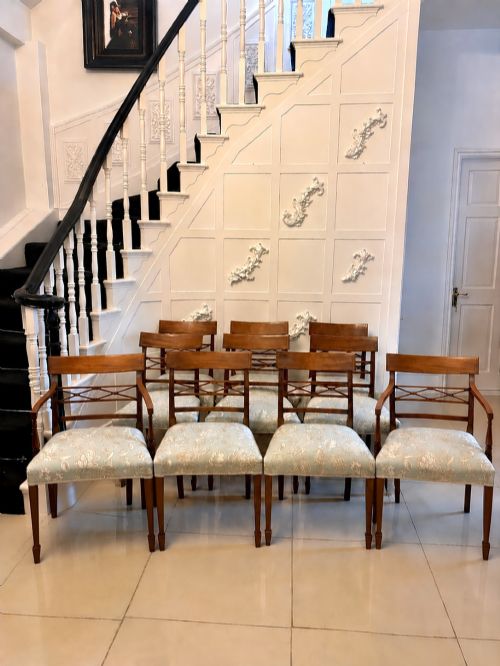
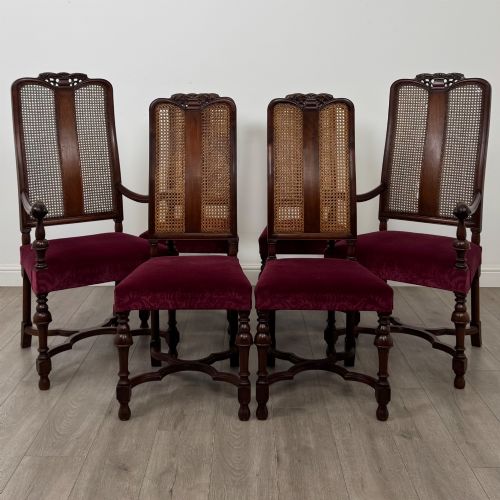
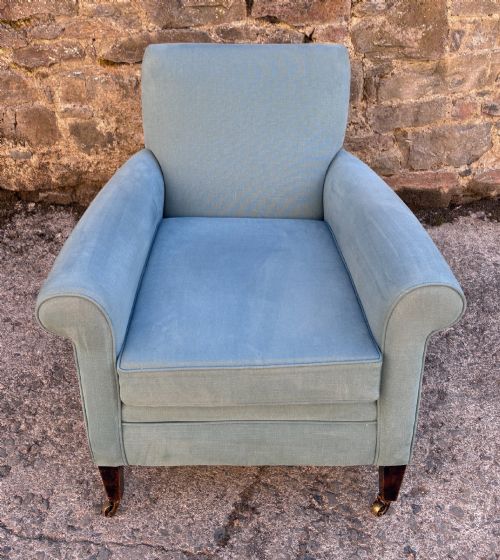
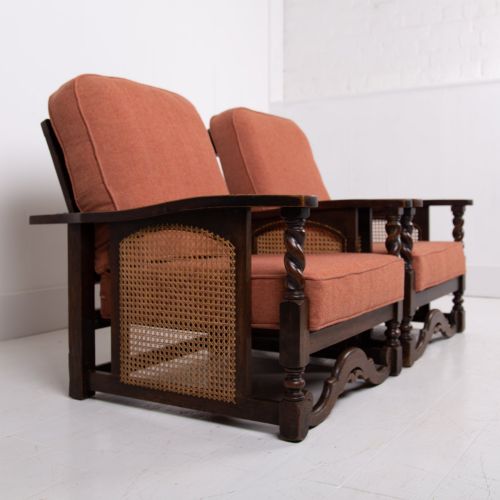
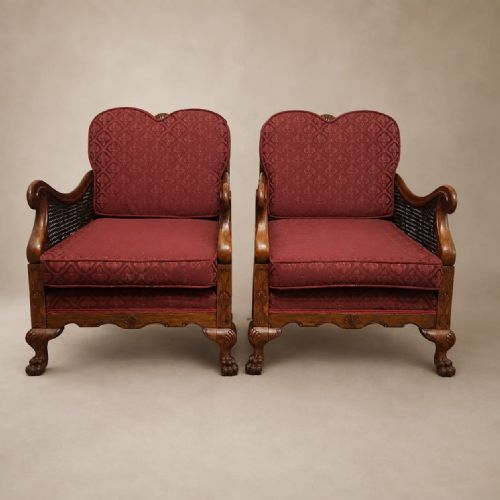
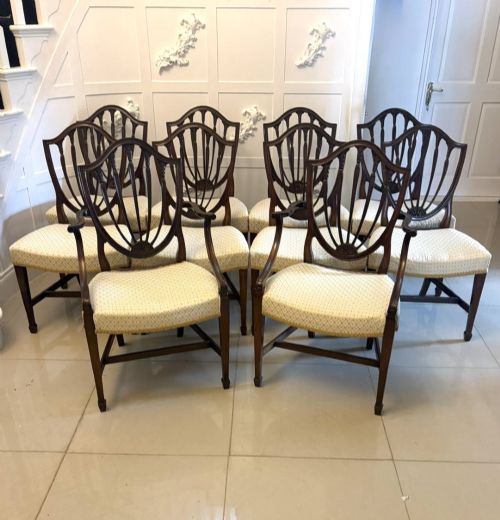
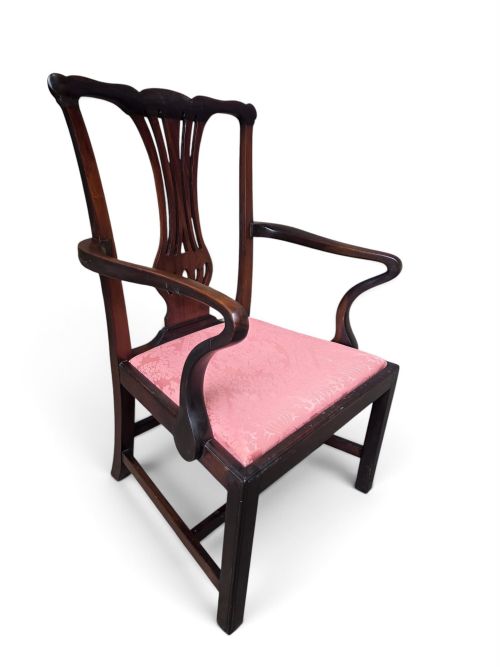
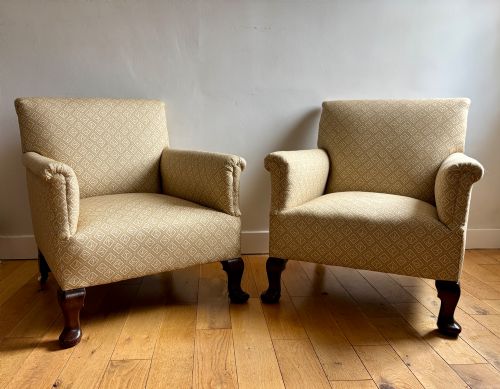
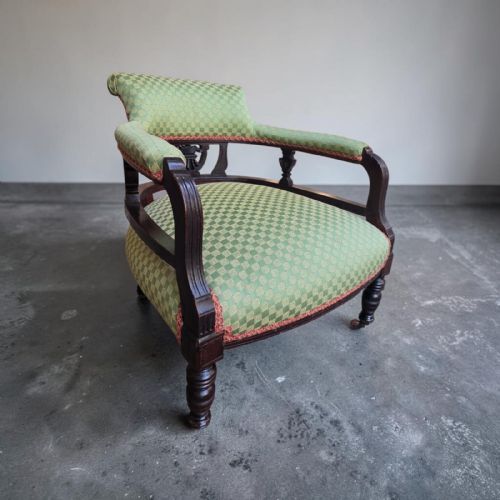
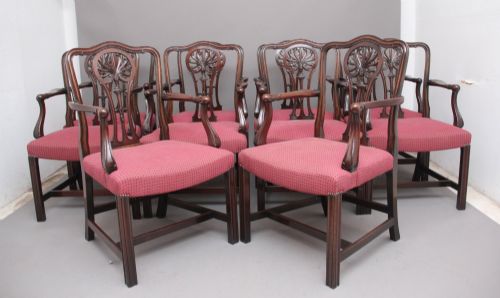
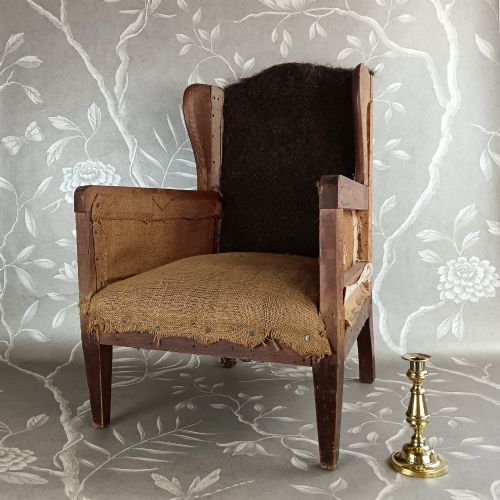
Edwardian Upholstered Armchair
When you choose an edwardian upholstered armchair, you invite deep comfort and refined period presence into your daily sitting space.
Edwardian Upholstered Armchair
An edwardian upholstered armchair brings together generous seating proportions and lighter timber frames than its heavy Victorian predecessors. These pieces span low-slung lounging chairs, buttoned tub seats and substantial deep-sprung armchairs built for long hours of reading or fireside rest.
The versions most commonly met on this page combine exposed mahogany or walnut framework with sprung seats and contemporary fabric coverings. Many follow the enduring design principles popularised by leading London workshops, offering low backs, scrolled arms and generous squab cushions.
How They Were Made
Makers constructed the foundational frames using solid hardwoods such as mahogany, walnut and oak, often incorporating bent components or subtle inlay work. Joinery relied on traditional mortise and tenon joints to ensure long-term structural stability under daily weight.
Upholstery techniques involved hand-tied coil springs, horsehair stuffing and webbing layered beneath top covers of velvet, leather or linen. Turned wooden legs frequently terminated in brass castors to allow smooth movement across heavy carpets.
Edwardian Upholstered Armchair Retail Price Guide 2026
Typical asking prices for edwardian upholstered armchair among the pieces listed under this phrase on Sellingantiques today, from the lower quarter to the upper quarter. They describe what is for sale here now, not the wider market.
The selection spans compact tub chairs, library armchairs and matching three-piece drawing room suites.
What Varies in Quality
The distinction between standard examples and exceptional pieces rests primarily on the integrity of the internal springing and the refinement of the woodwork. Superior frames exhibit tight joinery, dense stuffing that maintains a resilient crown, and timber selections showing rich grain and careful polishing.
Makers' stamps, original brass castors and documented provenance elevate certain pieces considerably. Attention to detail in the carving, inlay patterns and the symmetry of the upholstery lines separate workshop output from mass production.
Howard and Sons·Maple and Co·Whytock and Reid·Alfred Allen of Birmingham·SF Cullen·Morison and Co·Holland and Sons·Hindley and Sons
The Edwardian Upholstered Armchair Glossary
- Bergere
- An upholstered wooden-framed armchair with cane panelling on the back and sides. This French-inspired form gained widespread popularity across British drawing rooms during the early twentieth century.
- Tub chair
- A compact seating form characterised by a curved, continuous backrest that flows directly into low armrests. These pieces provide a protective, enclosed seat often finished with leather or buttoned upholstery.
- Carver
- An armchair designed to match a set of dining chairs, typically featuring open arms to accommodate wide clothing. They usually sat at the head of the table.
- Wingback
- A high-backed chair featuring projecting side panels designed to shield the sitter from draughts. Edwardian variants often paired this traditional form with mahogany frames and ball-and-claw feet.
- Castor
- A small wheel fitted to the base of furniture legs to ease movement across floors. They were frequently cast in brass and mounted to wooden feet.
Edwardian Upholstered Armchair: Frequently Asked Questions
How do I care for antique upholstery?
Vacuum fabric surfaces regularly using a low-suction attachment to remove dust particles before they settle into the fibres. Protect leather panels with specialist balms to prevent drying and cracking over time.
Keep wooden frames away from direct sunlight and strong heat sources to avoid timber shrinkage. Professional cleaning remains recommended for deep-sprung upholstery to preserve internal horsehair and webbing.
Were these chairs meant for formal rooms?
Edwardian seating served varied domestic spaces ranging from formal drawing rooms to quiet bedroom corners and libraries. Lighter frames allowed servants to reposition furniture easily for entertaining or tea service.
Deep-sprung club chairs found their natural home in smoking rooms and studies, prioritising private relaxation over formal posture.
Can I use modern fabrics for reupholstery?
Many collectors choose contemporary textiles including printed linens, velvets and heavy wools to refresh antique frames while respecting period aesthetics. Traditional patterns such as ticking stripes or damask also suit the heritage of these chairs.
Ensure that any replacement padding adheres to current fire safety regulations if the piece is intended for regular daily use in a modern home.
How do I distinguish Edwardian from Victorian chairs?
Edwardian frames generally display lighter proportions, brighter mahogany or walnut tones, and cleaner lines influenced by revival styles. Victorian pieces tend to feature darker, heavier timber and more heavily carved ornamentation.
Upholstery forms also shifted toward lower seats and deeper lounging comfort as the twentieth century progressed.