
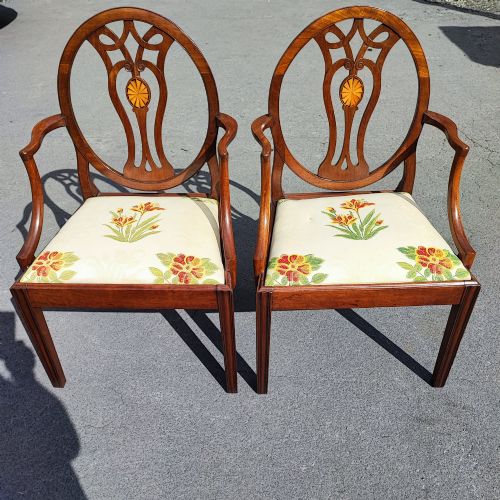
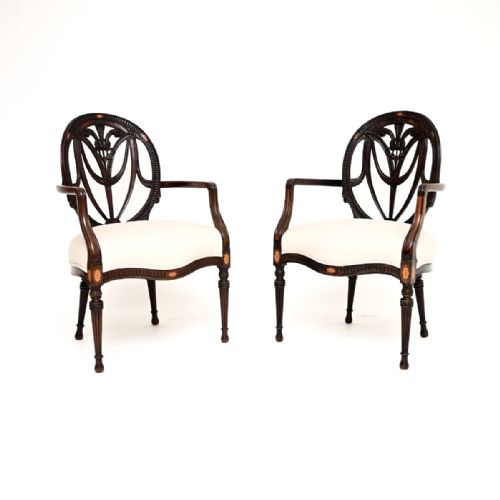
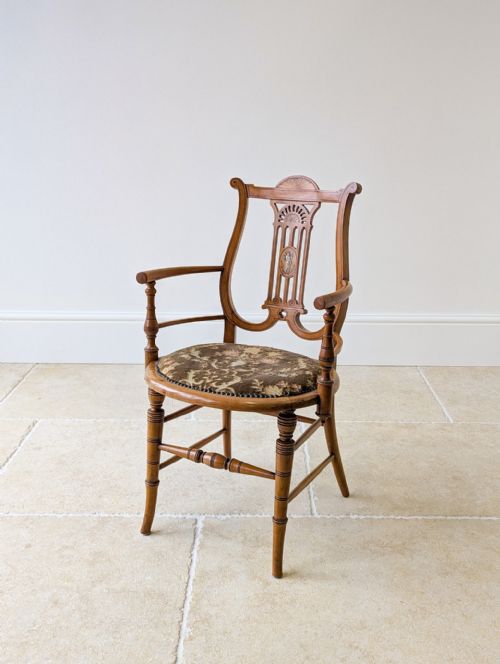
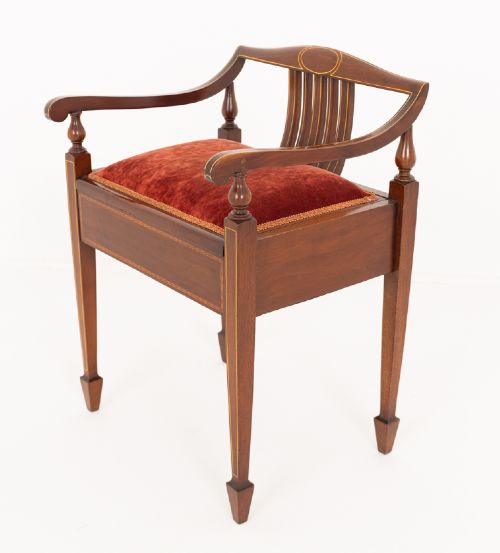
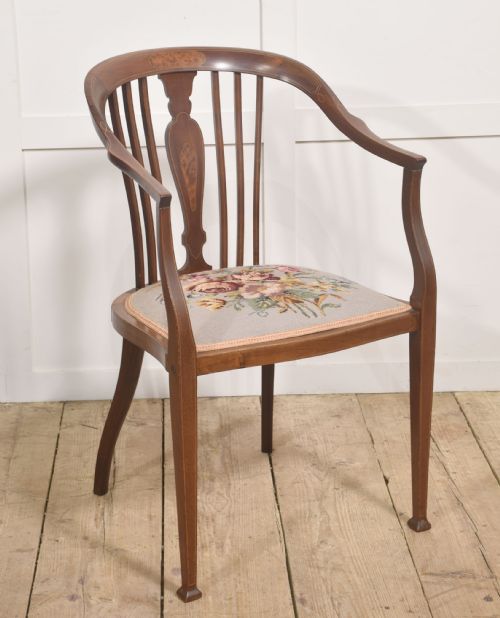


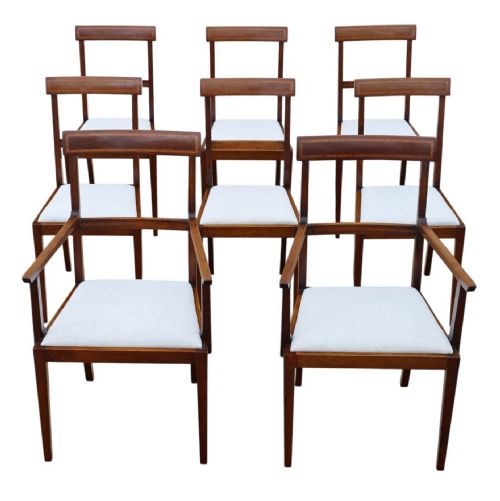


Sheraton Revival Armchair
A sheraton revival armchair brings neoclassical elegance and refined inlay to a room, offering both historical charm and comfortable seating.
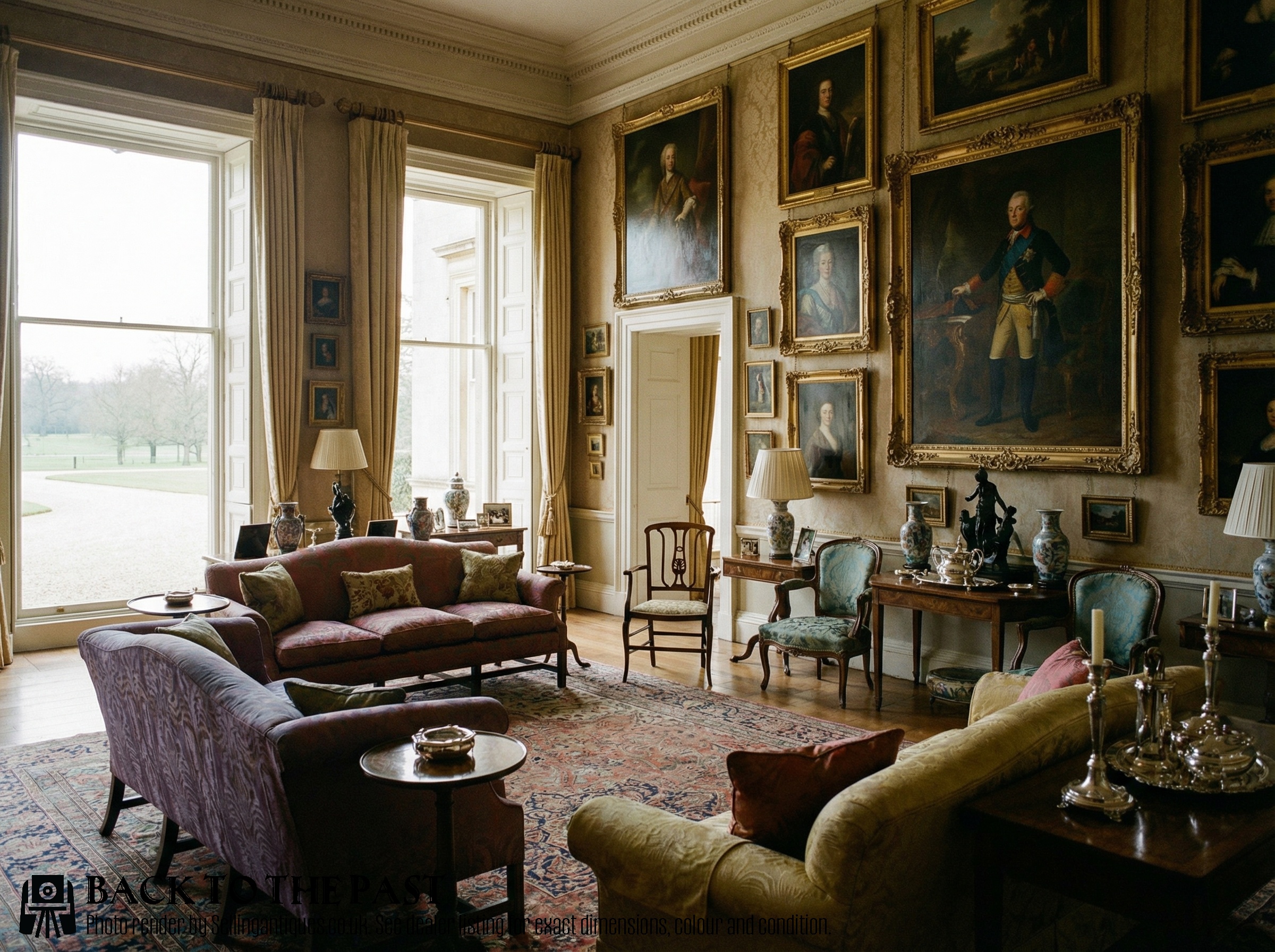
Sheraton Revival Armchair
A sheraton revival armchair is a seating piece inspired by eighteenth-century neoclassical designs, produced primarily during the Victorian and Edwardian eras. These chairs draw heavily on the lightness, symmetry, and rectilinear forms associated with Thomas Sheraton, adapting them for late nineteenth and early twentieth-century interiors.
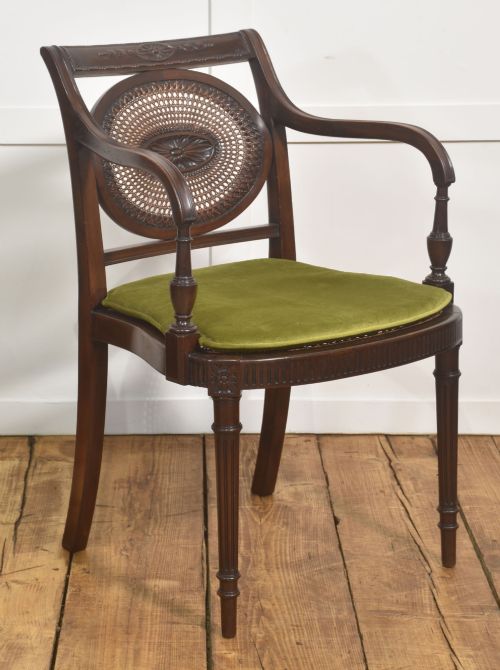
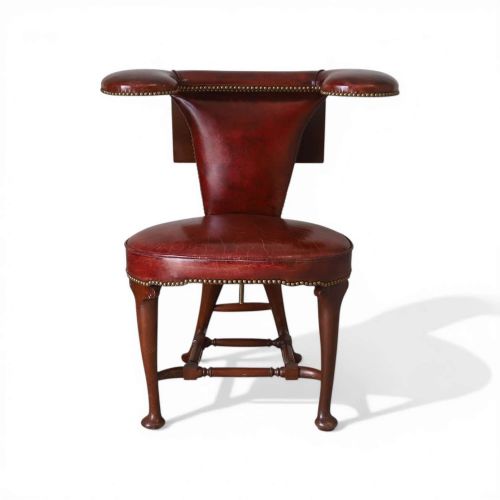
The pieces appearing on this page span from the late nineteenth century through the Edwardian period and up to the 1920s. Common formats include desk chairs, library armchairs with cane or bergere panels, reading chairs, and salon or parlour seating.
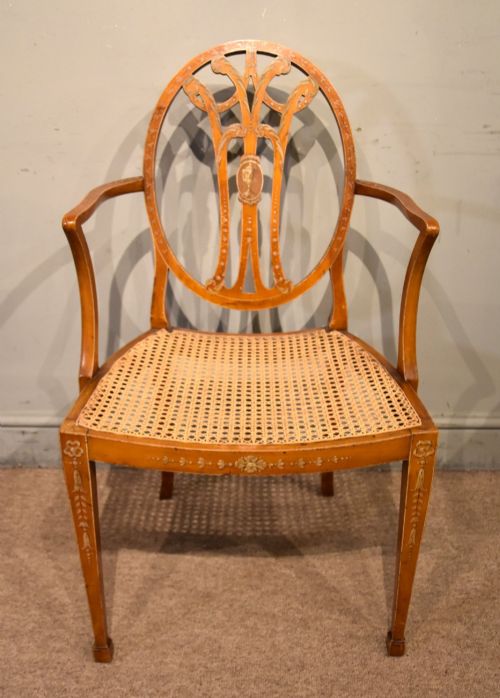
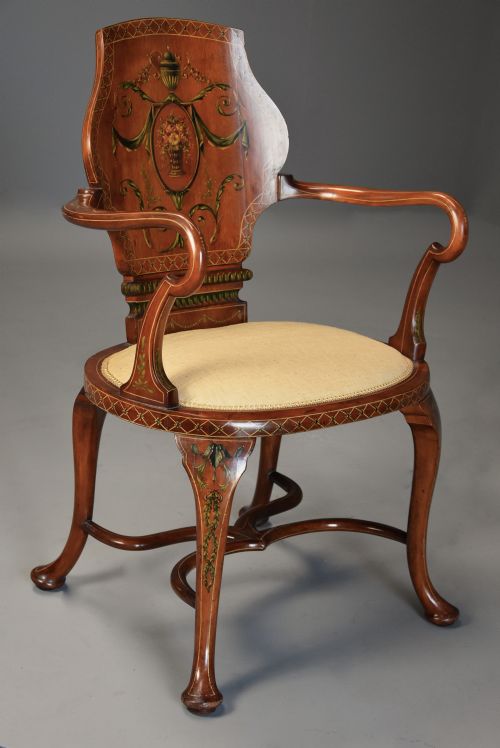
Makers and workshops of the period produced these chairs in mahogany and satinwood, frequently embellishing the frames with delicate inlay, painted motifs, or contrasting wood bands. They range from simple occasional chairs to substantial upholstered library and desk armchairs.
Materials and construction
Makers relied on mahogany and satinwood as the primary framing timbers, sometimes incorporating walnut or cane panels into the backrests and seats. These woods provided a stable, fine-grained foundation capable of holding slender structural members and intricate decorative elements.
Surface ornament relied heavily on satinwood inlay, marquetry, and hand-painted floral or classical motifs. Upholstered variants utilised traditional stuffing and fabric or leather coverings, secured with brass tacks where appropriate to the design.
Sheraton Revival Armchair Retail Price Guide 2026
Typical asking prices for sheraton revival armchair among the pieces listed under this phrase on Sellingantiques today, from the lower quarter to the upper quarter. They describe what is for sale here now, not the wider market.
Listings feature mahogany, satinwood, and cane across Edwardian and Victorian forms.
Distinctions in quality
Quality in these armchairs rests upon the crispness of the inlay, the precision of the joinery, and the integrity of the timber selection. Finer examples display tightly fitted contrasting veneers, balanced proportions, and careful hand-painted details rather than stencilled decoration.
The architectural stability of the frame and the retention of original surfaces, whether polished mahogany or painted satinwood, determine the standing of an individual piece within its period.
Maple & Co
The Sheraton Revival Armchair Glossary
- Satinwood
- A dense, lustrous tropical hardwood with a golden-yellow sheen, frequently used for veneering and inlay work on fine cabinet furniture. It provides a bright contrast against darker timbers like mahogany.
- Bergere
- An enclosed upholstered armchair with a wooden frame where the sides and back incorporate woven cane panels. This style offers a lighter visual weight than fully padded upholstery.
- Inlay
- A decorative technique where pieces of contrasting wood, shell, or metal are inserted into recessed cavities in the timber surface to form patterns. In Sheraton Revival pieces, this often includes bellflower husks, urns, and geometric banding.
- Carver
- A traditional term for an armchair, often matching a set of smaller dining chairs intended for the head of a table. These chairs feature arms designed to accommodate formal clothing.
Sheraton Revival Armchair: Frequently Asked Questions
What periods do these armchairs come from?
These chairs date primarily from the late nineteenth century, the Victorian era, and the Edwardian period up to the 1920s. They represent a deliberate revival of eighteenth-century neoclassical taste.
Makers of this era reinterpreted earlier aesthetic principles using contemporary workshop methods while maintaining historical vocabulary.
How do I distinguish mahogany from satinwood pieces?
Mahogany provides a deep reddish-brown structural frame, whereas satinwood offers a distinct golden-yellow timber often utilised for surface veneers and decorative panels. Many pieces combine both woods through contrasting inlay and banding.
Examining the primary grain colour and the placement of lighter veneers clarifies the material composition of the chair.
Where were these chairs used in a home?
These armchairs served multiple domestic functions, appearing as desk chairs in studies, reading chairs in libraries, and occasional or salon chairs in drawing rooms. Their lighter proportions allowed them to be moved easily between rooms.
Specialised forms like cane-backed bergere chairs or tub chairs offered comfortable seating for reading and writing.
How should I care for a painted satinwood surface?
Painted and inlaid satinwood surfaces require gentle dusting with a soft, dry cloth and protection from direct sunlight to prevent fading. Avoid liquid cleaners and harsh polishes that can damage delicate hand-painted motifs.
Maintaining stable indoor humidity levels preserves both the wooden substrate and the integrity of the delicate surface decoration.