
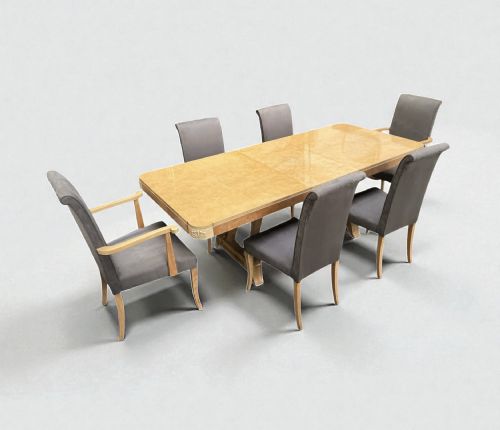


Satinwood Carver Chair
Satinwood carver chairs are substantial timber armchairs built for the head of a table or a drawing room, offering figured woods and painted or inlaid classical motifs.
Satinwood Carver Chair
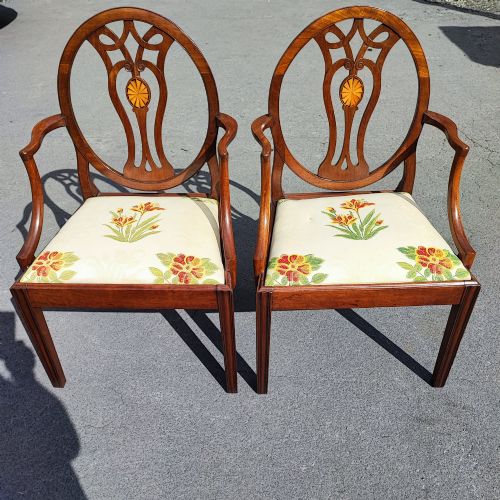
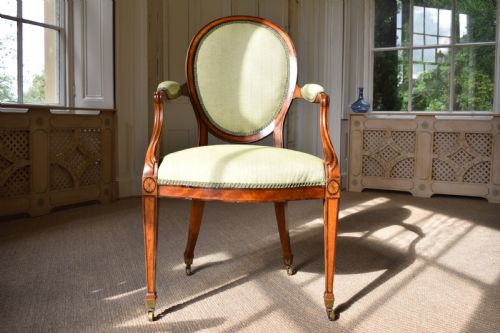
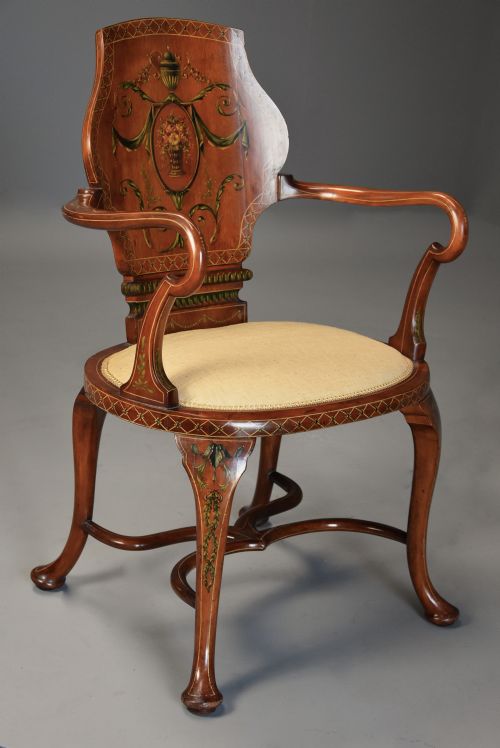
A satinwood carver chair brings together light timbers, prominent armrests, and formal revival styles spanning the Georgian, Edwardian, and Art Deco periods. These seating pieces appear frequently in Edwardian interpretations of Sheraton and Georgian designs, often incorporating contrasting string inlays or hand-painted decorative panels upon the wood.
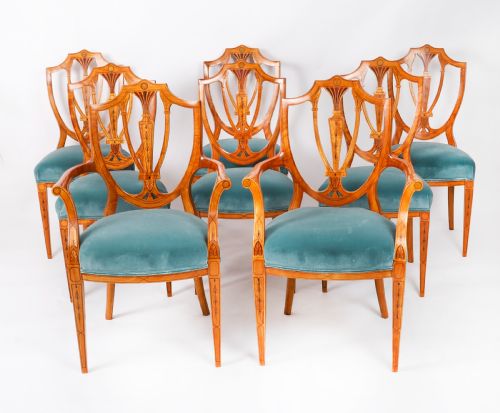
The term carver denotes an armchair intended for the head of a dining table or as a companion to a suite of side chairs. Examples listed here range from single open armchairs to pairs and larger sets, crossing forms from traditional dining suites to salon chairs and desk chairs.
Materials and construction
Makers built these chairs using satinwood as a primary timber or as decorative veneer applied over supportive woods such as mahogany, birch, and walnut. Artisans integrated contrasting string inlays, brass elements, and painted details directly into the timber surfaces to achieve classical revival aesthetics.
Upholstered elements rely on traditional fabrics, including velvet and specialised seat coverings. Structural joinery secures the open arms and backrests, whether shaped as shieldbacks or framed within rectilinear geometries.
Listings feature Edwardian, Georgian, and Art Deco periods, utilising satinwood, mahogany, birch, and walnut alongside fabric and velvet upholstery.
Judging the work
Quality rests in the precision of the timber matching and the crispness of any painted or inlaid ornamentation. Finer examples display meticulous grain selection in the satinwood veneer and clean, deliberate lines in the Sheraton style motifs.
Structural integrity of the arm joints and the proportion of the open frame separate standard production from superior pieces. The integration of secondary woods like mahogany and the preservation of original hand-painted details heavily influence the standing of an individual chair.
Cowtan and Sons·Hille·Shoolbred
The Satinwood Carver Chair Glossary
- Satinwood
- A dense, lustrous tropical timber known for its golden colour and reflective, satiny grain. It is frequently employed as a fine veneer or solid primary wood in high-status cabinet work.
- Sheraton Revival
- A late nineteenth and early twentieth century design movement that reinterprets the neoclassical furniture forms of the eighteenth century designer Thomas Sheraton. It relies on symmetrical geometry, light woods, and delicate inlay.
- String inlay
- A narrow line of contrasting wood or material inserted into a shallow channel on the surface of a piece. This technique creates geometric borders and outlines panels on tabletops and chair backs.
- Shieldback
- A chair back shaped in the outline of a heraldic shield, popularized during the eighteenth century and revived in later periods. It often encloses open splats carved or pierced with classical motifs.
Satinwood Carver Chair: Frequently Asked Questions
How do I date a satinwood carver chair?
Dating relies on examining the timber preparation, the style of the revival period, and the secondary woods used in the frame. Edwardian interpretations often combine mahogany structures with satinwood veneers.
Earlier nineteenth century examples display distinct construction techniques and hand-applied finishes that separate them from later twentieth century revivals.
Where should I place a satinwood carver chair?
These armchairs suit drawing rooms, studies, or as feature seating at the end of a dining table. Their decorative painted panels and figured wood grains draw the eye in formal interior settings.
Protect the light satinwood surfaces and fabric upholstery from direct sunlight to preserve the original timber tones.
What is the difference between a side chair and a carver chair?
A carver chair includes integrated armrests designed for greater comfort, whereas a side chair lacks arms and has a narrower frame. Carver chairs traditionally served the head of a dining table.
In salon settings, pairs of carver chairs balance larger room layouts alongside matching side chairs.
How do I care for antique satinwood furniture?
Maintain satinwood surfaces with appropriate soft dusting and avoid placing pieces near excessive heat sources or moisture. Gentle cleaning preserves the reflective quality of the timber and any delicate painted details.
Consult a professional restorer before undertaking any interventions on historic upholstery or inlaid veneers.